Chakra Healing Meditation: A Gentle Practice for Relaxation and Awareness
Welcome to a journey that invites you to explore the calming practice of chakra healing meditation. This gentle approach combines stillness, breathing, and focused awareness to help you achieve a more relaxed state of mind. Rather than a quick fix for every health concern, it offers a path toward greater wellbeing.
Sejal Shah, an experienced meditation teacher, emphasizes that regular practice can lead to a sense of calm, creativity, and a stronger connection to your self. You may find that through this practice, you experience warmth, tingling, or perhaps even a sense of nothingness, which is perfectly normal.
In this guide, we will introduce you to traditional concepts while ensuring that you understand meditation is not a substitute for medical care. We will walk through a practical sequence that begins at the base of your spine and moves upward, ending with a quiet rest near the crown of your head.
As you engage with this practice, keep an open mind. You might be surprised by what you discover about yourself.
Key Takeaways
- Chakra healing meditation promotes relaxation and awareness.
- Regular practice can enhance creativity and self-connection.
- Expect varied sensations during meditation, including calm and warmth.
- This practice is not a replacement for medical care.
- The guide offers a structured approach from the base of the spine to the crown.
Introduction to Chakra Healing Meditation
Step into the soothing realm of energy center meditation, a practice designed to enhance your wellbeing. This guide offers insights into the traditional energy centers, often referred to as chakras, which are integral to many wellness practices. The term “chakra” comes from the Sanskrit word meaning “wheel,” symbolizing movement and change.
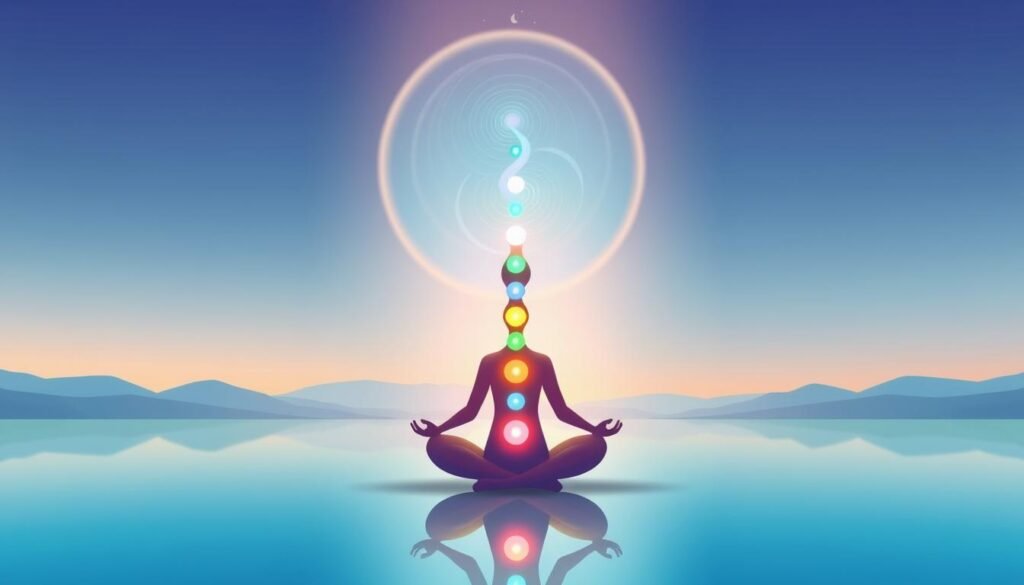
Gurudev Sri Sri Ravi Shankar highlights that there are 109 different energy centers, with seven main ones running along the spine. Each of these centers connects to specific emotions, bodily regions, and organs, influencing your overall health. This practice allows you to explore these connections, providing a pathway to emotional balance and body awareness.
As you engage with energy center meditation, remember that it can be approached as a reflective practice. You don’t need to interpret energy literally; instead, focus on the sensations and feelings that arise. This mindful attention develops gradually, much like the techniques outlined in our guide on mindfulness meditation for beginners.
Through this practice, you may experience greater peace and a calmer response to daily stress. Embrace the journey of self-discovery and relaxation that energy center meditation offers.
The Chakra System Explained
Dive into the fascinating world of energy centers that shape our emotional and physical experiences. The seven main energy centers, or chakras, run from the base of the spine to the top of the head. Each chakra plays a unique role in your overall well-being.
| Chakra | Location | Traditional Theme | Reflective Question |
|---|---|---|---|
| Root | Base of Spine | Survival | Do I feel safe? |
| Sacral | Lower Abdomen | Emotion | Am I open to pleasure? |
| Solar Plexus | Upper Abdomen | Willpower | Do I feel confident? |
| Heart | Center of Chest | Love | Am I compassionate? |
| Throat | Throat | Communication | Am I expressing myself? |
| Third Eye | Forehead | Intuition | Am I trusting my instincts? |
| Crown | Top of Head | Spirituality | Am I connected to something greater? |
Nadis, the energy channels, can be thought of as highways. The chakras are the intersections where these roads meet. This analogy helps to visualize how energy flows through your body. When energy moves upward, known as urdhvagati, it brings enthusiasm and creativity. Conversely, when energy flows downward, termed adhogati, it may lead to feelings like anger and fear.
While some modern interpretations associate colors and lotus petals with each chakra, these concepts are not universally found in ancient texts. They can, however, serve as helpful symbols during your practice.
The Science of Energy Flow and Kundalini Concepts
Uncover the intricate dynamics of energy flow that influence your emotional and physical states. In many spiritual frameworks, prana and chi are terms used to describe the vital energy that sustains life. These concepts remind us that our well-being is closely tied to how this energy flows within us.
The idea of Kundalini refers to a dormant energy that can rise through your energy centers. It’s important to approach this concept gently, as forcing this energy can lead to imbalance. Instead, focus on nurturing your energy through supportive practices.
Sometimes, people describe feeling chakra blocked when they feel stuck or overwhelmed. This feeling is not a confirmed physical blockage but rather a sign that emotional balance may be needed. Engaging in breathwork, meditation, and maintaining a healthy lifestyle can help you cultivate peace and emotional stability.
If you’re interested in learning more about how breathwork can aid in stress relief, check out this article on breathwork for stress relief.
Remember, if you experience any distress during your practice, it’s wise to pause and seek guidance. Your journey toward emotional balance should be supportive and nurturing.
chakra healing meditation: Practical Steps to Balance Your Energy
Engaging in a meditation practice can be a transformative experience. To help you balance your energy, here’s a simple sequence you can follow. Sejal Shah recommends finding a peaceful space and dedicating 15-20 minutes to this practice.
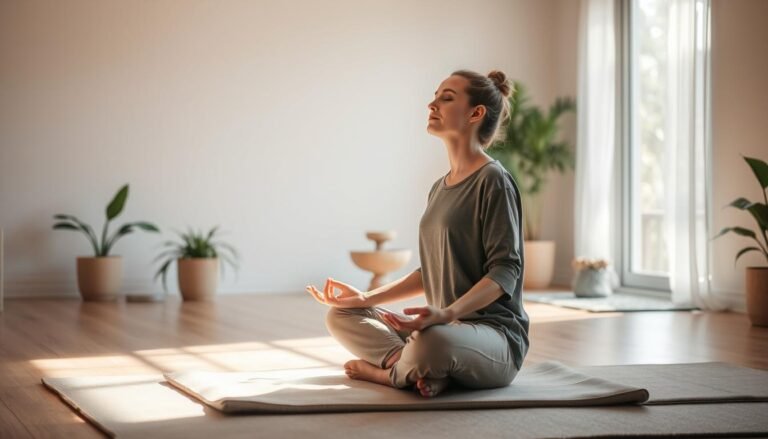
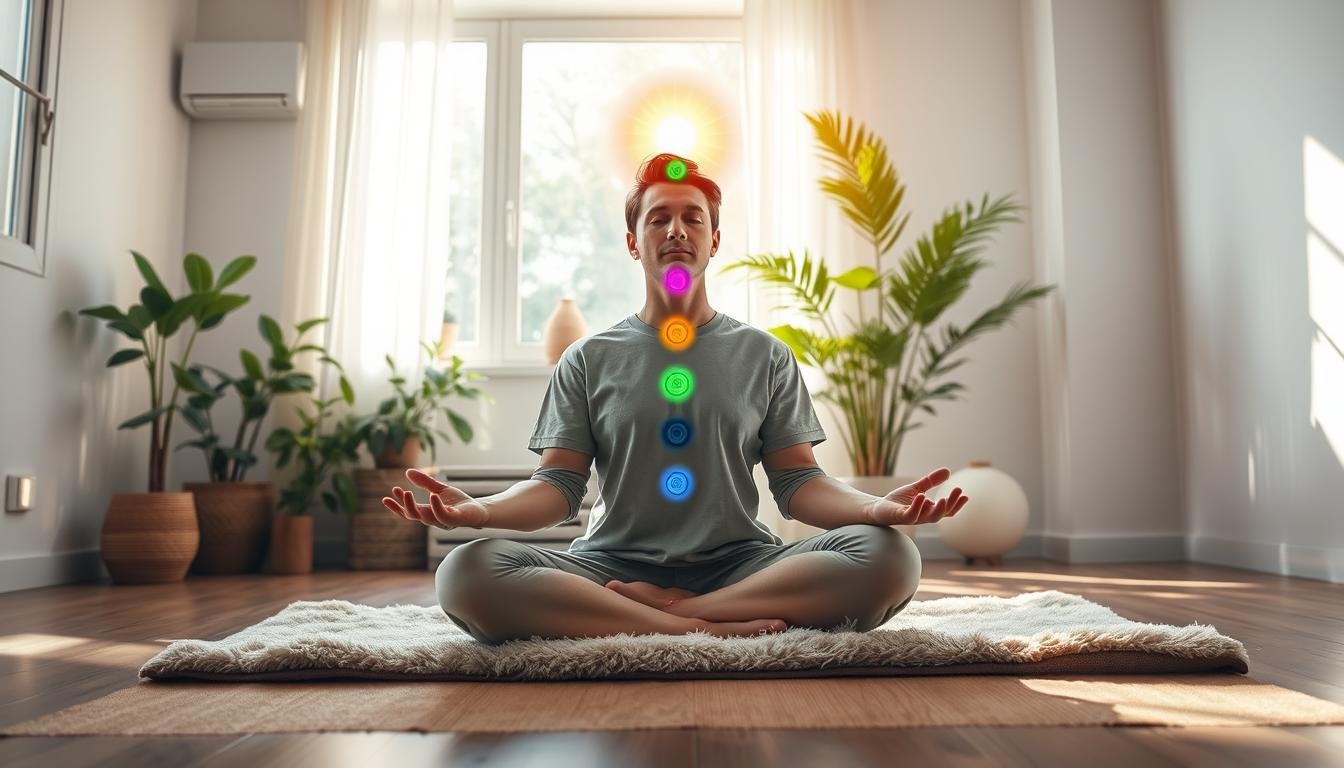
Start by sitting comfortably, ensuring your spine is erect yet relaxed. Place your hands on your knees with palms facing upward. Take a few gentle breaths to center yourself.
Step-by-Step Meditation Process
- Choose a quiet place and sit on a yoga mat or cushion.
- Set a timer for 15-20 minutes.
- Inhale deeply, bringing awareness to the base of your spine. Hold this focus for about two minutes.
- Gradually move your awareness through each energy center, spending two minutes on each.
- Notice any vibrations, warmth, or tingling sensations; however, it’s also normal to feel nothing.
- After completing the sequence, rest for a few minutes before gently opening your eyes.
This practice may help you achieve a sense of calm and peace. You can practice chakra meditation daily or a few times a week, ensuring it remains a comfortable part of your routine. For those who prefer guided instruction, consider exploring the Hari Om guided meditation by Gurudev Sri Sri Ravi Shankar.
Recognizing Subtle Sensations
As you meditate, be patient with yourself. Some days you may feel a strong flow of energy, while other times, sensations may be more subtle. This variability is a normal part of the process. The key is to remain open and allow your experience to unfold naturally.
Mindful Breathing and Relaxation Techniques
Embrace the simplicity of breath awareness to cultivate a peaceful mind. Breath awareness is a foundational practice that can enhance your meditation experience. Start by simply noticing your inhale, exhale, and the natural pause in between. There’s no need to change your rhythm or strain your lungs.
To deepen your practice, try this gentle exercise: inhale for a count of four and exhale for a count of six. Repeat this for several rounds, but stop if the longer exhale feels uncomfortable or makes you lightheaded. This technique can help calm your nervous system.
SKY Breath Meditation introduces various rhythms of breath. It’s best learned through proper instruction, ensuring you approach it safely. For a structured routine, consider checking out [a BetterLifeAtlas guide to breathing exercises for relaxation](/breathing-exercises-for-relaxation).
Pairing three minutes of breath awareness with your 15-20 minute meditation sequence can create a smoother transition into a state of calm. By focusing on your breath, you prepare your mind and body for deeper relaxation.
Creating a Personal Meditation Space
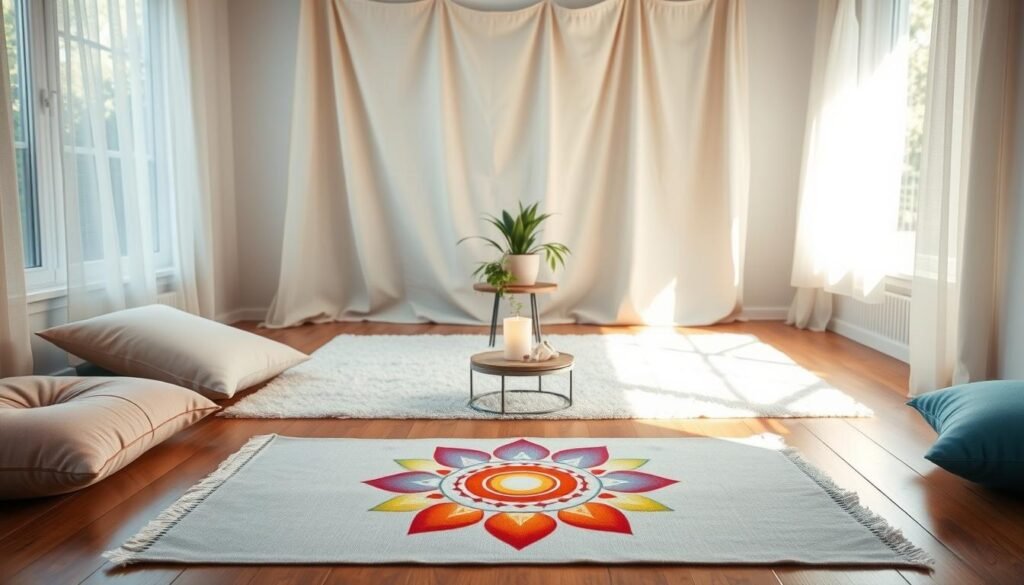
Creating a personal space for your practice can significantly enhance your meditation experience. A peaceful environment allows you to focus and connect deeply with yourself. Here are some tips to help you establish that perfect setting.
Tips for a Peaceful Environment
- Choose a quiet corner where you can remain undisturbed for 15-20 minutes, following Sejal Shah’s practical recommendation for beginning your practice.
- Use a yoga mat, folded blanket, or even a chair instead of purchasing specialized equipment, as long as your posture remains stable and comfortable.
- Keep your spine upright but relaxed. This posture is essential for maintaining comfort during your practice.
- Reduce interruptions by silencing notifications, informing household members, and placing your timer within earshot without needing to check the screen.
- Add one modest sensory cue, such as soft lighting or a familiar scent, while remembering that concentration matters more than decorative objects.
Integrating Meditation with Daily Life
Incorporating brief sessions of mindfulness into your schedule can foster lasting habits. You don’t need long hours to reap the benefits. Instead, focus on short, intentional practices that fit your busy lifestyle.
Start with just five minutes of breath awareness on hectic days. Gradually, aim for the recommended 15-20 minutes for a complete session. This approach allows you to build a sustainable routine without feeling overwhelmed.
Short Practices for Busy Schedules
- Schedule your practice after an existing habit, like brushing your teeth or making coffee. This creates a reliable cue.
- If daily practice feels daunting, select two or three consistent days each week, as suggested by Sejal Shah.
- During work breaks, try a brief body scan. Notice your feet, spine, shoulders, and breath without needing special equipment.
- Keep a simple journal to record the date, duration, and your mood after each session. This helps you observe patterns without judgment.
Overcoming Common Challenges in Meditation Practice
Every journey into self-awareness comes with its hurdles. You may find that obstacles arise during your practice, and that’s perfectly normal. Recognizing these challenges can help you navigate them with ease.
It’s essential to approach these difficulties with patience and understanding. Here are some common issues and practical adjustments to help you along the way:
Addressing Mental and Physical Obstacles
- If your thoughts start to wander, gently guide your focus back to your breath. Use the sensation at the base of your spine as an anchor, without self-criticism.
- For those who find sitting cross-legged uncomfortable, try using a chair or cushion. The key is to maintain an upright spine without tension.
- Understand that sensations or vibrations may arise, but feeling nothing doesn’t mean your practice is unsuccessful.
- If breathwork causes dizziness or anxiety, reduce the intensity. Return to your natural breathing rhythm before deciding to continue.
- Seek professional support if you experience persistent pain, panic, or distress that disrupts your daily life.
By acknowledging these challenges, you empower yourself to adapt and grow. For more insights on integrating mindfulness into your life, consider exploring this .
Conclusion
As you navigate this practice, remember that patience is key to your growth. Embrace the quiet moments to explore breath, attention, and body awareness at a manageable pace.
Sejal Shah’s method encourages you to dedicate about 15-20 minutes, focusing on gentle breathing and awareness from the base of your spine to the crown. Afterward, allow yourself to rest.
You don’t need to force any energetic experience; subtle sensations may arise, or you may feel nothing at all. Consistency matters more than intensity, so aim for a routine that fits your life, whether daily or a few times a week.
If you feel any distress or uncertainty, pause your practice and seek guidance from a qualified teacher or healthcare professional. Your journey is personal, and support is always available.
FAQ
What is chakra healing meditation?
This practice focuses on balancing energy centers in the body to promote relaxation and emotional wellbeing.
How can I tell if my energy centers are blocked?
You may experience physical discomfort, emotional instability, or a sense of disconnection. Noticing these signs can guide you to explore meditation.
How often should I practice meditation for the best results?
Daily practice, even for a few minutes, can significantly enhance your mental clarity and emotional balance over time.
Can meditation improve my mental health?
Yes, many find that regular meditation helps reduce stress, anxiety, and promotes a calmer mindset.
What should I do if I find it hard to focus during meditation?
It’s common to face distractions. Try gentle breathing techniques or guided sessions to help center your thoughts.
Is there a specific time of day that is best for meditation?
The best time is when you feel most relaxed and can dedicate time without interruptions, whether in the morning or evening.
How can I create a calming space for meditation?
Choose a quiet area, add soft lighting, comfortable seating, and consider incorporating soothing scents or sounds to enhance your experience.
Are there any physical benefits to practicing this meditation?
Yes, many report improved physical health, including better sleep, reduced tension, and enhanced overall vitality.
Can I practice this meditation with others?
Absolutely! Group meditation can foster a sense of community and shared energy, enhancing the experience.
What if I don’t feel any changes after a few sessions?
Changes can be subtle and may take time. Consistency is key, so keep practicing and be patient with your journey.