Group Meditation: Benefits and Tips for Practicing with Others
Have you ever considered how meditating with others can enhance your practice? In a shared mindfulness setting, you can find connection, structure, and encouragement. This approach can transform your individual routine into a more enriching experience.
Sean Fargo, who spent years as a Buddhist monk in Thailand, has dedicated over a decade to teaching mindfulness across various communities. His work with organizations like Tesla and Facebook, as well as his experience in prisons, highlights the practical benefits of practicing together.
This article will explore the advantages of group meditation, from preparing your space to overcoming challenges. You don’t need advanced skills or a special background to join in. Everyone can benefit from this supportive practice.
Key Takeaways
- Group meditation fosters connection and support.
- Sean Fargo brings extensive experience to the practice.
- No special skills are required to participate.
- Preparation and techniques can enhance your experience.
- Challenges can be addressed through community support.
Understanding the Unique Benefits of Group Meditation
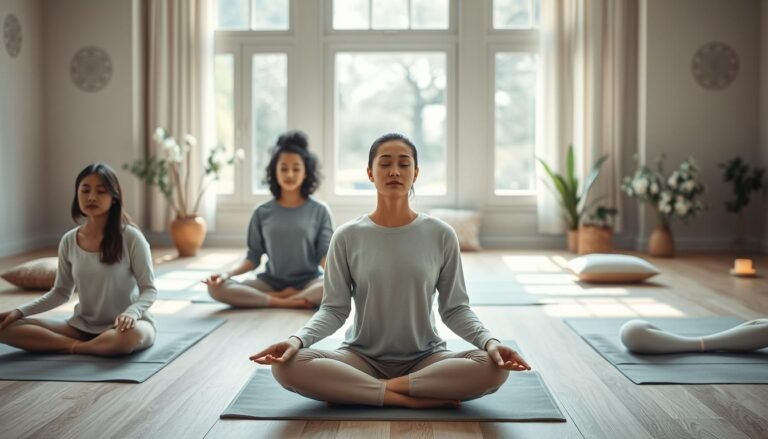
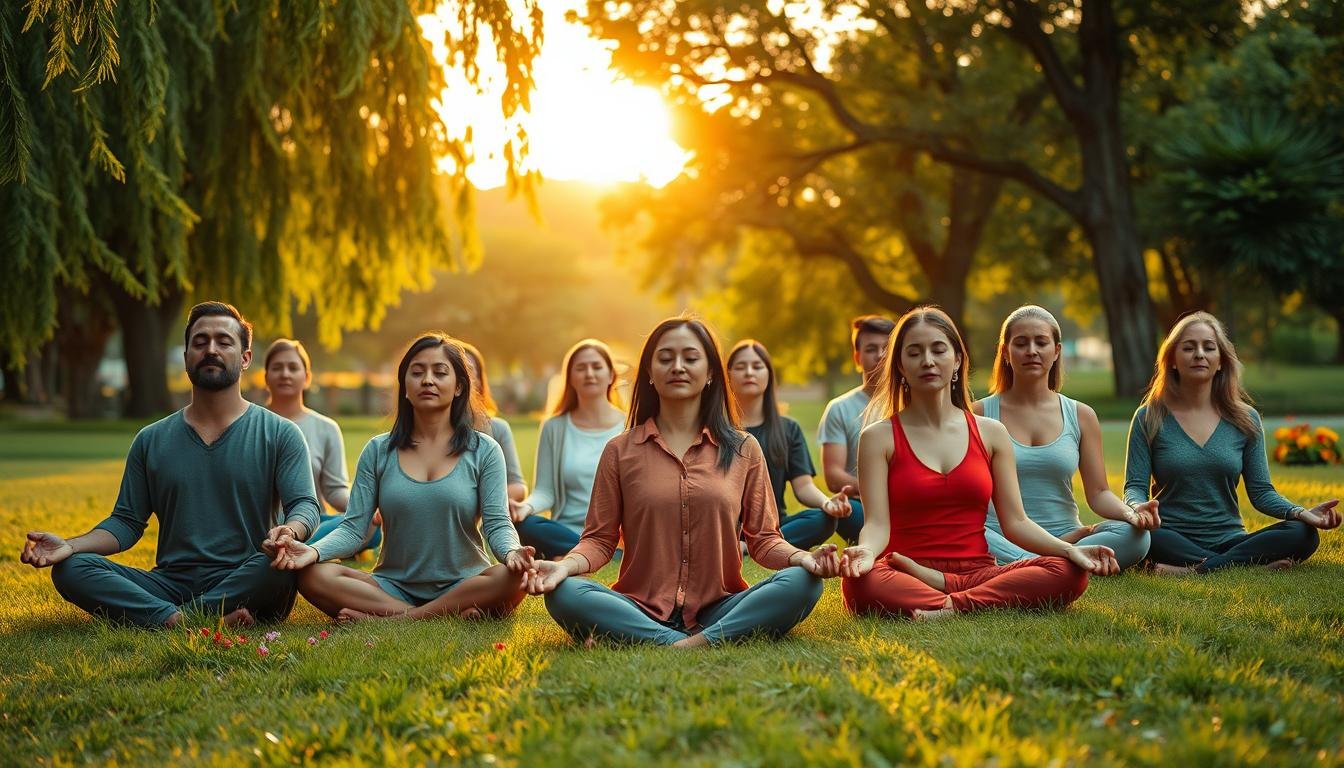
Imagine the profound impact of sharing a peaceful moment with others. Engaging in collective practice can significantly enhance your experience. Research shows that being part of a meditation community fosters deeper social connections and greater mindfulness.
One study found that watching others meditate is particularly effective for increasing social connectivity. This shared environment creates a supportive atmosphere where self-doubt can diminish. Barry Boyce, editor-in-chief of *Mindful* magazine, emphasizes the importance of discussing experiences within a group. This dialogue can help interrupt personal rumination and boost confidence.
Additionally, dyadic meditation, which involves two participants, has been shown to increase closeness and self-disclosure over time. Davidji, a senior meditation teacher, notes that group practice encourages gentle peer support, promoting kindness towards oneself and others.
Erica Jago highlights how collective meditation can inspire intentions for world peace. While meditation doesn’t guarantee specific outcomes, the shared commitment to mindfulness can create a powerful sense of community.
| Study | Finding | Benefit |
|---|---|---|
| Group vs. Solitary | Group practice increases social connectivity | Enhanced mindfulness |
| Dyadic Meditation | Increased closeness over time | Improved self-disclosure |
| Collective Practice | Stronger intention for peace | Community support |
Who Can Guide a Group Meditation Session?
The right facilitator can make all the difference in your experience. Many individuals are equipped to lead sessions, each bringing unique skills to the table. Educators, health professionals, and corporate leaders can adapt practices to suit various needs.
For instance, educators can introduce breathing exercises that match their students’ age and maturity. This ensures that the practice is engaging and accessible. Similarly, yoga teachers and social workers can use guided meditations in workshops or schools, making mindfulness a part of everyday life.
Corporate leaders also find value in mindfulness. They can implement practices to tackle workplace stress and boost productivity. Parents, too, can play a vital role. Starting with short, age-appropriate practices can help children ease into the concept of mindfulness.
As an example, Sean Fargo offers a Mindfulness Meditation Teacher Training Certification Program, which prepares individuals to lead with confidence. With the right training, anyone can guide a session effectively.
Preparing Your Space and Setting the Tone
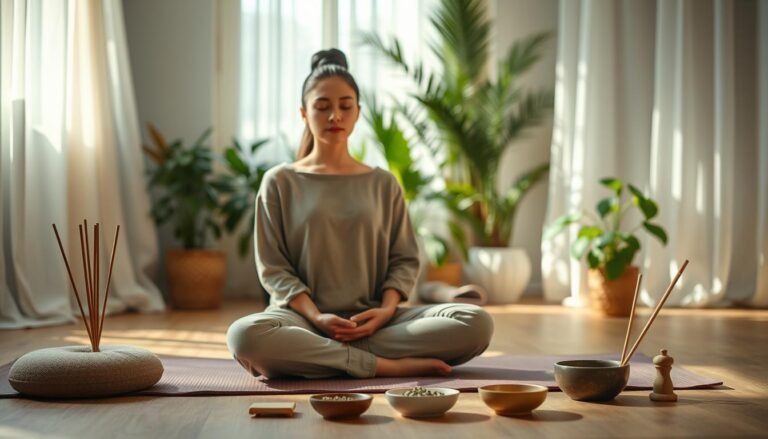
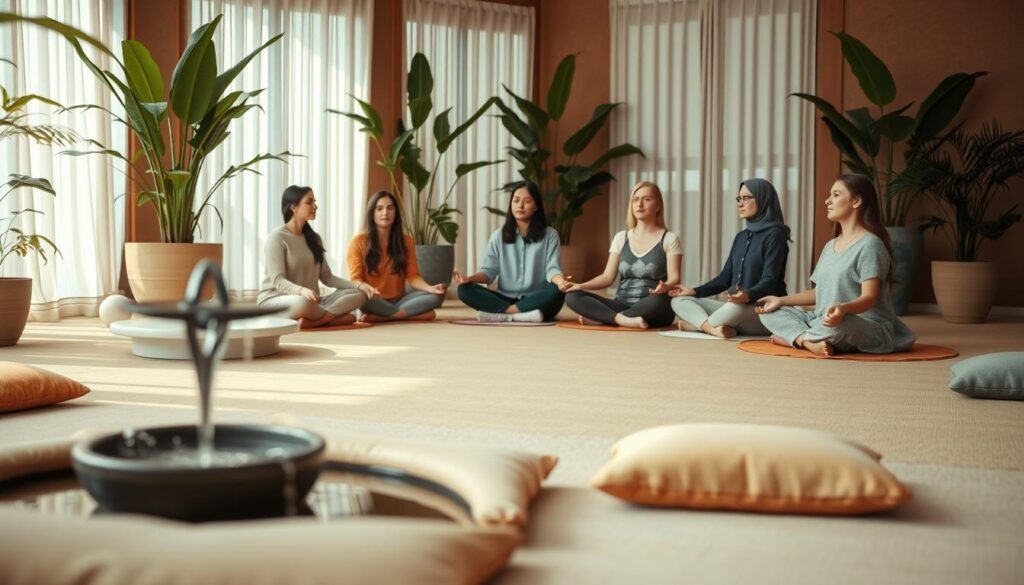
Creating the right atmosphere can significantly enhance your shared practice. Consider the room’s temperature and lighting before participants arrive. Both elements are vital for establishing a calm environment.
Offer a choice of chairs and cushions to ensure everyone finds a comfortable position. This flexibility allows participants to choose what best supports their experience.
Music and singing bowls can contribute to a peaceful ambiance. However, it’s important to test the volume beforehand. Ensure that sound complements your guidance without overpowering it.
Before using any aromas or essential oils, ask about scent sensitivities. This step makes your support tools inclusive and considerate of everyone’s preferences.
As participants arrive, welcome them warmly. Explain the session structure using a steady voice and unhurried pace. This approach fosters emotional safety and encourages a sense of belonging.
Essential Group Meditation Techniques
Utilizing essential techniques can transform your practice into a more impactful experience. Here are some effective methods to enhance your time together.
Mindful Breathing and Body Scan Practices
Start with three deep breaths. This simple exercise is perfect for beginners and can be adapted for various experience levels. Following this, guide a body scan from feet to head. Encourage participants to notice sensations without judgment.
Guided Visualization and Affirmation Scripts
Consider using visualization techniques, such as the “Dropping the Suitcases of Worries and Regrets” script. This method helps participants release burdens. Additionally, affirmations from the Teen Meditation to Believe in Yourself script can be included for younger audiences.
Research supports these techniques. A 2020 study by Ainsworth and colleagues showed that group mindfulness interventions improved anxiety and stress in participants with difficult asthma.
| Technique | Description | Benefits |
|---|---|---|
| Three Deep Breaths | Simple breathing exercise for grounding | Calms the mind and body |
| Body Scan | Guided awareness from feet to head | Enhances body awareness |
| Visualization | Imagining releasing worries | Promotes emotional release |
Overcoming Challenges in Group Settings
Navigating the complexities of shared practices can be challenging yet rewarding. Distractions often arise in a collective environment, impacting focus and energy. To foster a productive atmosphere, setting clear ground rules is essential.
For instance, establish arrival expectations to minimize interruptions from late entries or noise. Reframe unavoidable sounds, like coughing or shuffling, as opportunities for mindfulness. Encourage participants to notice these sounds without judgment, allowing them to come and go.
It’s also vital to accommodate varied experience levels. Survey participants about their prior experiences or label the session clearly, such as “Compassion for Beginners.” This approach helps everyone feel included and comfortable.
Offering posture alternatives and permission to pause ensures that all participants can engage safely. Moreover, managing advice-giving and oversharing with gentle redirection keeps the focus on the group’s needs.
Research by Crowley and colleagues in 2017 shows that group mindfulness can lower stress and anxiety while improving attention. Implementing these strategies can enhance your collective practice.
| Challenge | Strategy | Benefit |
|---|---|---|
| Distractions | Set clear arrival expectations | Minimized interruptions |
| Noise | Reframe sounds as mindfulness opportunities | Enhanced focus |
| Experience Levels | Label sessions clearly | Increased comfort |
Enhancing Group Connection through Mindfulness
Establishing trust among participants enhances the collective experience. In a shared practice, it’s vital to create a safe environment where everyone feels comfortable. This begins with a confidentiality agreement, ensuring that no one is obligated to share personal experiences after the session.
Mindful listening plays a crucial role. Encourage participants to speak briefly while others focus on their thoughts, emotions, and body sensations without preparing a reply. This technique fosters deeper connections and understanding.
Another engaging exercise is Silent Connections. This involves using eye contact, smiles, and facial expressions without speaking. Participants can opt out if they feel uncomfortable, allowing everyone to engage at their own pace.
Research shows that dyadic meditation can increase closeness and willingness to self-disclose over time. By keeping feedback compassionate and specific, the group can build trust without turning the session into unstructured therapy.
Bringing Technology into Group Meditation
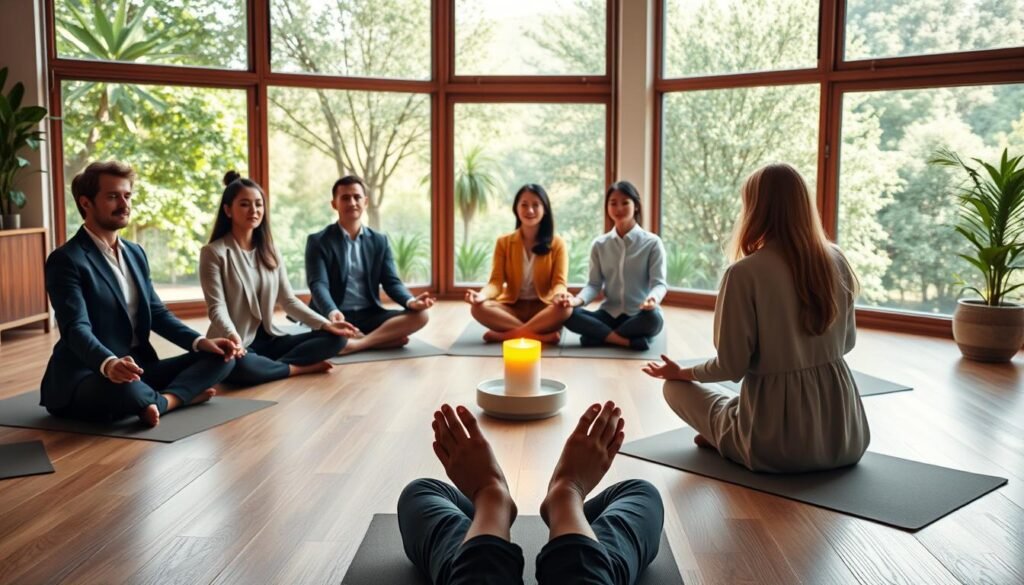
Exploring virtual platforms can create exciting opportunities for collective practice. With the right tools, you can connect with others in meaningful ways. Technology offers a chance to engage with people who share your mindfulness journey, regardless of distance.
Before your first online session, consider conducting a trial run with a friend. This will help you identify any audio, video, or timing issues. It’s essential to ensure everything works smoothly to provide a positive experience for participants.
Conducting Trial Runs and Virtual Engagement Strategies
During online sessions, think about how to encourage participation. You might decide whether to use introductions, chat prompts, or breakout rooms based on your group’s size and comfort level. Offering video-off participation can also be beneficial, as some may prefer privacy or have bandwidth issues.
Balancing In-Person and Online Practices
Online meditation can remove travel barriers, making it easier for people to join. However, in-person sessions allow for shared silence and energy that can enhance the experience. After each session, stay online for five to ten minutes. This time lets participants ask questions or share thoughts privately.
Creating a Sustainable Group Meditation Practice
Establishing a regular practice can greatly enhance your experience with others. Consistency is key when it comes to mindfulness sessions. Choose a predictable day and time, allowing participants to build attendance into their routines. Remember, consistency doesn’t mean perfection; it’s about showing up.
Matching meditation scripts to your audience is also essential. For beginners, start with “Three Deep Breaths.” For those with more experience, consider “Body Scan Advanced.” You can even use the “Teen Meditation to Believe in Yourself” script for younger participants.
Gradually introduce new techniques, such as visualization and affirmations, once the group is comfortable with the basics. This approach fosters a sense of relatedness and autonomy, which are crucial for motivation.
Keep a simple attendance and feedback record. This will help you adjust pacing and script length based on the group’s experience. Sean Fargo’s decade of teaching mindfulness illustrates how skills develop through repeated practice. For more insights on habit formation, check out related articles on BetterLifeAtlas.
Conclusion
In conclusion, practicing mindfulness with others can profoundly enhance your experience. As Shauna Shapiro noted, mindfulness helps people see clearly and respond effectively to life. To start, choose a suitable group, prepare a calm setting, and explain expectations clearly. Accessible practices can foster connection and motivation among participants.
Remember, shared mindfulness supports empathy and accountability without requiring everyone to have the same experience level. Facilitators should establish clear boundaries, use compassionate language, and maintain confidentiality during sessions.
As you embark on this journey, take a moment to breathe deeply and consider one manageable practice to try this week. You might be surprised by the positive impact it can have!
FAQ
What are the main benefits of practicing meditation in a group?
Practicing in a group enhances social connection, provides support, and increases mindfulness through shared inspiration. It creates a sense of community that can deepen your meditation experience.
Who can lead a group meditation session?
Group sessions can be guided by educators, health and wellness professionals, corporate leaders, parents, or community facilitators. Anyone with knowledge of mindfulness practices can effectively lead.
How should I prepare the space for group meditation?
Creating a calming environment is essential. Use soft lighting, comfortable seating, and calming scents. Consider incorporating support tools like cushions or blankets to enhance comfort.
What techniques are commonly used in group meditation?
Common techniques include mindful breathing, body scan practices, guided visualization, and affirmation scripts. These methods help participants connect with their inner selves and each other.
How can I overcome challenges in a group setting?
Managing distractions and energy dynamics is key. Encourage participants to focus on their breath and establish ground rules to minimize interruptions. Be mindful of varying experience levels and adjust practices accordingly.
How can we enhance connection within the group?
Sharing experiences fosters trust and connection. Encourage open discussions about feelings and insights after sessions, allowing participants to bond over their shared journey.
What role does technology play in group meditation?
Technology can enhance engagement, especially for virtual sessions. Conduct trial runs to ensure smooth experiences and balance in-person and online practices for flexibility.
How can we create a sustainable group meditation practice?
Building consistency is crucial. Schedule regular sessions and utilize proven meditation scripts to keep participants engaged and committed to their practice.