Meditation in Nature: How to Practice Mindfulness Outdoors
Henry David Thoreauonce reflected, “There are moments when all anxiety and stated toil are becalmed in the infinite leisure and repose of nature.” This sentiment resonates deeply with those seeking peace in their busy lives. The outdoors offers a unique space for mindfulness, allowing you to reconnect with yourself.
Imagine a serene setting, like the Blue Ridge Mountains, where a three-day silent program combined walking, mindful eating, and contemplative practices. The experience is not just about finding a remote spot; it can begin in your backyard or a local park. Spending even 10 minutes outdoors may help some people feel calmer, according to research often associated with Cornell.
In this article, you’ll discover simple practices that can be integrated into your daily routine. These include listening, walking, breathing, and quiet observation. Each moment spent outdoors can enhance your sense of well-being and mindfulness.
Key Takeaways
- Nature can help calm anxiety and stress.
- Simple outdoor practices can enhance mindfulness.
- You don’t need a remote location to experience the benefits.
- Just 10 minutes outdoors can make a difference.
- Activities like listening and observing can improve your well-being.
Introduction to Outdoor Mindfulness
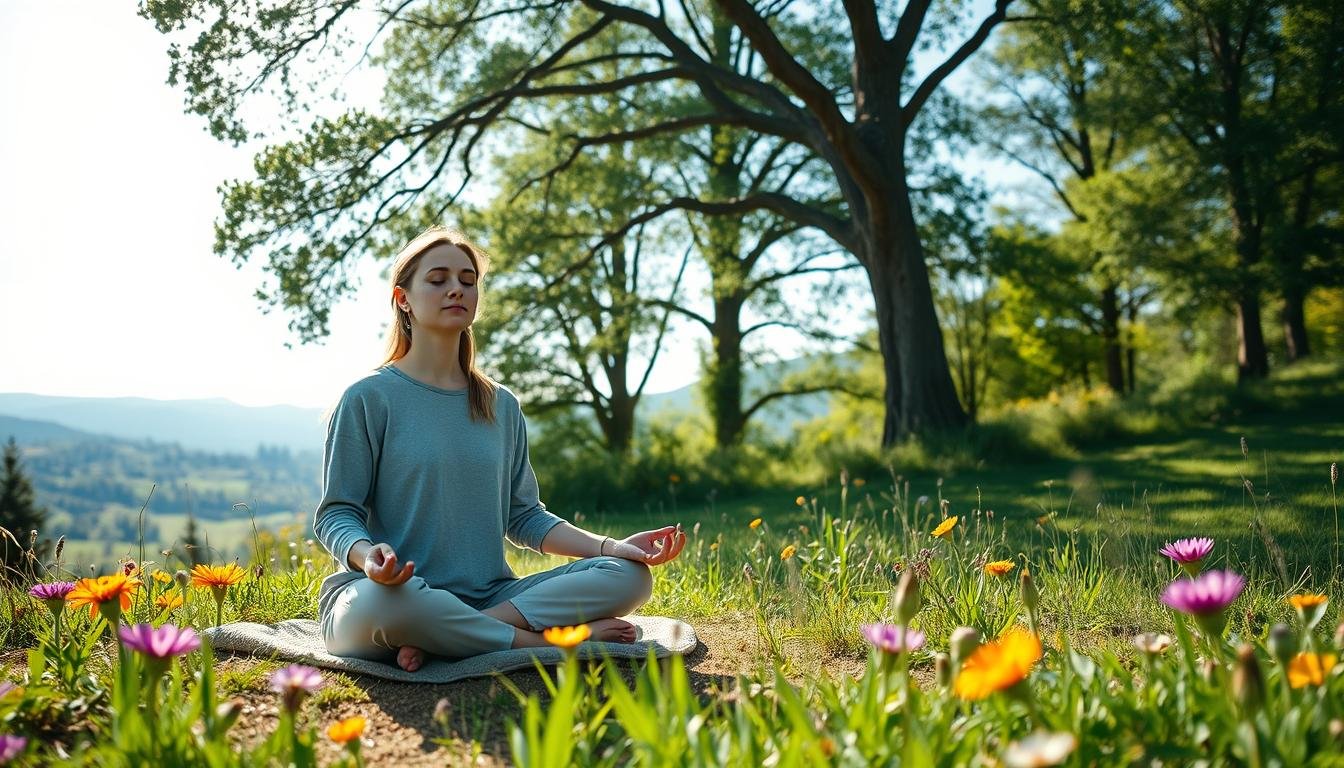
Visualize a peaceful spot where the air is fresh and the sounds of birds fill your ears. Outdoor mindfulness is about intentionally focusing your attention on your body, breath, and the natural world around you. This practice encourages you to be aware of the sights and sounds that often go unnoticed.
Mark Coleman’s rafting retreat on Utah’s Green River showcases how ancient sandstone canyons foster deeper contemplation. Participants found that the stunning landscape helped quiet their minds, making it easier to connect with the present moment.
Ajahn Buddhadhasa referred to this effortless focus as “natural samadhi.” This means that when you’re outdoors, your attention can flow more freely. Mindfulness doesn’t require you to eliminate every thought; instead, it invites you to notice each moment and gently return to the here and now.
Natural settings can break the cycle of distractions from phones and work. They create a safe space for you to reconnect with yourself. Start with a comfortable location and a short practice. You don’t need to wait for a grand adventure to experience the benefits of spending time outdoors.
Essential Benefits of Meditation in Nature
Consider the tranquility that comes from being surrounded by vibrant greenery. Spending time outdoors offers numerous benefits for both your physical and mental health. Many people find that even a brief period of 10 minutes in a natural setting can help them feel calmer. Some people also notice related physical ease, though individual experiences vary.
A study by the European Centre for Environment and Human Health involving 20,000 participants found that those who spent at least two hours in greener environments reported improved health and well-being. This connection to the earth enhances your awareness and helps restore focus, making it easier to connect with the present moment.
When you pay attention to the sensations around you, like the feel of the earth beneath your body or the gentle breeze, you strengthen your mind-body connection. Noticing the details—like flowers, birds, and sunlight—can create a calmer relationship with the world. These experiences can foster a sense of peace and presence that enriches your daily life.
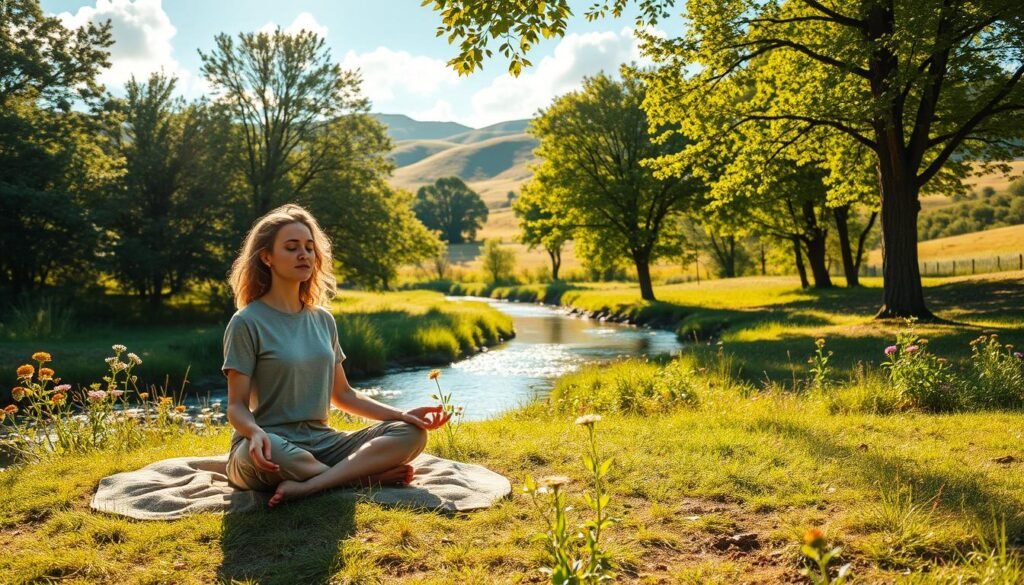
Mindful Techniques for Practicing Outdoors
Picture a moment where you fully engage with the sounds around you. Deep listening can transform your experience outdoors. Start by finding a comfortable spot to sit. Close your eyes or lower your gaze, and simply listen. Allow the sounds of birds, the wind, and even distant traffic to fill your awareness without judgment.
For about five minutes, immerse yourself in this auditory landscape. Notice how the sounds blend together. This practice helps you cultivate a sense of presence, grounding you in the moment.
Next, try a walking meditation. Pair each inhalation with a step and each exhalation with another. This rhythmic practice connects your breath to your movement. As you walk, perform a body scan, bringing your attention from your feet to your head. Feel the earth beneath you and the breeze against your skin.
Let your thoughts drift away as you focus on the sensations of walking. If distractions arise, gently guide your attention back to your body and breath. This mindful practice can enhance your awareness and deepen your connection to the outdoors.
Cultivating Connection with Nature’s Elements
Imagine stepping into a world where the trees whisper secrets and the breeze carries the scent of pine. This is the essence of forest bathing, or shinrin-yoku, a Japanese practice that encourages a slow immersion in the sights, sounds, and textures of the forest. Rather than hiking, you take your time to soak in the beauty around you. Many people find that about 20 minutes outdoors can start to feel restorative, with deeper calm often reported after longer stays.
Even if you don’t have a forest nearby, you can still enjoy this practice. Visit a local park, nature reserve, or even a cluster of trees in your neighborhood. Take a slow walk, allowing your senses to engage with the earth beneath your feet and the gentle breeze on your skin.
Another enriching experience is labyrinth meditation. This ancient practice invites you to walk a winding path toward the center, pause for reflection, and return along the same route. Labyrinths have symbolized sacred journeys for thousands of years. As you walk, consider an intention to release or carry forward, observing the natural world with an open heart.
Remember Rishi Patanjali’s teaching that wonder is the preface of yoga. Approach your time outdoors with curiosity, and allow the elements to guide your experience.
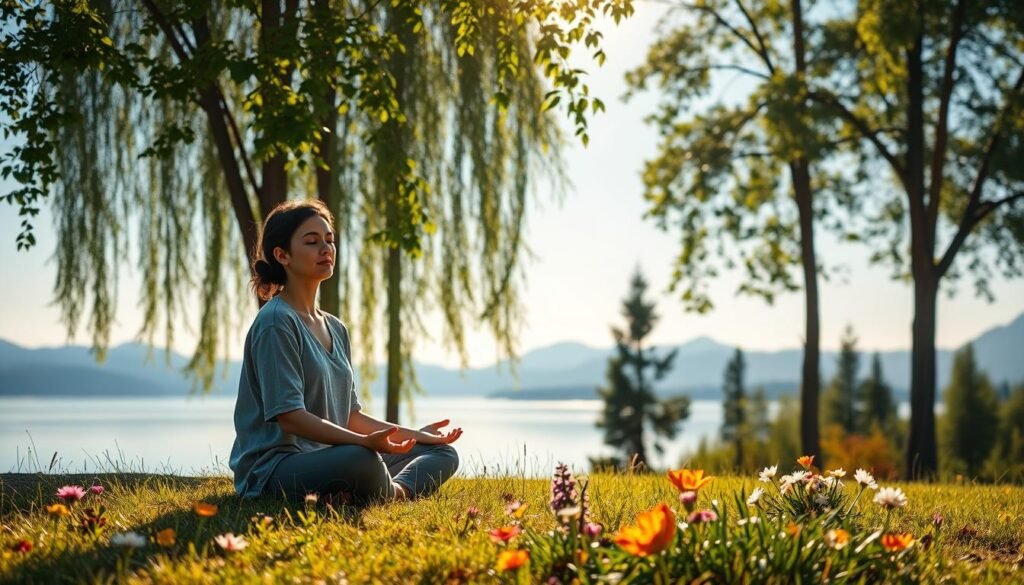
Adapting Meditation to Different Natural Environments
Envision a coastal landscape where the waves rhythmically kiss the shore. The sound of the ocean can be a powerful anchor for your attention. When practicing by the sea, sit safely above the tide line. Let the gentle waves wash over your thoughts, guiding you to a state of calm. The repeating sounds of water can help you focus on the present moment.
Similarly, freshwater environments like lakes and rivers offer unique experiences. You can notice the ripples and reflections on the surface, the cool air, and the changing light. These elements can deepen your awareness and connection to the world around you.
Urban green spaces, like parks or rooftop gardens, can also be excellent for mindfulness. Sandra Masters found peace in her Detroit rooftop garden, where she engaged with the sounds of birds and the hustle of city life. This shows that even small patches of green can foster a sense of tranquility.
Here are some practical tips for adapting your practice:
- Choose a quiet spot, whether it’s a beach, park, or garden.
- Engage your senses: notice the sounds, sights, and smells around you.
- Stay aware of your body and breath, even amidst distractions.
- Keep safety in mind, especially near water or busy areas.
Integrating Nature Meditation into Daily Life
Consider how integrating outdoor experiences into your daily life can enhance your overall well-being. Starting with just 10 minutes in a nearby park or garden can be a game changer. Gradually, you can build a longer and more consistent routine that fits your lifestyle.
Schedule two or three sessions each week, ideally at the same time of day. This helps create a habit that’s easier to remember. A simple structure for your practice might include:
| Activity | Duration | Focus |
|---|---|---|
| Breath Awareness | 2 minutes | Breath |
| Listening to Sounds | 3 minutes | Surroundings |
| Body Sensations | 3 minutes | Physical Feelings |
| Gratitude or Intention | 2 minutes | Mindset |
Keep a record of your practice. Note the location, duration, stress levels, and any notable sounds. This can help you discover which environments support your mindfulness journey best.
Remember the study linking two hours in greener environments to better health. Aim for this as a long-term goal. If outdoor trails aren’t available, consider options like a rooftop garden or tree-lined sidewalk.
Before heading out, check the weather, choose stable ground, and stay aware of your surroundings. This way, you can enjoy the experience while remaining safe.
Conclusion
Consider how dedicating a minute to listen can open your heart to the world around you. Outdoor mindfulness can begin with one quiet breath, one attentive step, or one moment of awareness. The natural sounds, changing light, and living landscapes all support your present-moment experience.
John Muir beautifully described nature’s peace flowing like sunshine into trees. This practice isn’t a cure-all, but it can enhance your sense of well-being. Follow Mark Coleman’s approach: start with inward attention, then expand your awareness to the surrounding beauty.
Even a city park or rooftop garden can offer meaningful practice. Choose one location and schedule a short outdoor session today. Embrace the opportunity to connect with the world around you.
FAQ
What are the benefits of spending time outdoors for mindfulness?
Spending time outdoors enhances your mental clarity, reduces stress, and improves overall well-being. The natural world offers unique sensory experiences that can deepen your mindfulness practice.
How can I practice mindfulness while walking in nature?
Focus on your breath and the sensations in your body as you walk. Pay attention to the sounds around you, like birds chirping or leaves rustling, and let these elements ground you in the present moment.
What is forest bathing, and how can it help me?
Forest bathing, or Shinrin-yoku, involves immersing yourself in a forest environment. It promotes relaxation, reduces anxiety, and fosters a deeper connection with nature, enhancing your overall mindfulness experience.
Can I practice mindfulness in urban green spaces?
Absolutely! Urban parks and gardens provide a great opportunity to connect with nature. Focus on the sights, sounds, and smells around you to cultivate a mindful experience, even in a bustling city.
How do I create a routine for outdoor mindfulness?
Start by setting aside a few minutes each day to spend outside. Choose a specific spot, like a park or garden, and make it a habit to engage in mindfulness practices there, such as deep breathing or simply observing your surroundings.