Yoga and Meditation: How to Build a Balanced Mind-Body Practice
Have you ever experienced the peacefulness of lying still in Savasana, also known as Corpse Pose? This moment of stillness after movement offers a gentle entry into a more profound practice. It allows you to connect your body and mind, creating a space for reflection and calm.
In essence, yoga meditation combines physical movement with breath awareness and mental focus. This practice originated in India, where the word “yoga” means “union.” It’s about harmonizing your body and mind, a concept that resonates with many, as shown by the fact that over 36 million Americans embraced this practice in 2016.
Throughout this article, we will explore practical steps, benefits, and safety guidance to help you build your own balanced routine. You’ll learn how to choose poses, breathing techniques, and even how to set up your home environment for success. By integrating these elements, you can cultivate a practice that supports your health and well-being.
Key Takeaways
- Corpse Pose serves as a peaceful transition into meditation.
- Yoga meditation combines movement, breath, and focus.
- The practice promotes a connection between body and mind.
- Millions of Americans practice this form regularly.
- Practical guidance can enhance your personal experience.
Understanding the Mind-Body Connection in Yoga and Meditation
Picture yourself in a serene space where body and mind unite in harmony. This connection has deep roots in history, tracing back to ancient India. Here, the practice evolved, with dhyana representing meditation as the seventh limb in Patanjali’s eight-limbed system. Each limb, including asana and pranayama, plays a vital role in achieving a balanced state.
Recent studies support the idea that these practices can significantly enhance well-being. For instance, research by Jurisic in 2018 showed that yoga meditation activates pain-relief receptors in the brain. The American College of Physicians even recommends yoga for chronic low back pain, highlighting its practical benefits.
Moreover, findings from Gaiswinkler in 2017 suggest that engaging in these practices can lead to improved mental health and reduced depressive symptoms. This suggests that yoga meditation is a supportive tool for enhancing your overall health. If you’re curious about the science behind these benefits, consider exploring more about evidence-based meditation benefits.
Harnessing the Power of yoga and meditation for Daily Well-Being
Imagine a daily routine where you can seamlessly integrate movement and mindfulness. This approach can significantly reduce stress and enhance your emotional balance. By practicing awareness, you can notice tension in your body before it escalates.
A South Minneapolis heated power studio suggests a simple breathing technique: inhale for four counts, hold for four, and exhale for six. This method can help ground you during stressful moments.
Research shows that yoga meditation improves mental health and reduces depressive symptoms. Gaiswinkler’s 2017 study highlighted these benefits, making a strong case for incorporating these practices into your life.
Consider a two-week experiment based on Patel’s findings from 2019. Focus on self-compassion and emotional regulation through brief daily sessions. This can transform your approach to stress.
Lastly, try a five-minute meditation after gentle movement. This can be particularly helpful when sitting still feels challenging. By applying mindfulness during meals, walks, and conversations, you can weave calmness into your everyday life.
| Practice | Technique | Duration | Benefits |
|---|---|---|---|
| Breathing | Inhale 4, Hold 4, Exhale 6 | 5 minutes | Reduces stress |
| Yoga Meditation | Mindful movement | 10 minutes | Improves mental health |
| Self-Compassion | Daily practice | 2 weeks | Enhances emotional regulation |
Building Your Personalized Practice
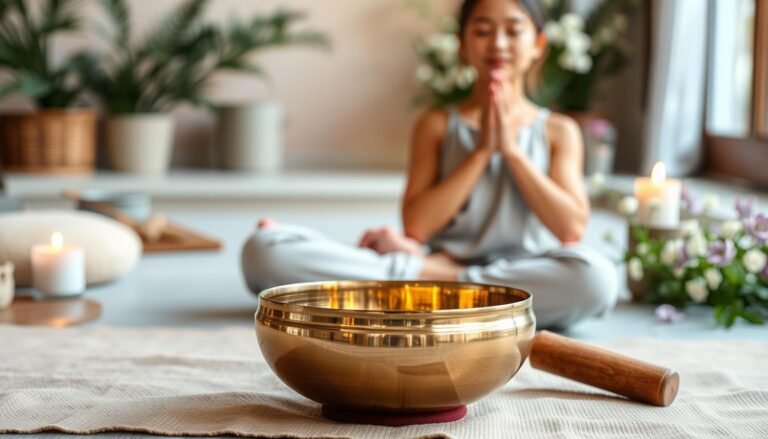
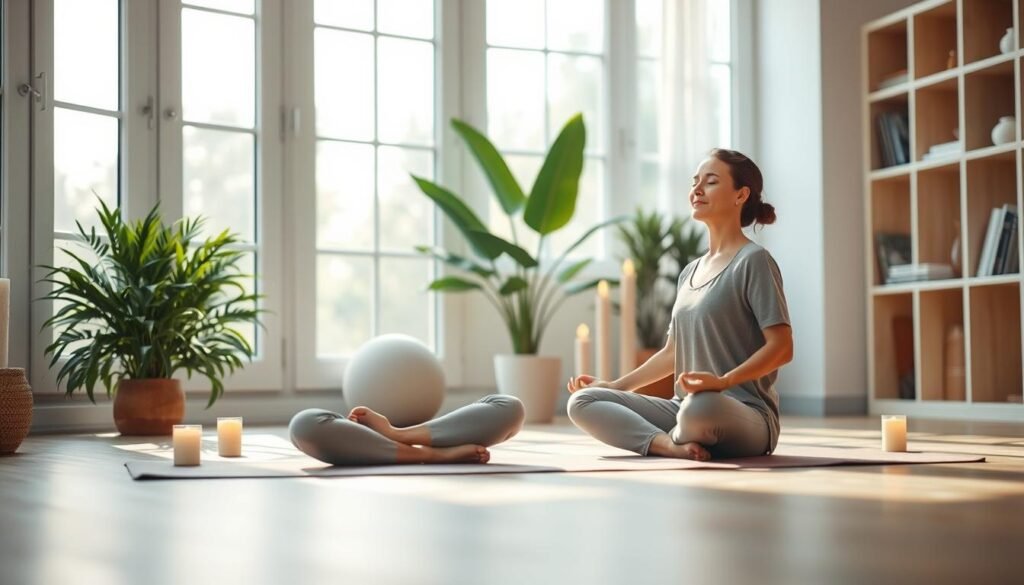
Creating a personal practice can transform your approach to wellness. Start by establishing a dedicated space at home. Look for a quiet, uncluttered area with enough room for a mat, optional cushion, folded blanket, blocks, and water.
Next, consider the different styles available. For instance, Hatha is often described as basic, while Vinyasa features fluid movements that flow from one pose to another. If you’re looking for something gentle, Restorative yoga uses supportive blocks and blankets to make poses more comfortable, especially for beginners or those with limited mobility.
As you explore, starting with a gentle yoga class or an online session can be beneficial. These resources often demonstrate essential breathing techniques, alignment, and modifications.
Lastly, always communicate with your instructor about any injuries or health concerns. This ensures a safe experience tailored to your needs. Remember, a personalized practice is a journey, and it’s essential to listen to your body as you progress.
Step-by-Step Guide to Yoga Meditation Poses and Breathing Techniques
Visualize a moment where you can truly connect with your breath and body. This connection is vital for enhancing your practice. Here are some essential poses and breathing techniques to get you started.
Essential Yoga Meditation Poses to Try
- Savasana: Lie on your back, arms and legs extended, palms facing up. Stay still for five to fifteen minutes.
- Supported Reclining Pose: Bend your knees, place the soles of your feet together, and use pillows for comfort.
- Sukhasana: Sit cross-legged, allowing your spine to lengthen, creating a sense of calm.
Effective Breathing Techniques for Mindfulness
- Abdominal Breathing: Let your belly rise as you inhale and soften as you exhale.
- Alternate-Nostril Breathing: Practice this technique before meditation to promote balance. Stop if you feel dizzy or strained.
- Mantra Meditation: Use a repeated sound or phrase to focus your mind.
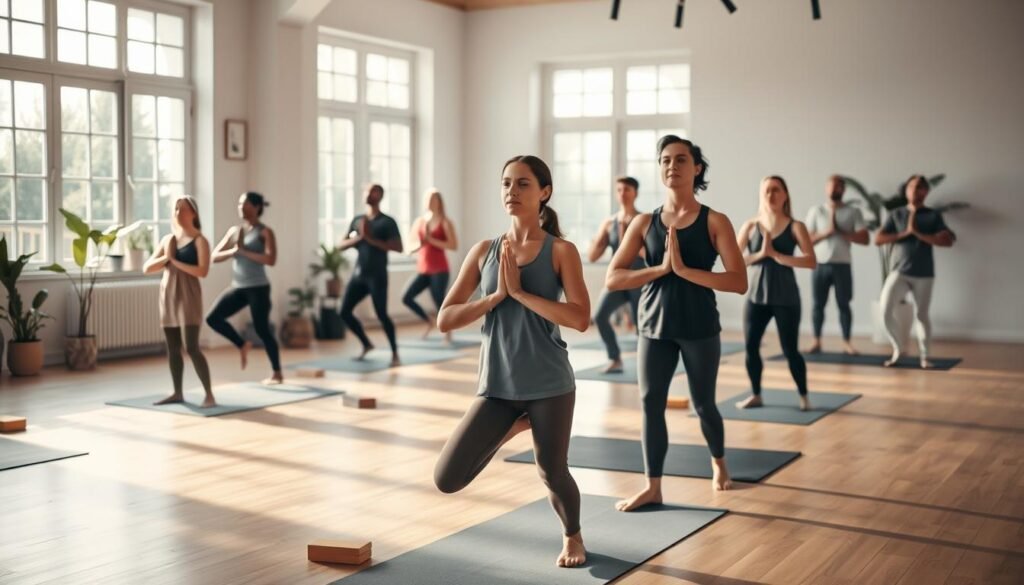
Start with five minutes of practice after a few basic poses. Gradually extend your time as you feel more comfortable. This gentle approach allows you to cultivate mindfulness without feeling overwhelmed.
Integrating Mindfulness into Your Routine
Imagine the calm that comes from integrating awareness into your daily activities. Mindfulness can transform your experience on and off the mat. Here are some tips to help you stay present.
Tips for Staying Present on and off the Mat
- Begin each session with a simple intention, such as “peace” or “strength.” This approach, recommended by a South Minneapolis heated power yoga studio, sets a positive tone.
- Use your breath as an anchor during challenging poses. Try inhaling for four counts, holding for four, and exhaling for six. This helps maintain control without forcing it.
- End your practice with Savasana or a short guided meditation. This allows your nervous system to settle after physical effort.
- Encourage beginners to practice for five or ten minutes after their asana session. This makes meditation feel less intimidating.
- Extend mindfulness into everyday activities, such as eating or walking. Notice sensory details, emotional reactions, and the urge to rush.
Using Intentions and Guided Meditations
Intentions can guide your practice. Consider using a word or phrase that resonates with you. Additionally, guided meditations can offer support, especially for beginners.
Integrating these practices into your routine can enhance your overall well-being. If you’re looking for more resources, check out for helpful tools.
| Practice | Technique | Duration | Benefits |
|---|---|---|---|
| Intention Setting | Focus on a word or phrase | 5 minutes | Guides your practice |
| Breathing | Inhale 4, Hold 4, Exhale 6 | During poses | Reduces stress |
| Mindfulness | Practice during daily activities | Ongoing | Enhances awareness |
Adapting Your Practice for Everyday Life
Consider how you can seamlessly weave mindfulness into your daily life. Adapting your routine is key to maintaining a sustainable practice. Here are some practical tools and resources to help you improve over time.
First, aim for consistency. Schedule a realistic five- or ten-minute session at the same time each day. Record your completion without judgment. This simple act builds a habit.
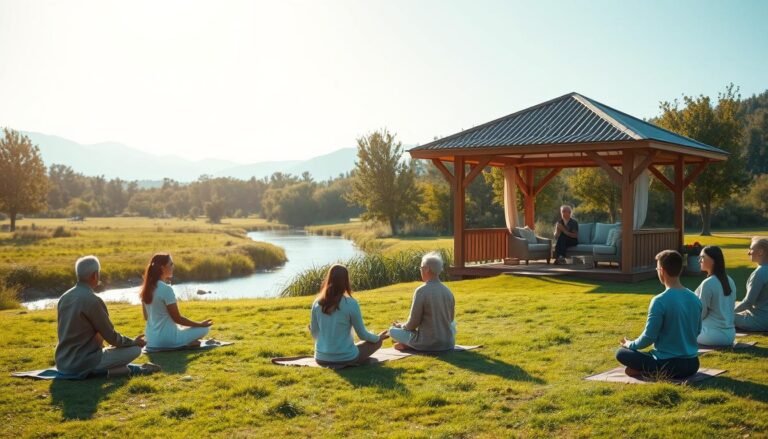
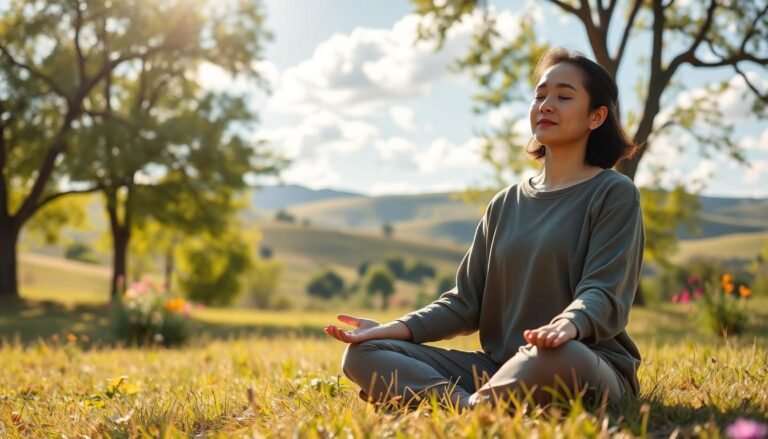
If sitting feels uncomfortable, try walking meditation. Use slow, conscious steps in a park or meadow. This method connects you with your surroundings while enhancing your practice.
For those with joint discomfort, restorative yoga can be beneficial. Utilize blocks, blankets, and pillows for support. This allows you to find comfort while maintaining balance.
Track your progress using Patel’s 2019 findings on emotional regulation. Observe how your flexibility, strength, or session length improves over time.
Lastly, remember that your journey is unique. Laird’s 2019 research links yoga meditation with resilience. Progress should be gradual and tailored to your needs.
| Practice | Technique | Duration | Benefits |
|---|---|---|---|
| Walking Meditation | Slow, conscious steps | 10 minutes | Enhances mindfulness |
| Restorative Yoga | Use of props | 15 minutes | Supports comfort |
| Progress Tracking | Daily journal | Ongoing | Measures improvement |
Conclusion
Reflect on the ways you can nurture a balanced routine that supports your overall well-being. Starting with just five minutes of Savasana can set a positive tone for your practice. Research shows that engaging in these practices can enhance mental health and mood.
Choose from various styles, such as Hatha, restorative, or Vinyasa, to find what resonates with you. If you’re new, remember that it’s normal for thoughts to wander. Gently guide your focus back without judgment.
Consistency is key. Even short sessions of five to ten minutes can be effective. Always consult a healthcare provider if you have any concerns about poses or breathing techniques.
FAQ
What are the benefits of practicing yoga and meditation?
Engaging in these practices can enhance your mental clarity, reduce stress, and improve overall well-being. They help create a sense of balance between the body and mind, promoting relaxation and mindfulness.
How often should I practice yoga and meditation?
It’s beneficial to practice regularly, even if it’s just a few minutes each day. Aim for at least 20-30 minutes a few times a week to experience significant improvements in your mental and physical health.
What is the best time of day to practice?
The ideal time varies for each person. Some prefer morning sessions to set a positive tone for the day, while others find evening practices help them unwind and reflect. Choose a time that fits your schedule and feels right for you.
Do I need any special equipment for yoga and meditation?
While a yoga mat can provide comfort and stability, you can practice without any special equipment. Comfortable clothing and a quiet space are often all you need to begin.
Can beginners join a yoga and meditation class?
Absolutely! Many classes cater to beginners, offering supportive environments to learn foundational poses and techniques. Don’t hesitate to ask instructors for guidance as you start your journey.
How can I stay motivated to maintain my practice?
Setting realistic goals, tracking your progress, and finding a community can keep you motivated. Remember to celebrate small victories and allow yourself to enjoy the process.
What if I can’t do certain poses?
It’s perfectly okay! Everyone’s body is different. Focus on what feels good for you, and consider using modifications or props to assist you. Listen to your body and practice at your own pace.