

Kundalini Meditation: What It Is and How Beginners Can Approach It
Are you curious about how to enhance your life through a unique practice? Kundalini meditation offers a gentle yet powerful way to explore your inner self. This method combines posture, breathing techniques, and focused awareness, making it accessible even for beginners.
Unlike traditional practices that may require an empty mind, this approach encourages you to observe your thoughts. It’s about finding an anchor and returning to it, rather than seeking instant enlightenment. Yogi Bhajan introduced many specific techniques designed to help with stress relief, focus, and emotional resilience.
As you begin your journey, choose a calm space where you can sit comfortably. Start with just a few minutes of practice and gradually build your consistency. By doing so, you may find that a steadier mind helps you respond to daily challenges with greater awareness and care.
Key Takeaways
- Kundalini meditation combines posture, breathing, and focus.
- It encourages observing thoughts instead of emptying the mind.
- Start with a calm space and practice for a few minutes.
- Gradually build consistency in your practice.
- A steadier mind can improve your response to everyday challenges.
Introduction to Kundalini Meditation
What if you could tap into a powerful method to understand your thoughts better? This practice invites you to observe the mind, which can generate thousands of thoughts each second. Rather than forcing silence, your first goal is to notice these thoughts without judgment.
Mental cleansing involves recognizing feelings like anger or fear and allowing them to pass. This approach helps you avoid turning every thought into a problem. A mantra can provide a rhythm, serving as an anchor when your focus drifts.
The Adi Mantra, “Ong Namo Guru Dev Namo,” is traditionally chanted three times to tune in. This practice is about connection, not memorization. Remember, Kundalini Yoga meditation is a practical self-awareness exercise. It can complement professional support for serious mental health concerns.
- Observe thoughts instead of forcing silence.
- Recognize and let go of emotions without dwelling on them.
- Use a mantra to regain focus when your mind wanders.
- Chant “Ong Namo Guru Dev Namo” to tune in.
- View this practice as a tool for self-awareness.
The Science and Philosophy Behind Kundalini Meditation
Imagine a practice that harmonizes your body and mind for greater clarity. The philosophy behind this technique suggests that the mind serves the soul. By training your attention through rhythmic sound and breath, you can enhance your focus and awareness.
Studies show that rhythmic breathing influences brain hemispheres and emotional regulation. This connection can also affect the vagus nerve, which plays a role in stress responses. Each session in Kundalini Yoga has a defined purpose, utilizing specific techniques like mantras and postures.
Timing is essential in this practice. Different lengths of meditation—such as three, eleven, or thirty-one minutes—are believed to produce various effects on the body and mind. These durations serve as guidelines to structure your practice, rather than tests of spiritual ability.
| Duration | Effect | Purpose |
|---|---|---|
| 3 minutes | Initial calming | Focus on breath |
| 11 minutes | Emotional balance | Enhance awareness |
| 31 minutes | Cellular rejuvenation | Deep mental rhythms |
Creating a Sacred Meditation Space
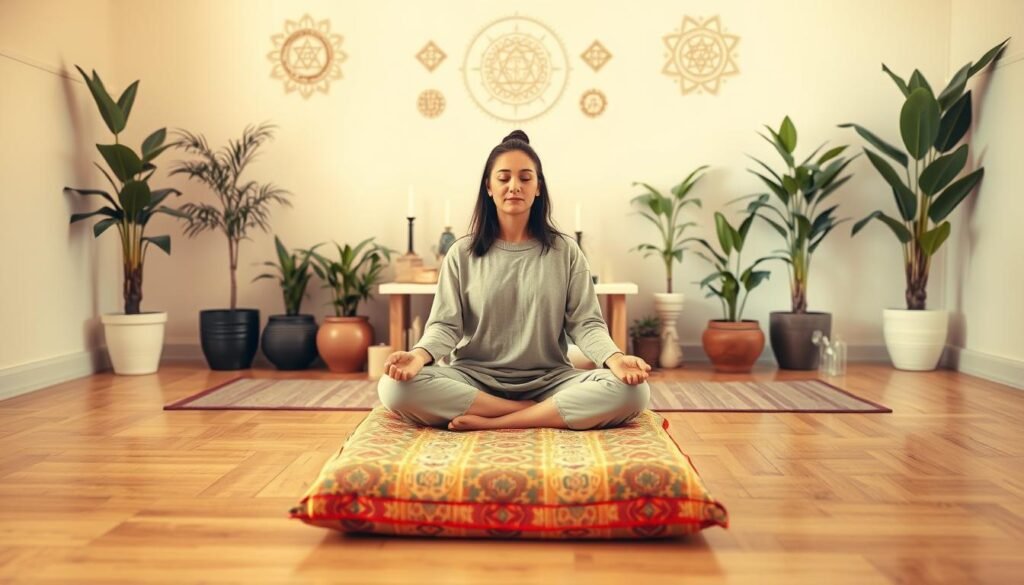
A serene meditation area can serve as a sanctuary for your inner exploration. By establishing a dedicated space, you create an environment that encourages focus and calmness.
Start by selecting a consistent corner in your home. Use a cushion or a natural-fiber mat for grounding. Practitioners often choose sheepskin for added comfort. Wearing loose, comfortable clothing can help reduce distractions during your practice.
Before you begin, take a moment to minimize interruptions. Turn off notifications, dim harsh lights, and clear away clutter. Remember, a simple setup can be just as effective as a decorated altar. A quiet chair or a clean floor can support your practice beautifully.
Consider a short preparation ritual. Washing your hands, dimming the lights, and taking three slow breaths can signal that it’s time to focus. This simple act can enhance your awareness and readiness for the practice ahead.
Fundamental Techniques and Postures for Practice
Could the right alignment and breathing transform your practice? Understanding the basic techniques can enhance your experience and deepen your energy flow. Let’s explore how to position your body and use your breath effectively.
Correct Posture and Spine Alignment
Begin in Easy Pose or sit comfortably on a chair. Keep your spine straight but relaxed. Your chin should be level, and your shoulders should drop away from your ears. This position allows your body to breathe naturally.
Breathing Exercises for Energy Flow
Start with a three-minute cat-cow warm-up. This exercise prepares and lubricates your spine. If you feel any pain, stop immediately. Next, practice the six-minute left-nostril breathing technique from Yogi Bhajan. Close your right nostril with your thumb while breathing smoothly through the left. Keep your other hand resting comfortably.
Always listen to your body. If you experience dizziness, chest pain, or unusual discomfort, stop the exercise. It’s essential to consult a healthcare professional if you have any health concerns.
| Technique | Duration | Focus |
|---|---|---|
| Cat-Cow Warm-Up | 3 minutes | Spine Mobilization |
| Left-Nostril Breathing | 6 minutes | Energy Flow |
| Easy Pose | As long as comfortable | Mindfulness |
Guided Practices and Mantra Work
Exploring the use of sound in meditation can unlock new dimensions of your practice. Mantras serve as powerful tools for focus and rhythm, helping you connect deeply with your inner self. One of the most effective techniques is the Kirtan Kriya, which uses the sounds Sa, Ta, Na, and Ma while engaging in fingertip movements.
This practice follows a traditional voice progression: starting with a normal voice, then whispering, moving to silent repetition, whispering again, and returning to a normal voice. This gradual shift helps deepen your inner focus.
The sounds carry symbolic meanings: Sa represents infinity, Ta symbolizes life, Na signifies transformation, and Ma embodies rebirth. This cycle reflects the journey of consciousness.
For more guidance, consider visiting 3HO’s Kirtan Kriya instructions and Kundalini Research Institute meditation guidance. These resources can enhance your understanding and provide teacher-led context.
If you find it challenging to remember timing, pronunciation, or hand movements, using a reputable guided audio session can be beneficial.
Step-by-Step Beginner’s Approach to Meditation
Imagine beginning your journey with simple, focused sessions that build over time. Starting with short practices can make a significant difference in your experience. A manageable approach allows you to ease into your routine without feeling overwhelmed.
Starting with Short, Focused Sessions
Begin with a three-minute session. This short time frame is traditionally linked to circulation and energy flow. Focus on your breath and choose one mantra to anchor your thoughts. This first milestone is achievable and sets a positive tone for your practice.
Building Consistency and Patience
After a few comfortable sessions, consider extending your practice to eleven minutes. This duration is associated with shifts in glandular balance and nervous-system activity. Remember, longer sessions don’t always equate to better experiences. Aim for twenty-two minutes only when you feel ready.
Create a simple sequence for your practice: prepare your space, sit with a straight spine, tune in, choose your anchor, notice your thoughts, and gently close your session. Commit to practicing for forty days to help establish a habit. Allow for modifications if needed, especially if you face pain or other concerns.
For more guidance, check out that can support your journey.
Integrating Meditation as a Daily Sadhana
Consider how integrating a mindful practice into your day could transform your life. Sadhana, or disciplined daily practice, can enhance your awareness and bring balance to your routine. The early morning, known as Amrit Vela, is often seen as a sacred time for this practice, as the mind may feel quieter.
To make meditation a part of your life, choose a reliable cue. This could be waking up, brushing your teeth, or finishing your morning coffee. By linking your practice to a daily habit, it becomes easier to remember.
Traditional frameworks suggest that:
| Duration | Purpose | Outcome |
|---|---|---|
| 90 days | Confirming a new pattern | Establishing a habit |
| 120 days | Embodying the practice | Deepening understanding |
| 1000 days | Mastery | Achieving enlightenment |
Tracking your sessions on a calendar can help you stay accountable. If you miss a day, return to your practice without self-criticism. Remember, patience is key to building a durable routine. While advanced practitioners may aim for two and a half hours, beginners can benefit from just a few consistent minutes.
Troubleshooting Common Meditation Challenges
Have you ever faced challenges while trying to focus during your practice? It’s common for distractions to arise, especially in the early moments of meditation. You might notice anger, old fears, or random thoughts surfacing. Remember, this does not mean your session is failing.
When your mind wanders, gently label the experience and return to your chosen focus point, such as your breath or a mantra. Avoid spending extra energy judging your thoughts. If stress makes it hard to stay still, consider shortening your session or slightly opening your eyes. You can also use slow breathing to regain calm before attempting focused meditation again.
Another helpful tip is to write down any persistent concerns after your practice. This gives your mind a practical place to store reminders, allowing you to release them during meditation. Each time you return to your point of focus, you strengthen your ability to concentrate. Persistence is far more valuable than seeking a perfectly quiet mind.
| Challenge | Solution | Outcome |
|---|---|---|
| Wandering Thoughts | Return to mantra or breath | Improved focus |
| Stress and Discomfort | Shorten session or adjust posture | Enhanced relaxation |
| Persistent Concerns | Write them down post-practice | Clearer mind |
Essential kundalini meditation Techniques for Beginners
Imagine unlocking the potential of your practice with easy techniques designed for newcomers. Starting with the right approach can make all the difference in your experience.
Here are some practical tips to ensure a safe and effective home practice:
- Begin with Kirtan Kriya, a simple yet powerful practice. It helps you focus without overwhelming you.
- Explore Sobagh Kriya, which consists of five parts. Each part can be practiced for three or eleven minutes, making it accessible.
- Only Sobagh Kriya Meditation #1 is suitable to practice alone. The other parts work best together.
- For advanced breathing techniques in Sobagh Kriya Meditation #5, start with 20 seconds of inhaling, holding, and exhaling. Shorter options are available if needed.
- Seek guidance from resources like 3HO or KRI for practices that involve complex movements or unfamiliar mantras.
- If you experience pain or discomfort, stop immediately and consult a healthcare professional.

Conclusion
Consider how dedicating just a few minutes each day can shift your perspective and enhance your well-being. Kundalini meditation offers a structured way to engage with your body, breath, and thoughts without the pressure to eliminate every distraction. Begin with three comfortable minutes, focusing on your spine and creating a calm space.
Traditional milestones like eleven minutes and forty days can guide your journey, but remember that your safety and progress are paramount. Use reputable resources for techniques like Kirtan Kriya and Sobagh Kriya to ensure you practice safely.
With patience and consistency, this practice can become a vital part of your daily routine, helping you respond to stress with clarity and intention.
FAQ
What is the purpose of kundalini meditation?
The purpose of this practice is to awaken the dormant energy within you, promoting self-awareness, spiritual growth, and a deeper connection to your consciousness.
How long should I meditate each day as a beginner?
Starting with just 10-15 minutes a day is ideal. As you become more comfortable, you can gradually increase your meditation time.
What are some common challenges faced during meditation?
Many people struggle with distractions, wandering thoughts, and finding the right posture. Acknowledging these challenges is the first step to overcoming them.
Can I practice kundalini meditation at home?
Absolutely! Creating a dedicated space at home can enhance your practice, allowing you to focus and connect with your energy flow.
What role do breathing exercises play in this practice?
Breathing exercises are essential for energy flow, helping to calm the mind and prepare the body for deeper meditation experiences.
How can I use mantras effectively?
Mantras help anchor your focus during meditation. Repeating a mantra can create a rhythm that guides your thoughts and enhances your practice.
Is it necessary to follow a specific technique?
While specific techniques can be beneficial, it’s essential to find what resonates with you. Experiment with different practices to discover what feels right.
How can I maintain consistency in my practice?
Setting a regular schedule and creating a supportive environment can help you build a consistent meditation routine.