Forest Meditation: How to Practice Mindfulness in Nature
When you arrive at Nolde Forest Environmental Education Center, you might notice something interesting. Many participants, as noted by Robert Sarnoski, a certified Forest Therapy Guide, often come 10 to 15 minutes early. Yet, they remain distracted by their phones and casual chatter. This is where the practice of forest meditation comes into play.
Unlike a standard hike, this practice invites you to pause, breathe, and engage your senses. It encourages you to truly notice the beauty around you rather than rush through it. You don’t need special equipment or to travel deep into the woods. Instead, you can start in a quiet place nearby, dedicating just a few minutes to focus.
Throughout this article, you’ll discover how to prepare for your time outdoors, practice breath awareness, and integrate these moments into your daily life. The goal is not just to be in nature, but to arrive inwardly, finding peace and connection.
Key Takeaways
- Participants often arrive distracted, highlighting the need for mindfulness.
- Forest meditation focuses on stillness and sensory engagement.
- You can practice this technique in a quiet place near you.
- It requires no special equipment—just your attention.
- The goal is to cultivate inner peace, not just to be outdoors.
Understanding forest meditation and Its Benefits
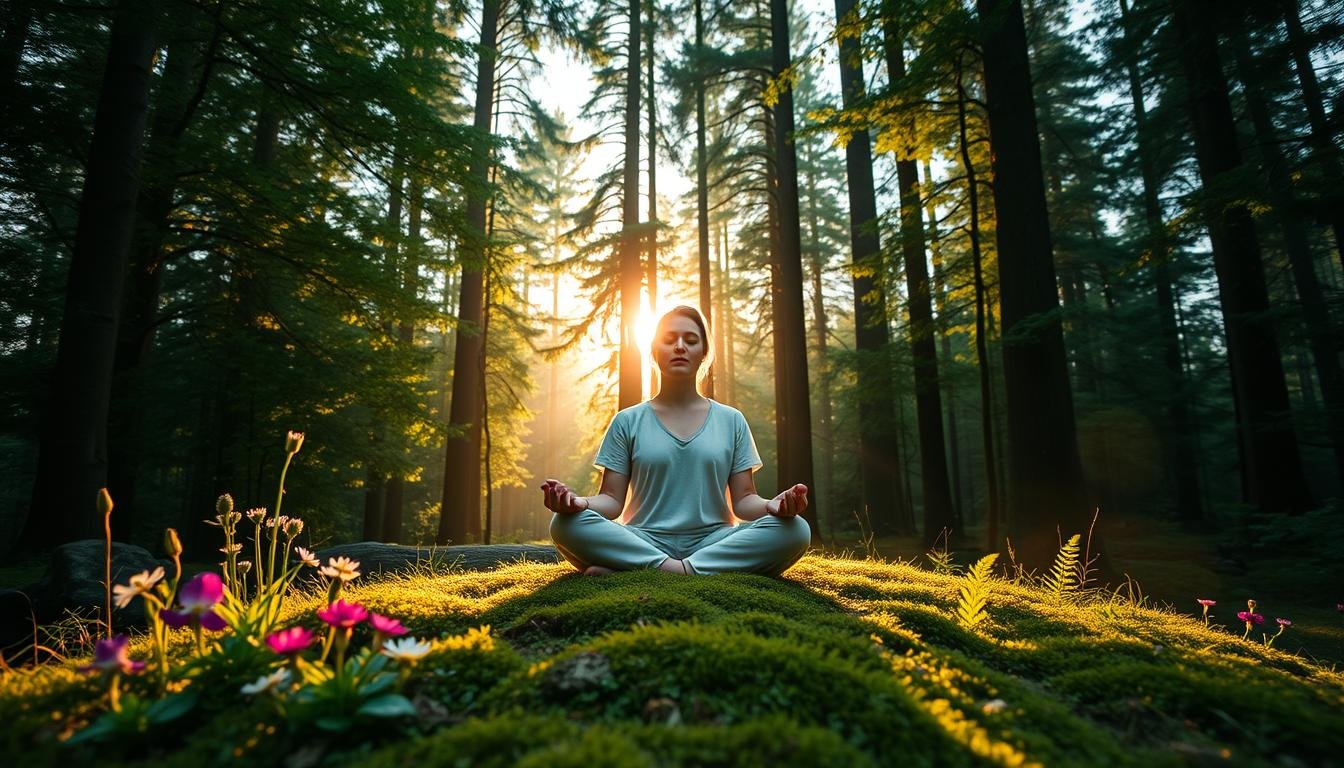
Stepping into the embrace of nature offers a unique opportunity for mindfulness. Forest meditation is a sensory-focused practice that uses the elements around you—trees, sounds, textures, and scents—as anchors for your attention. This approach allows you to fully engage with your surroundings and experience the moment.
There are two main ways to engage with nature: casual Forest Bathing and structured Forest Therapy. The Japanese term *shinrin-yoku* means bathing in the forest atmosphere, which emphasizes a relaxed, self-guided experience. In contrast, certified guides like Robert Sarnoski lead more structured sessions, following the principle that “the forest is the therapist, and I am only the guide.”
By slowing down, you create space to notice stress, bodily sensations, and emotional responses without judgment. This practice can lead to relaxation, clearer attention, and a deeper connection with nature. If you’re looking for more ways to enhance your outdoor experience, check out BetterLifeAtlas’s “8 Mindful Activities to Try When You Go Camping.”
Preparing to Connect with Nature
To fully embrace the experience outdoors, it’s essential to create a mindful environment. Start by choosing a safe spot like a garden, park, or even your backyard. Ensure this area allows you to sit or lie down comfortably without blocking paths or encountering hazards.
Emily Ruth, a yoga instructor from Morzine, suggests using a chair, cushion, or blanket to support your position. This way, you can find a comfortable stance that allows your body to relax. Remember to silence your phone and minimize distractions, giving yourself a few quiet moments to shift your focus away from daily concerns.
As you begin to walk, keep your eyes softly open. This will help you engage with your surroundings. If you feel comfortable, consider walking barefoot on clean, safe ground. If outdoor conditions aren’t ideal, you can still practice Ruth’s visualization techniques at home. This flexibility ensures you can connect with nature, no matter the circumstances.

| Preparation Tips | Details | Benefits |
|---|---|---|
| Choose a Safe Spot | Find a garden, park, or backyard. | Ensures comfort and safety. |
| Support Your Position | Use cushions or blankets. | Enhances relaxation. |
| Minimize Distractions | Silence your phone and reduce belongings. | Improves focus and mindfulness. |
| Engage Your Senses | Walk with eyes softly open. | Deepens connection with nature. |
| Practice at Home | Use visualization techniques. | Allows for consistent practice. |
Mastering Breathing Techniques and Body Scans
The connection between breath and awareness can transform your outdoor experience. Thích Nhất Hạnh reminds us in *How to Sit*, “Everyone is breathing, but not everyone is aware that they’re breathing.” This awareness can turn your automatic breath into a steady anchor for meditation.
Forest Breathing Exercise for Relaxation
Start with an adapted 2:1 breathing pattern. Inhale gently through your nose for one second, then take a second short inhale. After a brief pause, exhale through your mouth for about six seconds. Repeat this for 5 to 10 cycles. If you prefer a balanced approach, try inhaling for five seconds, pausing for one second, then exhaling for five seconds. Continue this for 3 to 5 minutes, always ensuring you’re comfortable.
Body Scan for Embodied Presence
Begin your body scan by focusing on your feet. Notice how they connect with the ground. Gradually move your attention upward through your body, observing any tension or warmth. Relax each part as you go. You can practice this while seated or lying down. If you’re in a safe spot, consider doing this on a log or among pine needles.
Always listen to your body. If you feel discomfort, dizziness, or pain, change your position or stop. This practice enhances your connection to the moment, helping you to feel more grounded.
Engaging Your Senses with Sound and Movement
Engaging with nature’s elements invites a deeper awareness of your surroundings. One of the best ways to do this is by tuning into the sounds around you. Begin by listening to nearby noises, like rustling leaves or the soft chirping of birds. Gradually expand your focus to include distant sounds, such as flowing water or your own breath.
Consider using Melanie Charles’s 8-minute guided forest meditation as a framework. This meditation highlights elements like a cabin fire, birdsong, and sunlight filtering through the trees. Such visualizations can enhance your experience and create a peaceful mental space.
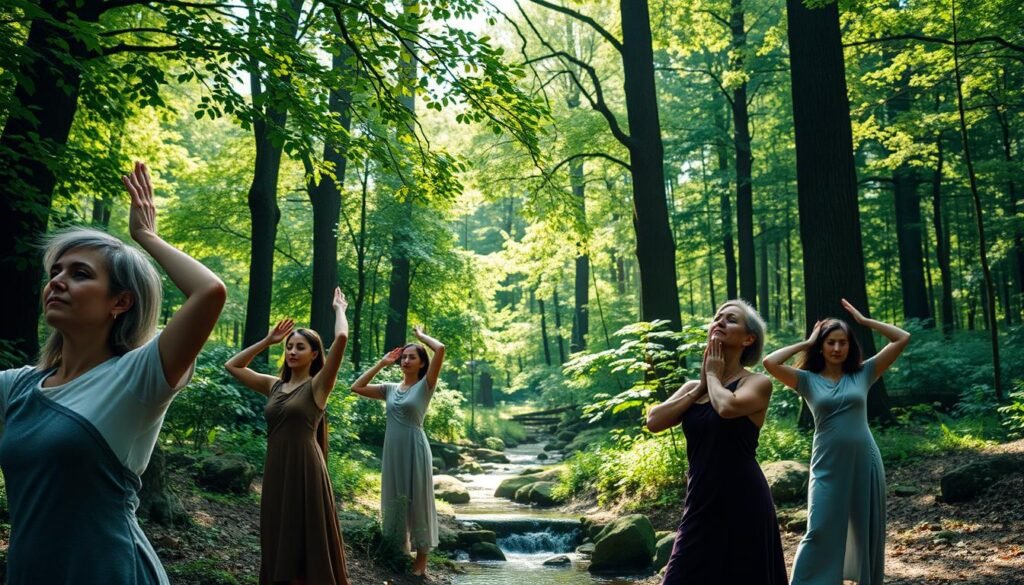
Movement also plays a crucial role. Stand with your feet shoulder-width apart, arms relaxed, and let your body sway gently like the trees. This simple act can help you feel more connected to the earth. You can also try walking slowly, paying attention to the textures beneath your feet—like bark or soft grass—and the scents in the air.
Experiment with Robert Sarnoski’s breathing technique: take five steps while inhaling and five steps while exhaling. Adjust the rhythm as needed to ensure comfort. Allow yourself to pause when something catches your attention—a sound, a breeze, or a warm patch of sunlight.
| Practice Element | Description | Benefits |
|---|---|---|
| Sound Awareness | Listen to nature’s sounds, starting with nearby noises. | Enhances focus and relaxation. |
| Guided Meditation | Follow Melanie Charles’s visualization. | Deepens connection and peace. |
| Gentle Movement | Sway like trees while standing. | Promotes physical awareness and grounding. |
| Slow Walking | Walk slowly, noticing textures and scents. | Increases sensory engagement. |
| Breathing Rhythm | Five steps per inhale and exhale. | Improves breath awareness and calmness. |
Integrating Mindfulness into Your Daily Life
Bringing the essence of nature into your everyday routine can enhance your overall well-being. It’s about finding small moments throughout your day to reconnect with your senses. Robert Sarnoski designed his exercises to be adaptable, whether you’re at home, in a park, or even at work.
Start your morning with a simple routine. Combine a few minutes of breathing, a body scan, and outdoor listening. You can even take a slow walk to ground yourself before diving into the day’s tasks.
At work, take a moment beside a window or step outside. Notice one sound, one physical sensation, and the rhythm of your breath. This practice can help reduce stress and refocus your energy.
If you can’t reach a quiet spot, use Emily Ruth’s visualization technique at home. Imagine the scent of pine, the texture of tree bark, and the warmth of sunlight filtering through leaves.
When running errands, slow your pace. Notice the air and breeze around you. Taking a moment to pause before entering busy places can bring clarity and peace.
For those seeking guided experiences, consider local programs through The Forest Guide School or join Sarnoski’s monthly Mindful Walking Meet-up. These opportunities can deepen your connection to nature.
Finding tranquility in nature can start with just a few mindful moments. Forest meditation begins by settling into a comfortable position, focusing on your breath, and listening to the sounds around you. You don’t need to embark on a long hike; simply pause and embrace stillness before you begin to walk.
Adapt the practice to suit your body and surroundings. Pay attention to how the air feels and allow your senses to guide you. Consider incorporating a simple daily habit, like spending three minutes breathing beside trees or taking a slow walk through a nearby park.
As you return to your day, take a moment to notice one sound, one physical sensation, and one moment of peace. This small act can foster a deeper connection to the world around you.
FAQs
- What is the difference between Forest Bathing and Forest Therapy?
- How long should beginners practice?
- Is walking meditation safe?
- Can I visualize at home?
- How do I find certified guides?
FAQ
What is forest meditation?
Forest meditation is a practice that involves immersing yourself in nature to cultivate mindfulness and relaxation. It encourages you to connect with the natural environment, focusing on your breath and the sensations around you.
How can I benefit from practicing mindfulness in nature?
Engaging in mindfulness outdoors can reduce stress, enhance your mood, and improve overall well-being. The combination of fresh air, natural sounds, and physical movement helps create a sense of peace and connection to the earth.
What should I do to prepare for a forest meditation session?
To prepare, find a quiet outdoor space where you feel comfortable. Wear appropriate clothing and shoes, and bring any items that help you relax, such as a blanket or journal. Allow yourself time to adjust to the environment.
What breathing techniques should I use during forest meditation?
Focus on deep, rhythmic breathing. Inhale slowly through your nose, allowing your belly to expand, then exhale gently through your mouth. This technique helps ground you and enhances relaxation.
How can I engage my senses while meditating outdoors?
Pay attention to the sounds of nature, such as rustling leaves or birds singing. Feel the textures of the ground beneath your feet and the breeze on your skin. Engaging your senses deepens your connection to the moment.
How can I integrate what I learn from forest meditation into my daily life?
After your outdoor experience, take a few moments to reflect on your feelings and insights. Incorporate mindfulness practices, such as deep breathing or taking short breaks to connect with nature, into your daily routine.