
Mindful Meditation: Simple Techniques for Greater Present-Moment Awareness
In today’s fast-paced world, finding moments of peace can feel challenging. Mindful meditation offers a practical way to reconnect with the present moment. It encourages you to notice your breath, body, thoughts, and emotions without judgment. This approach is not about achieving perfect calm but rather about being aware of what is happening right now.
Jon Kabat-Zinn, a pioneer in this field, describes mindfulness as purposeful and nonjudgmental awareness. It’s a skill you can develop over time, even in just a few minutes each day. The free Mindful app provides guided sessions lasting only 3-10 minutes, making it easy for busy people to incorporate this practice into their lives.
By focusing on your breath and gently redirecting your attention when it wanders, you can cultivate greater awareness. Simple techniques can be integrated into daily routines, allowing you to respond with compassion to your thoughts. Why not try a quick 3-minute guided practice today? It might just fit perfectly into your schedule.
Key Takeaways
- Mindful meditation helps you stay aware of your breath and emotions.
- Awareness is purposeful and nonjudgmental, as described by Jon Kabat-Zinn.
- The Mindful app offers quick sessions for busy beginners.
- Simple techniques can be practiced in daily life.
- Start with a brief guided practice to see if it suits you.
Understanding Mindful Meditation
In our busy lives, seeking calmness often feels like an uphill battle. Mindfulness is the natural ability to be fully present, observing our thoughts, emotions, and sensations without becoming overwhelmed. This practice invites you to engage with your experiences with curiosity and kindness.
Jon Kabat-Zinn, the creator of the Mindfulness-Based Stress Reduction program, emphasizes that this approach is about purposeful attention. It’s not about emptying your mind or achieving a constant state of calm. Instead, it’s about noticing the present moment as it is.
Research shows that regular mindfulness practice can actually change the brain’s structure, enhancing your ability to respond to life’s challenges. By repeatedly focusing your attention, you strengthen neural connections, fostering greater resilience.
Key Insights
- Mindfulness is an everyday ability, distinct from structured meditation.
- It involves observing sensations and emotions with nonjudgmental awareness.
- Regular practice can lead to meaningful changes in brain structure.
- Mindfulness is not a religious practice or a quick fix for problems.
- Creating space between experiences and reactions enhances self-understanding.
| Aspect | Mindfulness | Meditation |
|---|---|---|
| Definition | Everyday awareness | Structured practice |
| Goal | Present moment awareness | Exploration of thoughts and sensations |
| Approach | Nonjudgmental observation | Focused attention |
| Outcome | Enhanced resilience | Calmness and clarity |
Benefits of Mindful Meditation Practice
Amid the chaos of daily life, many people yearn for a way to enhance their well-being. Regular mindfulness practice offers numerous advantages that can transform your approach to stress and emotions.
Research by Amishi Jha in *Peak Mind* shows that just 12 minutes of meditation five days a week can protect and strengthen your attention. This small commitment can lead to significant improvements in focus and emotional regulation.
Here are some key benefits of incorporating mindfulness into your routine:
- Reduce stress: Mindfulness helps manage daily pressures, leading to a calmer mindset.
- Enhance focus: Improved attention can boost productivity and creativity.
- Emotional regulation: It fosters a steadier response to life’s ups and downs.
- Reshape pain perception: Observing discomfort without immediate reaction can change your relationship with pain.
- Support mental health: Mindfulness may alleviate anxiety and depression while promoting positive emotions.
To measure your progress, notice practical signs like listening more attentively or recovering faster from frustration. You can explore more about to deepen your understanding.
Starting Your Mindfulness Journey
Starting a new practice can feel overwhelming, but small steps can lead to meaningful change. You can begin with just five or ten minutes of focused attention. This makes it manageable and less stressful.
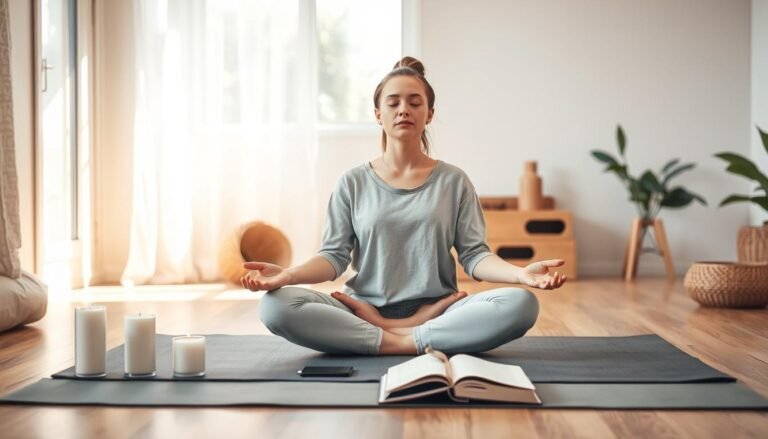
Choose a quiet, uncluttered space with natural light. You don’t need special cushions or equipment to start. Just find a comfortable spot where you feel at ease.
As you settle in, maintain a stable seated posture. Ground your feet, keep your spine naturally curved, and relax your shoulders. Your hands can rest comfortably on your knees or in your lap.
Consider keeping your eyes open with a soft downward gaze or gently closing them if that feels better. Using a timer can help you track your progress, gradually increasing your practice time to 45 minutes or an hour.
Remember, as Sharon Salzberg says, the most important moment is when you sit down. This act of self-care is a powerful step toward change.

- Start with five or ten minutes for a manageable routine.
- Find a quiet space with natural light.
- Maintain a stable seated posture with relaxed shoulders.
- Use a timer to gradually increase your practice time.
- Recognize sitting down as a meaningful act of self-care.
For more tips on building habits, check out our article on habit-building.
How to Practice Mindful Meditation
Finding peace in the midst of life’s demands can be a rewarding journey. By focusing on your breath, you can cultivate a sense of calm and awareness. The breath serves as a powerful anchor, helping you connect with the present moment.
Here’s a simple sequence to get you started:
- Begin by taking a stable seat. Place both feet on the floor or cross your legs comfortably, allowing your spine’s natural curves.
- Choose one breathing sensation, such as air moving through your nose, the rise of your chest, or the expansion of your belly.
- Notice your thoughts, sounds, emotions, and physical sensations without trying to block, change, or criticize them.
- When your attention wanders, gently label the distraction and return to your next breath as many times as needed.
- Pause briefly before adjusting your posture or scratching an itch. This creates space between a sensation and your automatic response.
- End your practice by lifting your gaze, noticing sounds, checking how your body feels, and observing your thoughts before continuing with your day.
- If silent practice feels challenging, consider using a guided audio session available in the Mindful app to help you stay focused.
By integrating these steps into your routine, you can enhance your mindfulness practice. Remember, it’s about gentle awareness, allowing you to navigate life’s moments with greater ease.
Everyday Mindfulness: Integrating Practice into Daily Routines
Incorporating mindfulness into your daily life can transform ordinary moments into opportunities for awareness. You don’t need to set aside large blocks of time. Instead, look for brief moments throughout your day to practice. This can be as simple as pausing to breathe before responding to a phone call.
Here are some actionable tips to integrate mindfulness into your routine:
- Pause before picking up the phone: Take a moment to notice your body and breath. This helps you respond thoughtfully instead of reacting automatically.
- Mindful eating: Focus on the texture, temperature, and flavor of your food. Notice your thoughts as you chew, creating a deeper connection with your meal.
- Walking with awareness: Pay attention to your footfalls, breathing, and the sounds around you. This practice helps ground you in the present moment.
- Mindful movement: Engage in simple yoga or stretching, synchronizing your breath with your movements for a few focused minutes.
- During conversations: Observe the urge to interrupt. Instead, return your attention to the speaker’s words and emotions.
- Attach a mindful pause: Link a moment of mindfulness to an existing routine, like brushing your teeth or making coffee.
These small adjustments can significantly enhance your overall awareness and help reduce stress. By consciously choosing to practice mindfulness, you create space for a more intentional life.
Guided Meditations and Helpful Apps for Beginners
Many people are looking for effective tools to support their journey toward greater awareness. The UCLA Mindful App is a fantastic resource, featuring guided sessions recorded by Diana Winston, the director of UCLA Mindful. This app offers a variety of options to suit your needs.
Beginners can start with a 3-minute Short Body Scan or a 5-minute Breathing Meditation. If you’re ready for a longer experience, try the 12-minute Breath, Sound, Body Meditation or the 19-minute Complete Meditation Instructions. These sessions are designed to fit into your busy life.
The app also provides content in multiple languages, including Spanish, French, and Mandarin, making it accessible to a wide audience. All meditations are licensed under a Creative Commons Attribution-NonCommercial-NoDerivatives 4.0 International License, ensuring that you can use them freely.
To explore this app further, visit the official UCLA Mindful App on iTunes or check it out on Google Play. With these resources, you can begin your journey toward greater awareness today!

Research and Evidence on Meditation Benefits
As you explore the world of awareness, understanding the science behind it can enhance your practice. Research into mindfulness shows promising results, especially regarding brain function and stress reduction. Jon Kabat-Zinn developed the Mindfulness-Based Stress Reduction program, which has been widely studied for its effectiveness.
Neuroscience research investigates how repeated attention training strengthens neural pathways linked to concentration and flexibility. A notable finding from Amishi Jha’s research in Peak Mind indicates that just 12 minutes of practice five days a week can protect and enhance your attention.
Additionally, Mindfulness-Based Cognitive Therapy combines mindfulness skills with cognitive techniques, providing another structured approach to mental well-being. While evidence supports the benefits of these practices, it’s important to note that they do not replace professional treatment for issues like depression or anxiety.
Consistency in practice can lead to brain remodeling, but individual experiences may vary. Here’s a summary of key insights:
| Aspect | Mindfulness-Based Stress Reduction | Mindfulness-Based Cognitive Therapy |
|---|---|---|
| Developed by | Jon Kabat-Zinn | Combines mindfulness with cognitive techniques |
| Focus | Stress reduction and awareness | Addressing negative thought patterns |
| Research backing | Extensive studies supporting benefits | Growing evidence of effectiveness |
Overcoming Common Meditation Challenges
Experiencing challenges during your practice is a common part of the journey. Many people find that their minds wander when they attempt to focus. This is completely normal, and it’s essential to recognize that noticing distractions is itself a part of the practice.
When you notice your thoughts drifting, gently label them as “thinking,” “planning,” or “feeling.” This simple act can help you return your attention to your breath or chosen anchor. It’s also important to remember that difficult emotions, physical pain, or restlessness can be observed without the need to push them away.
If you feel overwhelmed, consider shortening your session to just three or five minutes. This can make it easier to maintain focus, especially during stressful times. You might also find it helpful to keep your eyes softly open if closing them leads to discomfort or drowsiness.
For additional support, check out the UCLA Mindful app’s Meditation for Working with Difficulties and Body Scan for Sleep sessions. These resources can enhance your practice when you need extra guidance. Remember, mindfulness is not a cure-all but a valuable tool to complement professional support for issues like depression or severe distress.
Conclusion
Every day presents a chance to pause and reflect on your inner world. Remember, the essence of this practice lies in gently returning your focus after distractions. You don’t need a perfectly quiet mind or flawless posture to benefit from this journey.
Start with just five minutes, and feel free to use a guided session if that helps you stay on track. With consistency, you may notice improvements in focus, emotional balance, and stress reduction. The research supports that even brief sessions can yield significant benefits for your brain and overall health.
As you embark on this journey, embrace the moments you create for yourself. Each practice can lead to greater self-understanding and connection with the world around you.
FAQ
What is mindfulness meditation?
Mindfulness meditation is a practice that involves focusing your attention on the present moment, acknowledging your thoughts and feelings without judgment. It helps cultivate awareness and reduces stress.
How can I start practicing mindfulness meditation?
You can begin by setting aside a few minutes each day to sit quietly, focus on your breath, and gently bring your attention back whenever your mind wanders. Consistency is key.
What are the benefits of mindfulness meditation?
Practicing mindfulness can enhance your well-being, improve focus, reduce anxiety, and help manage stress. Research shows it can also positively impact your emotional health.
Can mindfulness meditation help with anxiety and depression?
Yes, studies indicate that mindfulness practices can significantly reduce symptoms of anxiety and depression by promoting a greater sense of calm and emotional regulation.
How long should I meditate each day?
Starting with just 5 to 10 minutes daily can be beneficial. As you become more comfortable, you can gradually increase the duration to 20 minutes or more.
Are there any apps for guided mindfulness meditation?
Yes, several apps offer guided sessions, including the UCLA Mindful app, which provides various features and free sessions to help you get started on your mindfulness journey.
What if my mind keeps wandering during meditation?
It’s normal for your mind to wander. When it happens, gently acknowledge the distraction and bring your focus back to your breath or the present moment without self-judgment.
How can I integrate mindfulness into my daily routine?
You can practice mindfulness in everyday activities, such as eating, walking, or even during conversations. Focus on the sensations and experiences in the moment to enhance your awareness.