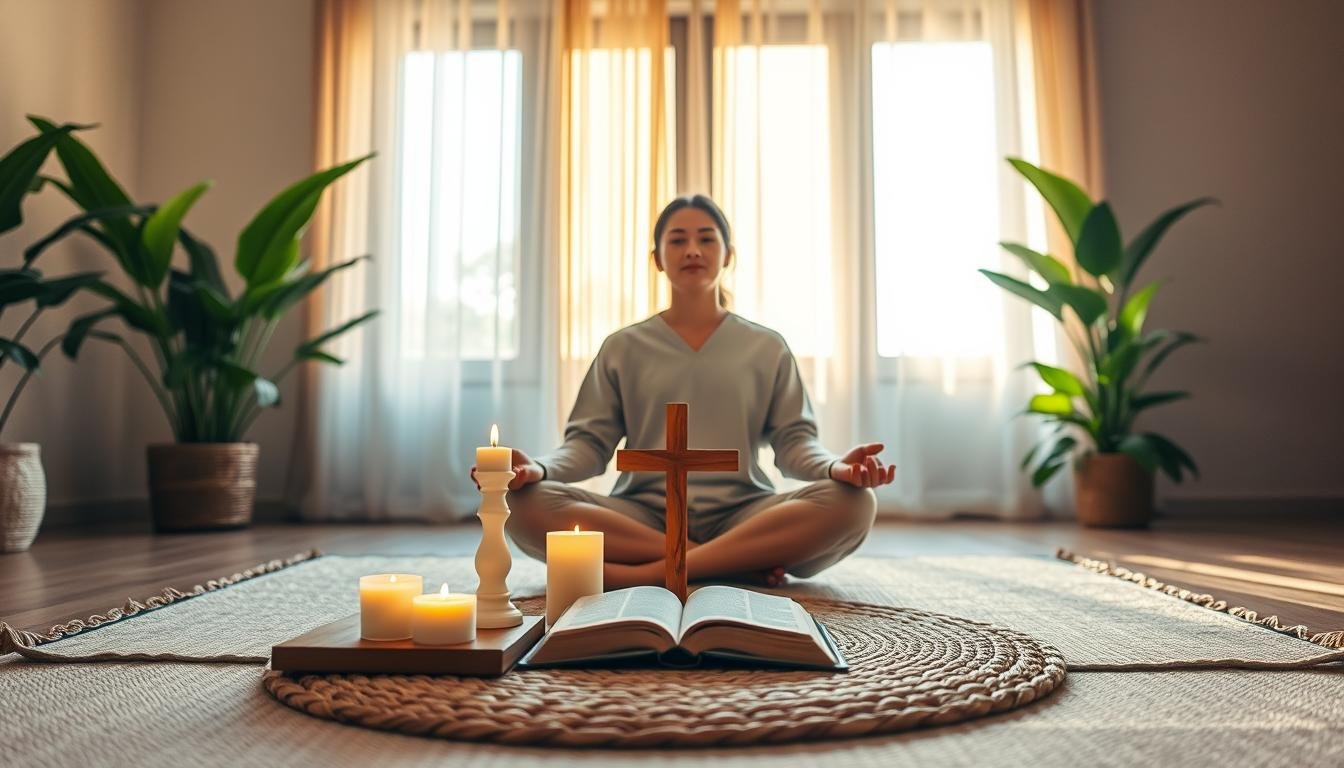
Christian Meditation: A Beginner’s Guide to Quiet Reflection and Prayer
Have you ever felt the need to pause and reflect? In our busy lives, finding a moment of quiet can be challenging. Yet, meditating on God’s Word can transform your day. Psalm 119:11 reminds us, “I have stored up your word in my heart that I might not sin against you.” This verse highlights how the practice of reflection shapes our choices and attitudes.
Thomas Brooks, a wise church leader from the seventeenth century, compared meditation to a bee savoring a flower to extract honey. This imagery illustrates that slow, intentional reflection can reveal deeper truths than hurried reading. You don’t need to be an expert; starting with a familiar verse and a few focused minutes can lead to profound insights.
Throughout this guide, you’ll explore biblical foundations, practical routines, and methods to help you grow in your journey. Remember, the goal is to cultivate a deeper communion with God through Scripture, not to chase dramatic experiences every day.
Key Takeaways
- Christian meditation is about focusing on Scripture and engaging in honest prayer.
- Storing God’s Word in your heart influences your life choices.
- Slow reflection can uncover more meaning than quick reading.
- Start with a familiar verse and a quiet space for just a few minutes.
- The goal is to deepen your relationship with God through His Word.
What Is Christian Meditation?
Christian meditation is a focused, devotional practice aimed at deepening your relationship with God. It involves turning your attention to Scripture, allowing you to know Him, love Him, and apply His truth in your life.
The Hebrew words hagah and sîḥâ/siakh emphasize the act of quietly repeating and musing over meaningful biblical passages. This reflects a style of meditation that is both contemplative and intimate.
As J.I. Packer described, it’s about calling to mind and dwelling on God’s works, ways, and promises. This process encourages you to remember His promises, consider their meaning, and apply them personally.
Unlike inductive Bible study, which prepares you for teaching, meditation focuses on communion with God. For beginners, starting with just one sentence can be beneficial. Let its meaning settle in your heart instead of overwhelming yourself with an entire chapter.
- Devotional attention to Scripture enhances your spiritual journey.
- Quietly repeating biblical words fosters deeper understanding.
- Engaging with God’s promises allows for personal application.
- Meditation is distinct from study, focusing on connection rather than teaching.
- Starting small can lead to meaningful insights over time.
Biblical Foundations and Scriptural Insights
Engaging with biblical passages invites deeper understanding and growth. The Bible emphasizes the importance of meditation in several key verses. For instance, Joshua 1:8 in the ESV instructs Joshua to meditate on the Book of the Law day and night, linking meditation with obedience and faithfulness.
Psalm 1:1-3 beautifully illustrates this by comparing the one who meditates on God’s law to a fruitful tree planted by streams of water. This image shows how sustained attention to Scripture can yield spiritual fruitfulness.
Moreover, Psalm 145:5 encourages focusing on God’s glorious majesty and wondrous works. The Psalms repeatedly emphasize the value of meditation, mentioning it around 19 times.
Even Jesus demonstrated the power of Scripture during His temptations and throughout His ministry. Paul further instructs believers in Colossians 3:16 to let the word of Christ dwell richly within them, highlighting the importance of applying Scripture in daily life.
Distinctive Features of Christian Meditation
In the realm of spiritual practices, understanding the essence of your approach is vital. This is especially true when comparing Christian meditation to Eastern practices. While both aim for inner peace, their foundations differ significantly.
Peter Toon, in his book *Meditating as a Christian*, highlights that Christian meditation focuses on God’s revealed Word. This contrasts with the inward journey often emphasized in Eastern meditation. Instead of seeking an empty mind, the goal is to fill your heart with Scripture, Christ’s life, and God’s love.
The 1989 Vatican document, *Aspects of Christian Meditation*, cautions against blending these practices without discernment. It reminds us that true meditation deepens our communion with God through biblical reflection.
Moreover, the Holy Spirit plays a crucial role in this process. Hans Urs von Balthasar connects our understanding of Scripture with the Spirit’s guidance, as noted in 1 Corinthians 2:9-10. Spiritual growth should be measured by increasing love, obedience, and wisdom, rather than unusual sensations.
| Aspect | Christian Meditation | Eastern Meditation |
|---|---|---|
| Focus | God’s Word | Inner peace |
| Goal | Deepening communion with God | Mental blankness |
| Guidance | Holy Spirit | Self-awareness |
| Scriptural Basis | Yes | No |
| Spiritual Growth | Love and obedience | Personal enlightenment |
Practical Steps to Begin a Daily Meditation Practice
Finding a peaceful moment in your day can set the tone for a fulfilling meditation practice. Creating a space that encourages reflection is essential. Aim for a quiet, distraction-free area where you can focus without interruptions.
Start by following George Müller’s example. He read Scripture in the morning to nourish his spirit. You can adapt this by choosing a consistent time that works for you, even if it’s not the morning.
Gather a few essentials: an upright chair, a Bible, a notebook, and a pen. This setup helps you stay alert and engaged. Aim for twenty to thirty minutes, but don’t stress if you need to adjust the time.
- Choose a distraction-free location and silence notifications.
- Begin with a simple sequence: breathe slowly, ask God for help, and read a short passage aloud.
- Focus on one meaningful phrase during your session.
- Consider using the Abide app for guided options lasting 2, 5, 10, or 15 minutes.
- Conclude by writing one practical response and one prayer to connect your reflection with daily action.
Exploring Lectio Divina and Other Meditative Methods
Diving into various meditative practices can enrich your spiritual journey. One prominent method is Lectio Divina, introduced by Saint Benedict’s followers in the sixth century. This practice encourages a deeper connection with Scripture through a four-step process.
Guigo II, a Carthusian monk, outlined these steps as:
- Reading: Start with a short passage from the Bible.
- Meditation: Reflect on its meaning and how it applies to your life.
- Prayer: Respond personally to God based on your reflections.
- Contemplation: Rest quietly in God’s presence, allowing the insights to settle.
The 1965 Second Vatican Council document Dei verbum emphasized the importance of this practice, which was reaffirmed by Pope Benedict XVI in 2005. Lectio Divina can be complemented by other approaches, such as the Jesus Prayer in Hesychasm or the imaginative exercises found in Ignatius of Loyola’s Spiritual Exercises.
For beginners, it’s wise to choose one method and practice it for several weeks. This allows you to learn its rhythm before exploring additional tools. You might also consider using the Abide app for guided sessions that fit your schedule.
Overcoming Common Barriers to Meditation
Life can often feel overwhelming, making it hard to carve out time for stillness. Many people struggle with distractions and busy schedules that can derail their efforts to engage in reflection. To help you navigate these challenges, consider some practical strategies.
Blaise Pascal emphasized the importance of sitting quietly each day. This perspective frames stillness as a deliberate priority rather than wasted time. In our complex world, A.W. Tozer cautioned against the distractions of modern life, urging us to seek solitude and quietness.
Start small. Commit to one session each week and revisit the same passage throughout the week. Remember, wandering thoughts are normal. Instead of criticizing yourself, gently reread the verse to refocus your mind.
George Müller practiced a Scripture-centered approach for over forty years. His experience shows that consistency grows through repeated nourishment rather than sudden intensity. Embrace these small steps to build a sustainable meditation routine.
- Frame stillness as a priority.
- Remove one recurring interruption from your routine.
- Start with a small commitment.
- Accept wandering thoughts as part of the process.
- Focus on consistency over intensity.
Embracing the Transformative Power of christian meditation
What if dedicating a few moments daily to reflection could enhance your spiritual journey? Many have found that intentional meditation can lead to profound changes in their lives.
For instance, Teresa of Ávila described meditation in her work, *The Interior Castle*, as a way to deeply contemplate God’s gift of Jesus and the mysteries of His life. This approach invites you to reflect on His continuing significance in your life.
Thomas Merton articulated that the goal of this practice is to achieve a deeper union with Christ through grace and charity. This connection can inspire you to engage in compassionate actions.
Ignatius of Loyola, who lived from 1491 to 1556, developed structured meditative exercises in his *Spiritual Exercises*. His work serves as a historic example of how reflection can guide personal growth.
Moreover, George Müller shared that Scripture meditation nourished his inner self and helped him endure trials peacefully. His testimony highlights the practical benefits of this practice.
Finally, Psalm 143:5-6 reminds us of the emotional honesty in spiritual growth, expressing a thirst for God even in difficult times. Remember, transformation often appears gradually, manifesting in wiser decisions and a steadier character.
Conclusion
Taking a moment to reflect can bring clarity and peace to your day. Remember, this practice is about Scripture-centered reflection designed to deepen your communion with God, not a test of spiritual ability.
Joshua 1:8 connects meditation with faithful action, highlighting that applying what you learn is just as vital as quiet reflection. Start simply with one short passage, an upright chair, and a brief session that can develop naturally over time.
Consider using the flexible structure of Lectio Divina—reading, meditation, prayer, and contemplation—as a guide to return to Scripture. Like George Müller, who practiced for over forty years, know that every beginner’s pace will look different.
Practice today and explore the BetterLifeAtlas for guidance on prayer, focus, and lasting habits.
FAQ
What is the purpose of Christian meditation?
The purpose of Christian meditation is to deepen your relationship with God by reflecting on His word, allowing you to find peace and clarity in your daily life.
How can I start a meditation practice?
Begin by setting aside a few minutes each day in a quiet space. Focus on a scripture verse or prayer, allowing your mind to settle and your heart to connect with God.
What are some effective methods for meditation?
Popular methods include Lectio Divina, breath prayer, and focusing on specific Bible passages. Experiment with different techniques to find what resonates with you.
How can I overcome distractions during meditation?
Create a designated space for meditation, free from distractions. Turn off notifications and set a specific time each day to practice, helping to establish a routine.
What are the benefits of regular meditation?
Regular meditation can enhance your spiritual growth, improve mental clarity, reduce stress, and foster a sense of peace and joy in your life.
Can meditation be practiced at any time of day?
Yes, meditation can be practiced at any time that suits you. Many find mornings or evenings to be particularly beneficial for quiet reflection and prayer.
How do I choose a scripture for meditation?
Select verses that resonate with your current life situation or spiritual journey. You might consider passages that speak to love, peace, or guidance.
Is it normal to feel restless when I meditate?
Yes, it’s common to feel restless initially. With practice, you’ll learn to calm your mind and focus your thoughts, making meditation a more fulfilling experience.