Meditation Breathing Techniques for Calm, Focus, and Relaxation
Have you ever noticed how a simple inhale and exhale can change your day? Mindful breathing offers a way to harness the power of your breath to enhance your focus and calm your mind. You don’t need special tools or years of experience to start; just a few moments each day can make a significant difference.
Setting a goal of 15 minutes daily for at least one week is a great starting point. However, remember that even shorter sessions can help you develop a sustainable habit. If stress or anxiety feels overwhelming, try a calming technique: inhale for three seconds, hold for two, and exhale for four. This method can quickly ground you in the moment.
This article will guide you through the basics of mindful breathing, structured exercises, and how it connects to body awareness. The insights shared here are inspired by practices from Greater Good in Action, a collaboration between UC Berkeley’s Greater Good Science Center and HopeLab.
Key Takeaways
- Mindful breathing can enhance focus and reduce stress.
- Start with just 15 minutes a day for a week to build a habit.
- Use a calming breath technique when feeling anxious.
- Explore structured exercises to deepen your practice.
- Insights are based on trusted practices from Greater Good in Action.
Introduction to Meditation Breathing
Did you know that your breath holds the key to a calmer and more focused state of mind? Meditation breathing is all about intentionally noticing your natural breath. By focusing on sensations in your nostrils, chest, or abdomen, you can anchor your attention and create a sense of peace.
Research shows that stress can lead to poorer memory, aches, and sleep issues. Reducing stress through mindful practices may support better sleep and even help manage high blood pressure. Dr. Ronald D. Siegel, a clinical professor at Harvard Medical School, emphasizes that focusing and relaxing are skills that improve with practice.
Additionally, Pranayama, a yogic breathing technique from India’s Vedic tradition, offers deeper insights into breath regulation. However, for beginners, gentle breath awareness can be a great starting point. This accessible practice can help cultivate relaxation and support a broader mindfulness journey.
- Deliberately notice your breath as a form of meditation.
- Recognize the connection between stress and physical health.
- Practice focusing and relaxing as skills to be developed.
- Explore the roots of breath awareness in ancient traditions.
The Science and Practice of Breathing Meditation
The act of simply breathing can profoundly impact your mental clarity. Focusing on your breath helps create a steady anchor for your mind. As you observe your breath, thoughts and feelings may arise, but that’s perfectly normal. Allow them to come and go without judgment.
Dr. Ronald D. Siegel emphasizes that focusing and relaxing are skills that improve with practice. Start with just 10 minutes in the morning and evening. As you grow comfortable, gradually extend your sessions to 20 or 30 minutes.
Here are some practical techniques to enhance your experience:
- Use silent counting, such as “in one, out two,” to help maintain your focus.
- Recognize that wandering attention is not a failure; it’s part of the process.
- Practice accepting your present experience, including any uncomfortable thoughts.
“The ability to focus and relax is a skill that improves with practice.”
Incorporating these techniques into your daily routine can lead to a more centered and calm state of mind.
Begin Your Journey: Meditation Breathing Techniques
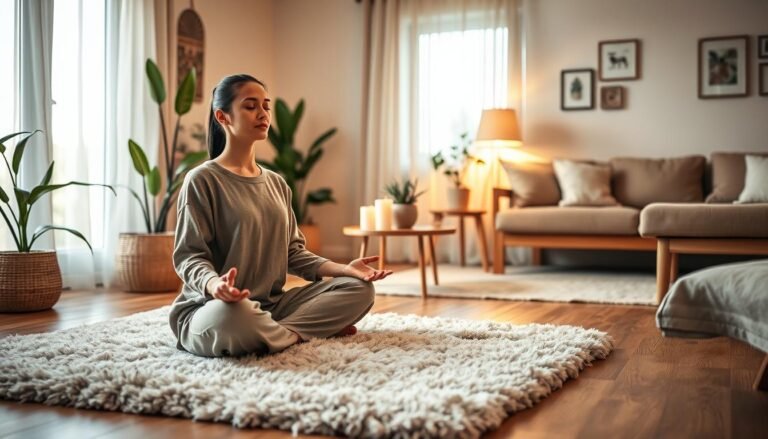
Your breath is a powerful tool that can help you find calmness in chaotic moments. To start, choose a comfortable position, whether seated or standing. Keep your spine upright yet relaxed, and let your hands rest naturally. This setup creates a foundation for your practice.
Begin with a five-to-seven-minute session. Focus on your body weight and how it connects with the floor or chair. Notice the natural rhythm of your breath. Try the calming technique: inhale through your nose for three seconds, hold for two, and exhale through your mouth for four seconds. This method can quickly ground you during stressful times.
As distractions arise, gently label them as “thinking” or “wandering.” Then, return your attention to the rise and fall of your chest or the sensations around your nostrils. Consistency is key; practice at the same time each day, and use shorter sessions whenever stress surfaces unexpectedly.
Exploring Effective Breathing Exercises
A simple focus on your breath can create a ripple effect of calmness in your life. Various breathing exercises can help you achieve this. Let’s dive into some effective techniques that you can easily incorporate into your daily routine.
Deep Belly and Box Breathing Explained
Deep belly breathing engages your diaphragm. To practice, place one hand on your chest and the other on your stomach. Inhale slowly through your nose, allowing your abdomen to expand. Exhale gently, feeling your stomach contract. Aim for 5-10 minutes of this practice to cultivate relaxation.
Box breathing is another effective technique. This method involves a four-count cycle: inhale for four seconds, hold for four, exhale for four, and hold again for four. It’s a favorite among military personnel and athletes for its calming effects.
Alternate Techniques for Daily Mindfulness
Alternate nostril breathing is a gentle exercise that can be practiced for five minutes. Use your right thumb to close one nostril while inhaling through the other. Switch sides and repeat, maintaining a natural rhythm.
The Wim Hof method is more intense, involving 30-40 deep breaths followed by a 1-2 minute hold. Be cautious with this technique; avoid practicing near water or while driving.
Sukh-Pranayama emphasizes ease and happiness, serving as a great preparatory exercise for deeper practices.
| Technique | Duration | Purpose | Beginner Tips |
|---|---|---|---|
| Deep Belly Breathing | 5-10 minutes | Relaxation | Focus on the abdomen expanding. |
| Box Breathing | 4 cycles | Calmness | Use a timer for accuracy. |
| Alternate Nostril Breathing | 5 minutes | Balance | Maintain unforced breathing. |
| Wim Hof Method | Varies | Energy boost | Practice in a safe environment. |
| Sukh-Pranayama | 5 minutes | Preparation | Focus on feeling ease. |
Integrating Mindfulness and Body Awareness
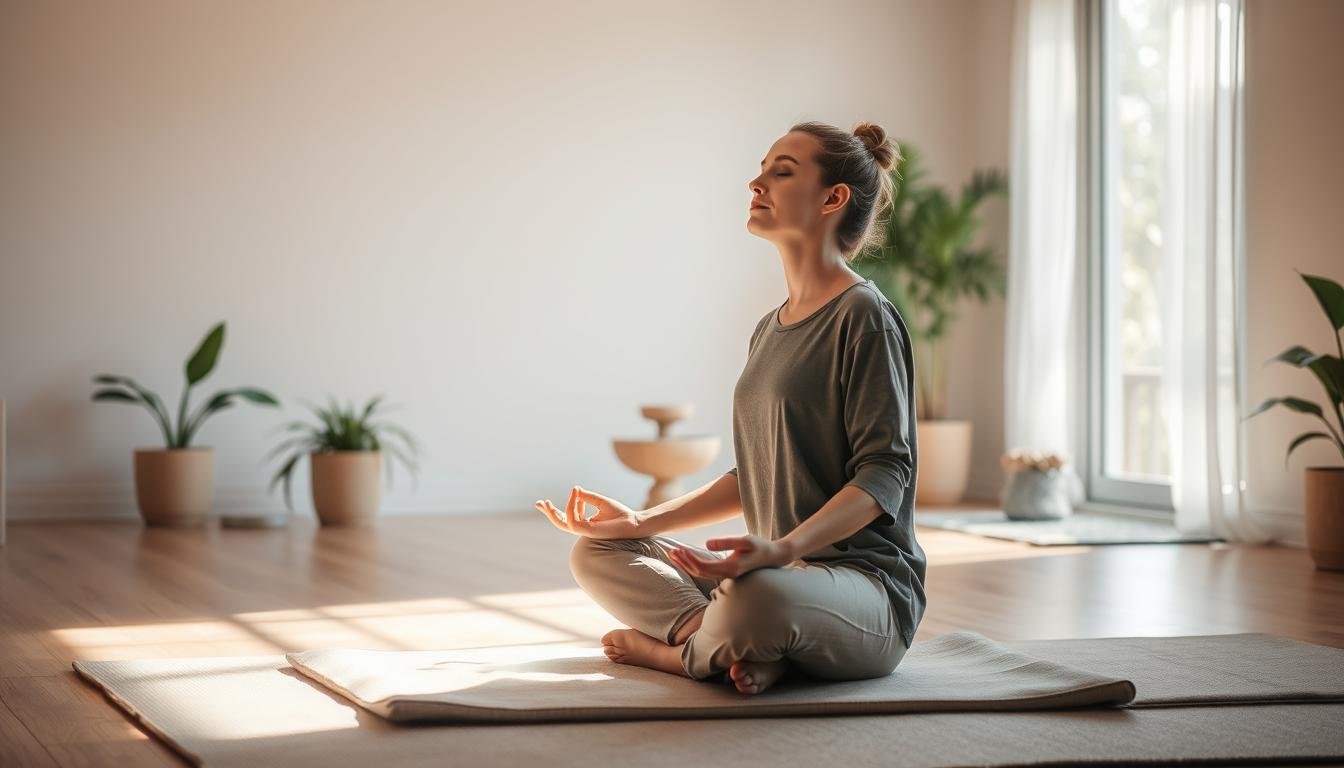
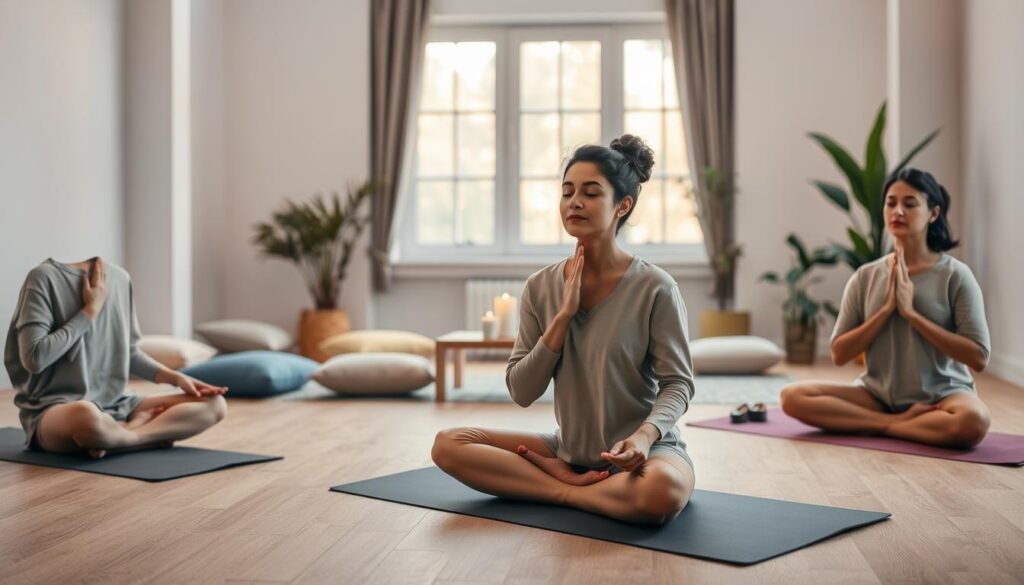
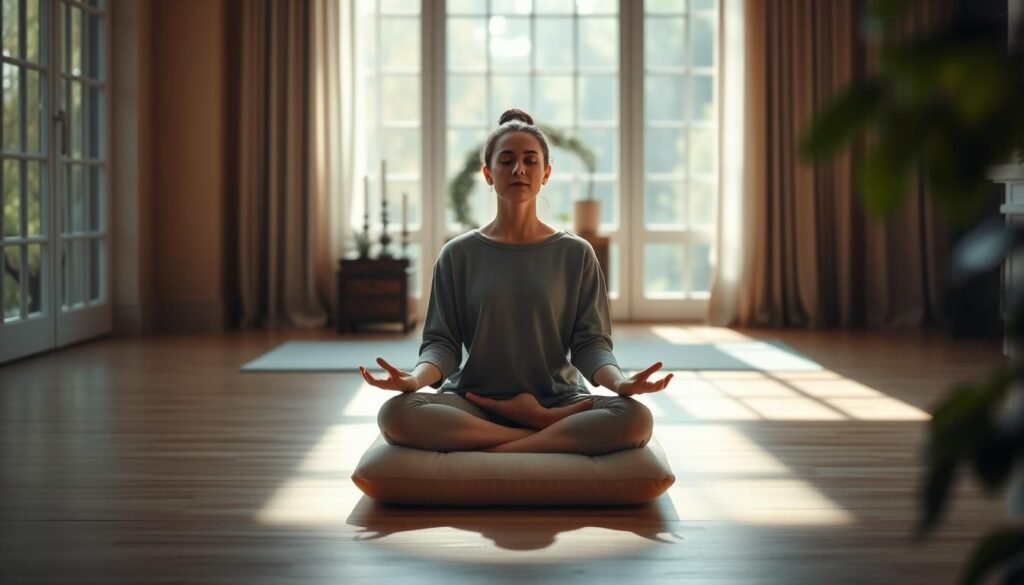
The way you hold your body can influence your ability to find calmness. To start, choose a comfortable position on a chair, floor cushion, or bench. Ensure your spine is erect but not rigid. Relax your shoulders and let your hands rest wherever they feel comfortable.
Next, take a moment to notice your body weight and how it connects with the surface beneath you. This awareness can help settle your mind before you focus on your breath. Scan your body slowly, identifying any tight areas in your jaw, shoulders, or abdomen. Gently soften these areas without forcing your body into a perfect pose.
Remember, your posture should support both alertness and ease. Allow your tongue and facial muscles to rest naturally. Finally, take a moment for a whole-body check-in. Appreciate yourself for taking this time to practice, and enjoy the calm that follows.
Advanced Meditation: Transcendental Meditation Connection
Diving into advanced techniques can reveal a whole new world of calm and clarity. While breath-focused practices keep your attention on your breathing, the Transcendental Meditation technique introduces a personalized mantra. This allows your mind to settle naturally, offering a different experience altogether.
The typical routine for TM involves practicing for 20 minutes twice daily. It’s essential to learn this method from a certified teacher rather than trying to self-instruct. Tony Nader, M.D., Ph.D., a Harvard-trained neuroscientist, serves as the international director of TM organizations, ensuring the method is taught correctly.
In the United States, there are over 170 TM Centers available to help you find local instruction. Research on TM spans from 1978 to 2023, covering various topics like anxiety, blood pressure, and emotional well-being. A recent study examined physician burnout, highlighting the technique’s potential benefits.
For structured instruction, consider visiting the official Transcendental Meditation teacher directory. This resource can guide you in finding a certified teacher to support your journey.
Conclusion
Finding tranquility can start with just a few moments of focused attention. You can begin your journey with five to seven quiet minutes each day. Many sources suggest aiming for 15 minutes daily for at least one week to build a habit.
Choose techniques that resonate with you, whether it’s natural breath awareness, belly breathing, box breathing, or alternate nostril breathing. Remember, returning to your breath when your mind wanders is part of the practice, not a sign of failure.
To help you stay consistent, pair your sessions with daily cues, like practicing after your morning coffee or before bedtime. Keep in mind that ongoing research, like the 2023 study on physician burnout, highlights potential benefits but doesn’t guarantee the same results for everyone.
Now, let’s dive into some frequently asked questions to further support your practice.
FAQ
What is the purpose of meditation breathing techniques?
The purpose is to enhance relaxation, focus, and overall well-being by using specific breathing methods to calm the mind and body.
How can I practice breathing exercises effectively?
Start by finding a quiet place, sitting comfortably, and focusing on your breath. Use techniques like deep belly breathing or box breathing to help maintain focus.
What are the benefits of incorporating mindfulness into my breathing practice?
Mindfulness helps increase awareness of your thoughts and feelings, reduces stress, and promotes a sense of peace, making your breathing practice more effective.
How long should I practice breathing exercises each day?
Even a few minutes daily can be beneficial. Aim for 5 to 10 minutes to start, gradually increasing as you become more comfortable with the practice.
Can breathing techniques help with anxiety?
Yes, focused breathing can significantly reduce anxiety by calming the nervous system and helping you regain control over your thoughts and emotions.
What should I do if I get distracted during my practice?
It’s normal to get distracted. Gently bring your focus back to your breath without judgment. Consistency will help improve your concentration over time.
Is there a specific posture I should maintain while practicing?
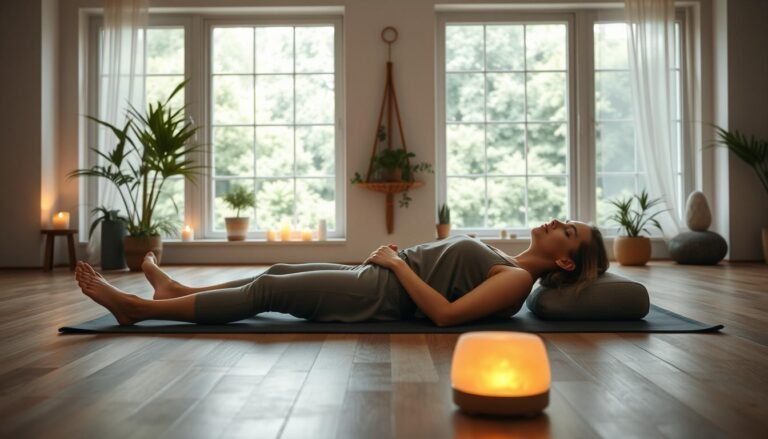
Sit or lie down in a comfortable position that allows your chest to expand freely. Keep your back straight to facilitate deep breathing.
Are there any specific breathing techniques for better sleep?
Yes, techniques like 4-7-8 breathing can help calm your mind and prepare your body for restful sleep by slowing your heart rate and reducing tension.