Meditation at Home: How to Build a Simple and Consistent Practice
Finding a moment to pause can feel challenging, yet it’s essential for your well-being. This practice offers a way to breathe deeply, settle your mind, and create a calmer moment in your day. You don’t need any mystical tools or expensive equipment to get started. Instead, you can simply sit comfortably and focus on your breath.
Dr. Becky Spelman provides a fantastic beginner video that clearly explains how to practice. With sessions ranging from 5 to 20 minutes, you can easily fit this into your schedule. You’ll learn to relax your eyes and bring awareness to your breath, creating a peaceful space.
Remember, this is a learnable skill. It’s not about achieving perfect concentration or having an empty mind. Consistency is key, and even if you miss a day, it doesn’t erase your progress. Embrace the journey, and allow yourself to explore the many benefits this practice can bring.
Key Takeaways
- Practice can be a simple pause to help you breathe and settle your mind.
- Dr. Becky Spelman’s video offers a clear starting point for beginners.
- Sessions can be as short as 5 minutes, fitting easily into your day.
- It’s a learnable practice, not a test of perfect concentration.
- Consistency is important, and missing a day is okay.
Understanding Meditation and Its Benefits
In the hustle and bustle of life, finding stillness is vital for nurturing your inner peace. This practice can be a powerful tool for managing stress and enhancing emotional health. When you take just a few quiet minutes each day, you create a moment of calm that can significantly impact your overall well-being.
Why Meditation Matters
Mindfulness meditation focuses your attention on the breath or body. This helps you notice thoughts without immediately reacting to them. By creating a gap between an event and your emotional response, you can respond more thoughtfully to daily stressors.
Physical and Emotional Benefits
Here are some key benefits you might experience:
| Benefit | Description |
|---|---|
| Stress Relief | Can lower stress levels and ease anxiety. |
| Improved Focus | Enhances attention and mental clarity. |
| Better Sleep | May lead to deeper, more restful sleep. |
| Emotional Balance | Eases low mood and mental clutter. |
| Increased Resilience | Supports better handling of life’s challenges. |
Headspace reports that regular practice can reduce stress by one-third and improve life satisfaction. Remember, results can vary, and the key is consistency.
Preparing Your Space for Meditation
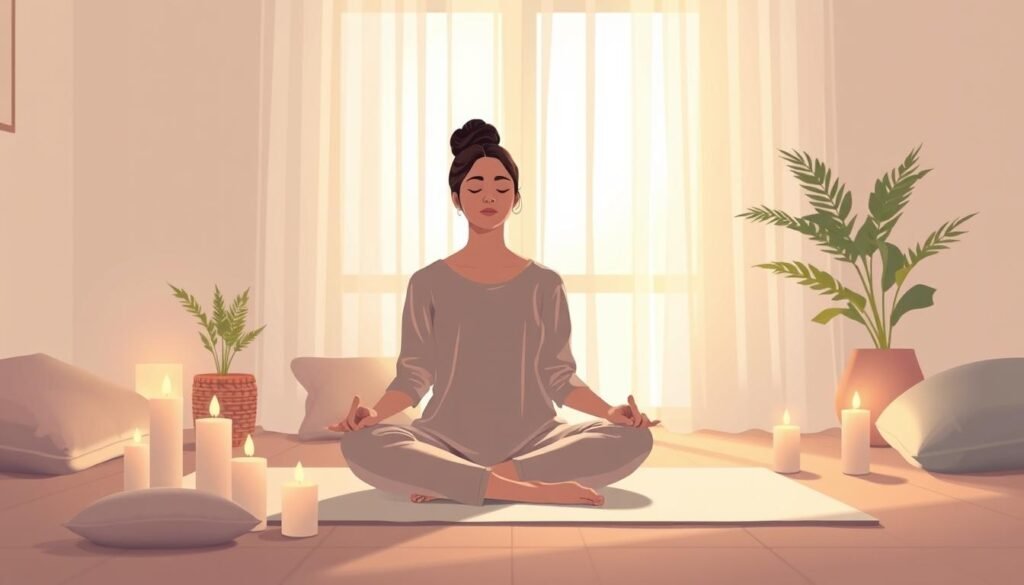
Creating a personal space for reflection can greatly enhance your experience. A comfortable and quiet spot is essential for fostering focus and relaxation. You don’t need fancy equipment; just a few simple items can do the trick.
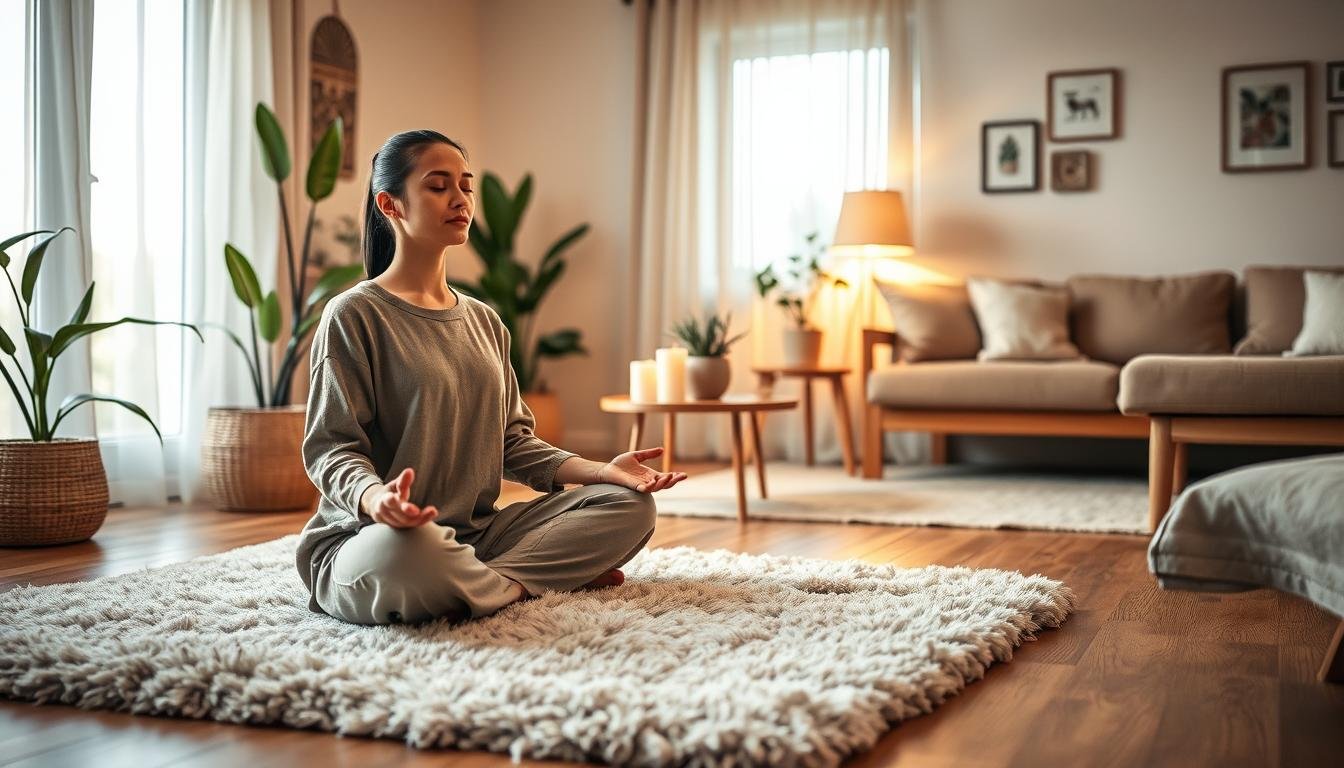
Consider choosing a warm, stable place where you can sit upright. This could be a chair, couch, bed, rug, or floor cushion. A yoga mat is optional; a towel or rug can provide sufficient support for a short session. Make sure your chair or bed offers enough support to keep you from slumping.
To promote relaxation, gently relax your neck and shoulders. Tuck your chin slightly and keep your back straight, but don’t force a rigid posture. Remember, sounds like barking dogs or traffic don’t have to ruin your moment of calm.
Before you begin, make practical comfort choices. Loosen any restrictive clothing, remove your shoes, and set your phone aside. These small steps can help you feel more at ease.
| Comfort Tips | Description |
|---|---|
| Choose Your Spot | Find a warm, stable place to sit comfortably. |
| Support Options | A yoga mat, towel, or cushion can help you sit upright. |
| Relax Your Body | Loosen clothing and maintain a straight back. |
| Manage Noise | Household sounds don’t have to disrupt your practice. |
| Settle In | Remove distractions to create a peaceful environment. |
Establishing a Consistent Practice Routine
Establishing a routine can transform your practice into a meaningful part of your day. The key is to find a time that works best for you, whether it’s in the morning or evening. Morning sessions can set a positive intention for your day, while evening practices can help you unwind and release the stress of the day.
Consider starting with just 5 to 10 minutes. This manageable time frame allows you to ease into your practice without feeling overwhelmed. As you grow more comfortable, you can gradually extend your sessions towards the recommended 20 minutes.
Amishi Jha’s research suggests that just 12 minutes of practice, five days a week, can significantly enhance your attention and resilience. To help you remember, attach your practice to an existing routine, like brushing your teeth or preparing for work. You can also set reminders or keep a cushion visible as a gentle nudge to practice.
Guided Meditation Techniques for Beginners
Taking the first step towards a serene mindset can feel overwhelming, yet it’s a crucial part of personal growth. Guided techniques offer spoken instructions that help you focus on posture, breathing, and responding to distractions. This structured approach is especially beneficial for beginners.
Benefits of Guided Meditation
With guidance, you can easily learn to relax and center yourself. Dr. Becky Spelman provides audio-only body scan and awareness-of-breath practices that are perfect for starting out. These sessions help you cultivate awareness and calmness.
As you progress, you might explore Barry Boyce’s offerings, which include short, longer, and formal sitting practices. This variety allows you to deepen your experience as you become more comfortable.
For additional resources, consider reading about building a mindfulness habit or establishing a stress-management routine.
Tools and Apps to Get Started
There are many apps available to support your journey. Check out Mindfulness.com’s beginner meditation sessions or explore Headspace guided meditation programs. These platforms provide a range of guided sessions to fit your needs.
Mastering Breathing Techniques and Mindful Focus
Incorporating breath awareness into your routine can create a powerful shift in your focus. By tuning into your breath, you cultivate a deeper connection with yourself. This practice is not just about relaxation; it’s about building a skill that enhances your daily life.
Start by sitting comfortably. Notice where your breath feels the clearest, and follow each natural inhale and exhale without trying to control it. For two minutes, use the simple mental cues “breathe in” on the inhale and “breathe out” on the exhale. This exercise can last for about 20 minutes as you become more comfortable.
It’s normal for your mind to wander. As
Sharon Salzberg recalls, her mind wandered after just one breath during her first experience.
This is part of the journey. When distractions arise, gently notice them, acknowledge the thought, and return your focus to your breath.
If focusing on your breath feels challenging, consider using a sound, a body sensation, or an external object as an anchor. This can help maintain your attention without judgment.
Essential Tips for Meditation at Home
Setting realistic goals can help you enjoy the journey of your practice. Instead of aiming for lengthy sessions right away, consider starting with just 5 or 10 minutes. This manageable timeframe allows you to ease into your routine without feeling overwhelmed.
Research by Amishi Jha suggests that even 12 minutes of practice, five days a week, can significantly support your attention. Remember, it’s more about consistency than duration. As you build your practice, you can gradually increase your time.
Here are some tips to keep in mind:
- Choose a measurable goal, like sitting for 5 minutes on 5 days each week.
- Focus on consistency rather than judging each session’s quality.
- Track your completed sessions to motivate yourself.
- Only increase your time when the shorter routine feels comfortable.
- Missing a day isn’t failure; just return to your practice when you can.
As you practice, you may notice your mind wanders. This is normal.
“It’s not about achieving perfect concentration; it’s about embracing the process.”
So, take a moment to acknowledge those thoughts and gently guide your focus back to your breath.
Overcoming Common Meditation Challenges
Experiencing a wandering mind is a natural part of learning to focus. It’s something both beginners and seasoned practitioners encounter. Recognizing distractions is a sign of awareness, not failure.
When interruptions arise, try labeling them. Simply note them as “hearing,” “thinking,” or “planning.” This helps you acknowledge the thought before gently returning your focus to your anchor.
Sounds like barking dogs or loud music can be disruptive. Instead of resisting these noises, allow them to come and go. This acceptance can create a more peaceful experience.
If you find your environment too distracting, consider using earplugs or noise-canceling headphones. White noise or soothing music can also help drown out disruptive sounds.
When interruptions happen, like a child or phone ringing, take a moment to reset. Use your next breath as a fresh start to return to your practice.
Integrating Meditation with Your Daily Life
Incorporating mindful practices into your daily routine can significantly enhance your overall well-being. By connecting these moments of calm with everyday activities, you can create a smoother flow throughout your day.
Using Meditation as a Stress-Reduction Tool
When life feels overwhelming, a few moments of stillness can make a difference. Research shows that just 30 days of consistent practice can lead to a one-third reduction in stress levels. This is especially beneficial when facing challenging situations.
Consider these practical applications:
- Take a two-minute breath pause before a work meeting to foster clear communication.
- Practice mindfulness after dropping your children off at school to ease into your day.
- Pause before opening emails to approach your tasks with a calm mindset.
- Use moments of tension, like difficult conversations, as reminders to breathe and respond thoughtfully.
- Regular practice can improve relationships by encouraging a pause before reacting emotionally.
Remember, this practice complements professional mental health care rather than replacing it. Integrating mindful moments into your routine can support your emotional health and create a more balanced life.
Exploring Advanced Meditation Variations
Exploring different approaches can enrich your journey and deepen your practice. As you grow more comfortable, consider trying out advanced techniques that can enhance your experience.
Body Scan and Mindful Walking Practices
One popular method is the body scan. This technique involves moving your attention gradually from your toes to the crown of your head. You can start by focusing on your feet, then your legs, torso, shoulders, and finally your face. This process helps cultivate awareness of sensations throughout your body.
Mindful walking is another engaging practice. While walking, pay attention to each foot lifting and lowering. You can count your steps from 1 to 10 and then start again. This technique can help you connect with your body and surroundings.
Extending Your Practice Beyond the Basics
Another powerful approach is loving-kindness meditation. Begin by repeating phrases like “May I live in safety” or “May I have mental happiness.” Direct these sentiments first toward yourself, then extend them to others.
As you feel more confident, explore sounds, spontaneous awareness, or even lying-down meditation. You might also try longer sitting sessions once basic breath practice feels familiar. Remember, these advanced variations still rely on the same foundation: notice sensations, acknowledge wandering attention, and return with patience.
| Technique | Description |
|---|---|
| Body Scan | Focuses on sensations from toes to head, enhancing body awareness. |
| Mindful Walking | Involves counting steps, promoting connection with the environment. |
| Loving-Kindness | Uses positive phrases to cultivate compassion for self and others. |
| Extended Sessions | Involves longer practices to deepen mindfulness and focus. |
| Sound Awareness | Incorporates listening to ambient sounds for enhanced presence. |
Conclusion
In the fast-paced world we live in, finding time for quiet moments can significantly enhance your well-being. A comfortable seat, a few minutes, and natural breathing are all you need to start. This practice helps you develop a healthier relationship with your thoughts and emotions. It won’t eliminate every difficult state or stressful experience, but it can support you in navigating them.
Choose a realistic daily or weekly routine that fits your lifestyle. When seated breath practice feels challenging, consider using guided support or body-based techniques. Remember Sharon Salzberg’s example: noticing distractions and returning your focus is the essence of this journey.
So, why not sit for just 5 minutes today? Afterward, check out the FAQs for guidance on common beginner questions. You can also explore more about mindfulness in everyday life and healthy stress relief to enhance your practice.
FAQ
What is the best time of day to meditate?
The best time to meditate varies for each person. Some find mornings refreshing, while others prefer evenings to unwind. Experiment to see what fits your schedule and lifestyle best.
How long should I meditate each day?
Beginners can start with just 5 to 10 minutes a day. As you become more comfortable, you can gradually increase your sessions to 20 or 30 minutes.
Do I need special equipment for meditation?
No special equipment is necessary. A comfortable spot to sit or lie down is all you need. You can use cushions or mats for added comfort if you wish.
What if my mind keeps wandering during meditation?
It’s normal for your mind to wander. When you notice it, gently bring your focus back to your breath or the present moment. This practice itself is part of the process.
Can meditation help with stress and anxiety?
Yes, many people find that meditation reduces stress and anxiety. It encourages mindfulness and helps you manage your emotions more effectively.
Are there specific techniques for beginners?
Beginners can benefit from guided meditations or simple breath awareness exercises. These techniques can help you focus and develop your practice.
How can I create a peaceful meditation space at home?
Choose a quiet spot with minimal distractions. You can enhance the atmosphere with soft lighting, calming scents, or soothing sounds to help you relax.
What are the physical benefits of meditation?
Regular practice can lower blood pressure, improve sleep quality, and boost your immune system. It promotes overall well-being and physical health.
How do I stay motivated to maintain my meditation practice?
Set realistic goals and remind yourself of the benefits. You might also consider joining a group or using apps to keep you engaged and accountable.
Can I meditate while doing other activities?
Yes, you can practice mindfulness during everyday tasks like walking or eating. This helps integrate meditation into your daily life and enhances your awareness.