Breathing Meditation: Simple Techniques for Calm and Mindful Awareness
Have you ever felt overwhelmed by stress or anxiety? You’re not alone. Many people experience these feelings in their daily lives. Fortunately, there are simple techniques that can help you find calm and improve your focus. One effective method is breathing meditation, which encourages you to place your attention on your breath.
This guide draws from the expertise of UC Berkeley’s Greater Good Science Center and HopeLab. They recommend practicing mindful breathing for just 15 minutes a day for at least a week. This small commitment can lead to significant benefits in your mental clarity and emotional well-being.
In this article, you will discover various techniques, such as natural breath observation and deep belly breathing. You might also try box breathing or alternate nostril exercises. These practices are designed to fit into your routine, allowing you to notice how your breath connects your mind and body, especially during stressful moments.
Remember, a calming breath can be as simple as a 3-second inhale, a 2-second hold, and a 4-second exhale. But don’t worry if you can’t follow this pattern perfectly. What matters most is finding a comfortable position and being consistent.
Key Takeaways
- Breathing meditation is an accessible way to settle the mind and build awareness.
- Practice for 15 minutes daily to experience the benefits.
- Explore techniques like natural breath observation and deep belly breathing.
- A calming breath pattern can enhance your practice but isn’t mandatory.
- Choose a comfortable position to connect your mind and body.
Understanding Breathing Meditation
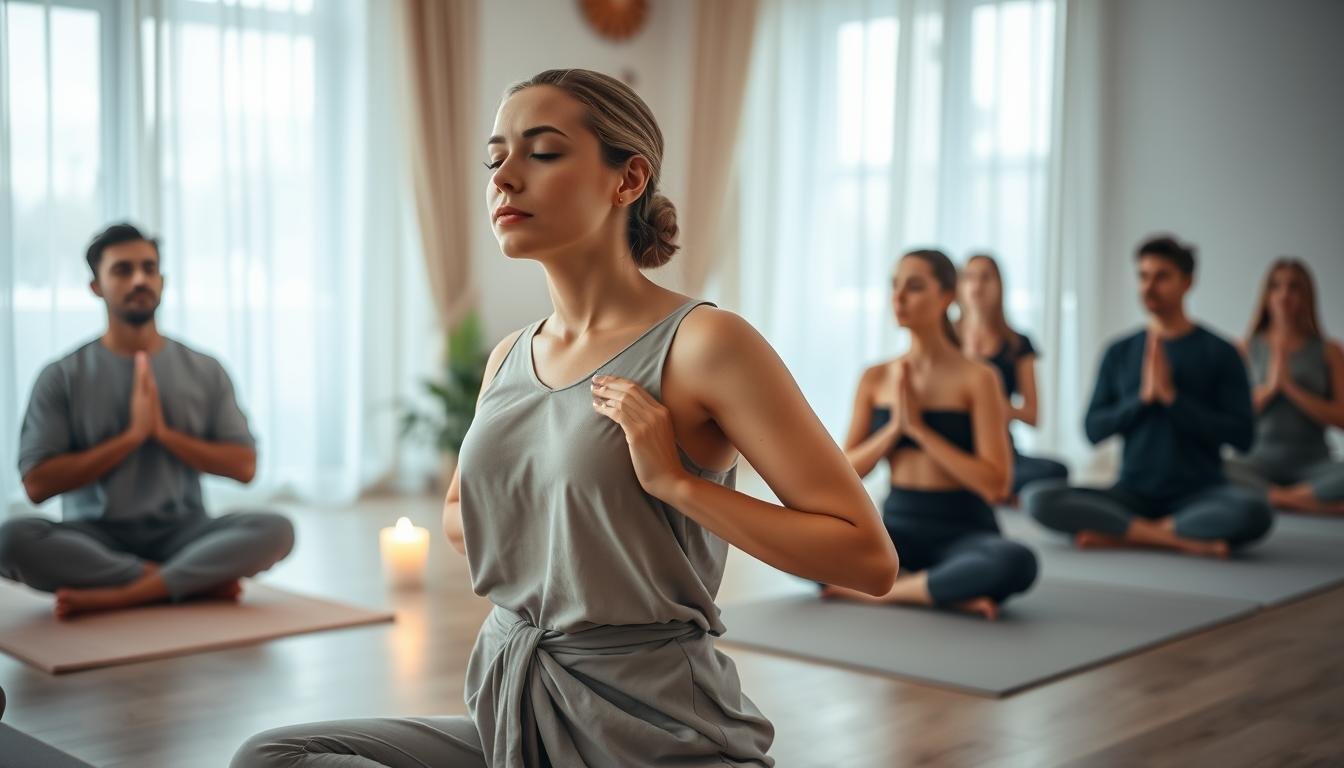
You might find yourself grappling with stress and anxiety at times. Breathing meditation is a simple yet powerful technique that can help you manage these feelings. It involves focusing your attention on your natural inhalations and exhalations. This practice allows everyday thoughts and sensations to arise without judgment.
Breathing meditation can be done while sitting, standing, or even walking. However, many people find that sitting is the easiest way to maintain a steady practice. By noticing your breath in the abdomen, chest, throat, or nostrils, you create a sensory anchor for your mind.
While it may help reduce stress and anxiety, it’s important to view these benefits as possible short-term experiences rather than guaranteed outcomes. Dr. Ronald D. Siegel from Harvard Medical School emphasizes that attention and relaxation are skills that improve with practice. Just like physical abilities, they develop through repetition.
Mindfulness, in this context, means intentionally focusing on the present moment and accepting it without judgment. This connection between breathing meditation and mindfulness encourages you to embrace the present rather than eliminate every thought.
| Technique | Description | Benefits |
|---|---|---|
| Natural Breath Observation | Focus on your natural breath without trying to change it. | Enhances awareness and promotes relaxation. |
| Deep Belly Breathing | Inhale deeply into your belly, expanding it fully. | Reduces stress and increases oxygen flow. |
| Box Breathing | Inhale for 4 seconds, hold for 4, exhale for 4, hold for 4. | Calms the mind and helps with focus. |
Getting Started with Simple Breathing Techniques
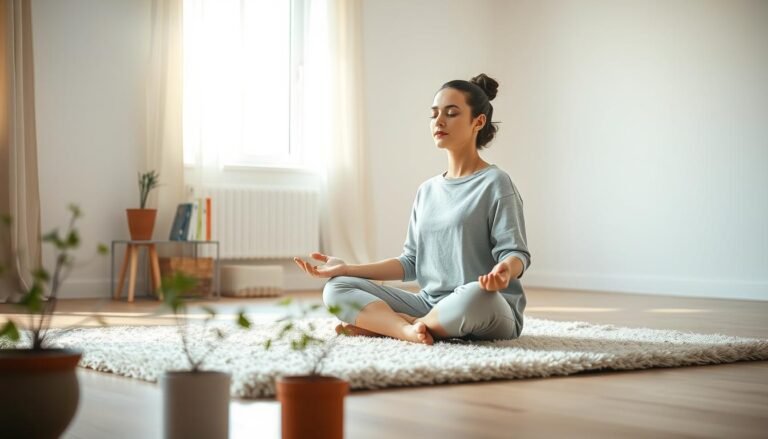
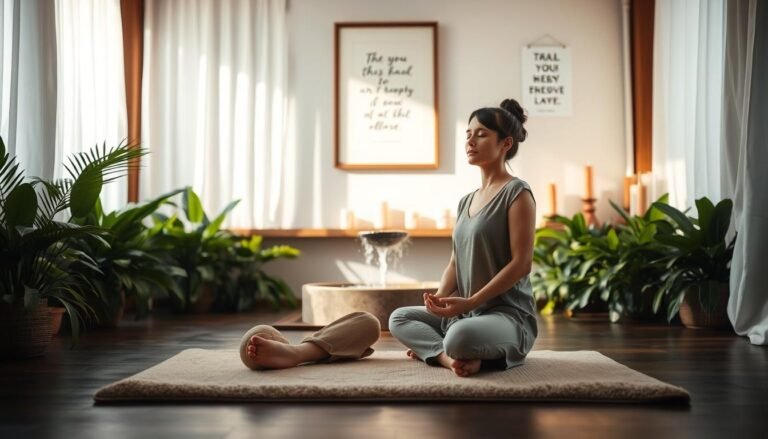
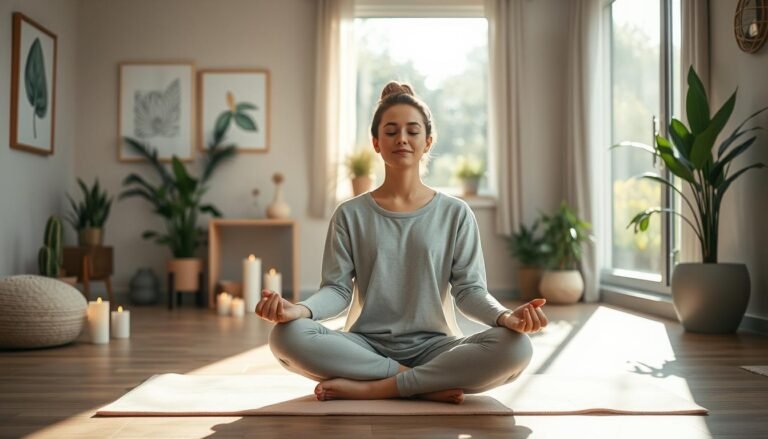
Do you often feel the weight of the world on your shoulders? Finding a comfortable position is the first step in your journey. You can sit on a chair, floor cushion, or bench. Ensure your spine is erect but relaxed, allowing your shoulders to drop away from your ears.
Place both feet firmly on the floor, or if you’re on a cushion, ensure your body is supported. Allow your hands, jaw, and shoulders to soften. This posture will help you feel grounded and alert.
Next, select a quiet location with minimal distractions. Remember, a perfect setting isn’t necessary when you’re starting. You can begin with just 10 minutes in the morning and another 10 minutes in the evening. As you become more comfortable, gradually increase your sessions to 20 or 30 minutes.
Practicing at the same time each day can help create a routine. Additionally, feel free to use short sessions whenever stress arises, giving you immediate support.
Step-by-Step Breathing Meditation Practices
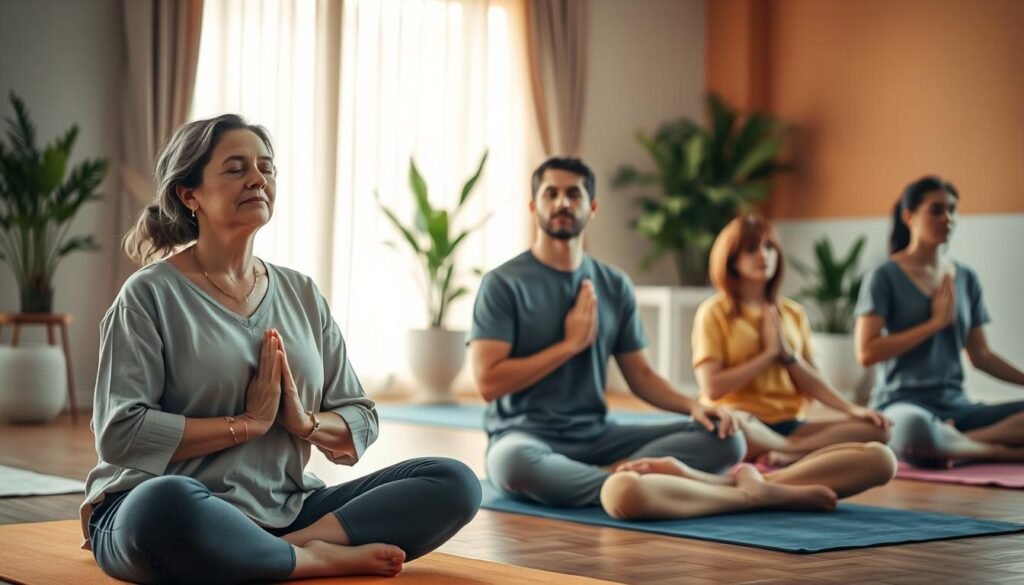
Do you sometimes feel like your thoughts are racing, making it hard to relax? Let’s explore a simple sequence to help you connect with your breath and find calm.
Begin in a comfortable position, feeling the weight of your body against the chair, cushion, or floor. Notice how your body makes contact with the surface beneath you.
Next, follow one full cycle of breath from the start of the inhale through the end of the exhale. Pay attention to the sensations in your body without forcing your breathing pattern. You might feel the air at your nostrils, chest, or abdomen.
When your mind wanders, gently label it as “thinking” or “wandering.” This is a natural part of the process. Remember, returning your attention to your breath is the key, not a sign of failure.
Stay with this practice for about five to seven minutes. Finally, take a moment to notice your whole body and appreciate the effort you made today.
Popular Breathing Exercises to Try
Are you curious about practical techniques to ease tension and enhance relaxation? Incorporating structured exercises into your routine can significantly improve your mental clarity and calmness. Here are a few popular breathing exercises you can try.
Deep Belly Breathing and Diaphragmatic Techniques
To practice deep belly breathing, place one hand on your chest and the other on your stomach. Inhale deeply through your nose, allowing your belly to expand while keeping your chest still. Aim to repeat this for 5-10 minutes, focusing on slow, gentle exhales.
Box and Alternate Nostril Breathing Exercises
Box breathing is a simple technique where you inhale for four counts, hold for four, exhale for four, and hold again for four. This structured pattern helps calm the mind.
For alternate nostril breathing, use your right thumb to close one nostril while inhaling through the other. Switch sides after a few breaths, practicing for about five minutes. This exercise promotes balance and relaxation.
Remember, while these exercises are beneficial, avoid forcing any breath holds. It’s best to practice seated or lying down, especially for more intense techniques like Wim Hof breathing, which involves 30-40 deep breaths followed by a breath hold.
Integrating Mindfulness and Relaxation into Daily Life
In the chaos of daily life, finding moments of calm can be challenging. However, integrating mindfulness into your routine can make a significant difference. By applying these practices during everyday activities, you can enhance your awareness and relaxation.
For instance, consider taking three attentive breaths before responding to a difficult message. This simple act can help you pause and focus on your breath, reducing stress. Additionally, try to notice the sensations in your body while walking, washing dishes, or even waiting in line. These ordinary moments can become opportunities for mindfulness.
Mindfulness principles are not exclusive to Buddhism; they are found in various philosophies and spiritual traditions. Pairing a short breathing pause with habits like your morning coffee or shutting down your computer can create a seamless transition into mindfulness.
Lastly, observing your thoughts without reacting immediately can foster a healthier relationship with life’s challenges. If independent practice feels daunting, consider using a guided meditation recording to support your journey while maintaining moments of quiet breath awareness each day.
Scientific Insights and Health Benefits
Have you ever wondered how stress affects your overall health? Research shows that psychological stress can lead to poorer memory, increased aches and pains, and worse outcomes for those with heart disease. Understanding these effects is crucial for your well-being.
Reducing stress may support more restful sleep and help control high blood pressure. While it’s important to note that breathing techniques alone won’t cure medical conditions, they can be a valuable part of a broader health strategy.
According to a meta-analysis by Eppley, Abrams, and Shear in the Journal of Clinical Psychology, different relaxation methods, including breathwork, can significantly impact stress reduction. For deeper insights, consider exploring Schneider, Grim, and Rainforth’s 2012 study on cardiovascular health and Rainforth and Schneider’s 2007 review on hypertension.
Recent research, including a 2023 randomized controlled trial, has also highlighted the potential of mindfulness practices in reducing burnout and depression among physicians. However, if you have heart, respiratory, psychiatric, or blood-pressure concerns, it’s essential to consult a qualified clinician before changing your treatment or attempting intense breathwork.
| Study | Focus | Findings |
|---|---|---|
| Eppley, Abrams, and Shear (1989) | Relaxation Methods | Impact on stress reduction |
| Schneider, Grim, and Rainforth (2012) | Cardiovascular Health | Breathwork and heart health |
| Rainforth and Schneider (2007) | Hypertension | Effects of relaxation techniques |
| Loiselle et al. (2023) | Physician Burnout | Mindfulness benefits |
Exploring Advanced Practices: From Breathing Meditation to Transcendental Meditation
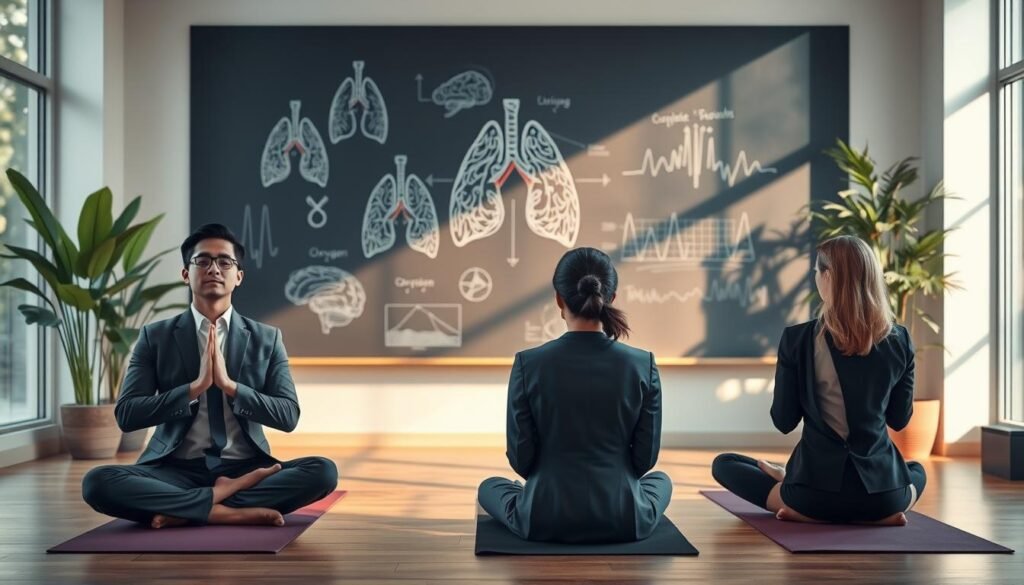
What if there are advanced methods that can enhance your current approach to breath awareness? One such technique is Sukh-Pranayama, which translates to ease or happiness. This gentle practice serves as a preparatory step for deeper meditation.
Sukh-Pranayama focuses on normal breathing and helps you transition smoothly into quieter meditation sessions. It’s essential to practice this technique without forcing your breath, distinguishing it from more intense breathwork.
Emily Fitz Randolph, a certified TM teacher, can guide you in mastering this preparatory exercise accurately. Once you’re comfortable, you might explore the Transcendental Meditation technique. This method involves silently repeating a personalized mantra for 20 minutes, twice daily.
Notably, Tony Nader, M.D., Ph.D., a Harvard-trained neuroscientist, leads the TM organizations, ensuring the method’s credibility. With over 170 TM Centers in the United States, finding certified instruction is accessible.
As Bonnie shared in a January 2024 Trustpilot review, TM offers deep rest, clarity, calm, and joy. While individual experiences may vary, many find this technique enriching.
Conclusion
In conclusion, observing your breath for just five to seven minutes can be a simple yet effective starting point. This practice, recommended by the Greater Good Science Center, helps you cultivate awareness.
Remember, it’s completely normal for your mind to wander. As Dr. Ronald D. Siegel emphasizes, attention and relaxation are skills that develop over time.
For beginners, focus on either natural breath awareness or five minutes of gentle diaphragmatic exercises. Avoid overwhelming yourself by trying every technique at once.
Consider gradually working up to the suggested 15 minutes daily for at least a week. This will help you build a consistent habit.
Ultimately, breathing meditation can serve as a standalone practice or as a gateway to deeper mindfulness and meditation techniques.
FAQ
What is breathing meditation?
Breathing meditation is a practice that focuses on your breath to cultivate mindfulness and relaxation. It helps you become aware of your inhalations and exhalations, promoting a sense of calm.
How can breathing techniques help with stress and anxiety?
Engaging in breathing exercises can activate your body’s relaxation response, reducing stress and anxiety levels. By focusing on your breath, you can shift your attention away from racing thoughts and find peace in the moment.
How do I start a daily breathing practice?
To begin, find a comfortable position, either sitting or lying down. Set aside a few minutes each day to focus on your breath, gradually increasing the time as you become more comfortable with the practice.
What are some simple breathing exercises I can try?
You can try deep belly breathing, where you inhale deeply through your nose and let your abdomen expand. Box breathing, which involves inhaling, holding, exhaling, and pausing for equal counts, is another effective technique.
Can mindfulness practices be integrated into my daily routine?
Absolutely! You can incorporate mindfulness by paying attention to your breath during everyday activities, such as walking or eating. This helps create a more intentional and aware approach to life.
What does research say about the health benefits of breathing exercises?
Studies have shown that regular breathing practices can lead to improved sleep quality, reduced stress levels, and enhanced overall well-being. Engaging in these techniques may positively impact your mental and physical health.
What is Sukh-Pranayama?
Sukh-Pranayama is an advanced breathing technique that focuses on the balance of energy in the body. It can be a bridge to deeper meditation practices, enhancing your overall experience.
How does Transcendental Meditation differ from breathing meditation?
Transcendental Meditation involves the use of a mantra to help quiet the mind, while breathing meditation focuses solely on the breath. Both aim to promote relaxation and mindfulness but use different techniques to achieve these goals.