Couples Meditation: Mindfulness Practices to Strengthen Connection
When partners feel emotionally distant, couples meditation can be a gentle, intentional way to rebuild closeness. This practice helps you step away from daily routines and reconnect on a deeper level. One inspiring example is Liza Colpa’s 10-minute tantra meditation. This guided meditation uses shared breathing, eye contact, affirmations, and reflection to create a meaningful experience.
Tantra, which means “to weave together,” emphasizes the connection between mind, body, and spirit. It’s not just about intimacy; it’s about fostering present-moment awareness. During the pandemic, Liza and her husband found solace in this practice, reconnecting without needing to solve every outside problem immediately.
In this article, you’ll discover practical exercises, beginner strategies, and routine-building ideas. Whether you’re new to this practice or have experience, these insights can help you enhance your relationship.
Key Takeaways
- Couples meditation helps rebuild emotional closeness.
- Liza Colpa’s tantra meditation fosters connection through shared practices.
- Tantra emphasizes the integration of mind, body, and spirit.
- Practical exercises can enhance your relationship, regardless of experience.
- Mindfulness practices can create a deeper understanding between partners.
Understanding the Benefits of Couples Meditation
If emotional barriers arise, practicing mindfulness can help you reconnect. Research highlights several benefits that mindfulness brings to relationships. For instance, a 2018 study showed that mindfulness practice increases partner acceptance. This means that being mindful can create a sense of safety, reducing automatic judgments during interactions.
Moreover, shared breathing and quiet attention allow partners to notice emotional tension in their bodies. This awareness can prevent reactive responses during tough conversations. A 2019 study supports this by linking mindfulness-based interventions with improved conflict resolution and emotional regulation.
Additionally, mindfulness is connected to higher satisfaction in both relationships and personal life, as found in 2017 research. This shows that individual mindfulness practice is equally valuable. Finally, the 2004 study found that mindfulness enhances perceived closeness and partner acceptance while allowing for healthy individuality.
Preparing Your Space for Meditation
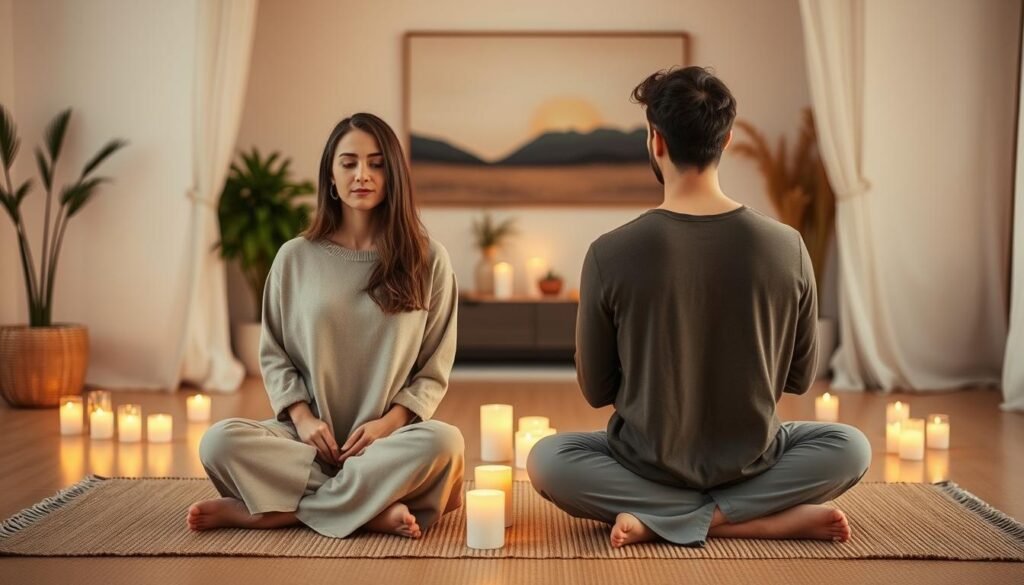
A peaceful environment sets the stage for deeper connection. Before starting your practice, it’s crucial to create a calm, distraction-free space. This ensures you can focus entirely on each other without interruptions.
Begin by following Liza Colpa’s advice. Choose a quiet, neutral area where phones, television, and household noises won’t disrupt your concentration. This will help both partners feel safe and comfortable.
Here are some simple tips to enhance your space:
- Place two cushions or chairs at eye level, allowing you to sit comfortably facing one another.
- Agree that either person can pause the practice if eye contact or emotional sharing feels overwhelming.
- Maintain a comfortable room temperature and soft lighting to create a welcoming atmosphere.
- Clear the floor to ensure the space feels intentional without needing expensive equipment.
Finally, reserve this space for your practice and start with the three grounding breaths described in Liza Colpa’s meditation script. This will help you both settle in and prepare for a meaningful experience.
Step-by-Step Guided Meditation Techniques
For those feeling distant, simple techniques can help reignite emotional closeness. Following Liza Colpa’s 10-minute structure, you can create a meaningful experience together. Start by sitting face-to-face, closing your eyes, and taking three deep breaths to release tension.
Next, invite your partner to open their eyes gradually. Gaze at each other naturally, allowing for blinking or brief glances away. This creates a comfortable atmosphere. If both agree, gently place your hands on each other’s chests. This helps you synchronize your breathing, deepening the connection.
Incorporate affirmations from Colpa’s script, such as “I love you,” “Thank you,” and “You are safe with me.” Conclude the practice with a natural gesture like holding hands, hugging, or kissing. Take a moment to share appreciation and choose one relationship intention.
Remember, it’s normal for feelings of anger or tension to arise. Acknowledge these emotions instead of ignoring them. This practice can lead to a deeper understanding and connection.
Mindfulness Exercises to Deepen Intimacy
Exploring mindfulness exercises can create a deeper emotional bond between partners. These practices not only foster connection but also enhance communication. Here are some effective techniques to try together.
Practicing Eye-Gazing and Synchronized Breathing
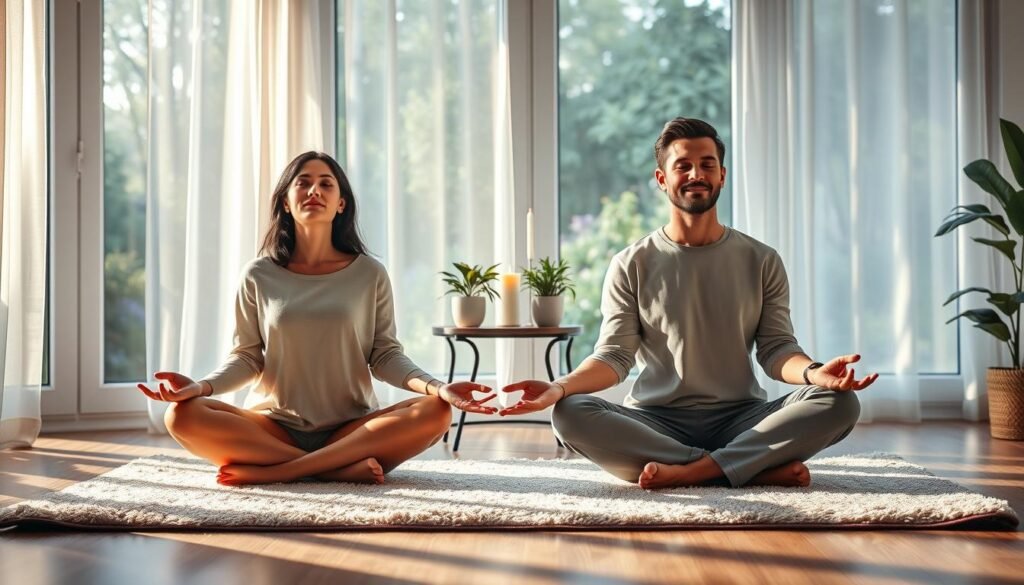
Start with a short exercise of eye-gazing and synchronized breathing. Sit facing each other, keeping your gaze soft and comfortable. Breathe together for about two minutes, allowing the connection to grow.
Engaging in Gratitude and Loving-Kindness Meditations
Out-loud noting is a powerful exercise. One partner shares their present experience for two minutes while the other listens without interruption. This practice builds empathy and understanding.
Next, try metta, or loving-kindness meditation. Spend about 90 seconds each offering and receiving positive phrases like, “May you be happy.” This promotes warmth and compassion.
Gratitude meditation allows you to appreciate each other’s qualities and shared memories. Instead of waiting for special occasions, express gratitude for everyday moments.
Finally, loving presence meditation invites you to acknowledge each other’s joys and challenges. Spend five to ten minutes sharing recent experiences with appreciation.
Consider using Jacqui’s soothing guided meditation audio for these exercises. Afterward, journal about your connection and affirmations to reinforce your bond.
| Exercise | Duration | Focus |
|---|---|---|
| Eye-Gazing | 2 minutes | Connection |
| Out-Loud Noting | 2 minutes per person | Empathy |
| Loving-Kindness | 90 seconds per person | Compassion |
| Gratitude Meditation | 5-10 minutes | Appreciation |
| Loving Presence | 5-10 minutes | Understanding |
Practical Tips and Strategies for Beginners
Starting a new practice can feel daunting, especially when it involves vulnerability. It’s important to ease into this journey together. Liza Colpa suggests identifying your personal “challenge line.” This means starting with what feels manageable before diving into more intense practices.
Awkwardness is completely normal. Eye-gazing may lead to giggles or self-consciousness, which is okay! Begin with two quiet minutes of simple breathing or holding hands. This allows you to connect without pressure.
Here are some supportive strategies:
- Identify your challenge line to ensure you start with a comfortable activity.
- Normalize any awkwardness; it’s a natural part of the process.
- Consider the 24-hour rule: wait a day before discussing something difficult shared during your time together.
- Respect each other’s boundaries and meet at a comfortable pace.
- Keep sessions light and enjoyable; regular practice builds trust over time.
“Respecting boundaries and meeting one another where they are is a sign of a healthy relationship.”
Daily Couples Meditation for Ongoing Connection
Establishing a routine can be the key to nurturing your emotional bond. Scheduling a five- or ten-minute session after dinner, before bed, or following a disagreement can make connection a repeatable habit. Matthew Sockolov and his partner have enjoyed this practice for over ten years, focusing on consistency rather than striving for perfection.
Alternating shared sessions with individual practices can also be beneficial. Personal mindfulness can enhance your ability to listen, show compassion, and regulate emotions. Consider using journaling to support your shared practice, tracking session lengths, emotional observations, and intentions without turning it into a performance measurement.
For additional resources, explore the Insight Timer for free guided meditations, relationship-building courses, and a community of over 25,000 groups. You can also find related articles on BetterLifeAtlas about mindfulness journaling, healthy communication, and evening routines.
Conclusion
Building a deeper connection often starts with simple, shared experiences. You don’t need to resolve every relationship concern for mindfulness to be beneficial. It can create calm moments for mutual attention.
Liza Colpa’s 10-minute tantra process is an excellent starting point. It includes three breaths, eye-gazing, synchronized breathing, affirmations, and reflection.
Research supports the idea that mindfulness improves closeness, acceptance, satisfaction, and conflict resolution. For beginners, it’s crucial to start small and honor each other’s boundaries.
This week, choose one manageable exercise to practice consistently. Notice how shared presence can positively impact your communication and connection over time.
FAQ
What is couples meditation?
Couples meditation is a practice where partners engage in mindfulness exercises together to enhance their emotional connection and strengthen their relationship.
How can meditation benefit my relationship?
It can improve communication, build trust, and deepen intimacy, leading to a more supportive and understanding partnership.
Do I need any special equipment for couples meditation?
No special equipment is required. Just a quiet space where both partners feel comfortable and relaxed is enough to start.
How long should we meditate together?
Beginners can start with just 10 minutes a day and gradually increase the duration as they become more comfortable with the practice.
Can we meditate if we have different experience levels?
Absolutely! Meditation is a personal journey, and both partners can benefit from practicing together, regardless of their experience.
What types of exercises can we do during couples meditation?
You can practice eye-gazing, synchronized breathing, or loving-kindness meditations to enhance your connection and presence with each other.
How can we create a calming environment for meditation?
Choose a quiet space, eliminate distractions, and consider using soft lighting or calming scents to create a peaceful atmosphere.
Is it normal to feel uncomfortable at first?
Yes, it’s common to feel a bit awkward initially. With practice, you’ll likely find it easier to relax and connect during your sessions.