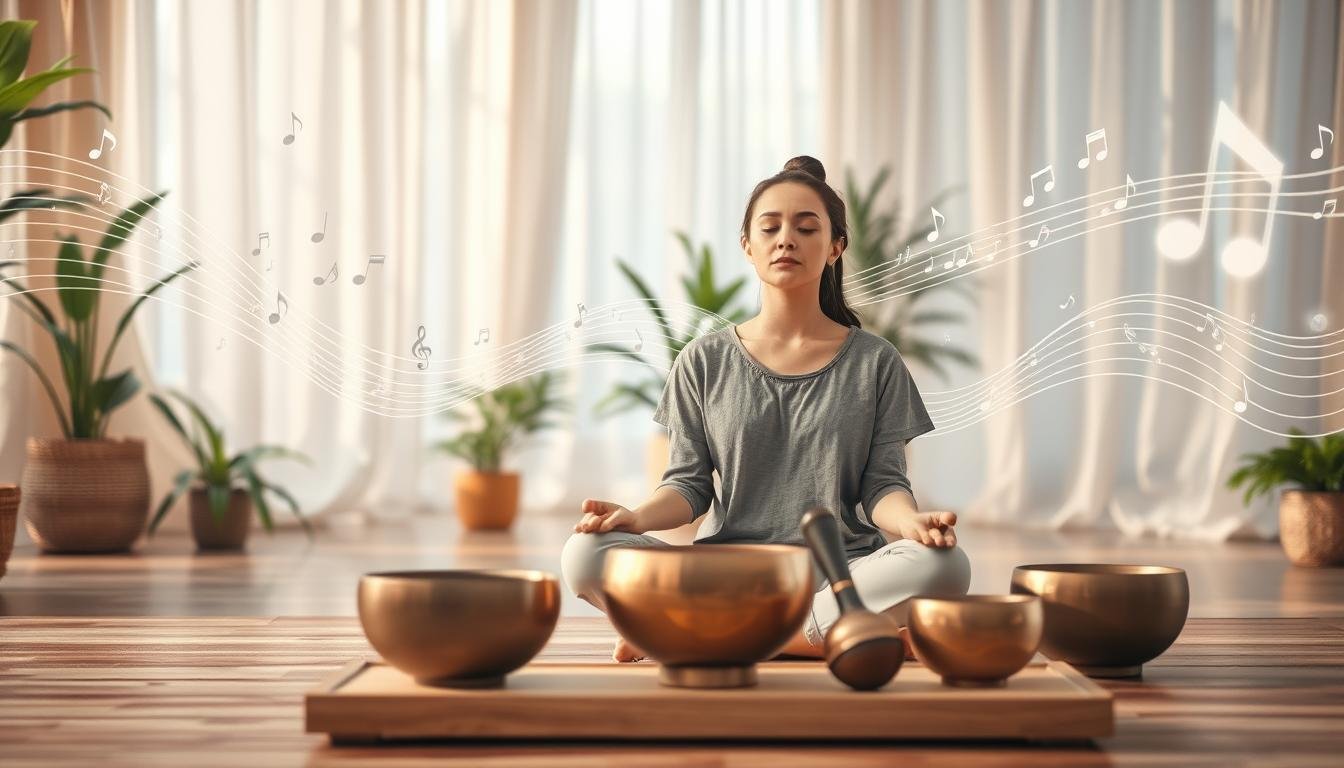
Meditation Frequencies: Understanding Sound and Frequency-Based Meditation
Have you ever wondered how meditation frequencies can help you find calm? These frequencies use steady tones, ambient music, or rhythmic pulses to create a soothing atmosphere. As highlighted by the TOI Lifestyle Desk on May 16, 2024, many people turn to different sounds for relaxation, sleep, or focus. Each frequency offers unique benefits, allowing you to choose what resonates best with your needs.
Among the various approaches, Solfeggio frequencies, binaural beats, and chakra-oriented music stand out. Each method offers distinct pathways to enhance your emotional and spiritual journey. It’s important to note that these recordings serve as wellness tools. They are not replacements for professional medical or mental health care.
This article will guide you through practical tips on selecting the right equipment, setting intentions, and aligning music with your personal goals. You’ll discover how to create a peaceful routine that supports your overall well-being.
Key Takeaways
- Different frequencies can enhance relaxation, sleep, and focus.
- Solfeggio frequencies and binaural beats are popular methods.
- These tools support wellness but are not substitutes for professional care.
- Practical tips can help you align sound with personal goals.
- Creating a peaceful routine can improve overall well-being.
What Are Meditation Frequencies?
Could the right sound be the key to unlocking your inner calm? A meditation frequency is an audible tone or rhythmic pattern measured in Hertz. The meaning of a tone often depends on how you listen and your personal intention.
Sound healing can take many forms, including singing bowls, nature recordings, or chanting. In contrast, frequency meditation often focuses on a specific numerical tone to enhance your experience.
Historically, nine Solfeggio tones were derived from numerology and have been used for centuries. These tones hold spiritual interpretations, which many view as beliefs rather than facts.
Traditionally, practices involved silence or natural sounds. Today, however, you can find various recordings through meditation apps and online platforms. To explore foundational breathing and attention skills that complement sound-based listening, check out this BetterLifeAtlas mindfulness article.
The Science Behind Sound Healing and Frequency Meditation
What if the right sound could influence your mood and energy levels? The science behind sound healing reveals that steady sounds can serve as an anchor for your attention. Many find that slow musical pacing and predictable repetition help them settle their minds more easily.
Different tones have specific associations. For example, the Meditation Music Library identifies 0.5 Hz with Delta-wave sleep music, 5 Hz with Theta waves, and 9 Hz with Alpha waves. However, it’s essential to note that these are not guaranteed outcomes. Individual experiences can vary widely.
Furthermore, the Solfeggio source suggests that 528 Hz may help reduce cortisol levels, which is linked to stress. Yet, personal responses to sound can differ, and scientific evidence is still evolving. It’s crucial to approach these claims with an open mind and a sense of curiosity.
Energy balance, too, is a subjective experience. It encompasses feelings of alertness, grounding, and emotional steadiness rather than measurable medical outcomes. If you ever feel discomfort while listening, such as agitation or headaches, it’s wise to stop or change the recording.
| Frequency (Hz) | Associated State | Recommended Listening Time |
|---|---|---|
| 0.5 | Delta-wave Sleep | 20-30 minutes |
| 5 | Theta Waves | 20-30 minutes |
| 9 | Alpha Waves | 5-15 minutes for beginners |
| 528 | Stress Reduction | 20-30 minutes |
Deep Dive: Meditation Frequencies and Their Benefits
Imagine if the right sounds could support your healing journey. Different tones can offer unique benefits for your physical, emotional, and spiritual well-being. Here’s a closer look at how specific frequencies may assist you in these areas.
| Intention | Suggested Track | Evaluation Method |
|---|---|---|
| Gentle relaxation around pain | 174 Hz | Assess if tension eases; persistent pain needs medical advice. |
| Boosting energy levels | 285 Hz | Note if you feel more energized; not a treatment for fatigue. |
| Enhancing communication and relationships | 639 Hz | Reflect on interactions; observe improvements in tolerance and love. |
Spiritual healing varies by individual. For some, it means finding meaning, engaging in prayer, or visualizing positive outcomes. Remember, these experiences are personal and may not guarantee universal effects.
Solfeggio Frequencies: Ancient Tones for Healing Energy
What if ancient tones could guide you toward healing and balance? Solfeggio frequencies are specific sound patterns that have been used for centuries to promote well-being. Each tone carries unique associations that can support various aspects of your life.
Here’s a closer look at some of these powerful tones:
- 174 Hz: This is known as a calming tone, ideal for easing tension and pain. Consider a quiet 5-15 minute body scan while listening.
- 396 Hz: Often referred to as the “frequency of liberation,” this tone helps release feelings of guilt and fear. Pair it with the intention: “I can respond to this feeling with compassion.”
- 417 Hz: This frequency is linked to new beginnings and changing habits. Reflect on transitions in your life while listening.
- 528 Hz: Known as the “Love Frequency,” it encourages self-acceptance and emotional reflection. Use it for heart-centered visualization.
| Hertz Value | Traditional Association | Suggested Intention |
|---|---|---|
| 174 Hz | Calm and pain relief | Relax and release tension |
| 396 Hz | Release guilt and fear | Respond with compassion |
| 417 Hz | New beginnings | Reflect on transitions |
| 528 Hz | Transformation and love | Embrace self-acceptance |

Harnessing Binaural Beats and Brainwave Frequencies for Deep Relaxation
Imagine harnessing the power of sound to achieve deeper relaxation. Binaural beats are created when two different frequencies are delivered to each ear. This unique auditory experience can help you reach various brainwave states, enhancing your relaxation journey.
For instance, the Meditation Music Library identifies 0.5 Hz as Delta waves, ideal for sleep. Meanwhile, 5 Hz represents Theta waves, perfect for deep meditation. Lastly, 9 Hz corresponds to Alpha waves, which promote a relaxed focus.
While listening, it’s crucial to use stereo headphones to experience the full effect of binaural beats. Starting at a comfortable volume for 5-15 minutes is recommended, especially if you’re new to this method. Also, avoid using binaural beats while driving or performing tasks that require your full attention.
Interestingly, the Schumann Resonance, often cited at approximately 7.83 Hz, differs from binaural beats. It serves as a natural frequency but does not involve the same listening technique.
Affiliate disclosure: This article contains affiliate links. If you purchase through one of these links, Better Life Atlas may earn a commission at no additional cost to you.
This section already explains that binaural beats only work as intended with stereo headphones, because each ear needs a slightly different tone. Ennora is a binaural-beats meditation audio library: downloadable tracks mixed for that two-ear listening format. Opening the link takes you to Ennora’s collection of those recordings, where the binaural-beats format is the product.
Incorporating Frequency Meditation into Your Daily Routine
Creating a dedicated space for your practice can enhance your experience significantly. Start by choosing a quiet, comfortable area where you can sit undisturbed. Following the TOI guidance, consider keeping the same chair, cushion, or blanket available. This consistency can help form a lasting habit.
Begin with shorter sessions of 5-15 minutes, gradually extending to 20-30 minutes as you feel more comfortable. It’s essential to listen to your body and adjust accordingly. For instance, you might focus on easing tension with 174 Hz or releasing fear with 396 Hz.
Before and after each session, take a moment to check in with yourself. Record your mood, energy, focus, and physical comfort. This practice can provide valuable insights without the pressure of dramatic results.
For more guidance on building habits, check out this BetterLifeAtlas article. Remember, consistency is often more beneficial than switching recordings daily.
Technology and Tools for an Immersive Meditation Experience
What role do technology and tools play in shaping your sound-based relaxation journey? The right audio equipment can significantly enhance your experience. For binaural beats, stereo headphones are essential. They help you fully immerse in the sound. On the other hand, speakers are great for ambient tracks, like those at 432 Hz or 528 Hz, especially in shared spaces.
When selecting audio equipment, focus on a few key factors:
- Clear playback: Ensure the sound is crisp and free from distortion.
- Comfortable fit: Choose headphones that you can wear for extended periods.
- Stable connections: Opt for Bluetooth or wired options that won’t cut out.
- Volume controls: This feature allows you to adjust the sound easily.
When exploring apps, check for features like tone identification, session length, and sleep timers. The Meditation Music Library offers a royalty-free collection that may suit wellness professionals and content creators. They also provide a 20% discount on first orders with the code SAGE20.
| Equipment Type | Best Use | Recommended Brands |
|---|---|---|
| Headphones | Binaural Beats | Sony, Bose |
| Speakers | Ambient Tracks | JBL, Sonos |
| Apps | Guided Sessions | Calm, Insight Timer |
Personalizing Your Frequency Meditation Journey
Imagine adjusting your sound sessions to fit your unique lifestyle and goals. Personalizing your experience can significantly enhance the benefits you receive. Here’s how to create a tailored approach that meets your needs.
Start by defining your goals. For instance, if you’re seeking restful sleep, pair it with 0.5 Hz Delta music. For deep introspection, consider 5 Hz Theta music. If you want to focus and relax, 9 Hz Alpha music is ideal.
For emotional healing, use 396 Hz to reflect on guilt or fear. You might explore 417 Hz for journaling about habit changes or 528 Hz for compassion-focused sessions.
It’s essential to test one recording over several sessions. This way, you can determine if it supports your mood, concentration, or emotional steadiness. Remember, shorter sessions of 5-15 minutes can fit into busy mornings, while longer sessions of 20-30 minutes may work better in the evening.
Ultimately, your comfort is paramount. If a sound feels distracting or unpleasant, don’t hesitate to switch it out. Trust your instincts, and let your journey unfold naturally.
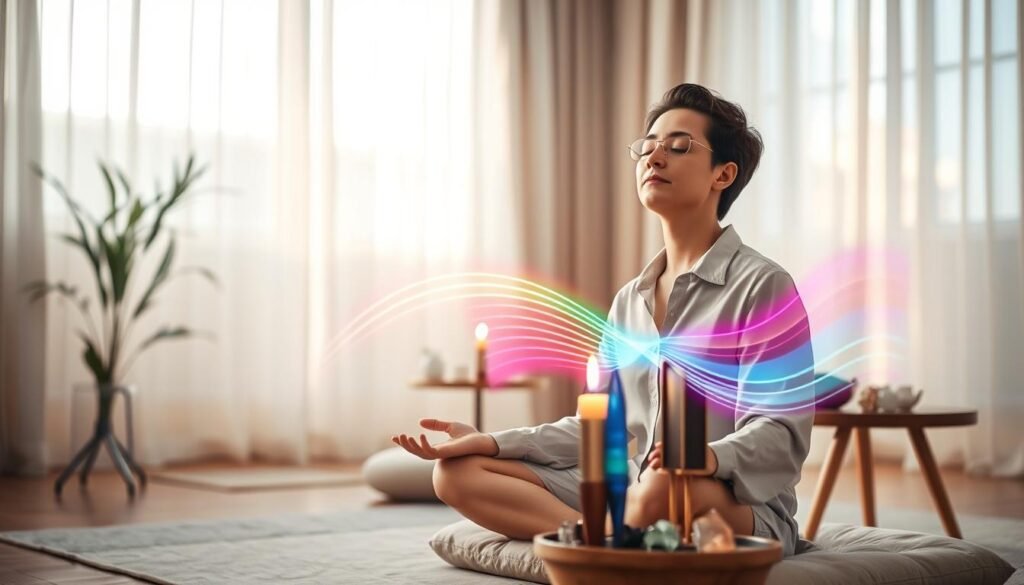
Achieving Chakra Balance with Healing Frequencies
Could exploring sound patterns lead you to a more balanced state of being? Understanding chakra-specific sounds can enhance your experience. Each energy center resonates with unique frequencies that may support your well-being.
Overview of Chakra-Specific Frequencies
| Chakra | Frequency (Hz) | Seed Mantra |
|---|---|---|
| Root | 396 | LAM |
| Sacral | 417 | VAM |
| Solar Plexus | 528 | RAM |
| Heart | 639 | YAM |
| Throat | 741 | HAM |
| Third Eye | 852 | OM |
| Crown | 963 | AUM |
These associations are part of spiritual traditions and should be viewed as reflective tools rather than medical claims. Pairing each center with its seed mantra can enhance your focus during practice.
Integrating Seed Mantras and Visualizations
To deepen your experience, choose one chakra to focus on. Imagine a warm color or gentle light at that center while breathing slowly for 5-15 minutes. This visualization can create a calming atmosphere.
For instance, you might listen to the 720 Hz track “The 7 Healers Vol. 1 – Third Eye Chakra” as you visualize. This approach combines sound with intention, fostering a deeper connection to your energy centers.
Top Meditation Music Tracks to Enhance Your Practice
Imagine the impact of thoughtfully curated playlists on your overall well-being. The right music can significantly elevate your relaxation experience. Here are some recommended tracks to consider for various moods:
Curated Playlists for Different Moods
- Sleep Playlist: Build around “Restoration,” the 0.5 Hz Delta track, designed for a smooth transition into restorative rest.
- Focus Playlist: Include “This Moment,” the 9 Hz Alpha track, keeping the volume low so it complements your reading or work.
- Grounding Playlist: Combine “Breath Of The Earth” at 110 Hz with “Timeless Earth,” inspired by the 7.83 Hz Schumann Resonance.
- Spiritual Reflection: Add “Guardian” at 444 Hz and “You Shall Heal” at 528 Hz for heart-centered practice.
- Deeper Meditation: Use “Healing Bowls” with 5 Hz Theta waves for a more profound experience.
Integrating Music from Trusted Sources
When using tracks for your classes or videos, it’s crucial to review licensing terms. The Meditation Music Library offers royalty-free tracks, including “Heart Alignment” and “You Shall Heal (528Hz)” for $49 each. This ensures you can share your journey while respecting creators’ rights.
Expert Tips for Maximizing Frequency Meditation Benefits
What practical steps can you take to maximize the advantages of your auditory practice? Starting with a consistent schedule of 5-15 minutes is ideal for beginners. Once you feel comfortable, gradually increase your sessions to 20-30 minutes. This approach allows you to build a sustainable routine.
Before each session, take a moment to write down one clear intention. After listening, jot down your observations. This practice helps you focus on what you want to achieve and track your progress.
It’s also beneficial to compare your sessions. Instead of assuming that every change in mood or stress level is due to a specific sound, consider tracking your sleep quality, perceived stress, focus, and overall mood. This method provides a clearer picture of your experience.
For example, someone might find that using 0.5 Hz before bed improves their sleep, while another person enjoys 9 Hz during quiet work hours. These are personal anecdotes, not scientific evidence, but they can guide your own practice.
Lastly, if you face ongoing pain, severe anxiety, or other significant issues, consulting a qualified professional is essential. Remember, while sound can support your journey, it should not replace professional advice.
| Session Length | Recommendation | Observation Tips |
|---|---|---|
| 5-15 minutes | Beginner’s practice | Focus on intention |
| 20-30 minutes | Regular practice | Track changes in mood |
| 45-60 minutes | Longer sessions | Reflect on overall experience |
Conclusion
Imagine how a consistent sound backdrop could elevate your personal growth journey. Utilizing various sound options can anchor your practice, whether you prefer a Solfeggio tone, a brainwave-inspired track, or natural recordings. Start with a brief 5-15 minute session in a quiet space, adjusting the length and equipment as you grow comfortable.
Consider using tones like 174 Hz, 396 Hz, 417 Hz, or 528 Hz to set intentions, but remember that these associations are not guarantees of healing. For binaural beats, opt for headphones, while speakers work well for ambient sounds. When creating content for clients or public classes, ensure the music is properly licensed.
Pay attention to how your mind and body respond over time. Place frequency practices alongside, not as a substitute for, appropriate medical or mental health support. Embrace this journey with curiosity and patience.
FAQ
What are meditation frequencies?
Meditation frequencies refer to specific sound vibrations that can promote relaxation, healing, and emotional balance. These frequencies can help you connect with your inner self and enhance your overall well-being.
How do sound and frequency affect the body?
Sound and frequency can influence your physical and emotional state by altering brainwave patterns and promoting a sense of calm. Different frequencies can target specific areas of stress or tension, helping to restore balance and harmony.
What are Solfeggio frequencies?
Solfeggio frequencies are a set of specific tones believed to have healing properties. Each frequency is associated with different benefits, such as reducing stress, promoting love, or aiding in emotional healing.
How can I incorporate frequency meditation into my daily routine?
You can start by setting up a peaceful meditation space and dedicating a few minutes each day to practice. Establish clear intentions for your sessions to guide your focus and enhance your experience.
What are binaural beats, and how do they work?
Binaural beats are created when two slightly different frequencies are played in each ear, resulting in a perceived third tone. This can help induce various brainwave states, promoting relaxation, focus, or sleep.
How can I personalize my frequency meditation journey?
Tailor your sessions by choosing frequencies that resonate with your personal needs and goals. Experiment with different sounds and techniques to find what works best for you.
What tools or technology can enhance my meditation experience?
Consider using quality headphones or speakers to immerse yourself in sound. There are also various apps and online resources that offer guided sessions and curated playlists to support your practice.
How can I achieve chakra balance through sound?
Each chakra is associated with specific frequencies. By focusing on these tones during your practice, you can help align and balance your energy centers, promoting overall well-being.
What are some recommended meditation music tracks?
Look for curated playlists that cater to different moods and intentions. Trusted sources often provide high-quality tracks designed to enhance your meditation experience.
What tips can help maximize the benefits of frequency meditation?
Consistency is key. Set aside regular time for practice, and stay open to exploring new techniques and frequencies. Real-life examples from others can also inspire and motivate your journey.