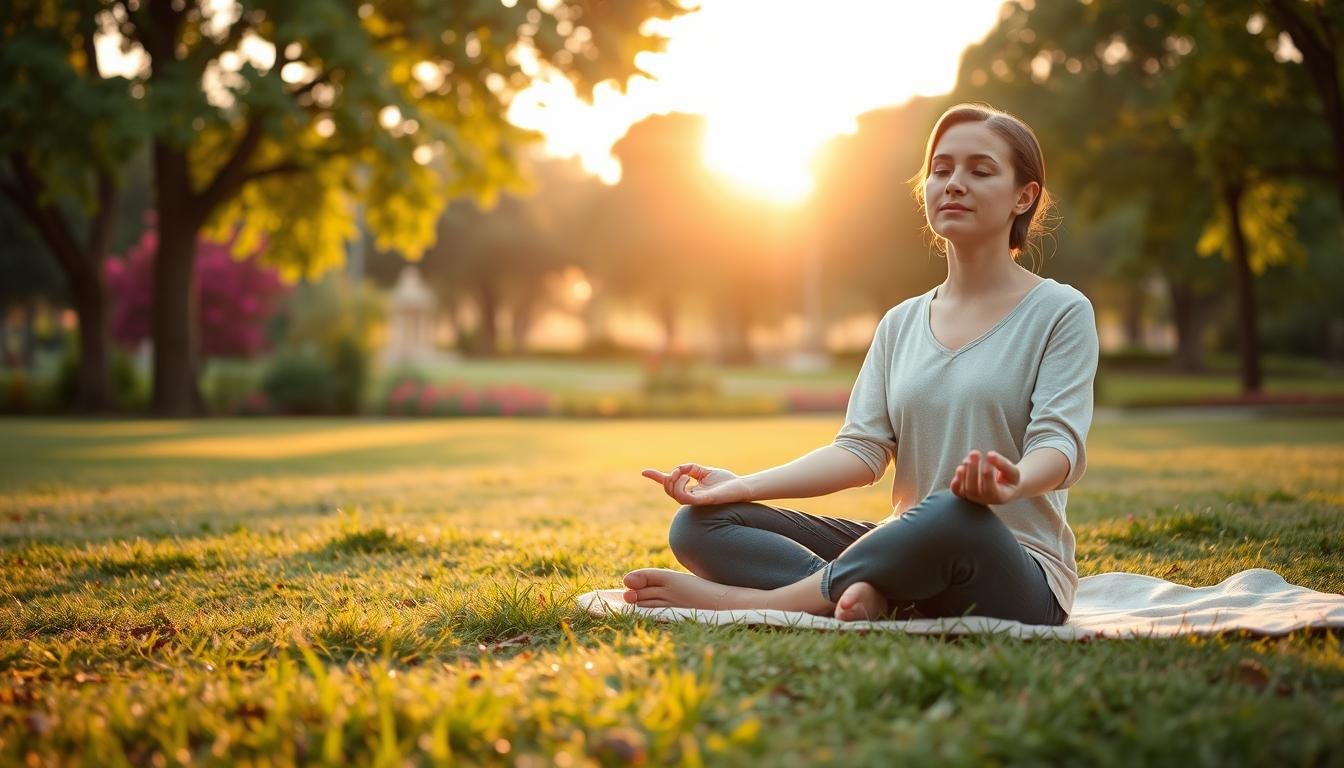
Grounding Meditation: A Simple Practice to Feel Calm and Present
Have you ever felt overwhelmed by stress or racing thoughts? If so, you’re not alone. Many people struggle with anxiety and find it challenging to stay present. Grounding practices can help. They allow you to focus on your body and breath, bringing your attention back to the moment.
Kim Burris, a licensed holistic therapist with over ten years of experience, offers a simple five-minute routine. This practice invites you to notice your feelings without the pressure to change them. Instead of striving for a quiet mind, you can learn to embrace your current state.
Whether you’re at home, in a chair, or outside, you can pause and connect with yourself. This article, refreshed in June 2026, aims to provide you with practical guidance to incorporate this calming practice into your daily life.
Key Takeaways
- Grounding meditation helps redirect attention to the body and breath.
- It encourages noticing feelings without judgment.
- A simple five-minute routine can ease stress and anxiety.
- Accessible practices can be done anywhere, anytime.
- This article has been updated for current, practical guidance.
Introduction to Grounding Meditation
Do you sometimes struggle to stay focused and present amidst life’s chaos? Grounding practices can help you find a sense of rootedness and calm. Think of it like a tree firmly planted in the earth, offering stability even in strong winds.
This technique encourages you to bring your attention and energy “in and down,” anchoring your body and nervous system. One popular method is the 5-4-3-2-1 technique. It guides you to notice five things you can see, four you can touch, and three you can hear. This practice shifts your focus from racing thoughts to the present moment.
Unlike sensory distractions that only provide temporary relief, grounding connects you deeply with your physical sensations. You don’t need special equipment or an empty room to start. Just find a comfortable spot and choose the approach that feels right for you.
How Grounding Meditation Eases Anxiety
Anxiety can often feel like a heavy weight, clouding your ability to enjoy the present moment. This emotional state engages your autonomic nervous system, making it challenging to find calm through mere thinking. Research by Chalmers in 2014 found that people with anxiety disorders show reduced heart rate variability. This highlights the need for practices that promote nervous system flexibility.
Grounding techniques, such as focusing on your breath and body, can help interrupt escalating stress. By directing your attention inward, you create a pause in the chaos. Slow, deliberate breathing allows you to regain control and can be particularly effective in moments of high anxiety.
In a study by Hooper and colleagues in 2011, breathing-based mindfulness was shown to reduce anxiety in phobic situations. These findings suggest that incorporating such practices into your routine can be beneficial. However, if anxiety significantly disrupts your relationships, work, or sleep, seeking professional therapy is essential.
The Science Behind Grounding Meditation
When stress hits, do you notice how disconnected you feel from your physical self? Understanding the connection between your body and breath is essential. Grounding practices can help bridge this gap. The vagus nerve, a key player in your nervous system, runs from your brainstem through your heart and lungs. It plays a vital role in regulating stress responses.
Research by Laborde in 2022 showed measurable changes in heart-rate variability after just one session of slow breathing. This indicates that even five to ten minutes of focused breathing can start to shift your body’s physiology. Similarly, Hoge’s 2023 study found that an eight-week mindfulness-based stress reduction course led to anxiety reductions comparable to a leading medication.
Moreover, Stephen Porges introduced the concept of neuroception, which explains how your nervous system continuously scans for safety. This understanding is crucial for grounding practices. By returning your attention to your breath and body, you enhance your ability to manage stress and anxiety effectively.
| Study | Findings | Implications |
|---|---|---|
| Laborde 2022 | Heart-rate variability changes after slow breathing | Short sessions can improve physiological responses |
| Hoge 2023 | Mindfulness course reduces anxiety | Mindfulness is as effective as medication |
| Porges | Neuroception concept explained | Understanding safety can enhance grounding practices |
Preparing Your Mind and Space for Meditation
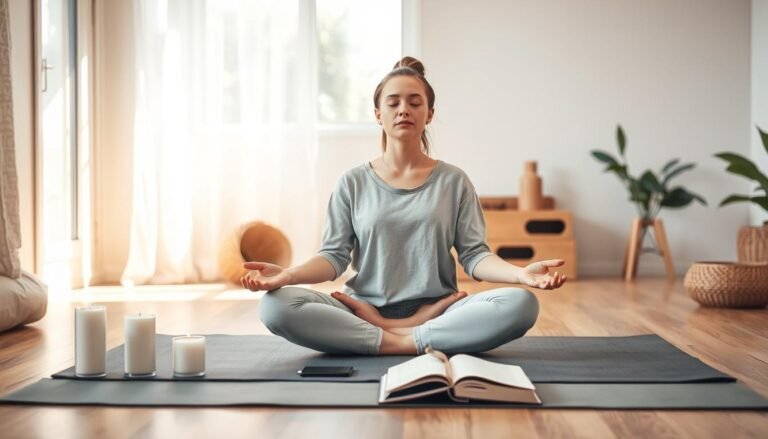
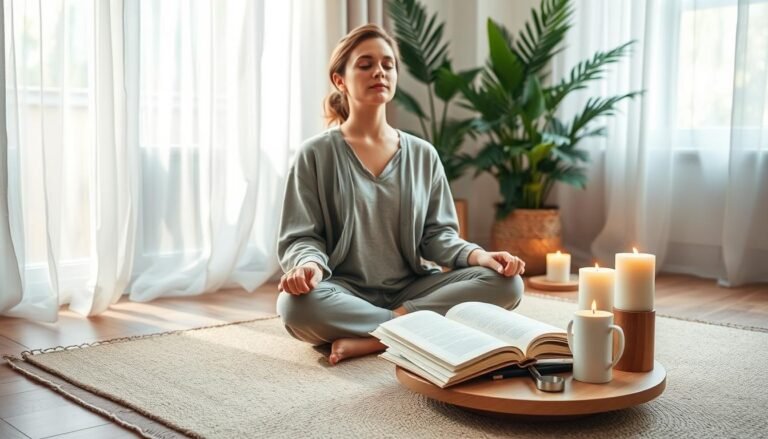
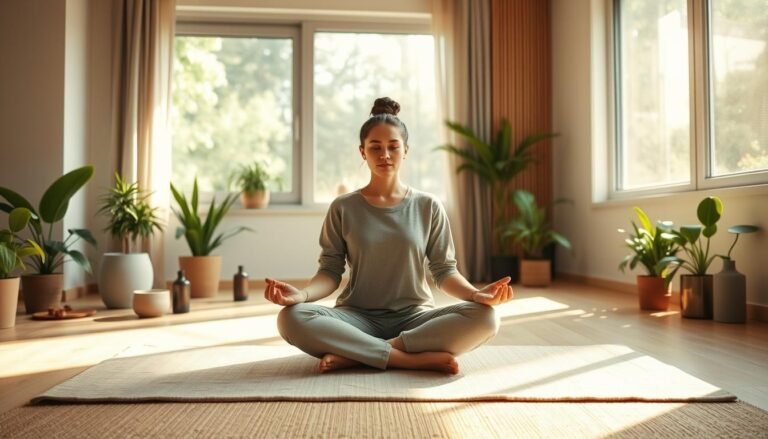
Finding a peaceful spot can be the first step toward feeling more centered. A calm environment sets the stage for your practice. You can choose to sit in a chair, on the floor, or even lie down if that feels better for your body.
While a quiet room is ideal, it’s not essential. You can practice in a parked car or outdoors, making it easy to fit this into your day. Aim for five to ten minutes of focused time, turning off electronic devices and dimming the lights when possible.
Before you begin, take a moment for a self-check. Ask yourself if your body feels tense, tired, or restless. If you notice discomfort, remember that it’s okay to open your eyes, move gently, or stop if stillness becomes distressing.
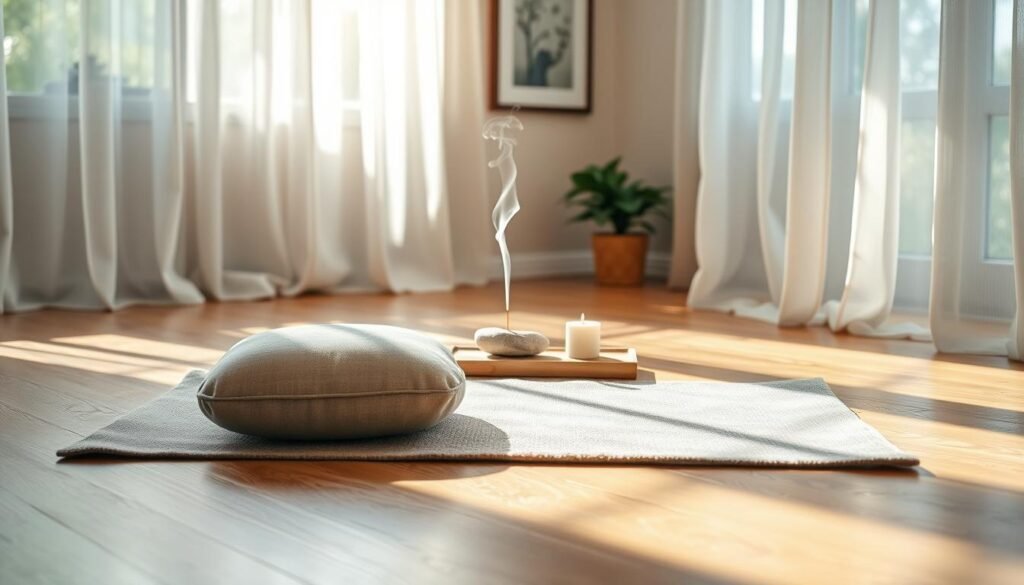
A Step-by-Step Guide to Practicing Grounding Meditation
Do you ever wish you could just take a moment to feel your body fully? This practice is about reconnecting with yourself. It starts with finding a comfortable posture and setting an intention. You don’t need to fix anything; just be present.
As you settle in, consider these options for your posture: sitting in a chair, on the floor, or lying down. Whatever feels supportive is perfect. Next, set an intention to show up without judgment. This will help you stay focused during your practice.
Before You Begin: Finding Your Posture and Intention
- Choose a supported posture that feels right for you.
- Set an intention to simply be present, without trying to change anything.
During the Session: Focusing on Your Breath and Body
During your five-minute practice, direct your attention to your breath. Notice how your belly softens and the contact of your body with the surface beneath you. If your mind wanders, gently guide it back to your breath without self-criticism.
After the session, take a moment to notice any changes. Is there a 1% shift in your ease or tension? You might also consider journaling a few sentences about your experience. This reflection can deepen your awareness and help you connect with your body.
| Step | Action | Purpose |
|---|---|---|
| 1 | Choose your posture | Find comfort and support |
| 2 | Set your intention | Encourage presence and acceptance |
| 3 | Focus on breath | Anchor attention and calm the mind |
| 4 | Notice changes | Reflect on your experience |
Using Your Breath as the Heart of the Practice
Isn’t it interesting how just a few conscious breaths can bring you back to the present? Your breath serves as a powerful anchor in moments of stress or anxiety. To begin, take a moment to notice where your inhalation starts and ends, then observe the same for your exhalation. Follow your breath without forcing its depth.
As a comfortable starting point, try inhaling for three seconds and exhaling for three seconds. This simple technique can create a steady rhythm. Some people find that a longer exhale feels soothing, but if counting feels strained, return to your natural breathing.
Research by Laborde in 2022 found that just one session of slow breathing can lead to measurable changes in heart-rate variability. Aim for five to ten minutes of steady breathing each day. Remember, comfort and consistency matter more than perfect technique.
Enhancing Body Awareness Through Mindful Movement
Sometimes, your body can speak louder than your mind, revealing stress and discomfort. By tuning into your physical sensations, you can identify areas of tension and relaxation. This awareness is the first step in transforming how you feel.
Start with a slow body scan. Begin at your feet and move upward, noticing any tightness in your jaw, shoulders, or chest. Don’t rush to relax; just observe. This simple practice helps you connect with your body.
To deepen this connection, try pressing your heels into the floor. Feel the solid ground beneath you. Then, gently release the pressure. This physical anchor can ground you in the moment.
Incorporate gentle movements like shoulder rolls or neck stretches. You might also enjoy standing stretches or swaying side to side, similar to playful movements from childhood. These techniques help release built-up energy and promote relaxation.
Additionally, consider creative activities like coloring, which studies have shown can calm both students and children. Embrace these tools to enhance your body awareness and reduce stress.
Tools and Techniques to Elevate Your Practice
Imagine having easy access to techniques that can enhance your calm and focus. Utilizing guided audio and video meditations can significantly support your practice. A five-minute guided session can reduce decision-making fatigue by providing clear spoken prompts for posture, breathing, and body awareness.
When selecting recordings, look for those with a calm pace and clear instructions. It’s also helpful to choose options that allow flexible posture and give you permission to pause if sensations become uncomfortable.
Building a personal toolkit can further enhance your experience. Consider including:
- A textured object to hold during practice.
- Calming music that resonates with you.
- Written affirmations to inspire positivity.
- Water to stay hydrated and refreshed.
- A sensory exercise that connects you to the present moment.
Organize your tools into physical, mental, and soothing categories, as suggested by Najavits in 2007. Resources from universities like James Madison University and the University of Sydney can also provide valuable guidance tailored to your comfort level.

Integrating Grounding Meditation into Daily Routines
Do you find it challenging to stay grounded amidst the hustle and bustle of daily routines? Integrating short sessions into your day can make a significant difference. These moments can help you connect with your body and breath, reducing anxiety and enhancing your overall well-being.
Start your day with five minutes of practice before checking messages. This time allows you to notice your body and set a steady intention for the day ahead. Between meetings, take one to three minutes to release shoulder tension. Press your feet into the floor to reset before diving back into work.
Consider practicing before difficult conversations or after therapy. This approach creates space for emotions and helps you avoid carrying stress into your next interaction. Use transitions, like sitting in a parked car, to shift your focus before heading home.
Remember, even one minute of conscious breathing daily is a meaningful start. Consistent practice is more beneficial than waiting for perfect conditions. Embrace these small moments to cultivate calm in your life.
Grounding Meditation Benefits for Overall Wellbeing
Isn’t it fascinating how simple practices can lead to profound shifts in your emotional state? Engaging in grounding techniques can offer both immediate and lasting benefits for your well-being.
Many people report feeling a sense of calm after just a few minutes of focused attention. This can manifest as:
- Calmer breathing and reduced tension in the body.
- Improved emotional clarity and steadiness.
- Enhanced sleep patterns over time.
- Greater focus and confidence in daily tasks.
While some may notice these changes quickly, others might experience subtler benefits that develop through consistent practice. For instance, a mere 1% reduction in tension can be a meaningful step toward greater ease.
Research, such as the study by Hoge in 2023, highlights that regular mindfulness practices can significantly improve heart-rate variability. This suggests that while grounding techniques can enhance your emotional health, they should complement, not replace, professional therapy when needed.
To explore more about these practices, check out for guidance.
Combining Mindfulness with Grounding Practices
Isn’t it curious how a few mindful practices can transform your day? By integrating mindfulness with grounding techniques, you can deepen your awareness and connection to the present moment.
Start with simple grounding exercises. For instance, use the 5-4-3-2-1 method. This involves:
- Identifying five things you can see.
- Noticing four things you can touch.
- Listening for three sounds around you.
- Smelling two scents in your environment.
- Tasting one thing, if possible.
As you practice, consider adding mindful movement. Stand tall like a tree, gently swaying, or feel how the floor supports your feet. This connection can enhance your sense of stability.
For a deeper experience, visualize the earth rising through your spine, providing support and grounding. This imaginative anchor relates to Stephen Porges’s concept of neuroception, helping you feel safe and connected.
Combining these techniques can lead to profound shifts in your overall well-being. As you explore these variations, remember that mindfulness is a personal journey. You can choose what resonates with you and adapt your practice accordingly.
Overcoming Common Challenges in Meditation
Is it challenging for you to quiet your mind during practice? You’re not alone. Many people experience a wandering mind, often referred to as “monkey mind.” According to Yates, Immergut, and Graves (2017), this type of thinking jumps rapidly between ideas, making it hard to focus.
It’s important to remember that noticing distractions and returning to your breath is part of the practice. This isn’t a sign of failure; it’s an opportunity to strengthen your focus. When you feel overwhelmed, try this simple reset: open your eyes, name a few visible objects, press your feet into the ground, take a sip of water, and move gently.
For those who experience panic, Tully, Sardinha, and Nardi (2017) proposed a mindfulness-based action plan. However, if you encounter serious or unfamiliar chest symptoms, seek medical attention immediately. You might also want to keep track of which grounding technique helps you best during different stages of a panic attack, as suggested by Kissen and colleagues (2020).
Additional Resources and Internal Links for Further Guidance
Are you searching for effective ways to manage stress and anxiety? You’re not alone. Many people look for resources that can support their emotional health. Below are some valuable tools and articles that can help you deepen your practice and understanding.
Explore Related BetterLifeAtlas Articles
- Anxiety Relief Techniques
- Beginner Mindfulness Exercises
- Breathing Techniques for Anxiety
- Improving Sleep Habits
- Enhancing Body Awareness
- Stress Management Strategies
Natural External References and Further Reading
For additional grounding exercise materials, consider checking resources from the University of Lethbridge, James Madison University, and the University of Sydney. These institutions provide worksheets and guides to help you practice effectively.
If you find yourself needing professional support, the Holistic Counseling Center offers online services throughout California. With in-person offices in El Dorado Hills, San Anselmo, and San Francisco, they integrate various therapeutic approaches, including psychotherapy, somatic therapy, and mindfulness techniques.
Conclusion
Have you ever noticed how a simple moment of awareness can shift your entire day? Grounding techniques provide a practical way to reconnect with your body and breath when anxiety or mental overload takes over.
Start with just five comfortable minutes, or even one minute of conscious breathing. Measure your progress through small changes rather than striving for perfect calm. You can choose a chair, the floor, a parked car, or an outdoor place to practice.
Remember, wandering thoughts are normal. Each gentle return to your breath strengthens your attention without requiring you to silence your mind. If anxiety disrupts your sleep, relationships, or daily life, combine these practices with appropriate medical or therapy support for the best results.
FAQ
What is grounding meditation?
Grounding meditation is a practice that helps you connect with the present moment, focusing on your body and breath to cultivate mindfulness and reduce stress.
How can grounding meditation help with anxiety?
This technique can ease anxiety by shifting your attention away from racing thoughts and into the sensations of your body, promoting a sense of calm and safety.
What are some simple grounding techniques I can try?
You can try focusing on your breath, feeling your feet on the ground, or using sensory experiences like touching an object or listening to calming sounds.
How long should I practice grounding meditation?
Even a few minutes can be beneficial. Aim for 5-10 minutes daily to start, gradually increasing the time as you become more comfortable.
Do I need any special tools for grounding meditation?
No special tools are required. However, using guided audio or video resources can enhance your experience and help you stay focused.
Can I practice grounding meditation anywhere?
Yes! You can practice in various settings, whether at home, in a park, or even at your workplace, as long as you can find a quiet moment.
What should I do if my mind wanders during meditation?
It’s normal for your mind to wander. Gently acknowledge the thoughts and redirect your focus back to your breath or body sensations without judgment.
How can I integrate grounding meditation into my daily routine?
Consider incorporating it into your morning routine or using quick reset exercises throughout the day to maintain a sense of calm and presence.