A Practical Meditation Guide for Building a Consistent Daily Practice
Have you ever thought about how a simple practice can change your life? Incorporating meditation into your daily routine is more accessible than you might think. You don’t need fancy equipment or a perfect environment to start. All you need is a few quiet moments each day.
Begin with just 5 to 10 minutes. This short time frame makes it easy to fit into your busy schedule. You can sit comfortably, focus on your breath, and gently notice when your mind wanders. It’s perfectly normal to get distracted. The key is to return your attention without judgment.
For those who prefer some guidance, Mindfulness.com offers beginner-friendly sessions and a free trial. Remember, consistency is what truly matters. You don’t have to achieve a perfectly quiet mind right away. Just take those small steps each day, and you’ll be on your way to a more mindful life.
Key Takeaways
- Start with 5-10 minutes to make the practice approachable.
- No special equipment or memberships are needed.
- Focus on natural breathing and notice distractions.
- Mindfulness.com offers short sessions for beginners.
- Consistency is more important than achieving a quiet mind.
Introduction to Meditation and Its Value
Imagine how a small change in your daily routine can lead to significant transformations. Understanding meditation and mindfulness can be the first step toward a more focused and fulfilling life. These practices are not just about relaxation; they are tools for training your mind.
Meditation is essentially about redirecting your attention, often using the breath as an anchor. It helps you cultivate calm and clarity. Remember Sharon Salzberg’s experience? She lost focus after just one breath during her first attempt. This shows that wandering thoughts are completely normal and part of the process.
Mindfulness, on the other hand, is about being present with your thoughts and feelings without judgment. It differs from forced relaxation by allowing you to acknowledge sensations as they arise. Just a brief pause can create space for better choices at home, work, and in relationships.
Mindfulness meditation is a practical approach to recognizing automatic reactions before deciding how to respond. This can lead to improved interactions and a more balanced life.
| Concept | Definition | Benefits |
|---|---|---|
| Meditation | Training the mind to focus and redirect attention | Increased calm and clarity |
| Mindfulness | Present-moment awareness without judgment | Improved decision-making and emotional regulation |
| Breath Awareness | Using breath as an anchor for focus | Enhanced concentration and relaxation |
Understanding the Basics of Meditation Practice
The interplay between your breath, mind, and body can create a powerful foundation for personal growth. When you focus on your breath, you anchor your attention, allowing your body to relax. This connection helps you notice when your mind wanders, guiding you back to the present moment.
Mindfulness techniques often utilize the breath as a focal point. However, you can also explore other methods, such as sounds or sensations. Here are some key points to consider:
- Natural breathing provides a steady reference point, keeping your body grounded and relaxed.
- Noticing thoughts and returning to the breath strengthens your attention over time.
- Body sensations can offer valuable insights, revealing feelings in areas like your belly or shoulders.
- Breathing techniques, such as diaphragmatic breathing and alternate-nostril breathing, are optional but beneficial.
- When breath-focused practice feels challenging, consider using sounds or open awareness as alternatives.
How to Meditate for Beginners
Starting a new practice can feel daunting, but it can lead to remarkable changes in your life. Here are some simple steps to help you get started with your meditation journey.
Simple Steps to Get Started
- Find a comfortable spot where you can sit without distractions.
- Set a timer for 5-10 minutes to keep your practice manageable.
- Notice your body and take a moment to relax your shoulders and back.
- Focus on your breath, inhaling deeply and exhaling slowly.
- When your mind wanders, gently bring your attention back to your breath.
Setting Up Your Meditation Environment
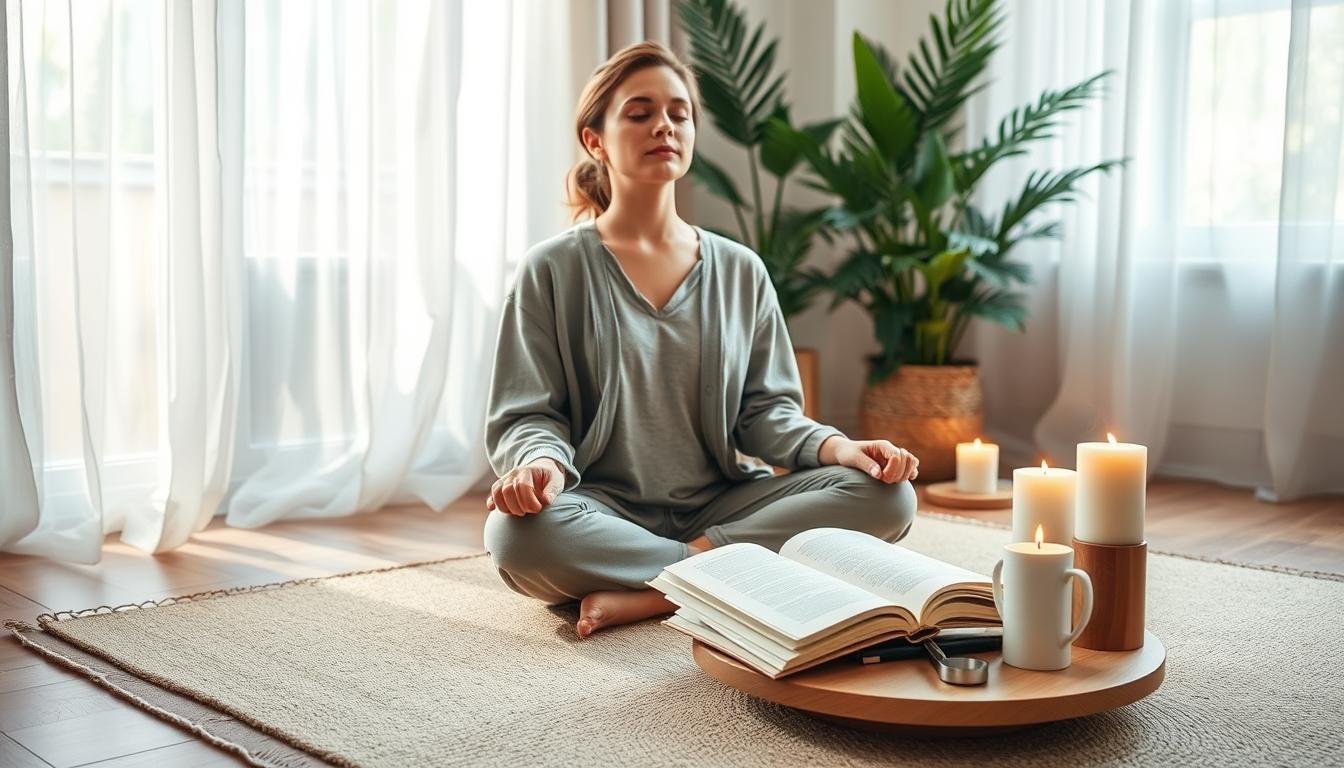
Your meditation space doesn’t need to be perfect. A chair, cushion, or even your bed can work, as long as your back is supported and your shoulders are relaxed. You can keep your eyes gently open or softly closed, depending on what feels best for you.
It’s important to choose a calm area, but remember that ordinary sounds are part of life. Allow yourself to be present with them. As you finish your practice, lift your gaze gently, notice the sounds around you, and reflect on your thoughts and sensations.
| Step | Description |
|---|---|
| 1 | Find a comfortable position |
| 2 | Set a timer for 5-10 minutes |
| 3 | Focus on your breath |
| 4 | Gently return your attention when distracted |
| 5 | Reflect on your experience at the end |
Building a Daily Meditation Habit
Creating a consistent routine can transform your life in unexpected ways. Establishing a daily practice doesn’t have to be overwhelming. You can start small and gradually build your habit.
Research by Amishi Jha suggests that just 12 minutes of meditation five days a week may help support attention. This manageable target makes it easier to fit into your day. Remember, it’s not about the length of time but the consistency of your practice.
Since about 95% of our behavior runs on autopilot, consider using reminders to help you stay on track. Attach your practice to existing routines, like brushing your teeth or getting ready for bed. This way, it becomes a natural part of your day.
Don’t worry if you miss a day; it doesn’t erase your progress. Simply return to your practice when you can. Tracking your sessions can also be helpful. Focus on the number of days you meditate rather than extending the duration too quickly.
Your Meditation Guide: Cultivating Mind and Body Awareness
Think about how guided practices can lead you to a more profound understanding of yourself. Guided meditation offers structured instructions that can help you focus on your posture, breathing, and visualization. This approach is especially beneficial for beginners who may feel uncertain about how to start.
Consider choosing a session length that fits your schedule. Whether you have a few minutes for a quick check-in or a longer time for a deeper experience, there’s a session for you. It’s essential to notice body sensations and emotions during these practices. Instead of viewing them as distractions, allow them to be part of your experience.
The Mindfulness.com app provides beginner-friendly sessions that can offer you the support you need. As you grow more comfortable, you can gradually try unguided practices, focusing on your breath or another point of attention.
| Guided Meditation Benefits | Description |
|---|---|
| Clear Instructions | Provides prompts for posture and breathing |
| Visualization Techniques | Enhances focus and relaxation |
| Emotional Awareness | Encourages noticing feelings without judgment |
Guided Meditation Techniques and Variations
Explore the various approaches to deepen your understanding and connection with your body and mind. There are many techniques available, each offering unique benefits to enhance your practice.
Exploring Audio Practices and Apps
Audio-guided practices can be a great way to start. Apps like Headspace and Calm provide structured sessions for various techniques. You can try body scan meditations, which guide your attention from your toes to your head. This practice helps you notice sensations without judgment.
A Closer Look at Body Scan and Mindfulness Techniques
In body scan meditation, you pause at each body part to observe feelings. This technique enhances your awareness of how your body feels. Another effective method is loving-kindness meditation, where you repeat phrases like “May I live in safety” and “May I live with ease.”
For a more traditional approach, consider Transcendental Meditation, developed by Maharishi Mahesh Yogi in the 1950s. This technique involves practicing for 20 minutes twice daily, ideally with a certified teacher.

Overcoming Common Challenges in Meditation
Every new endeavor comes with its own set of challenges, especially in cultivating awareness. You might find your mind wandering or be distracted by everyday sounds. Remember, even experienced practitioners like Sharon Salzberg have moments when their thoughts drift away after just one breath.
To manage these distractions, it helps to normalize wandering thoughts. When they arise, gently notice them and guide your attention back to your breath or body sensations. This simple response can strengthen your focus over time.
Everyday noises, like barking dogs or traffic, don’t have to disrupt your practice. Instead, view them as part of your experience. If external sounds are too distracting, consider using earplugs or soothing music to create a more peaceful environment.
Discomfort is also common. If you feel itchy or sleepy, make small adjustments rather than forcing stillness. Remember, the goal is to stay present, not to achieve perfection.
Integrating Meditation into Your Daily Routine
Imagine transforming routine moments into opportunities for greater focus and presence. You can link mindfulness with familiar activities to enhance your daily life. Consider pairing your practice with simple tasks like brushing your teeth or walking to your car.
Mindful walking is a great way to start. Notice the lifting and falling of each foot as you walk. Count your steps to ten, then begin again. This technique can help ground you in the moment.
Creating reminders can also support your practice. Place a cushion or a note in your usual spots, like near your chair or by the door. This visual cue can prompt you to pause and take a breath before moving on with your day.
Try using “If this, then that” cues. For example, if you open the office door, take one deep breath. Or, if your phone rings, pause for a moment. Regularly refreshing these reminders can keep them effective, especially since much of our behavior runs on autopilot.
Benefits of Regular Meditation Practice
Consider how integrating a few moments of mindfulness into your day can lead to lasting benefits. Regular practice can significantly reduce stress and enhance your focus. By training your attention to return from distractions, you can create a more peaceful mind.
Research by Amishi Jha suggests that just 12 minutes of practice, five days a week, may help protect and strengthen attention. Guided programs often report that several weeks of consistent practice may support lower stress and greater life satisfaction for some people.
Furthermore, regular practice may improve sleep quality, boost immunity, and support emotional health. While it’s important to note that meditation is not a cure-all, some research has associated meditation practice with resilience and cardiovascular health. For deeper insights, consider exploring the 2019 study on PTSD, the 2002 article on hypertension, and the 2014 research on immune-cell levels.
Always remember that meditation complements appropriate medical care. Individual experiences can vary across techniques and personal goals, making it essential to find what works best for you.

Conclusion
Every small step you take can lead to a significant shift in your daily life. As a beginner, you can start with just five minutes in a comfortable chair, focusing on natural breathing. Remember, returning your attention is part of the process, just like Sharon Salzberg’s one-breath example illustrates.
To create a sustainable routine, aim for 12 minutes of practice five days a week. It’s okay to shorten your sessions when life gets busy. Choose one technique, one daily cue, and one supportive audio option to begin with, then gradually explore more.
Ultimately, this practice can support your attention, reduce stress, and deepen your awareness. You don’t need perfect silence or special beliefs to benefit. Start today, and see how these small moments can transform your world.
Related Guides
- Meditation for Beginners: How to Start a Simple Daily Practice
- Guided Meditation: How It Works and How to Get Started
- Meditation Benefits for Mind, Focus, and Daily Well-Being
FAQ
What is the best time of day to practice meditation?
The best time to meditate is when you can be consistent. Many people find morning meditation helps set a positive tone for the day, while others prefer evening sessions to unwind. Choose a time that works for you.
How long should I meditate each day?
Starting with just 5 to 10 minutes is perfectly fine. As you become more comfortable, you can gradually increase the duration. Aim for at least 20 minutes for more profound benefits.
Do I need to sit in a specific position to meditate?
No specific position is required. You can sit on a chair, cushion, or even lie down if that feels more comfortable. The key is to maintain a posture that keeps you alert yet relaxed.
What if my mind keeps wandering during meditation?
It’s normal for your mind to wander. When you notice this happening, gently bring your focus back to your breath or the present moment. This practice helps strengthen your mindfulness over time.
Can I use guided meditations as a beginner?
Absolutely! Guided meditations are a great way to start. They provide direction and support, making it easier to focus and stay engaged during your practice.
How can I create a calming meditation environment?
Find a quiet space where you won’t be disturbed. Consider dimming the lights, using comfortable seating, and adding calming elements like candles or soft music to enhance your experience.
What are the benefits of regular meditation practice?
Regular practice can reduce stress, improve focus, enhance emotional health, and promote better sleep. Over time, it helps cultivate a greater sense of awareness and connection to your body and mind.
How do I stay motivated to meditate daily?
Set a specific time each day and treat it as an important appointment. Tracking your progress and joining a community can also provide motivation and support.