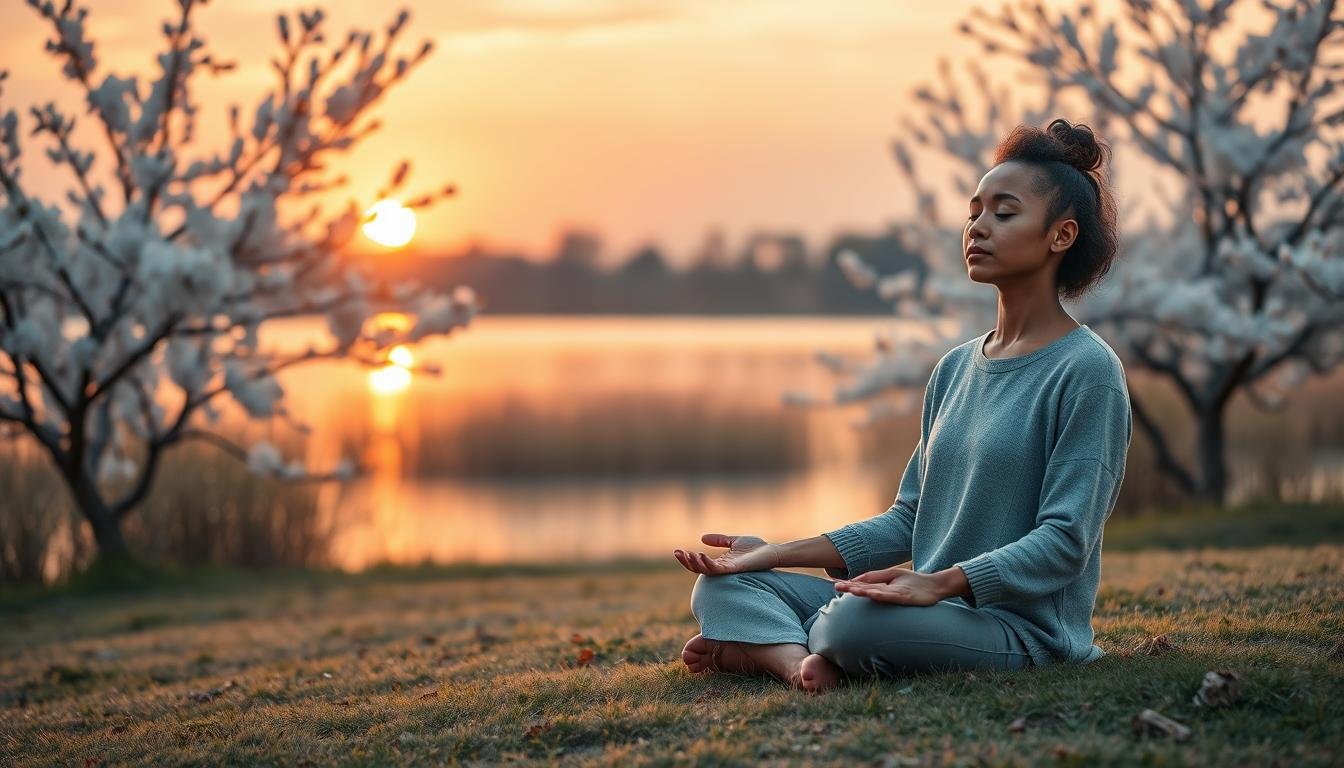
Peace Meditation: A Simple Practice for Calm and Inner Balance
In our busy lives, taking just a few quiet minutes can help you reconnect with calm. For instance, Kate James’s 4.8-rated meditation has gained over 99.1k plays, demonstrating its effectiveness. This article introduces a simple practice designed for beginners, inspired by Kate James in Melbourne and Sound & Yoga in Portland, Maine.
Sound & Yoga’s three-minute meditation is particularly appealing when your schedule feels crowded or emotionally demanding. You’ll learn to focus on your breath and gently relax your body. This approach encourages you to be present rather than forcing your mind to empty.
You can practice this technique seated or lying down, following Kate James’s beginner-friendly guidance. Remember, while meditation can support a sense of calm and balance, individual experiences may vary from day to day.
For those looking to integrate this practice into daily life, consider pairing it with a consistent morning routine. Check out our article on building a consistent morning routine to make meditation easier to remember.
Understanding Peace Meditation
Amidst the chaos of daily life, carving out a few moments can help you rediscover your center. Peace meditation is a present-focused practice that combines breath observation, body scanning, and guided imagery. Following Kate James’s approach, you can gently connect with your body and mind.
In this practice, you’ll learn to notice breath sensations across the top lip, chest, and abdomen. This focus provides clear physical points for beginners, making it easier to stay engaged. As you soften your eyes, jaw, and shoulders, you may begin to notice where your body holds tension.
Some benefits of this guided meditation include relaxation and a reduced awareness of stress. Sound & Yoga designed their sessions specifically for those feeling overwhelmed or anxious. You might also explore visualization techniques, like imagining a calm place or warm light in your heart space.
Remember, meditation isn’t about judging your thoughts. It’s a way to reveal the nature of your mind and enhance your self-awareness. For further exploration, consider Dr. Jana Rentzel’s or Gay Vickers’s Mindfulness Meditation for Inner Stillness.
Simple Steps for Daily Meditation Practice
A few quiet moments can serve as a bridge to a more serene state of mind. Here’s a simple guide to help you get started with your daily practice.
Preparing Your Mind, Breath, and Body
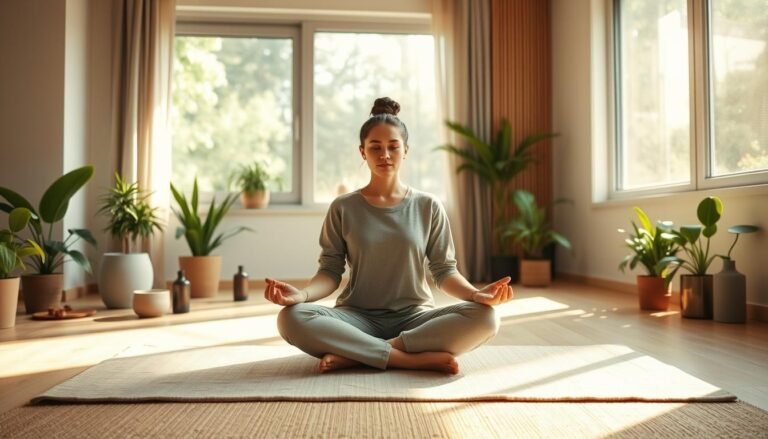
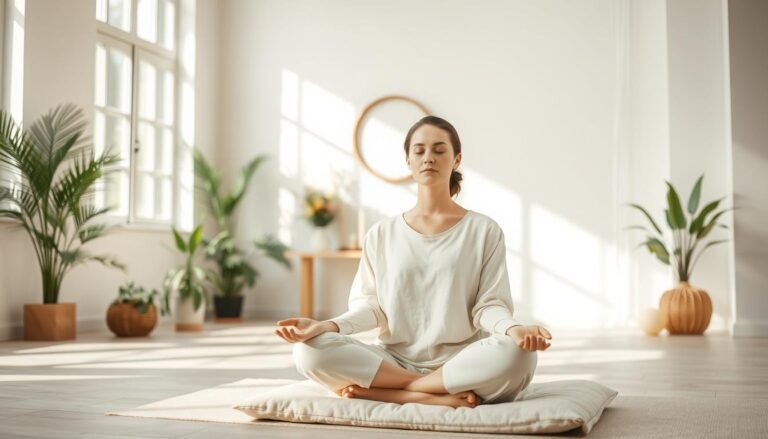
1. Begin by choosing a comfortable seated or lying position. Let your hands rest loosely with your palms open, just as Kate James recommends.
2. Take two slow, deep breaths. Then, notice the natural inflow and outflow of your breath without forcing any rhythm.
3. Soften your eyes, jaw, shoulders, chest, abdomen, and feet. This body scan helps release noticeable tension.
A Step-by-Step Guide to Inner Calm
4. Imagine a gentle energy of peace flowing from your open palms throughout your body.
5. Picture a calm, safe place—real or imagined. Notice its colors, sounds, and how it feels.
6. Visualize a warm light glowing in your heart space, growing brighter with each inhale and spreading outward with each exhale.
7. Silently repeat, “May I be peaceful,” “May others be peaceful,” and “May the world know peace.”
8. Finally, notice the sounds around you and the air on your skin. Gently stretch and open your eyes when you’re ready.
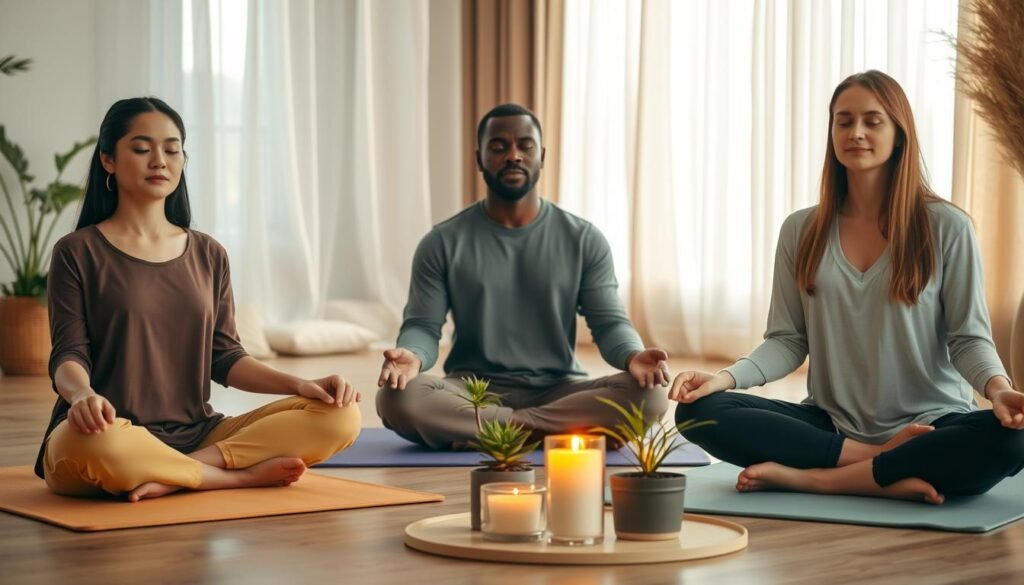
By following these steps, you can cultivate a deeper sense of awareness and relaxation in your daily life. For more insights, explore that can enhance your practice.
Integrating Meditation into Your Everyday Life
Finding small pockets of time for reflection can lead to a more balanced and fulfilling life. Here are some practical tips to help you maintain a consistent meditation practice.
Start with a three-minute session from Sound & Yoga on busy mornings. You can gradually increase the duration only if it genuinely fits your schedule.
Attach your meditation practice to an existing habit, like brushing your teeth or making coffee. This way, your daily cue remains visible, even during stressful times.
Use Kate James’s nine-minute Body Scan Meditation when you feel physical tension. Alternatively, her 18-minute Peaceful Sleep session can be a great way to unwind before bed.
When worries persist, try the 20-minute Releasing Anxiety meditation. Remember, this practice is supportive self-care rather than a guaranteed solution.
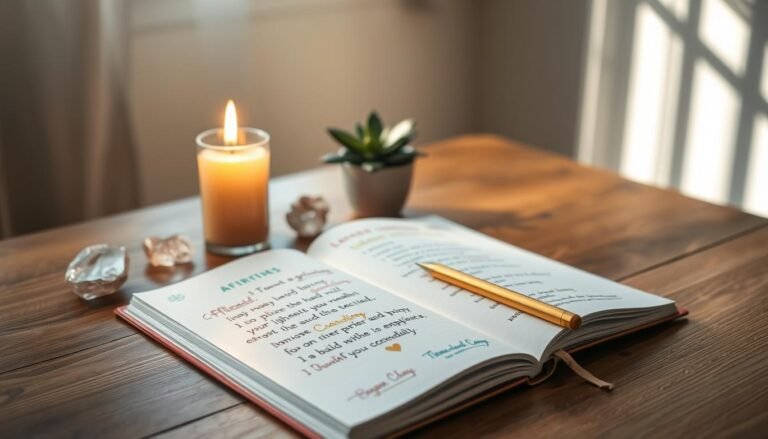
To track your progress, keep a simple record of the date, duration, and emotional state before and after each session. This can help you notice short-term calm, as Claire did on August 4, 2026.
If you miss a few days, return to your routine without self-criticism. Minnie’s experience on February 10, 2026, shows that repeated practice can help you reconnect with your inner peace.
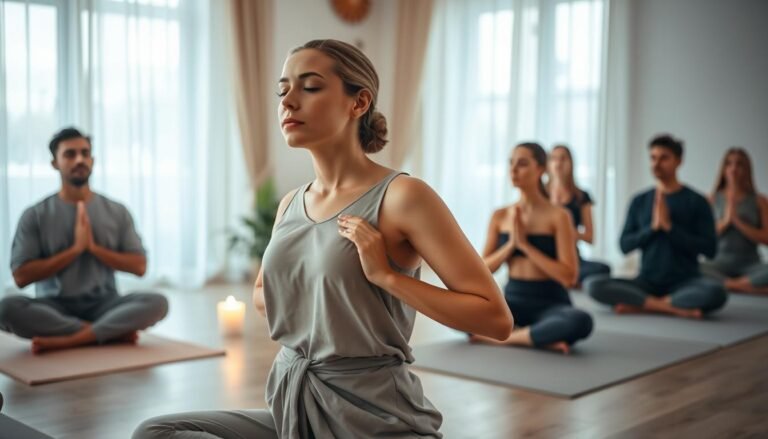
Lastly, create variety by exploring Sound & Yoga’s morning meditation, Laurie Ferreri’s Snow Angel Meditation, or even a gentle yoga session when sitting still feels challenging.
| Meditation Practice | Duration | Focus Area |
|---|---|---|
| Body Scan Meditation | 9 minutes | Tension Relief |
| Peaceful Sleep | 18 minutes | Relaxation |
| Releasing Anxiety | 20 minutes | Worry Management |
| 3-Minute Morning Meditation | 3 minutes | Awakening Intention |
Conclusion
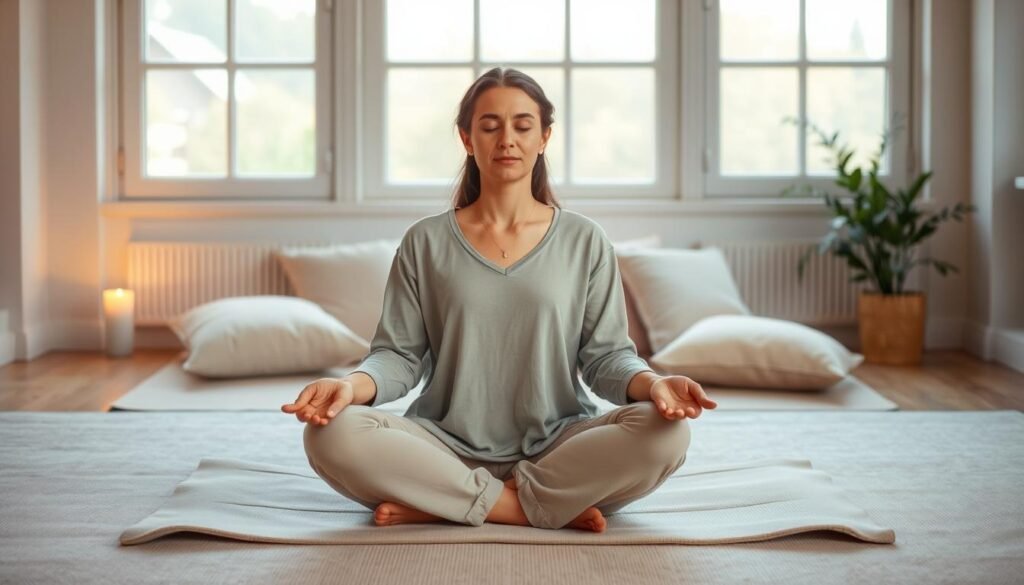
Allocating time for yourself can create a pathway to inner balance. Start with a comfortable position and natural breathing, even if it’s just for a few minutes, as shown in Sound & Yoga’s three-minute practice.
Incorporating a body scan, gentle imagery, and loving-kindness phrases can help you reconnect with your inner peace. Remember, consistency is more important than perfection. Minnie’s experience illustrates how returning to practice can make calm more accessible over time.
Choose a duration that fits your life. Whether it’s three minutes or a longer session, the key is to make it work for you. Explore the possibilities and find what resonates.
For your convenience, here are some common questions:
- How long should meditation last?
- Can beginners meditate lying down?
- What should you do when thoughts interrupt?
- Can meditation help with anxiety?
- How often should you practice?
Lastly, please remember that the source recordings are protected by copyright and should be accessed through authorized pages.
FAQ
What is the best time to practice meditation?
The best time to meditate is when you can dedicate a few uninterrupted minutes to yourself. Many find mornings effective for setting a positive tone for the day, while others prefer evenings to unwind and reflect.
How long should I meditate each day?
Start with just a few minutes each day, gradually increasing the duration as you become more comfortable. Even 5-10 minutes can be beneficial for cultivating awareness and relaxation.
Do I need to sit in a specific position to meditate?
While traditional practices suggest sitting cross-legged, the most important aspect is that you feel comfortable and relaxed. You can sit in a chair, lie down, or even practice while walking.
What if my mind keeps wandering during meditation?
It’s completely normal for your mind to wander. When you notice this happening, gently bring your attention back to your breath or the present moment without judgment.
Can meditation help with stress and anxiety?
Yes, many people find that regular meditation helps reduce stress and anxiety by promoting relaxation and improving emotional regulation. It encourages a sense of calm and clarity.
Is guided meditation necessary for beginners?
Guided meditation can be very helpful for beginners as it provides structure and direction. However, you can also practice on your own once you feel more comfortable with the process.
How can I stay motivated to maintain a meditation practice?
Setting a specific time for meditation, creating a peaceful space, and reminding yourself of the benefits can help keep you motivated. Joining a group or using apps can also provide encouragement.