Healing Meditation for Relaxation, Reflection, and Emotional Well-Being
Have you ever felt overwhelmed by stress or emotions during a recovery journey? Healing meditation can offer a gentle path toward relaxation and reflection. This practice supports your emotional well-being, especially when recovering from illness or injury. It’s important to remember that while meditation can be beneficial, it should complement guidance from healthcare providers.
Julie Peters, an Insight Timer teacher and counseling therapist, created an 11-minute guided practice that focuses on breath awareness and supportive imagery. This approach encourages you to connect with your body and embrace the healing process. As you engage in this meditation, you may find moments of peace and emotional release.
Explore Insight Timer’s extensive library of free guided meditations and join over 25,000 community groups for additional support. This vibrant community can help you navigate your journey toward emotional balance and recovery.
Key Takeaways
- Healing meditation can aid relaxation and emotional well-being during recovery.
- Julie Peters offers an 11-minute guided practice focused on breath and imagery.
- This practice can enhance your connection with your body and mind.
- It’s essential to combine meditation with professional healthcare advice.
- Insight Timer provides a wealth of resources for guided meditations and community support.
Getting Started with Your Self-Healing Practice
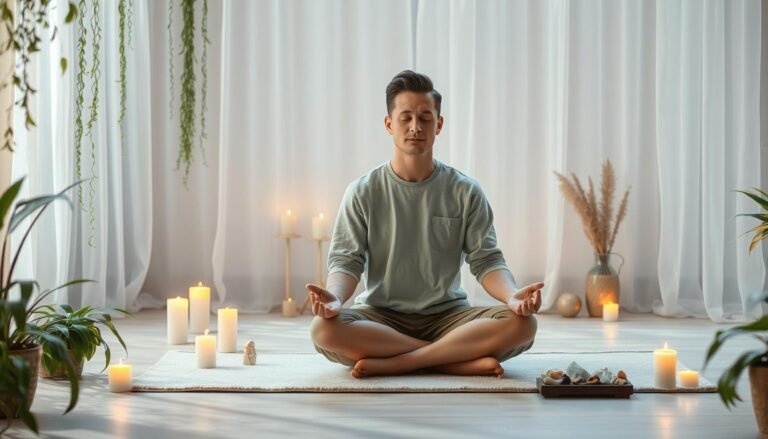
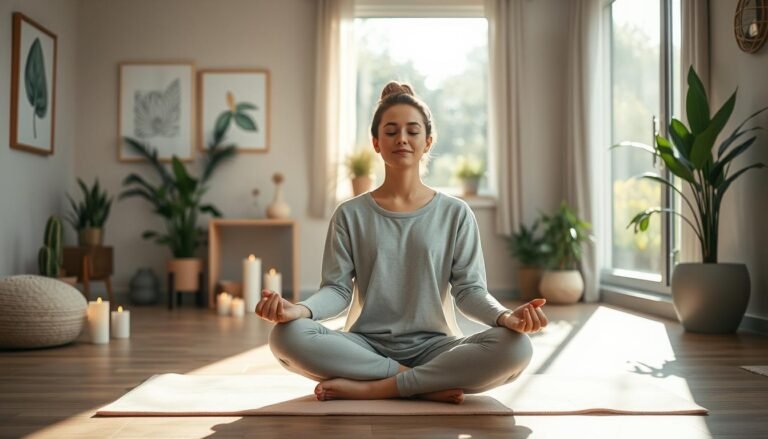
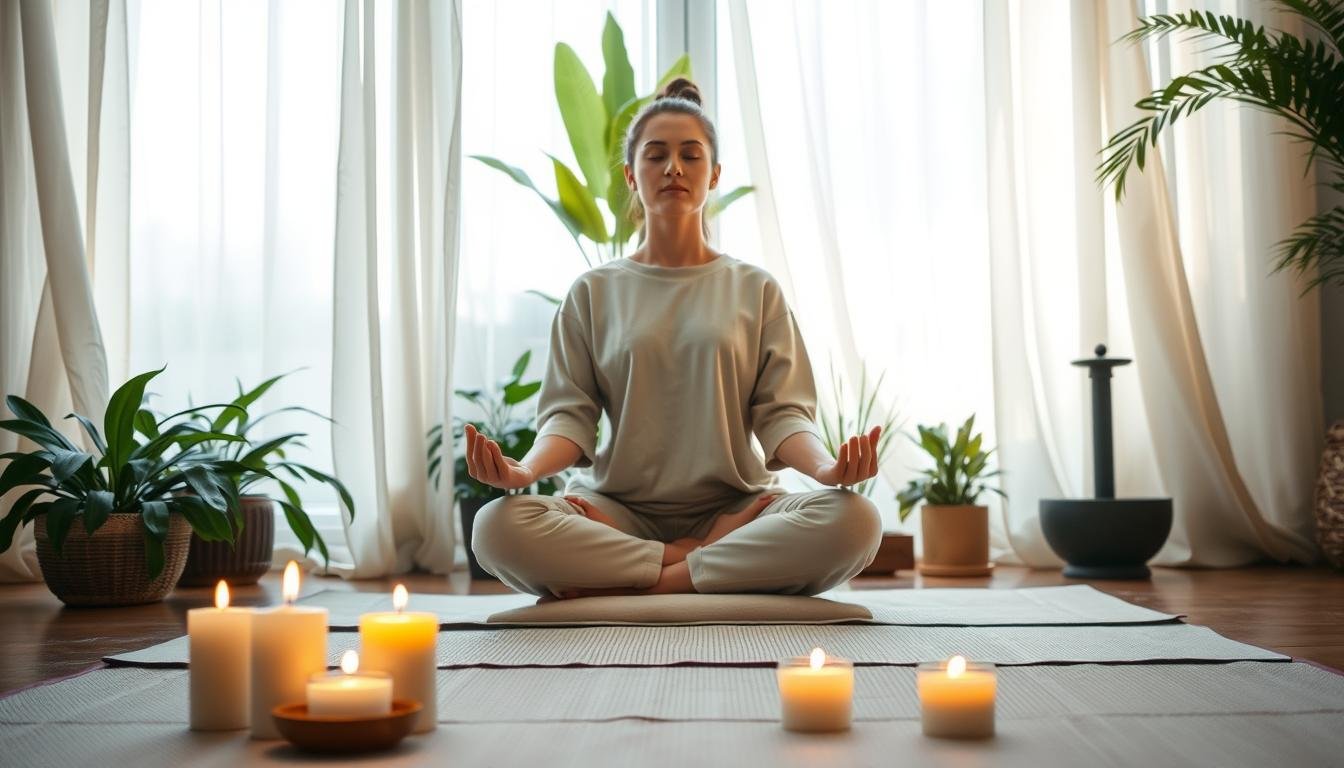
Do you find it challenging to create a space for self-reflection and healing? Setting up your environment is the first step. Begin by choosing a comfortable seated or lying position. Julie Peters encourages you to move, fidget, or adjust until your body feels supported. This flexibility helps ease any tension you may feel.
Next, reduce distractions. Select a quiet space, dim harsh lights, and have items like water, a blanket, or a cushion nearby. These simple adjustments can enhance your experience. If closing your eyes feels unsafe, you can soften your gaze instead.
Let the surface beneath you support your weight. This practice reminds you to use minimal effort to hold yourself up. If you find stillness or controlled breathing uncomfortable, allow natural breathing and gentle movement. Remember, this is about what feels right for you.
| Setup Step | Description |
|---|---|
| Choose Position | Find a comfortable seated or lying position. |
| Reduce Distractions | Select a quiet space and dim the lights. |
| Support Your Body | Let the surface beneath you carry your weight. |
| Natural Breathing | Allow your breath to flow naturally without control. |
Healing Meditation Techniques for Relaxation and Recovery
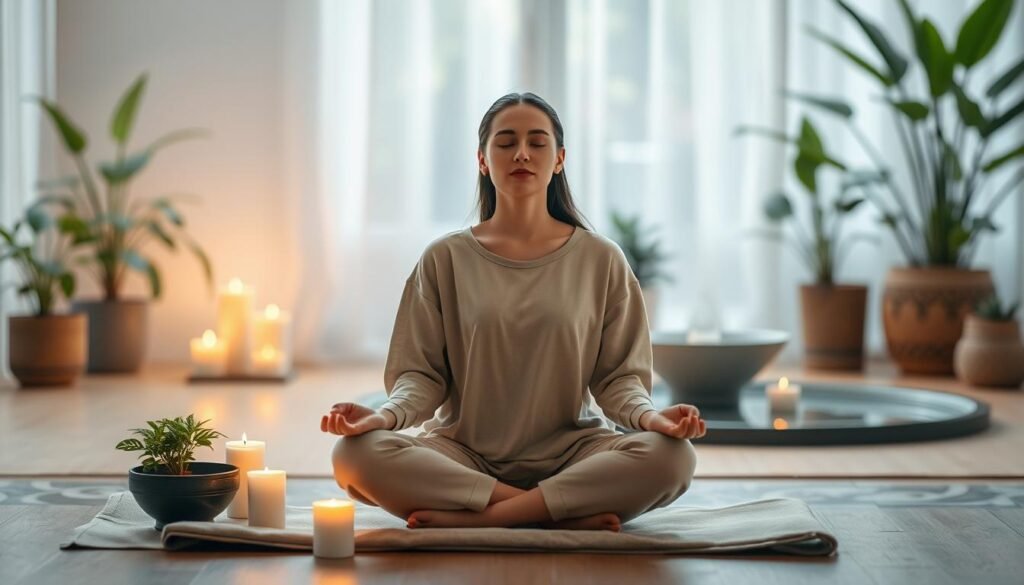
Are you searching for ways to alleviate stress and foster emotional balance? Incorporating specific techniques into your practice can enhance your experience. These methods not only promote relaxation but also support your overall well-being.
One effective approach is to focus on your breath. Yasmine Saad, PhD, highlights that meditation can lower cortisol levels and activate the parasympathetic nervous system. This encourages relaxation and complements any treatment you may be receiving.
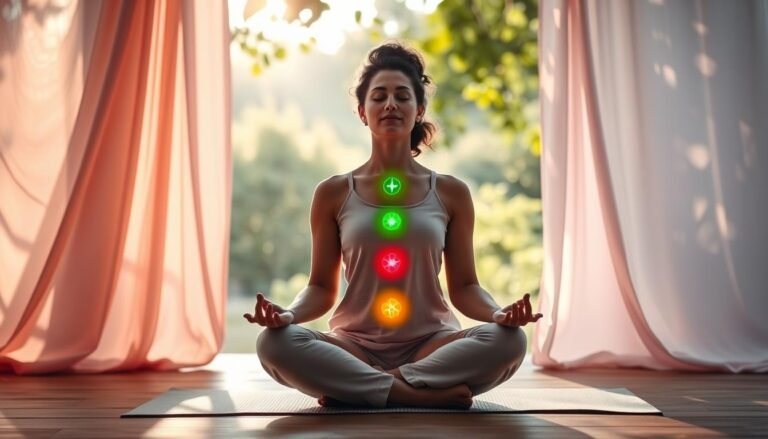
Another technique involves visualization. Imagine a comforting white light, representing love and support. Picture inhaling this light through your nose, letting it fill your lungs, bloodstream, and bones. With each exhale, release any tension or discomfort you may feel.
- Notice the natural rise and fall of your breath, allowing longer exhales to promote calm.
- Visualize light generated by joy, a cherished memory, or a beloved pet.
- Consider the promising research linking mindfulness to reduced pain and enhanced recovery.
These techniques can be part of your healing journey, but remember that they are supportive practices, not replacements for medical treatment. For more guided meditations, explore resources .
Guided Step-by-Step Healing Meditation Session
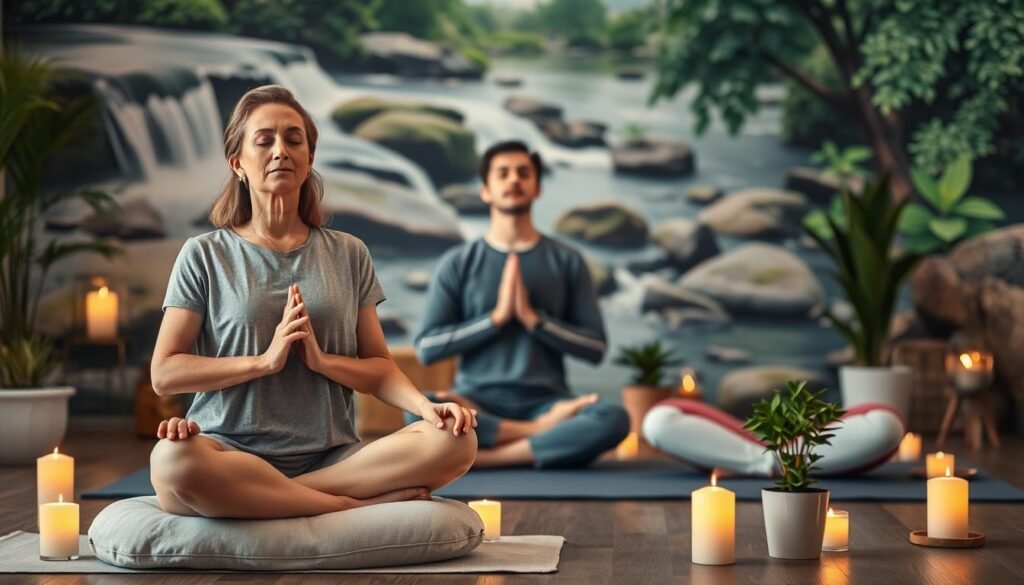
Do you feel ready to embark on a journey of self-discovery through a step-by-step meditation? Following a structured script can help you navigate your emotional landscape. Julie Peters’ nine-stage sequence is designed to guide you through this process.
Begin with preparation and grounding yourself in the earth. Then, focus on your breath to create a calming atmosphere. Visualize healing light, allowing it to fill your body with warmth and comfort. As you breathe in, direct this light toward areas of discomfort.
Following a Structured Meditation Script
- Start with preparation and earth connection.
- Engage in breath awareness and healing-light visualization.
- Focus on one area of discomfort, then move to another as it feels right.
Adapting the Steps to Your Unique Healing Journey
Remember, this is your practice. Let the words flow over you and trust your body’s inner knowing. You can adjust the steps to fit your needs.
Tips for Beginners from Experienced Practitioners
- End with a final deep breath and gentle stretching.
- Reflect on how the light felt and which areas needed attention.
- Consider how this practice can fit into your daily life.
Integrating Healing Meditation into Your Daily Routine
Are you looking for ways to make meditation a regular part of your life? Integrating these practices into your daily routine can create lasting benefits. By starting small, you can build a habit that supports your overall well-being.
Consider beginning with an 11-minute session inspired by Julie Peters. Attach this practice to a reliable cue, like waking up or going to bed. This consistency can help you establish a routine that feels natural.
Additionally, pairing meditation with gentle yoga or stretching can enhance your experience. This combination supports both your mental and physical recovery without overwhelming you. Remember, even a short session can make a difference.
Using sleep meditations at night can also be beneficial. Following Julie Peters’ example, you might listen to guided sessions to help you drift off peacefully. These moments can promote better sleep and overall health.
Research supports the idea that mindfulness can reduce injury risk and improve mood. A small 2024 study of female Division I athletes found mindfulness exercises linked to better muscle readiness and energy levels. While this doesn’t guarantee injury prevention, it highlights the power of mindful practices.
For more resources, explore Insight Timer’s free library of guided meditations and join their community groups for support. You can find additional insights on mindful movement, sleep habits, and stress management.
Conclusion
As you wrap up your journey through this exploration, remember that Julie Peters’ 11-minute practice provides a gentle framework for breath awareness, body connection, visualization, and reflection. These elements can significantly support your emotional processing and relaxation.
It’s essential to adapt your posture, gaze, and breathing to what feels safe for you. Forcing stillness or specific outcomes is not necessary. Instead, build consistency through a short daily session, journaling, or gentle yoga that fits naturally into your routine.
Trust your body’s inner knowing as you approach each day with patience and compassion. For further insights on personal empowerment and emotional well-being, explore more resources . Your journey toward emotional balance is unique, and every step counts.
FAQ
What is healing meditation?
Healing meditation is a practice that focuses on promoting emotional and physical well-being through mindfulness, breathwork, and visualization techniques.
How can I get started with my self-healing practice?
Begin by creating a comfortable environment, setting aside time for yourself, and preparing your mind and body through relaxation techniques.
What techniques are effective for relaxation and recovery?
Breathing techniques that calm the nervous system and visualization of healing light can significantly enhance your relaxation and recovery process.
How do I follow a guided meditation session?
You can follow a structured meditation script or use audio guides, adapting the steps to fit your unique healing journey.
What tips do experienced practitioners have for beginners?
Beginners should start with short sessions, focus on their breath, and be patient with themselves as they develop their practice.
How can I integrate healing meditation into my daily routine?
Simple practices like setting a specific time each day and linking meditation with other wellness activities, such as yoga, can help maintain consistency.