Meditation Mantras for Focus, Calm, and Mindful Awareness
Have you ever felt overwhelmed by your thoughts? Mantra meditation offers a powerful tool to help you find focus and calm. The term “mantra” comes from Sanskrit, meaning “sacred counsel or formula.” For over 3,000 years, these repeated words or phrases have guided individuals in various traditions, including Hinduism and Buddhism.
A simple mantra can serve as an anchor for your mind when distractions arise. It allows you to return to a steady point, helping you navigate through work, worries, or unfinished tasks. Think of traditional sounds like “Om” alongside contemporary affirmations such as “I am enough.” Both can support your journey toward inner peace.
In this article, you’ll learn how to choose a mantra, synchronize it with your breath, and establish a daily practice. Remember, it’s perfectly normal to notice distractions and gently return your focus. One structured approach is Light Watkins’ 21-Day Meditation Challenge, which organizes simple mantras into a transformative experience.
Key Takeaways
- Mantras are repeated phrases that help focus the mind.
- They can alleviate feelings of overwhelm and promote calm.
- Different types of mantras serve various purposes.
- Establishing a daily practice can enhance mindfulness.
- Returning to your mantra after distractions is part of the process.
Introduction: The Power of Meditation Mantras
Do you find it challenging to maintain focus amidst daily distractions? Many people, including Vishen, the founder of Mindvalley, describe mantra meditation as a vital tool for achieving success in life and work. He believes it has been the most powerful thing he learned, helping him navigate his busy mind.
By repeating a single phrase, you create a mental anchor that steadies your attention. This is especially helpful when your thoughts dart between various responsibilities and worries. Instead of trying to eliminate every thought, you can start with just five minutes of quiet breathing.
The goal isn’t perfect stillness but rather developing a kinder relationship with your distractions and cultivating present-moment awareness. Light Watkins’ 21-Day Meditation Challenge is a fantastic example of using simple, repeatable phrases to establish a consistent practice.
Understanding Mantras and Their Origins
What if the phrases you chant hold deeper meanings from ancient traditions? The word “mantra” originates from Sanskrit, meaning “sacred counsel or formula.” This highlights how mantras provide intentional guidance for your mind during practice.
Across various cultures, such as Hinduism, Buddhism, and Jainism, mantras have been integral for over 3,000 years. While ancient syllables like Om resonate with spiritual energy, modern affirmations convey personal values. Both forms serve as powerful tools for inner peace.
Examples include So Hum, Om Namah Shivaya, and Om Shanti Shanti Shanti. These phrases not only carry meaning but also emphasize rhythm and repetition. This can enhance your meditation experience without requiring a specific religious commitment.
Benefits of Meditation Mantras for Mindful Awareness
Could the right words help you find balance in your busy life? Mantra meditation offers numerous benefits for emotional and physical well-being. A study published in the International Journal of Yoga found that chanting “Om” significantly reduced cortisol levels and improved heart-rate variability. This suggests that engaging in this practice can help lower stress and promote relaxation.
By focusing on repeated phrases, you create a pause that aids in emotional regulation. This can be particularly helpful during moments of anxiety or mental overload. Dr. Herbert Benson of Harvard Medical School described the “relaxation response,” which highlights how our bodies can react positively to mindful practices.
Here’s a summary of the key benefits:
| Benefit | Description |
|---|---|
| Focus | Enhances attention and concentration. |
| Calm | Promotes relaxation and reduces stress. |
| Present-Moment Awareness | Encourages mindfulness and being in the now. |
| Self-Compassion | Fosters a kinder relationship with oneself. |
| Stress Management | Helps manage anxiety and emotional overload. |
As you practice mantra meditation, consider tracking changes in your sleep, mood, and tension levels. This will help you notice the positive effects over time, rather than judging a single session.
Meditation Mantras: Transforming Your Focus and Calm
Could the right affirmations lead you to a calmer, more focused mind? Using specific phrases can create a positive shift in your thoughts and feelings. Here are some affirmations you can practice:
- “I am peaceful and present” – Use this as an anchor for mornings or stressful moments.
- “I am grateful for this moment” – This helps redirect your attention to the present, away from past regrets or future worries.
- “I am calm, I am clear” – Perfect for achieving emotional steadiness before important decisions.
- “I choose peace over worry” – A reminder that taking a pause can help manage anxiety.
Start with just five minutes a day, gradually increasing your practice to 20 minutes as you feel comfortable. Below is a comparison of each affirmation, its primary intention, and the best time to use it:
| Affirmation | Intention | Best Time |
|---|---|---|
| “I am peaceful and present” | Focus and calm | Mornings |
| “I am grateful for this moment” | Gratitude | Anytime |
| “I am calm, I am clear” | Emotional clarity | Before tasks |
| “I choose peace over worry” | Anxiety management | During stress |
These phrases can help you cultivate a sense of peace and mindfulness in your daily life.
Choosing the Right Mantra for Your Practice
How do the words you resonate with influence your personal growth? Selecting the right phrase can enhance your journey. It’s essential to consider intention, language, and comfort when making your choice.
Vishen emphasizes that a personal mantra should reflect your core values and motivate you. Traditional options, like the sound Om, or affirmations such as “I am enough,” can be effective.
Factors to Consider
- Choose between a traditional sound, a Sanskrit phrase, or a plain-English affirmation.
- Reflect on your current goal: focus, calm, self-acceptance, or compassion.
- Select language that feels believable and avoids internal resistance.
- Pronunciation matters for traditional phrases, while personal affirmations depend on clear intention.
- Test one mantra for several days before changing it, unless it causes discomfort.
Aligning with Personal Goals
By aligning your choice with your goals, you create a powerful tool for transformation. The right words can guide you toward a more centered and fulfilling experience.

Step-by-Step Guide to Practicing Mantra Meditation
What steps can you take to create a focused and calming routine? Starting a practice can be simple and rewarding. Here’s a beginner-friendly approach to help you get started.
Getting Started
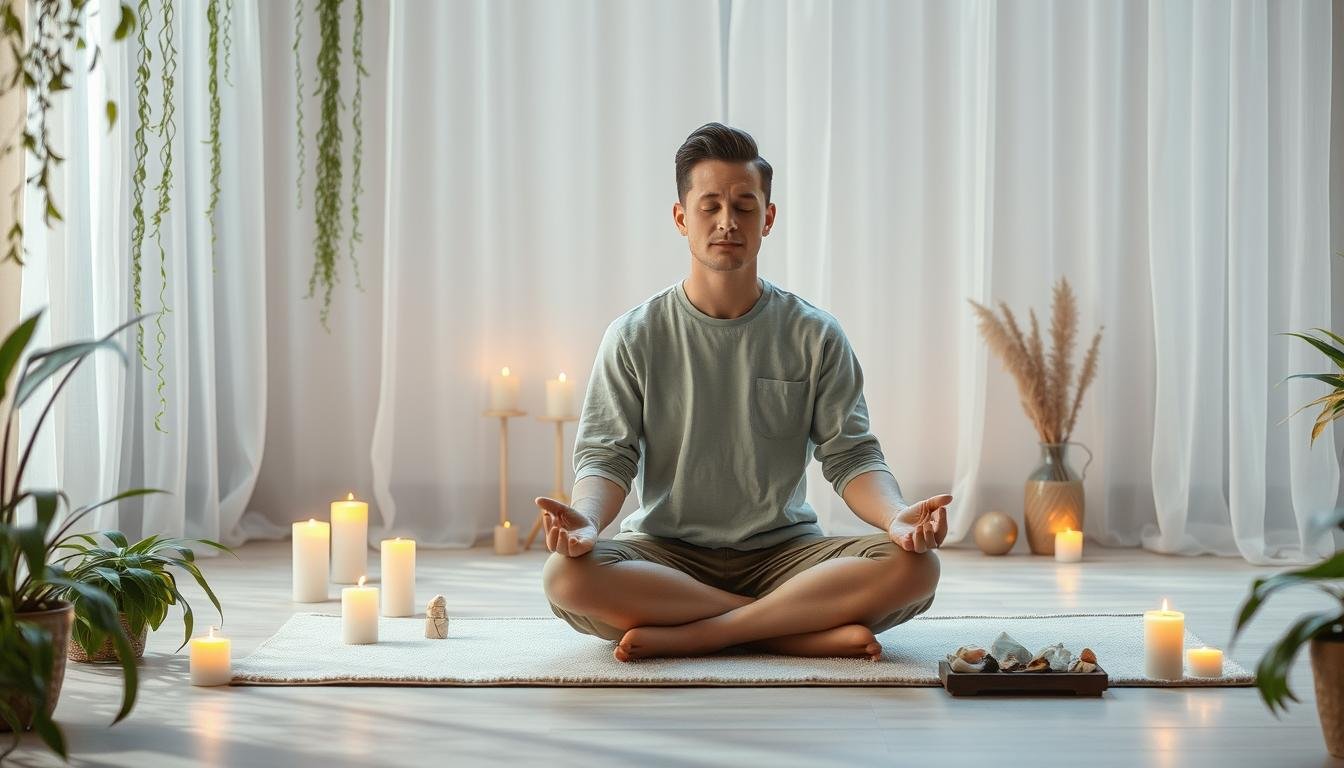
Begin with just 3-10 minutes daily. This short duration allows you to ease into the practice without feeling overwhelmed. Find a comfortable position, either sitting in a chair or on the floor, ensuring your spine is straight yet relaxed.
Take several natural breaths. Once you feel settled, state your intention and begin repeating your chosen phrase aloud, softly, or silently. Remember, it’s normal for your mind to wander. When it does, gently return your focus to the phrase. This act of returning is a vital skill.
Establishing a Routine
Consider using a traditional mala, which typically contains 108 beads, to help keep track of repetitions during longer sessions. If counting distracts you, focus on the meaning of the phrase instead.
To build a routine, link your practice to an existing habit, like waking up, making coffee, or preparing for sleep. This connection can make it easier to incorporate your practice into daily life.
| Step | Description |
|---|---|
| Duration | Start with 3-10 minutes daily. |
| Posture | Sit comfortably with a straight spine. |
| Breathing | Take natural breaths before beginning. |
| Repetition | Repeat your chosen phrase aloud or silently. |
| Routine | Attach practice to an existing cue. |
Enhancing Your Practice with Deep Breaths and Relaxation Techniques
Could the way you breathe transform your experience of stillness? Coordinating your breath with your practice can deepen your sense of calm. Pair a short phrase with each inhale and exhale, allowing the rhythm to guide you.
Thich Nhat Hanh beautifully captures this with his cue:
“Breathing in, I calm body and mind. Breathing out, I smile.”
This simple mantra can enhance your focus and relaxation.
For those who prefer structure, try Box Breathing. This technique involves counting your breaths: inhale for four counts, hold for four, exhale for four, and pause for four. It can be a grounding way to manage stress.
Another option is alternate-nostril breathing. This method promotes balance and relaxation. If you feel dizzy or anxious, stop and return to natural breathing.
Ensure your shoulders are relaxed, your jaw is unclenched, and your seat is supported. These small adjustments send calming signals to your body. Remember, these techniques align with Dr. Herbert Benson’s relaxation response, offering practical ways to counter stress.
Overcoming Common Meditation Challenges
What if acknowledging your wandering thoughts could actually enhance your practice? It’s normal for your mind to drift during your sessions. The key is to notice when it happens and gently guide your focus back to your chosen phrase. This act of returning is the essence of the practice.
When overwhelming thoughts arise, consider using the phrase “I let go of what I cannot control.” This can be particularly helpful during moments of anxiety or obsessive thinking. You might also try opening your hands while exhaling, symbolizing the release of control.
For heightened alertness or feelings of panic, the phrase “I am safe and supported” can ground you. Remember, seeking professional support is essential if distress becomes persistent. Letting go doesn’t mean neglecting your responsibilities; it’s about distinguishing between what you can act on and what you cannot.
| Challenge | Recommended Phrase | Use Case |
|---|---|---|
| Wandering Mind | “I let go of what I cannot control” | When planning loops or obsessive thoughts dominate. |
| Heightened Alertness | “I am safe and supported” | During panic or trauma-related distress. |
| General Anxiety | “I am calm, I am clear” | To promote emotional steadiness. |
Integrating Mantras into Daily Routines
What if integrating affirmations into your routine could transform your mindset? Using simple phrases can provide a sense of calm and focus throughout your day. Here are some practical ways to incorporate affirmations into your daily life:
- Start your day with “I am peaceful and present.” Repeat this after waking to set a calm tone before checking messages or news.
- Use “I choose peace over worry” before opening emails, entering meetings, or engaging in difficult conversations.
- Practice silently during your commute. Just ensure you stay attentive to driving or navigating public transport safely.
- Place a written mantra near your desk, mirror, or bedside table as a visual cue for quick mental resets.
- Keep sessions short. Aim for consistency over duration to make affirmations a daily habit.
These simple practices can enhance your focus and bring more calm into your life.
The Science and Research Behind Mantra Meditation
Have you ever wondered how the practice of repeating phrases can impact your brain? Recent studies reveal fascinating insights into how mantra practice affects our mental state and overall well-being.
A 2021 study published in the International Journal of Yoga found that chanting “Om” is linked to lower cortisol levels and improved heart-rate variability. This suggests that engaging in such practices can help manage stress effectively.
Neuroscience research indicates that mantra practice activates the prefrontal cortex, which is crucial for executive functions like attention and decision-making. This doesn’t guarantee performance gains, but it highlights the cognitive benefits of focused repetition.
EEG studies show increased alpha and theta brain wave activity during mantra practice, indicating a relaxed yet alert state. In contrast, beta waves, often associated with anxiety, decrease.
While beginners may start with just 5-10 minutes a day, traditional practices like Transcendental Meditation involve repeating a mantra twice daily for 20 minutes. A finding from Wake Forest University suggests that even short daily sessions can activate the ventromedial prefrontal cortex.
As you explore these findings, remember that meditation complements, rather than replaces, appropriate medical care.
Inspirational Mantras and Their Meanings
How might embracing positive phrases transform your daily experiences? Affirmations can significantly impact your self-acceptance and overall well-being. Here are a couple of powerful phrases to consider:
“I am enough” – Embracing Self-Acceptance
This affirmation reminds you of your inherent worth. It encourages you to accept yourself during times of comparison, rejection, or disappointment. Saying “I am enough” allows room for growth without demanding perfection. It’s a gentle nudge to appreciate who you are, flaws and all.
“I choose peace over worry” – Cultivating Calm
This phrase serves as a practical reminder to pause before succumbing to anxious thoughts. It helps ground you during moments of overthinking, allowing for a more peaceful mindset. When stress arises, repeating this affirmation can guide you back to a calmer state.
Additionally, consider incorporating loving-kindness phrases like “May I be happy. May I be well. May I be safe.” This practice can extend goodwill not just to yourself but also to loved ones and even those you find challenging.
For a compassion-centered approach, try the Tibetan Buddhist mantra “Om Mani Padme Hum”, which embodies the essence of compassion. Lastly, “Om Shanti” signifies universal peace and is often used in yoga settings, making it a wonderful addition to your affirmations.
| Affirmation | Meaning | Use Case |
|---|---|---|
| “I am enough” | Affirmation of self-worth | During self-doubt |
| “I choose peace over worry” | Encouragement to let go of anxiety | In stressful situations |
| “May I be happy” | Wishing happiness for oneself | Daily practice |
| “Om Mani Padme Hum” | Mantra of compassion | During reflective moments |
| “Om Shanti” | Universal peace | Yoga practice |
Using Mantra Meditation to Boost Productivity and Focus
Could using focused phrases improve your ability to tackle daily tasks with clarity? Many successful individuals, including Vishen, attribute part of their achievements to practices that enhance decision-making and focus.
A study of 36 prominent CEOs revealed that 85% considered intuition an essential tool for decision-making. This insight suggests that taking a moment to reflect before acting can lead to better outcomes.
Here are some practical ways to integrate mantra practice into your work routine:
- Before starting a task, such as writing or preparing a presentation, use a brief focus phrase.
- Vishen’s experience highlights that while meditation can support career success, it requires a realistic routine rather than instant results.
- Consider repeating a phrase once per breath as you begin a work block, then return to your task without forcing continued meditation.
- Use “I am calm, I am clear” before prioritizing tasks or making decisions, especially when information is incomplete.
By incorporating these phrases into your routine, you can enhance your focus and productivity throughout the day.
Combining Mantra Meditation with Yoga and Breathwork
What if blending breathwork with positive phrases could elevate your sense of peace? One powerful phrase to incorporate is Om Shanti, which means “universal peace.” This phrase is often used as a greeting or closing in yoga classes, setting a tranquil tone for the practice.
To enhance your experience, pair a quiet mantra with slow movements. Allow your breath to guide transitions instead of adhering to a rigid pace. For instance, you might repeat Om during seated centering. Then, switch to an English affirmation during restorative or closing postures.
Yoga meditation is one of seven prominent types of meditation, alongside mindfulness and loving-kindness practices. As you explore this integration, choose movements that feel stable and accessible, especially when combining breathwork with longer holds.
| Practice | Activity | Benefit |
|---|---|---|
| Seated Centering | Repeat “Om” | Promotes peace and focus |
| Restorative Poses | Use English affirmations | Encourages self-acceptance |
| Flow Transitions | Match breath with movement | Enhances mindfulness |
Personalizing Your Mantra for Self-Acceptance
Could the phrases you tell yourself create a pathway to greater self-acceptance? Developing a personal affirmation can be a transformative step toward embracing your worth and growth.
Start with the framework of “I am enough.” Repeat this phrase ten times daily for one month. This practice can help you internalize its message and reinforce your self-esteem.
Consider building an affirmation around a present value. Phrases like “I am patient,” “I am learning,” or “I support myself” can be effective. Keep the wording compassionate and believable, avoiding any statements that create pressure or unrealistic expectations.
As Deepak Chopra wisely said,
“Language creates reality. Words have power. Speak always to create joy.”
Your words can shape your self-talk and attention, influencing how you perceive yourself.
Additionally, invite yourself to journal about any resistance, body sensations, and emotional shifts you notice after practicing your personalized phrase. This reflection can deepen your understanding of your journey toward self-acceptance.
Additional Tips: Internal and External Resources for Meditation Practice
What if tapping into expert insights could refine your daily practices? Expanding your knowledge can significantly enhance your journey toward focus and calm. Here are some valuable resources to consider.
Related BetterLifeAtlas Articles
- Ways to calm an anxious mind
- Beginner breathwork exercises
- Effective stress management techniques
- Exploring the benefits of yoga
- Improving your sleep quality
- Building lasting habits
Trusted External Research and Links
For a deeper understanding, check out the International Journal of Yoga for insights on how chanting “Om” can lower stress levels. Additionally, explore Harvard Medical School’s findings on Dr. Herbert Benson’s relaxation-response work, which highlights the benefits of focused practices. You can also refer to Wake Forest University’s research, which delves into how meditation can enhance attention and emotional regulation.
Remember, while these resources provide valuable information, they should not replace personalized medical or mental health advice.

Conclusion
What if a single affirmation could shift your perspective and enhance your well-being? Begin by choosing one phrase that resonates with your current needs, whether it’s calm, focus, self-acceptance, gratitude, or compassion. Start with just three to ten minutes each day, using natural breathing, and gently return your focus whenever your mind wanders.
Remember, the 2021 International Journal of Yoga study highlights the benefits of chanting “Om” for stress management. Consistency is key; it’s more important than perfect pronunciation or lengthy sessions. Incorporate your chosen phrase into an existing daily routine, and feel free to adjust it as your goals evolve.
Next, look forward to the FAQs that will guide you on beginner duration, selecting a phrase, handling distractions, and more!
FAQ
What is a mantra and how can it help me?
A mantra is a word or phrase that you repeat during your practice. It can help center your thoughts, reduce anxiety, and promote a sense of calm and focus.
How do I choose the right mantra for my practice?
Consider your personal goals and what you wish to achieve. A mantra that resonates with you will enhance your practice and support your journey towards inner peace.
How can I integrate mantra practice into my daily routine?
Start by setting aside a few minutes each day to focus on your mantra. You can incorporate it during quiet moments, like while commuting or before bed, to enhance mindfulness throughout your day.
What are some common challenges I might face while practicing?
It’s normal to experience a wandering mind or frustration with your progress. Acknowledge these feelings and gently bring your focus back to your mantra without judgment.
How does breathing play a role in mantra meditation?
Coordinating your breath with mantra repetition can deepen your relaxation and enhance your focus. Deep breaths help ground you and create a rhythm that supports your practice.
Can mantra meditation improve my productivity?
Yes! Regular practice can enhance your focus and clarity, making it easier to tackle tasks and improve your overall productivity.
Are there specific mantras for anxiety relief?
Phrases like “I am safe” or “I choose peace” can be effective in calming anxious thoughts and promoting a sense of security.
How can I personalize my mantra for self-acceptance?
Reflect on your feelings and aspirations. Create a phrase that speaks to your journey, such as “I am worthy” or “I embrace my uniqueness.”