Third Eye Meditation: What It Is and How to Practice Mindfully
Have you ever wondered about the potential of your mind and body connection? Third eye meditation offers a unique way to explore this. This practice focuses on the area between your eyebrows, often linked to the Ajna chakra, which is believed to enhance intuition and awareness.
Many people approach this practice with varying expectations. While some may seek deeper spiritual insights, it’s essential to remember that results can differ from person to person. As you embark on this journey, you’ll discover techniques to help you connect with your inner self.
In this article, we’ll share a beginner-friendly routine based on Kimberly Snyder’s guidance from January 25, 2022. You’ll learn about posture, breathing, and the use of mantras. Start with just five to ten minutes a day, gradually working towards a suggested 20-minute practice as you grow more comfortable.
However, keep in mind that this practice is not a substitute for medical or mental health care. If you experience headaches, vision changes, anxiety, or depression, please consult a professional.
Key Takeaways
- Third eye meditation focuses on the space between the eyebrows.
- The Ajna chakra is linked to intuition and inner awareness.
- Begin with a short routine and gradually increase your practice time.
- This practice is not a replacement for medical care.
- Results may vary for each individual.
Understanding the Concept of Third Eye Meditation
What if you could tap into a deeper level of awareness through focused meditation? The concept of the third eye serves as a spiritual focus point located between your eyebrows. This area is linked to the Ajna chakra, often regarded as the center of intuition and perception.
Activating this chakra can lead to various benefits. Many practitioners report experiencing greater calm, improved mental clarity, and enhanced intuitive reflection. While these outcomes are common, it’s important to note that results can vary for each individual.
Yogananda emphasized the significance of eye position during meditation, suggesting that directing your gaze inward can support access to higher wisdom. Additionally, the Shambhavi mudra involves a gentle inward-and-upward gaze, which helps focus your attention at the center. If you ever feel strain, remember to relax your eyes.
“The third eye is not a literal eye but a gateway to deeper understanding.”
Exploring these practices can deepen your connection to yourself and enhance your meditation journey. For further insights, consider reading about mindfulness benefits to compare traditional practices with evidence-informed approaches.
Historical Origins and Cultural Insights
Understanding the roots of your meditation practices can deepen your experience. The concept of chakras has been central to many Eastern traditions. These energy centers, including the sixth center known as Ajna, are believed to play a vital role in spiritual growth.
The term “chakra” translates to “wheel,” symbolizing the flow of energy and consciousness. This framework offers a unique perspective on personal balance and well-being. Yogananda emphasized that spiritual truths should be felt rather than just read. His teachings helped bring yoga and meditation to a broader audience, encouraging exploration and personal connection.
It’s essential to recognize that Eastern traditions are diverse. The meaning of the third eye can vary significantly across different teachers and communities. For those looking to explore further, consider reading about yoga meditation basics to gain a broader understanding of these ancient practices.
The Science and Energy Behind the Third Eye
Have you thought about the science behind the energy flow in your meditation journey? The pineal gland, located deep in the center of your head, plays a crucial role in this exploration. It sits parallel to the traditional space between your eyebrows, often associated with the third eye.
This gland is linked to light and regulates your circadian rhythm through melatonin production. While it’s sometimes referred to as the “seat of the soul,” this nickname stems from historical interpretations rather than clinical facts.
Understanding the chakra system enhances your practice. The Ajna chakra, connected to the eyes and the lower brain, interacts with the pineal gland and pituitary glands. This connection symbolizes how energy flows through your body.
| Traditional Concepts | Physical Anatomy | Meditation Experience |
|---|---|---|
| Ajna chakra | Pineal gland | Heightened awareness |
| Energy flow | Hormonal regulation | Calmness and clarity |
| Spiritual insight | Brain activity | Intuitive reflection |
Focus on comfortable breathing and steady posture during your practice. Instead of chasing lights or visions, allow your body and mind to relax. This approach fosters a deeper connection with your inner self.
Preparing Your Mind and Body for Meditation
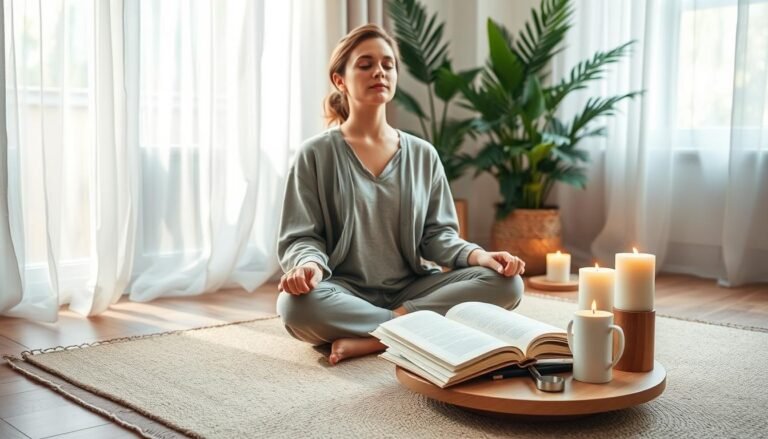
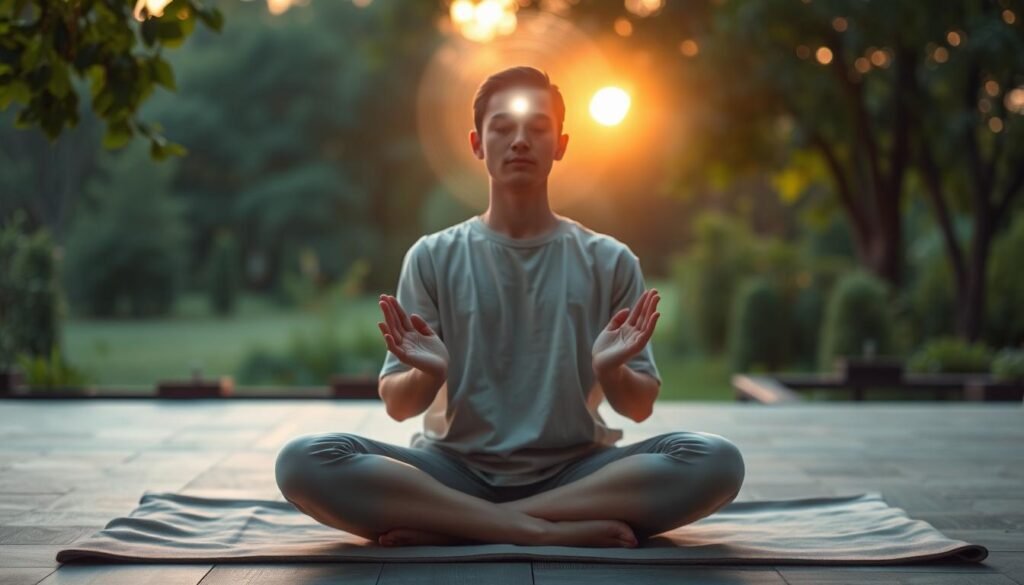
What steps can you take to prepare your mind and body for a fulfilling meditation experience? Start by choosing a quiet location. Silence your phone and find a comfortable position where your breathing feels easy and natural.
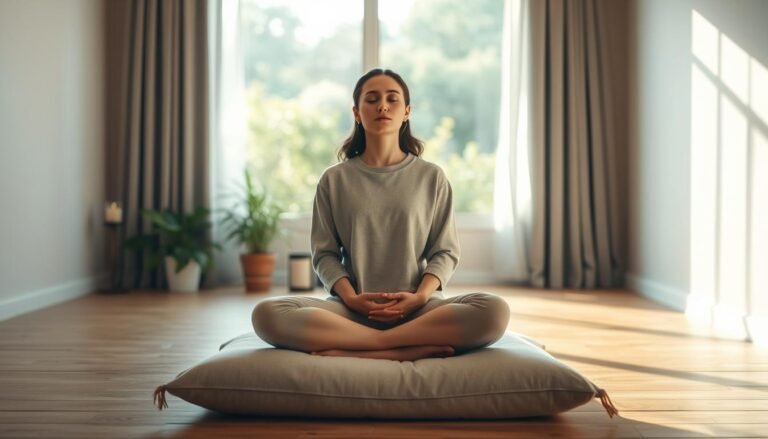
Sit upright on a cushion or chair, or even lie down if that feels better. Remember, comfort is key! You don’t need to achieve a traditional lotus pose to benefit from this practice.
Before you begin, take a moment to relax your shoulders, jaw, forehead, and hands. Notice where tension remains in your body. Stretching can help, so consider trying gentle poses like child’s pose, eagle pose, or dolphin pose to settle in.
Set a realistic starting time of just five minutes. Keep water nearby and listen to your body. Stop if you feel pain, dizziness, or significant distress.
| Preparation Steps | Details | Yoga Poses |
|---|---|---|
| Choose a Quiet Location | Silence distractions | Child’s Pose |
| Find Comfort | Sit or lie down | Eagle Pose |
| Relax Tension | Focus on your body | Dolphin Pose |
Step-by-Step Guide to Third Eye Meditation
Are you ready to embark on a journey of self-discovery through focused practice? This guide will help you connect with your inner self and enhance your meditation experience.
Start by setting a clear intention. You might say, “I will practice calmly.” Sit comfortably with your spine lifted, and take three deep breaths to ground yourself.
- Inhale while gently tensing your whole body for a count of six, then release with a two-part exhale. Repeat this exercise three times.
- Focus on your natural breath for five to ten minutes. Notice the pauses between inhalation and exhalation without forcing them.
- With your eyes closed, gently raise your inner gaze toward the space between your eyebrows, keeping it soft and relaxed.
- Repeat the word “Peace” for five to ten minutes. Finish your practice with hands in Anjali mudra, taking a moment to express gratitude.
- If you prefer structure, count backward from 100, then return your attention to your breath before slowly opening your eyes.
With consistent practice, you can gradually extend your total meditation time to 20 minutes or more. Remember, the key is to focus your breath and stay present in the moment.
Incorporating Mudras and Breathing Techniques
What if subtle adjustments in your breathing could enhance your meditation experience? Incorporating mudras and breathing techniques can significantly deepen your practice. Mudras are specific hand, finger, or body positions that help redirect energy, or prana, inward during meditation.
The Shambhavi mudra is a powerful technique. It involves gently directing your inner gaze upward toward the space between your eyebrows. Remember to stop if you feel any discomfort. Pair this mudra with slow, even breathing. This approach allows energy to flow naturally without forcing sensations or visual effects.
It’s essential to distinguish between gentle breathing exercises and more intensive methods. For beginners, focus on calm, steady breaths. In contrast, techniques like holotropic breathwork require supervision and can last several hours. These sessions involve rapid, controlled breathing and should only be practiced with a trained facilitator.
“The power of your breath can transform your meditation experience.”
Overcoming Challenges in Your Meditation Practice
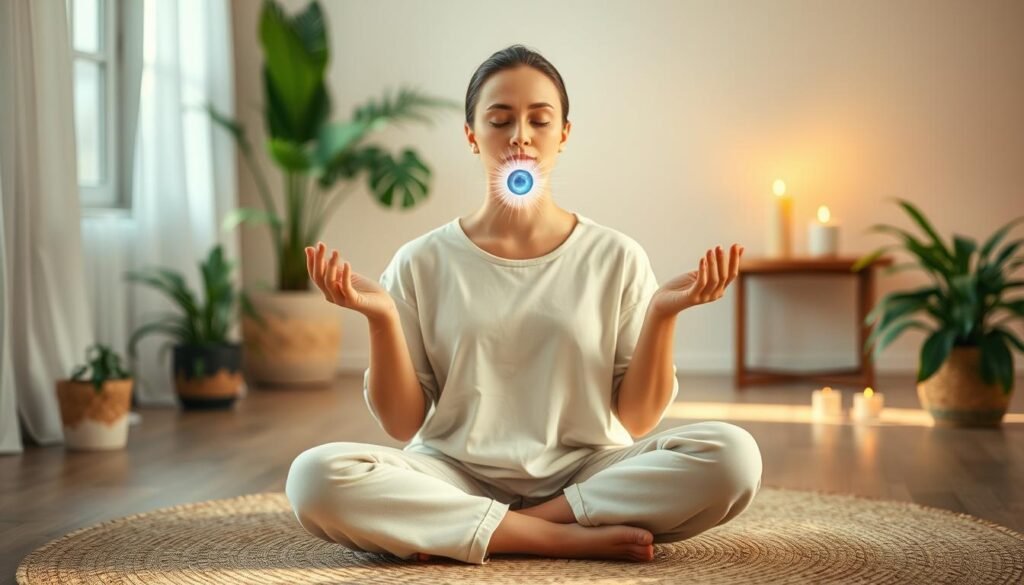
Finding your focus during meditation is a common hurdle many face. It’s essential to acknowledge that distractions can arise, and it’s okay to feel that way. When thoughts wander, gently bring your attention back to your breath. This nonjudgmental approach can help you stay grounded.
If you experience strain in your forehead or eyes, lower your inner gaze. Relax your facial muscles and shift to ordinary breath awareness. This adjustment can ease discomfort and enhance your practice.
Should you develop a headache, consider shortening your session. It’s crucial to listen to your body and stop if discomfort persists. Ground yourself by slowly opening your eyes and noticing three physical objects around you. Feel your feet on the ground before returning to your daily activities.
Lastly, if you experience ongoing headaches, vision changes, or anxiety, seek qualified medical support. It’s vital not to dismiss these symptoms as mere chakra blockages.
Enhancing Your Daily Routine with Mindful Meditation
What if simple daily habits could elevate your awareness and intuition? Integrating mindfulness into your routine can lead to profound benefits. Start by setting aside a consistent time each day for your practice. Aim for five minutes initially, gradually increasing to 20 minutes or more as you feel comfortable.
To track your progress, maintain a simple journal. Record the duration of your sessions, the quality of your breath, and your mood. This will help you notice patterns and improvements over time.
Consider using guided meditation as you begin. Once you feel settled, add a focus on the area between your eyebrows or use affirmations. This gentle shift can deepen your experience.
Additionally, explore optional practices like dream journaling, intuitive movement, or sound healing. Essential oils such as white sage, pine, lavender, and sandalwood can enhance your practice, creating a calming atmosphere.
Remember, applying your intuition alongside practical information can aid your decision-making in various aspects of life, including work and relationships.
| Practice | Duration | Benefits |
|---|---|---|
| Daily Meditation | 5-30 minutes | Increased awareness |
| Dream Journaling | 10 minutes | Enhanced intuition |
| Intuitive Movement | 15 minutes | Improved energy flow |
Conclusion
Imagine unlocking a deeper connection between your mind and body through mindful practice. The journey of self-discovery with this technique combines upright posture, natural breathing, and inner focus. It’s essential to approach this practice with consistency rather than expecting immediate mystical experiences.
Begin with Kimberly Snyder’s recommended three preparatory breath rounds, followed by five to ten minutes of focused exercises. As you become comfortable, aim to extend your practice to 20 minutes.
Remember, the concepts of the Ajna chakra and the third eye are spiritual, while the pineal gland has biological ties to light and melatonin. If you encounter headaches, eye strain, or dizziness, feel free to adjust your technique.
For further guidance, explore trusted resources from the NHS and Cleveland Clinic on beginner meditation and its benefits.
Here are some frequently asked questions:
- How do I meditate on the third eye?
- Is the pineal gland literally the third eye?
- How long should beginners practice?
- What does Shambhavi mudra mean?
- When should I seek help?
FAQ
What is third eye meditation?
Third eye meditation is a practice that focuses on the ajna chakra, often referred to as the third eye. It involves techniques that help you enhance your intuition, awareness, and connection to your inner self.
How can I activate my third eye?
Activating your third eye can be achieved through consistent practice. Techniques such as focused breathing, visualization, and mindfulness can help open this energy center, enhancing your perception and insight.
What are the benefits of third eye meditation?
Practicing this form of meditation can lead to improved intuition, heightened awareness, and a deeper connection to your inner wisdom. It may also help reduce stress and improve decision-making abilities.
How long should I meditate to open my third eye?
You can start with just 10-15 minutes a day. As you become more comfortable, you can gradually increase the duration to deepen your practice and enhance the benefits.
What should I focus on during meditation?
During meditation, focus on your breath and visualize light or energy at the center of your forehead, just above the eyebrows. This helps to center your mind and direct energy to the third eye area.
Can anyone practice third eye meditation?
Yes, anyone can practice this meditation. It is suitable for all levels, from beginners to advanced practitioners, and can be adapted to fit individual needs and preferences.
Are there any specific breathing techniques I should use?
Yes, effective breathing techniques such as deep abdominal breathing or alternate nostril breathing can enhance your meditation experience by promoting relaxation and energy flow.
What if I struggle to maintain focus during meditation?
It’s common to experience distractions. Gently bring your attention back to your breath or your visualization. Over time, you will build greater concentration and awareness.
How can I incorporate this practice into my daily routine?
You can integrate third eye meditation into your daily life by setting aside a specific time each day, such as in the morning or before bed, to establish a consistent routine.