Tea Meditation: How to Turn a Cup of Tea Into a Mindfulness Practice
Have you ever found yourself overwhelmed by busy thoughts? You’re not alone. Many people feel uncertain about how to start a mindfulness practice. Fortunately, you can transform a simple cup into a powerful moment of focus in just ten minutes.
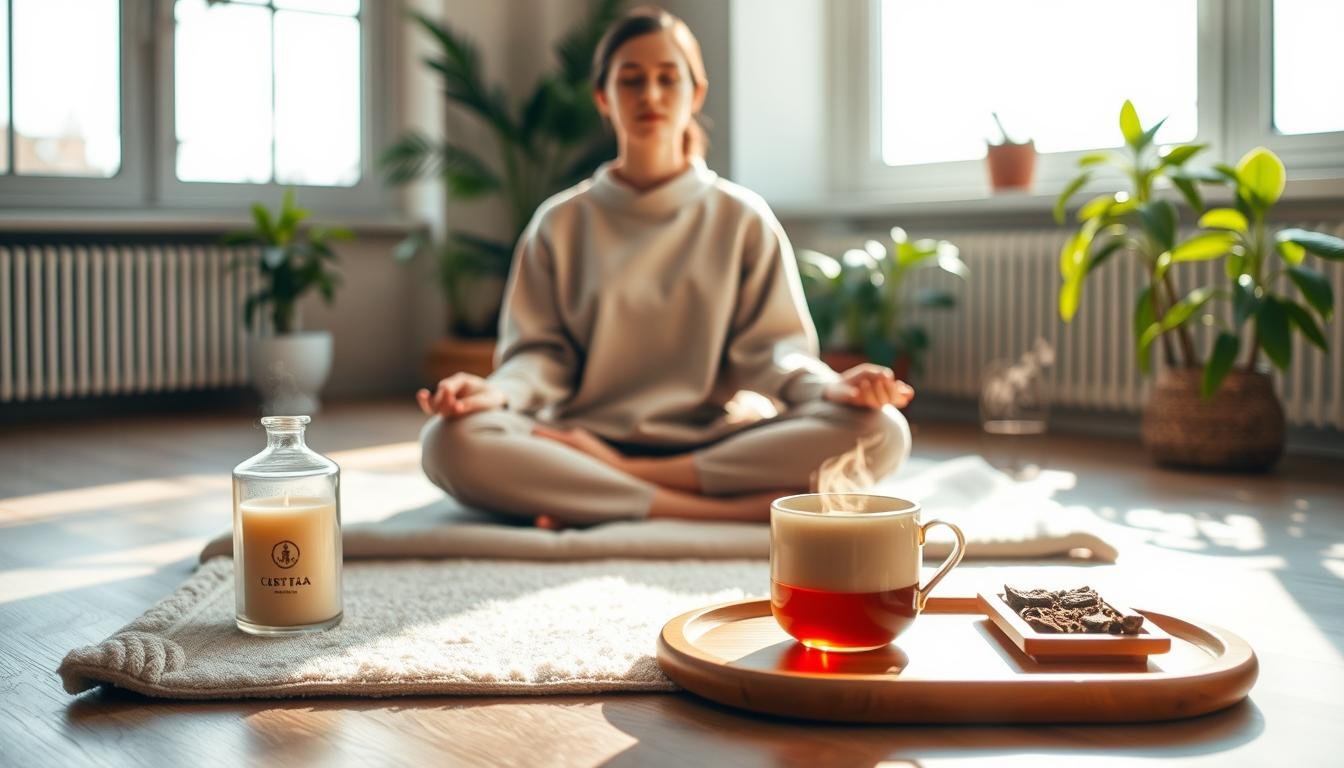
Tea meditation is about more than just sipping. It invites you to engage with the entire process, from choosing your vessel to savoring the last sip. You don’t need to turn off your mind; instead, the goal is to understand your thoughts and gently bring your attention back to the present.
As you prepare your cup, notice the sounds of the kettle, the steam rising, and the rich aroma. Each element can help you create a mindful moment. Remember, it’s not about finding the perfect blend; it’s about enjoying what you love. A full session can take only 10-15 minutes, making it an accessible way to embrace mindfulness.
Key Takeaways
- Busy thoughts are common; a 10-minute cup can help you start.
- Engage with the whole process, from vessel selection to the last sip.
- Meditation is about understanding thoughts, not turning them off.
- Focus on the sensory experience of preparing and enjoying your drink.
- Any favorite drink works; enjoyment is key to the practice.
- A complete session often takes only 10-15 minutes.
Understanding Tea Meditation and Its Benefits
Do you often feel like your mind is racing, making it hard to focus? Tea meditation offers a way to train your attention during everyday activities. This practice encourages you to engage fully with the moment, allowing you to notice when habits or distractions take over.
At the heart of this practice is the Japanese tea ceremony, known as chanoyu. It embodies the principle of ichigo ichie, or “one time, one meeting.” This mindset reminds you to treat each tea session as a unique experience, fostering a deeper connection with your drink.
Research supports the benefits of mindful drinking. A 2008 study noted increased alpha brain-wave activity within 40 minutes of consuming matcha. This suggests that mindful sipping can enhance calmness and emotional ease. Furthermore, Ed Halliwell emphasizes returning to sensations without judgment whenever your mind wanders.
Incorporating these elements into your routine can transform how you experience your cup. As you practice, remember that mindfulness is about awareness, not perfection. It’s a gentle way to cultivate emotional balance and enhance your daily moments.
Setting Up Your Space and Teaware
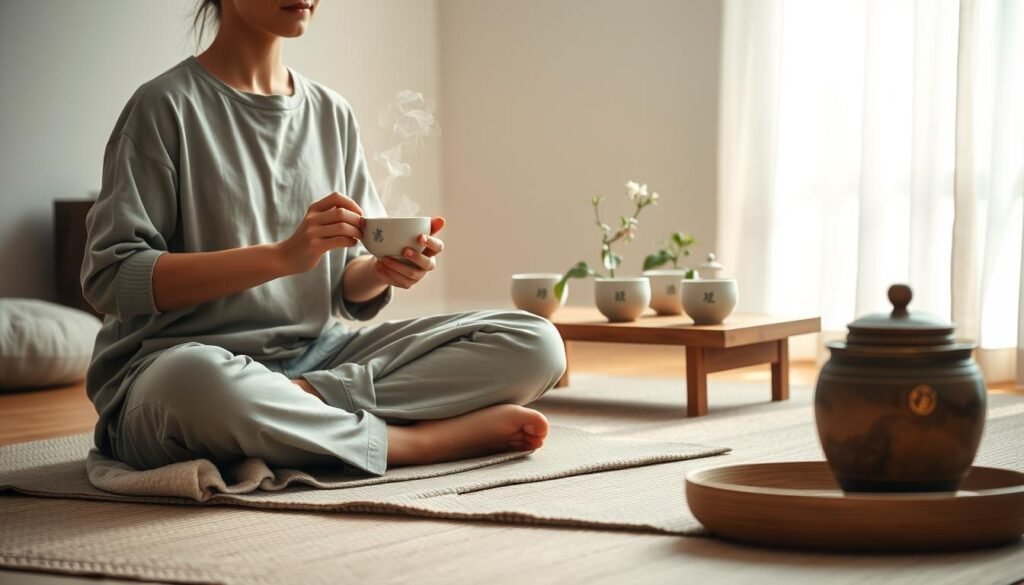
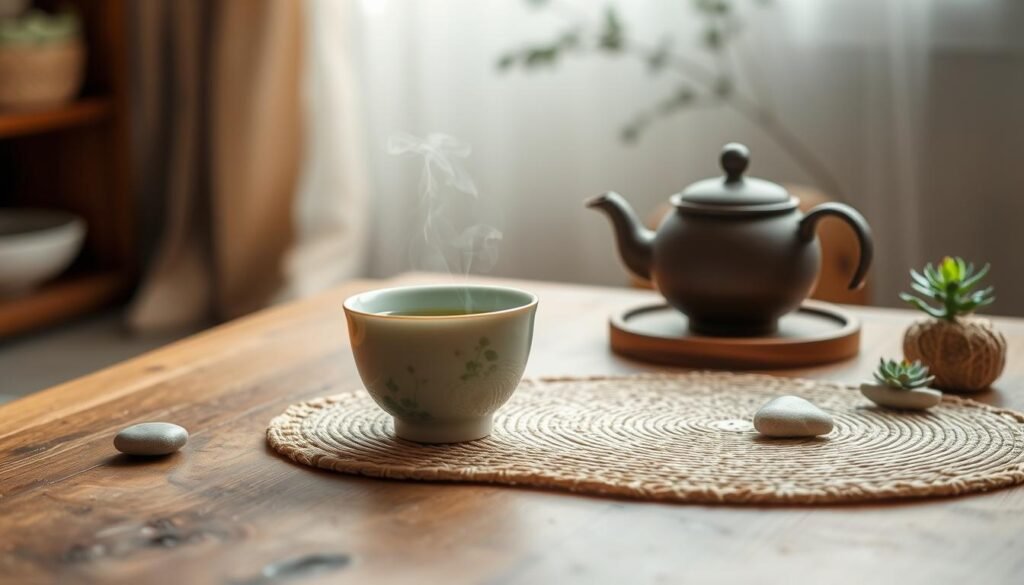
Have you ever noticed how your surroundings can impact your focus? Creating the right environment can significantly enhance your experience of tea meditation. Start by selecting a vessel that speaks to you. It could be a vintage teacup, a small tasting cup, or a mug with special memories. The choice is yours!
Consider using a kyusu or a yunomi to deepen the ritual. These Japanese teapots and cups add unique shapes and textures to your practice, enriching the sensory experience. However, remember that you don’t need them to enjoy this journey.
When it comes to your tea selection, think about what you need. For bright energy, sencha is a great choice. If you seek deep calm, gyokuro is perfect. For a warm comfort, hojicha will do the trick. Rolled oolong is particularly engaging, as you can watch the leaves dance and unfurl in hot water.
For those who enjoy a more deliberate preparation, matcha offers an artful experience. If loose leaves are available, they provide a visual treat as they expand and change in color and aroma. But don’t worry if you only have tea bags; they can work just as well for your mindful practice.
Finally, prepare a quiet, comfortable space. A stable seat and a clear surface will help you focus on the process. Allow yourself enough time to notice every step without rushing. By setting up your space thoughtfully, you can create a perfect environment for your next mindful cup.
Step-by-Step Guide to a Mindful Cup of Tea
Have you considered how focusing on a single task can bring you peace? Preparing a cup can be a wonderful way to practice mindfulness. Start by filling your kettle with fresh water. As it heats, pay attention to the sounds it makes. Inhale for four counts and exhale for six counts to center your mind.
Preparing the Water and Practicing Breathing Techniques
Notice the kettle’s quiet hiss transform into a rolling boil. While you wait, feel your body in the chair or on the floor. This awareness helps you stay present. Once the water reaches the right temperature, observe the steam rising as you prepare to steep.
Engaging All Five Senses for a Deeper Experience
Next, place the tea leaves or bag into your vessel with full attention. Pour the water slowly and watch as the color changes. During the steeping time, engage your senses. Breathe in the aroma, listen to the gentle sounds, and notice the movement of the leaves.
Hold the warm cup with both hands, bringing it to your nose. Let the first sip touch your mouth slowly. Pay attention to the flavor, texture, and temperature. Take about 30 seconds between sips to savor each moment. Finally, close your session by feeling the seat beneath you, listening to the surrounding sounds, and expressing gratitude for this mindful experience.
Incorporating Tea Meditation into Your Daily Routine
Do you find it challenging to carve out time for yourself amidst your busy schedule? Integrating tea meditation into your day can be a simple yet effective way to enhance your mindfulness practice. Even a five-minute session can provide a refreshing pause.
Here are some practical tips to help you anchor yourself in the present moment:
- Attach your practice to daily cues: Link a five-minute session to breakfast, an afternoon break, or your evening wind-down.
- Focus on consistency: A brief pause can be just as beneficial as a longer session. Prioritize regularity over duration.
- Use sensory anchors: Let the sound of the kettle, the warmth of the cup, or the final sip guide your attention back to the moment.
- Keep your setup visible: A simple tea arrangement can reduce decision fatigue, making it easier to start.
- Mindfulness in daily activities: Brushing your teeth or walking can also become opportunities for mindfulness.
When stress rises, take a moment for a quick sensory check: notice three things you see, two sounds, and one physical sensation. This practice can help you stay grounded.
For more insights, check out articles on building lasting habits, simple breathing exercises, or evening routines for better sleep.
Conclusion
In our fast-paced lives, finding moments of calm can feel elusive. Tea meditation transforms a familiar routine into a practical mindfulness exercise, fitting comfortably into a 10-15 minute window. You don’t need special tools or settings; any enjoyable drink and vessel can support your focus.
Concrete sensations like the sounds of the kettle, the warmth of your cup, and the aroma of your drink serve as helpful anchors. If your mind wanders, gently return to these senses without judgment, practicing patience and compassion as emphasized by Ed Halliwell.
Start with one mindful cup today. Build consistency through familiar daily cues rather than waiting for the perfect moment. Always remember to express gratitude for the journey of your drink, from cultivation to the peaceful moment in your hands.
FAQ
What is the best type of tea to use for meditation?
The best type of tea for mindfulness practice is one that you enjoy. Many prefer green teas like matcha for their calming effects, while others may choose herbal blends that promote relaxation.
How long should I spend on tea meditation?
You can start with just a few minutes, gradually increasing the time as you become more comfortable. Aim for 10-15 minutes to fully engage with the experience.
Can I practice tea meditation while multitasking?
It’s best to focus solely on the experience for maximum benefits. However, you can adapt the practice to fit your schedule by setting aside a few mindful moments during your day.
What if my mind wanders during the practice?
It’s completely normal for your thoughts to drift. Gently bring your attention back to the sensations of drinking, such as the warmth of the cup or the aroma of the leaves.
How can I create a calming environment for tea meditation?
Choose a quiet space, free from distractions. Consider dimming the lights, playing soft music, or using essential oils to enhance your sensory experience.
Are there specific breathing techniques I should use?
Simple deep breathing works well. Inhale slowly through your nose, hold for a moment, and exhale gently through your mouth. This helps center your mind and body.