Singing Bowl Meditation: How to Use Sound for Relaxation and Mindfulness
Have you ever wondered how sound can enhance your well-being? Singing bowl meditation is a simple yet powerful practice that utilizes sound vibrations to promote relaxation and mindfulness. Originating from the rich traditions of Tibet, India, Bhutan, and Nepal, these bowls have been used for centuries in various ceremonies and healing practices.
In this article, you will learn how to engage with these ancient tools to find inner peace and improve your overall mood. A typical session can last anywhere from 5 to 30 minutes, making it accessible for anyone, regardless of experience. You’ll discover how to choose the right bowl, create a serene environment, and focus on the soothing sounds that resonate within.
While many people report benefits such as reduced tension and better emotional balance, it’s essential to remember that this practice is not a substitute for medical treatment. Ready to explore this enriching journey? Let’s dive in!
Key Takeaways
- Singing bowl meditation uses sound and vibration for relaxation.
- These bowls have cultural roots in Himalayan traditions.
- Sessions can be as short as 5 minutes, perfect for beginners.
- Benefits include reduced tension and improved emotional balance.
- This practice complements, but does not replace, medical treatment.
Introduction to Singing Bowl Meditation
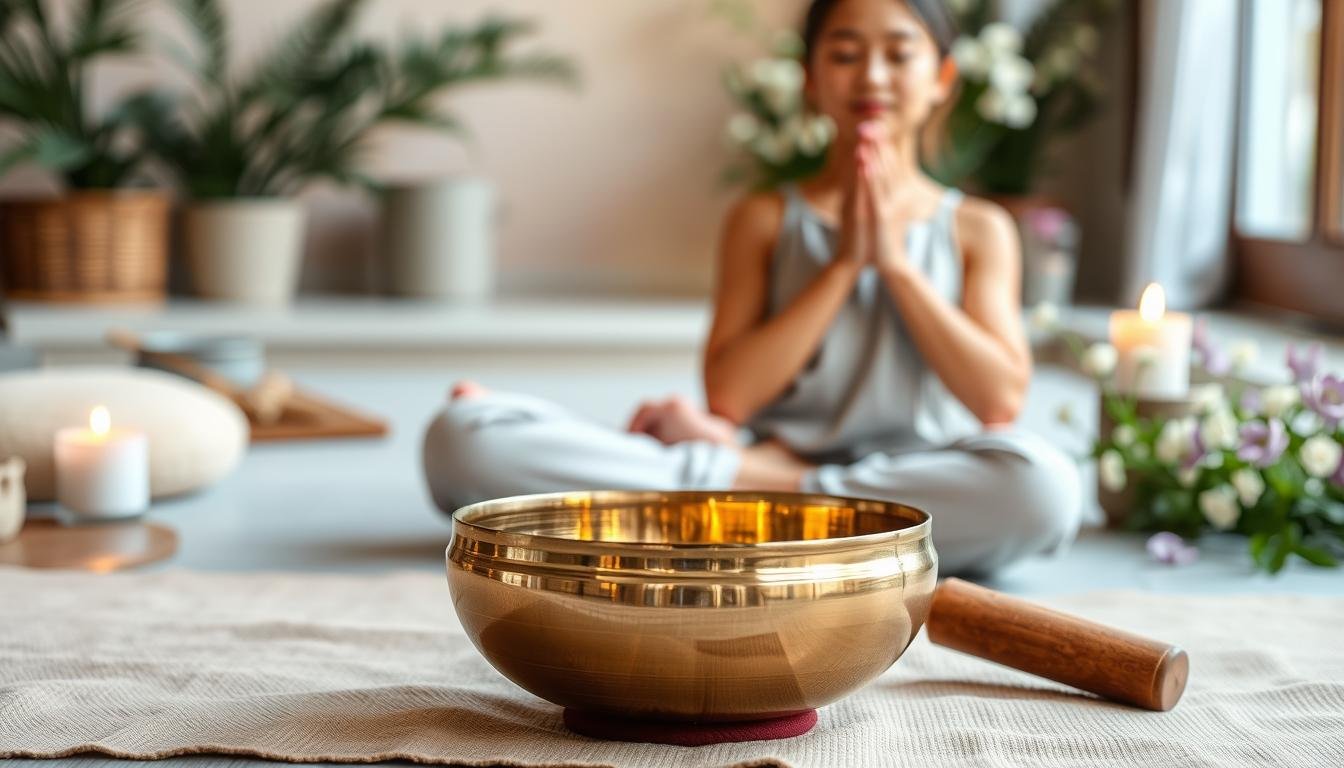
Sound has a unique ability to enhance your state of mind and well-being. Singing bowl meditation uses harmonic vibrations to create a calming atmosphere. When struck with a mallet, these bowls produce a ringing tone that can anchor your focus during practice.
In Buddhist traditions, singing bowls serve as audible markers, signaling the start and end of silent meditation cycles. This connection between sound and intentional practice can deepen your mindfulness experience.
The goal is not to achieve perfection but to notice the tone, vibration, and your breath. Beginners can start by taking three slow breaths, gently striking the bowl, and listening quietly. This simple approach can help you cultivate awareness.
As noted by the University of Nevada, Reno, incorporating sound into your relaxation routine can significantly reduce stress. Below is a table summarizing the benefits of sound in mindfulness practices:
| Benefit | Description | Effect on Mind |
|---|---|---|
| Focus | Sound provides a steady object for meditation. | Enhances concentration |
| Relaxation | Harmonic vibrations promote a calm state. | Reduces anxiety |
| Awareness | Encourages presence in the moment. | Improves emotional balance |
“Sound is the medicine of the future.” – Edgar Cayce
History and Origins of Singing Bowls
The story of sound healing is rich and varied, spanning across cultures and centuries. Singing bowls have a deep-rooted connection to the Himalayan regions of Tibet, India, Bhutan, and Nepal. While their exact origins remain uncertain, their use in Tibetan Buddhist practices is well documented.
For thousands of years, these bowls have been integral to ceremonies and rituals. They have served as tools for meditation, marking the beginning and end of silent practices. Generations of artisans have preserved the knowledge of crafting these bowls, often using traditional metal alloys.
Ancient Traditions and Tibetan Roots
Tibetan communities utilized these bowls in various ways, including meditation and ceremonial practices. Their harmonic tones helped practitioners focus and maintain a tranquil mind. The craftsmanship involved in producing singing bowls is a cherished tradition that has been passed down through the ages.
Evolution Into Modern Mindfulness Practices
In recent years, the use of singing bowls has expanded beyond religious settings. They are now popular in yoga studios, music therapy, and sound baths. While contemporary claims about healing frequencies are prevalent, it’s essential to approach these practices with respect for their cultural origins.
| Aspect | Traditional Use | Modern Application |
|---|---|---|
| Purpose | Rituals and ceremonies | Yoga and therapy |
| Material | Bronze and metal alloys | Crystal and metal |
| Focus | Meditation timing | Mindfulness enhancement |
“Sound is the medicine of the future.” – Edgar Cayce
Choosing the Right Singing Bowl for Your Practice
Choosing the right bowl can greatly enhance your practice. Each bowl offers unique characteristics that affect your experience. When selecting, consider the material, size, and sound quality.
Traditional bowls are often made from metal alloys like bronze, copper, and iron. These materials produce rich, resonant tones. In contrast, crystal bowls made from quartz create clear, vibrant sounds. Aluminum bowls are lightweight and provide brighter tones, making them easy to transport.
Size matters too. Larger bowls typically produce deeper sounds, making them suitable for group sessions. Smaller bowls are more portable and easier to hold during personal practice. Remember to listen to each bowl before purchasing. Pay attention to how it resonates with you, whether it brings calm, focus, or a comfortable meditative state.
| Material | Sound Character | Practical Use |
|---|---|---|
| Traditional Metal | Rich and resonant | Group meditation |
| Crystal | Clear and vibrant | Personal practice |
| Aluminum | Bright and light | Portable sessions |
For more tips on creating a calming space for your practice, check out our article on creating a calming meditation space.
Practical How-To for Using Singing Bowls in Meditation
Engaging with sound can be a transformative experience in your daily routine. To make the most of your practice, it’s essential to create a peaceful and distraction-free environment. Begin by finding a comfortable, quiet space where you can focus without interruptions. Silence your notifications and take several deep breaths to center yourself.
Creating a Peaceful and Distraction-Free Environment
Once you have your space, consider the size of your bowl. Larger bowls can rest on the ground, while smaller bowls can be held in your non-dominant hand or supported on your fingertips. This setup will help you feel more connected to the sound.
Step-by-Step Techniques for Playing the Bowl
- Warm the bowl by gently striking the rim at a 45-degree angle.
- Slowly circle the outside rim with the mallet, using your wrist for movement.
- Maintain light, even pressure to produce a sustained tone.
- Adjust your speed and pressure to explore different intensities and vibrations.
- Allow your session to last between 5 and 30 minutes, following the sound and relaxing your breath.
Remember to pay attention to the sound and return your focus gently whenever your mind wanders. This practice can help you achieve a deeper meditative state.
| Step | Action | Purpose |
|---|---|---|
| 1 | Find a quiet space | Minimize distractions |
| 2 | Choose the right bowl | Enhance connection |
| 3 | Warm the bowl | Prepare for sound |
| 4 | Circle the rim | Create resonance |
| 5 | Adjust pressure | Explore tones |
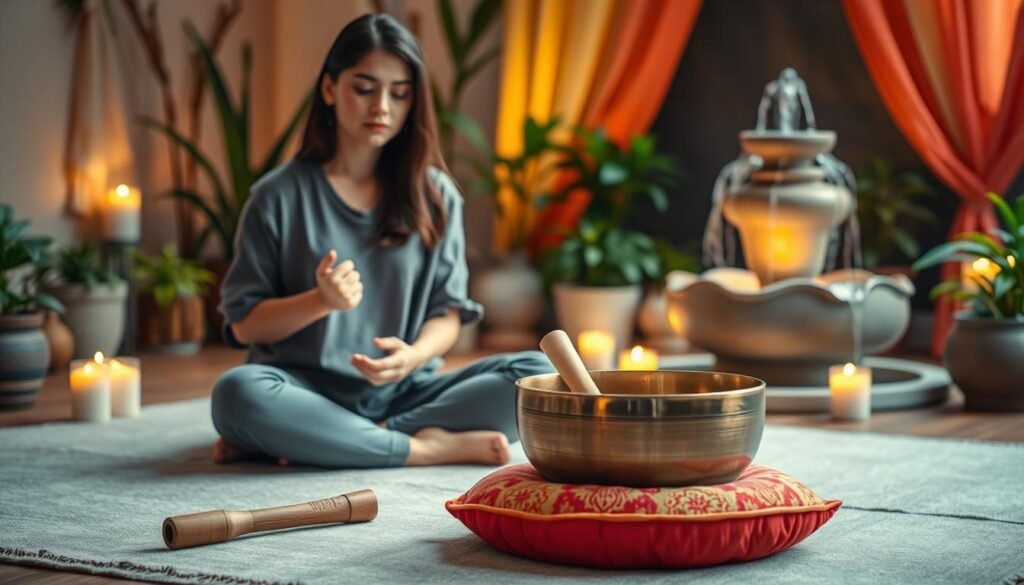
Maximizing the Benefits of Singing Bowl Meditation
To truly benefit from sound practices, consistency and mindfulness are key. Research shows that engaging regularly with sound can enhance your overall well-being. A 2016 observational study by Goldsby et al. found that sound meditation positively affects mood, tension, and emotional balance. You can read more about this study here.
Additionally, a systematic review by Stanhope and Weinstein in 2020 highlighted various benefits, including reduced blood pressure and heart rate. You can find this review here. These studies indicate that regular practice can lead to deeper relaxation and improved focus.
To maximize your experience, combine sound with slow, deep breathing. Ensure you maintain a comfortable posture and engage in consistent sessions. This way, your practice supports mindfulness rather than becoming mere background noise.
Consider tracking your stress, focus, and mood before and after sessions over a week. This simple exercise can help you identify the personal benefits of your practice.
| Reported Benefits | Description | Evidence Source |
|---|---|---|
| Relaxation | Promotes a calm state of mind. | Goldsby et al. 2016 |
| Emotional Balance | Helps reduce anxiety and depression. | Stanhope & Weinstein 2020 |
| Concentration | Enhances focus during sessions. | Goldsby et al. 2016 |
| Lower Blood Pressure | Supports cardiovascular health. | Stanhope & Weinstein 2020 |
“Sound is the medicine of the future.” – Edgar Cayce
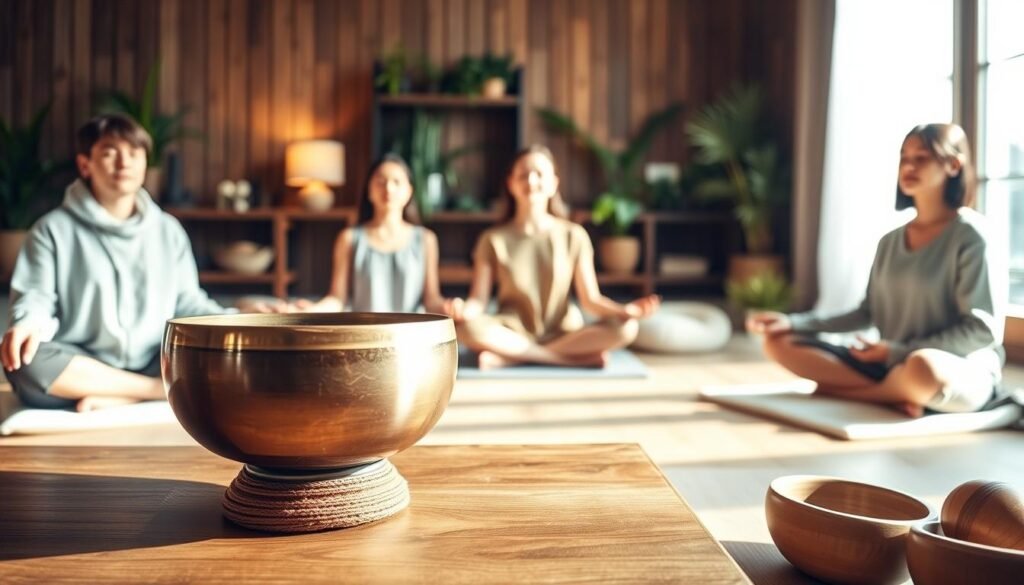
Integrating Singing Bowls into Daily Routine
Daily rituals can be transformed with the gentle resonance of sound. Incorporating a singing bowl into your routine can foster a sense of calm and mindfulness. Start your day with a simple morning ritual: strike your bowl once, take four slow breaths, and set a clear intention for the day. This practice helps ground you before diving into daily tasks.
For a midday reset, consider using sound to alleviate stress. When feeling overwhelmed, take a moment to listen to gentle tones, allowing longer exhales to shift your nervous system toward calm. This brief pause can be incredibly refreshing.
As evening approaches, create a soothing wind-down routine. Dim the lights and spend five to ten minutes listening to calming sounds. This practice prepares your mind for rest. A final quiet pause before sleep can enhance your overall relaxation.
You don’t need to own a bowl to enjoy these benefits. Platforms like Insight Timer offer thousands of singing-bowl tracks and sound-healing meditations. For example, Desh’s “Relaxing Sound Bath of Crystal Singing Bowls” lasts 117:48, while 33bowls’ “33 Bowls Tibetan Singing Bowls: Rain” track is 45:20 long. These can be great alternatives to enhance your practice.
Conclusion
Harnessing the vibrations of sound can be transformative for your well-being. You can start your journey with just one bowl, a quiet space, and a few deep breaths. Even five minutes of focused time can set a positive tone for your day.
Remember, the right bowl for you depends on personal comfort, tone, and size, rather than price. Regular practice can lead to various benefits, but it’s essential to approach these outcomes as possibilities rather than guarantees.
If you are sound-sensitive or have specific neurological conditions, listen to your body and consult a medical professional if needed. Explore the FAQs below for practical guidance on session length, anxiety relief, quality, water, chakras, and safe use.
FAQ
What are the benefits of using a singing bowl?
Using a singing bowl can promote deep relaxation, reduce stress, and enhance mindfulness. The sound vibrations produced can help you achieve a meditative state, lower blood pressure, and encourage inner peace.
How do I choose the right singing bowl for my practice?
When selecting a singing bowl, consider factors like size, material, and sound quality. Larger bowls typically produce deeper tones, while smaller bowls offer higher pitches. Traditional metal bowls and crystal bowls each have unique properties, so try a few to find what resonates with you.
How do I use a singing bowl effectively during meditation?
To use a singing bowl, hold it in your non-dominant hand and gently strike it with a mallet or rub around the rim to create sound. Focus on the vibrations and let them guide your breathing, helping you to stay present in the moment.
Can I use a singing bowl if I’m a beginner?
Absolutely! Singing bowls are accessible for beginners. Start with simple techniques, such as striking the bowl or rubbing the mallet around the rim, and gradually explore different sounds and rhythms as you become more comfortable.
How often should I practice with a singing bowl?
Consistency is key. Aim for short sessions a few times a week to start. As you grow more familiar with your practice, you can increase the frequency and duration of your sessions to deepen your experience.