Spiritual Meditation: Practices for Reflection, Awareness, and Inner Peace
Spiritual meditation is a practice embraced by many cultures and religions around the world. It offers a pathway to deeper reflection, awareness, and a sense of connection with something greater than ourselves. Unlike techniques that focus solely on relaxation, this practice invites you to explore your connection with a higher power, the Universe, or your inner self.
As you embark on this journey, it’s important to set realistic expectations. While scientific studies have extensively examined relaxation techniques, the effects of spirituality can be more challenging to measure. Remember, your experiences may vary, and certified meditation coach Jen Alico emphasizes that it’s essential not to force any specific feelings or outcomes.
In this article, you’ll discover practical methods, timing suggestions, and journaling prompts to help you build a consistent practice. Embrace the journey of self-discovery and find your own unique way to connect.
Key Takeaways
- Spiritual meditation supports reflection and awareness.
- It differs from relaxation techniques by fostering a connection with a higher power.
- Expect varied experiences, as spirituality is often subjective.
- Scientific research focuses more on relaxation than spiritual effects.
- Practical tools can help establish a consistent meditation practice.
Introduction to Spiritual Meditation
Beginning this journey requires an open mind and heart. Spiritual meditation is a practice that encourages mindful attention toward understanding the self and connecting with something greater. This practice can include various methods, such as breath awareness, prayer, or quiet reflection, depending on your personal beliefs.
Historically, spiritual experiences have been explored in psychology and philosophy. William James, in his work The Varieties of Religious Experience, noted that different cultures approach spirituality in unique ways. Examples range from Hindu japa mala to Buddhist metta, showcasing diverse methods that share themes of intention and connection.
Importantly, you don’t need special abilities or a specific faith to start your meditation practice. As Jen Alico states, this journey is about exploring your own connection with a higher power, the Universe, or your inner self. Embrace this opportunity for growth and self-discovery.
“The greatest use of a life is to spend it on something that will outlast it.”
| Practice Type | Description | Example |
|---|---|---|
| Breath Awareness | Focusing on your breath to cultivate mindfulness. | Deep breathing exercises. |
| Prayer | Communicating with a higher power for guidance. | Personal or structured prayers. |
| Visualization | Imagining a peaceful scene to enhance relaxation. | Guided imagery sessions. |
The Foundations of Spiritual Meditation
To cultivate a meaningful practice, you need to understand the core elements that support your journey. Setting a clear intention is essential. Whether your goal is to cultivate compassion or deepen your connection with a higher power, clarity in your purpose will guide your experience.
Consider the diverse traditions that contribute to spiritual practices worldwide. For instance, Hindu japa mala and mantra meditation utilize repeated sacred sounds to enhance focus. Similarly, Sufi dhikr emphasizes the remembrance of God, while Buddhist practices like loving-kindness (metta) and Zen Zazen encourage mindfulness and self-awareness.
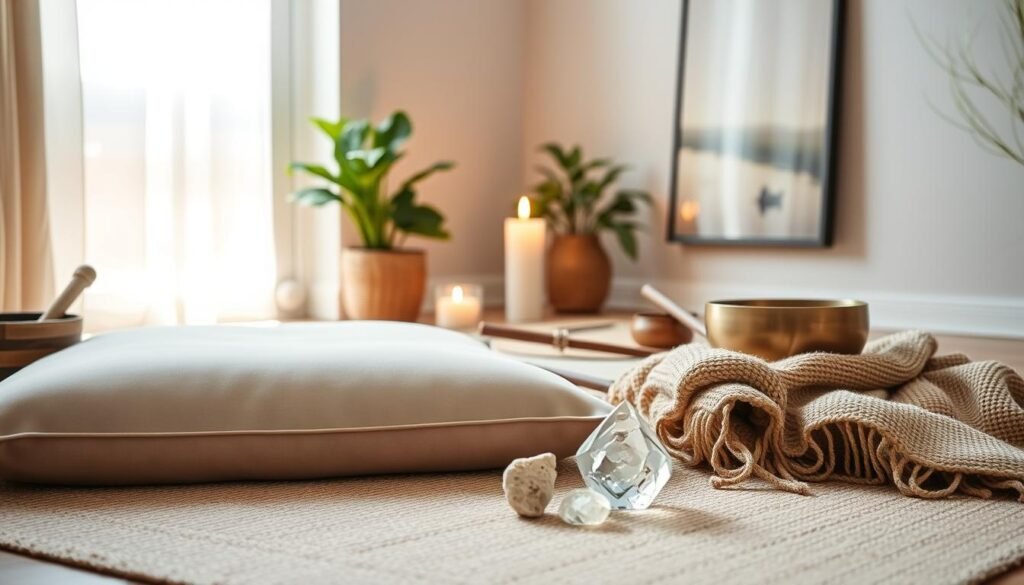
Creating a calm environment is equally important. Choose a comfortable position, find a quiet space, and set aside a manageable amount of time. This allows you to focus on your breath and sensations without distractions.
Mindfulness is about noticing your thoughts and feelings without judgment. When your mind wanders, gently return your focus to your breath or mantra. Self-acceptance and authenticity play crucial roles in this process, fostering a deeper understanding of yourself and others.
“The quieter you become, the more you can hear.”
| Practice | Description | Example |
|---|---|---|
| Hindu Japa Mala | Repeating sacred sounds to focus the mind. | Using a mala bead for mantra repetition. |
| Sufi Dhikr | Remembrance of God through repetitive phrases. | Chanting names of God. |
| Buddhist Metta | Sending love and kindness to oneself and others. | Guided loving-kindness meditation. |
As you explore these practices, remember that your journey is unique. Embrace the moments of stillness and connection, allowing them to enrich your life.
For more resources on enhancing your practice, consider visiting or .
Understanding Spiritual Experiences and Awakening
Your journey may lead to unique moments that resonate deeply with your sense of self and connection. Spiritual experiences can manifest in various ways, including feelings of awe, transcendence, or visions. A 2019 study identified key characteristics such as absorption and a sense of spiritual presence. These experiences are often deeply personal and subjective.
It’s essential to recognize that not every meditation session will yield profound insights. Feeling nothing unusual during your practice does not mean it has failed. Spiritual awakening is often described as an activation of higher consciousness, leading to greater awareness and connection.
Here are some grounded signs of spiritual awakening:
- Reduced reactivity to stressors.
- Increased self-awareness and compassion.
- Clearer values and priorities in life.
- A stronger sense of life purpose.
While it’s tempting to chase after spiritual power or quick transformations, it’s crucial to take your time. Avoid unrealistic promises from self-styled gurus and focus on your unique journey.
| Characteristic | Description | Example |
|---|---|---|
| Absorption | A deep focus that can lead to altered states of consciousness. | Being fully present in the moment. |
| Transcendence | A feeling of rising above the ordinary. | Experiencing a sense of unity with the universe. |
| Spiritual Presence | A feeling of connection with a higher power. | Moments of clarity during meditation. |
Benefits of Spiritual Meditation for Mind, Body, and Soul
Exploring the benefits of a dedicated practice can profoundly impact your life. Research shows that spiritual meditation serves as a valuable complement to mental health care. A 2018 study highlighted its effectiveness in supporting individuals dealing with anxiety, depression, and stress.
Moreover, a 2020 study confirmed its role in pain management and recovery from substance use disorders. This approach can enhance your overall well-being, offering a pathway to greater self-awareness and clarity.
Regular practice may lead to improved creativity and inner peace. Nisha, a meditation practitioner, shares that consistent engagement fosters self-acceptance and a stronger sense of belonging. You might notice calmer responses to daily challenges and an increased ability to focus.
Additionally, a 2019 study involving cancer survivors suggested that these practices could help alleviate sleep problems. While these findings are promising, remember that meditation should complement, not replace, professional mental health support.
As you continue your journey, take time to reflect on the changes you experience. Are you making kinder choices? Do you feel more in tune with your body’s needs? Each small shift can signal the benefits of your practice.
How to Practice Spiritual Meditation Daily
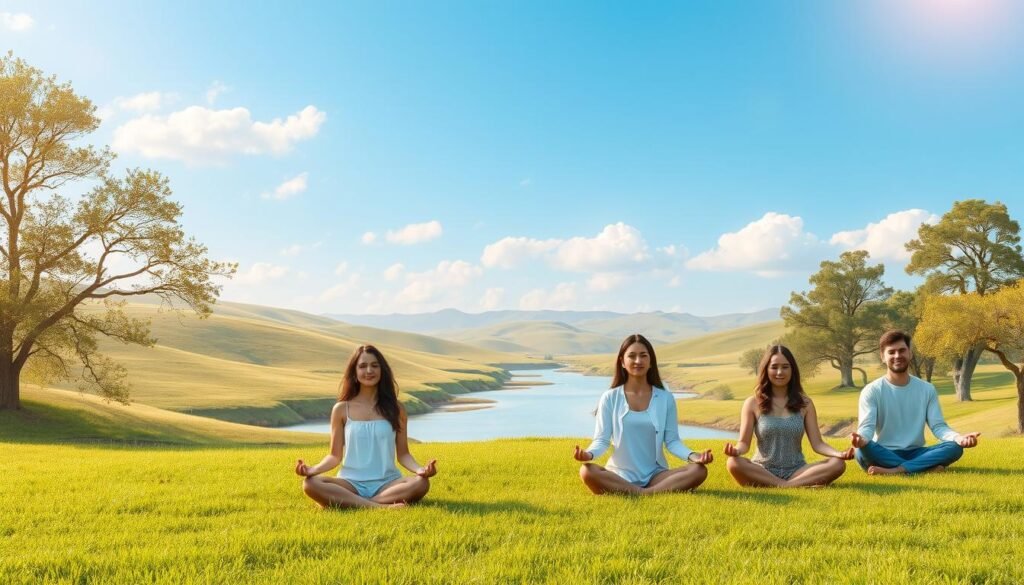
Incorporating a daily practice can transform your connection with self and others. Here are two effective methods based on the teachings of Jen Alico and Nisha. Each offers a unique approach to deepen your awareness and enhance your experience.
Alico’s Guided Meditation Technique
Jen Alico recommends a gentle sequence to settle into your practice:
- Find a comfortable cushion and sit down.
- Place your right hand over your heart center and your left hand below your belly button.
- Notice your breathing, allowing it to become calm and steady.
Next, visualize an inner light. Observe its color and brightness. Imagine it traveling into the sky and returning slowly to your body before you open your eyes.
Nisha’s Approach to Connecting with Inner Light
Nisha emphasizes a comfortable seated position. Sit upright with uncrossed wrists and ankles. Start by observing your breath, then shift your attention to your heartbeat. Finally, focus on your heart space.
It’s normal for your mind to wander. Thank those distracting thoughts and gently return to your breath without judgment. After your practice, take time to journal your sensations, insights, or any changes in emotional reactivity. Remember to drink plenty of water!
| Step | Alico’s Technique | Nisha’s Approach |
|---|---|---|
| Position | Right hand on heart, left hand below belly | Upright, uncrossed wrists and ankles |
| Focus | Breath awareness | Breath, then heartbeat |
| Visualization | Inner light traveling | Heart space connection |
For more resources on enhancing your practice, consider visiting .
Guided Meditations and Tools for Connection
Finding tools to support your practice can significantly enrich your spiritual journey. One excellent option is Amanda Nicole’s 15-minute guided meditation. This structured session focuses on connecting with your inner light and universal energy.
The meditation includes seven essential steps:
- Relaxation
- Releasing the ego
- Grounding
- Connecting with inner light
- Expanding light
- Linking with the universe
- Returning to a natural state
Additionally, consider using binaural beats as a sound environment. These can enhance your experience, but remember to keep the volume comfortable. If the sound feels unpleasant, it’s okay to stop.
For more guided sessions, the free Insight Timer app offers a vast library of resources. This app can support your practice at home, during travel, or after work.
When exploring external teachers, look for qualities like humility, kindness, and wisdom. Avoid those who make unrealistic promises of supernatural power.
| Step | Description | Purpose |
|---|---|---|
| Relaxation | Calm your mind and body. | Prepare for meditation. |
| Grounding | Visualize roots extending into the earth. | Enhance stability and connection. |
| Universal Connection | Link your inner light with the universe. | Foster a sense of belonging. |
For additional resources on enhancing your practice, consider visiting .
Ideal Times and Environments for Spiritual Meditation
Choosing the right time and environment for your practice can greatly enhance your experience. Jen Alico emphasizes that mornings and evenings are often ideal. During these times, your body may be more receptive to connection and awareness.
For a morning routine, start with one or two paragraphs of journaling. This helps clear your mind and set a positive intention for the day. Follow this with breath awareness to ground yourself.
In the evening, consider using Do Not Disturb mode on your devices before meditating. Limiting screen exposure afterward prepares your mind for restful sleep. Create a quiet space that encourages relaxation.
It’s important to adapt your practice around your work, health needs, and family responsibilities. A fixed schedule can feel restrictive, so find what works best for you. Tracking your sleep, mood, and insights for several weeks can help you assess the benefits of your routine.
“The best time for meditation is the time you can maintain consistently.”
Approaching this journey with an open heart can lead to transformative experiences. Remember, spiritual meditation is not a quick fix but a gradual practice of honest reflection and mindful breathing. It fosters connection, compassion, and awareness, allowing you to grow at your own pace.
Pema Chödrön’s *Start Where You Are* highlights self-compassion as a foundation for kindness toward others. The Dalai Lama teaches that serving others nurtures happiness and a sense of belonging. Start with just five to fifteen minutes at home, choosing one method that resonates with you.
Ordinary kindness and present-moment appreciation are vital signs of spiritual awareness. Allow meaningful change to unfold over time, and be patient with yourself on this journey.
FAQs
- Does spiritual meditation require a specific religion? No, it is open to anyone, regardless of belief.
- How long should beginners meditate? Start with 5-15 minutes daily.
- Is spiritual awakening scientifically proven? While experiences vary, many studies support the benefits of meditation.
- How does meditation differ from relaxation? Meditation focuses on awareness and connection, while relaxation emphasizes stress relief.
FAQ
What is spiritual meditation?
Spiritual meditation is a practice that helps you connect with your inner self and something greater. It often involves focusing on the present moment, enhancing awareness, and fostering a sense of peace.
How can I start a meditation practice?
Begin by setting aside a few minutes each day to sit quietly. Focus on your breath, observe your thoughts, and allow yourself to be present. Gradually increase the time as you become more comfortable.
What are the benefits of meditation?
Regular practice can improve mental health, reduce stress, enhance creativity, and promote overall well-being. It helps you gain clarity and a deeper understanding of yourself and your life purpose.
How do I know if I am experiencing a spiritual awakening?
Signs of spiritual awakening can include heightened awareness, a desire for personal growth, and feeling more connected to others and the world around you. You may also experience shifts in your perception of life.
What techniques can I use to deepen my meditation practice?
Techniques such as guided meditations, mindfulness exercises, and visualization can help deepen your practice. Experiment with different methods to find what resonates with you.
When is the best time to meditate?
Many people find morning meditation beneficial for setting a positive tone for the day. Evening sessions can also be helpful for reflection and relaxation before sleep.
Can meditation improve my relationships?
Yes, meditation can enhance your emotional awareness and empathy, leading to improved communication and connection with others. It helps you approach relationships with a more open and understanding mindset.
What resources can I use to support my meditation journey?
There are various apps, books, and online resources available to guide your practice. Consider exploring meditation apps or joining local meditation groups for support and inspiration.