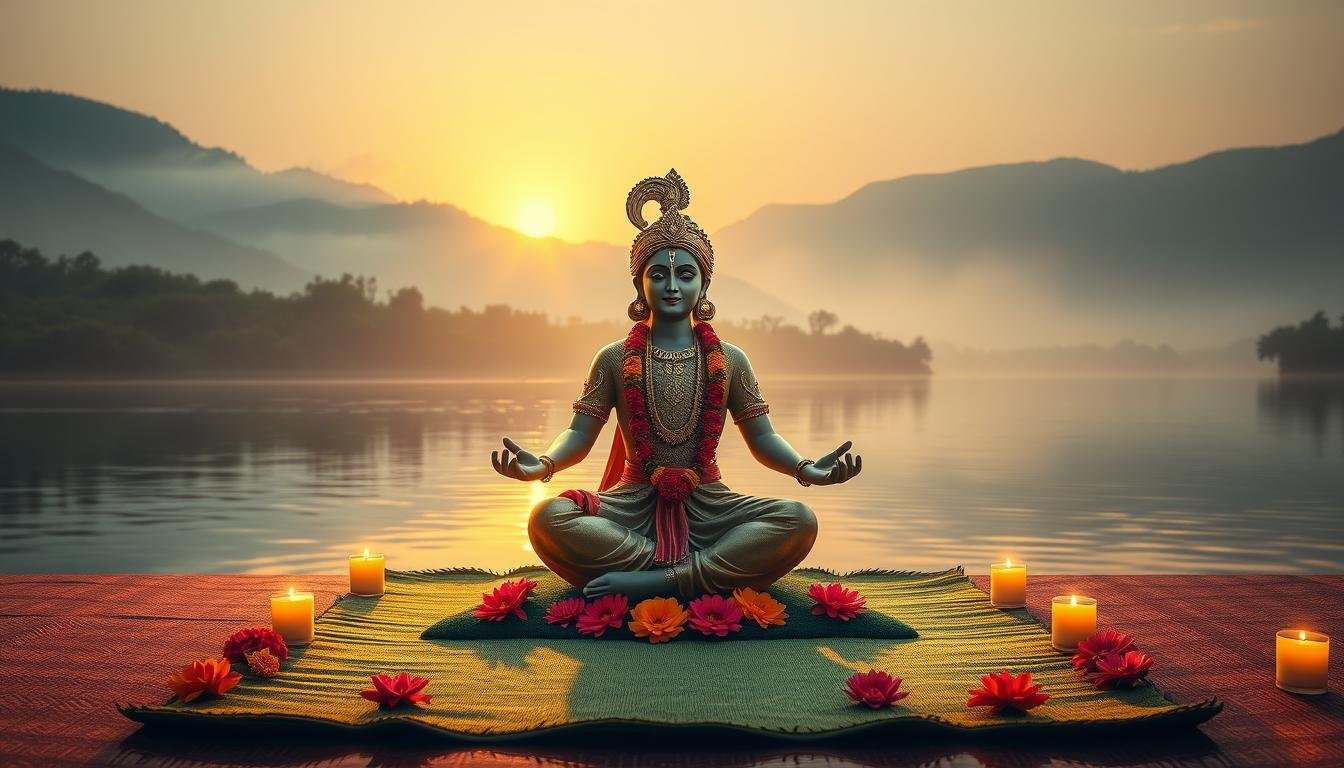
Krishna Meditation: Mantras, Mindfulness, and Devotional Practice
Are you ready to explore a practice that combines love, sound, and focused energy? Krishna meditation offers a unique approach to mindfulness through simple mantras and intentional breathing. This devotional practice invites you to connect with your inner self while contemplating the divine qualities of Krishna.
The Hare Krishna Maha Mantra is a cornerstone of this practice, especially recommended for our current age. It consists of the repeated phrases “Hare Krishna” and “Hare Rama,” which serve as a spiritual call to connect with higher consciousness. By starting with just a few mindful breaths, you can create a calming space in your daily routine.
Remember, meditation is not about emptying your mind but nurturing it. Begin with short sessions of 5-10 minutes, gradually building your practice. This journey aligns with teachings from the Bhagavad Gita, emphasizing devotion and personal growth. So, let’s embark on this enriching path together!
Key Takeaways
- Krishna meditation combines focused attention, breathing, and mantra repetition.
- The Hare Krishna Maha Mantra is a traditional sound practice for spiritual connection.
- Repeated words act as a call to divine energy and love.
- Start with mindful breaths and short sessions to ease into practice.
- The Bhagavad Gita links meditation with devotion and personal growth.
- Meditation is a gradual journey, not an immediate fix.
Understanding the Power of Krishna Meditation
Explore a transformative practice that merges devotion, sound, and mindful awareness. The Hare Krishna Maha Mantra is central to this journey. Its sound vibrations help awaken a deeper consciousness within you. The mantra, consisting of the words “Hare,” “Krishna,” and “Rama,” connects you to supreme spiritual pleasure. Each repetition brings you closer to a state of bliss and self-awareness.
Chapter 6 of the Bhagavad Gita, known as Dhyana Yoga, provides practical instructions for meditation. This chapter emphasizes that meditation is more than just relaxation; it’s about training the mind and senses to focus on the divine. In verse 6.19, the Gita compares a steady mind to a lamp in a windless place, illustrating the calmness you can achieve.
As you chant the Maha Mantra, you engage in a practice that revives your Krishna consciousness. This connection fosters an inner peace that transcends daily distractions. Embrace the sound, feel the energy, and allow it to guide you toward a more fulfilling life.
| Word | Meaning | Significance |
|---|---|---|
| Hare | Energy of the divine | Invokes spiritual love |
| Krishna | Supreme God | Embodiment of pleasure |
| Rama | Divine joy | Represents love and virtue |
Creating a Sacred Space for Your Meditation Practice
Establishing a serene space can significantly enhance your meditation experience. According to the Bhagavad Gita 6.11, it’s important to meditate in a clean place with a firm seat. This helps create an environment that supports your journey inward.
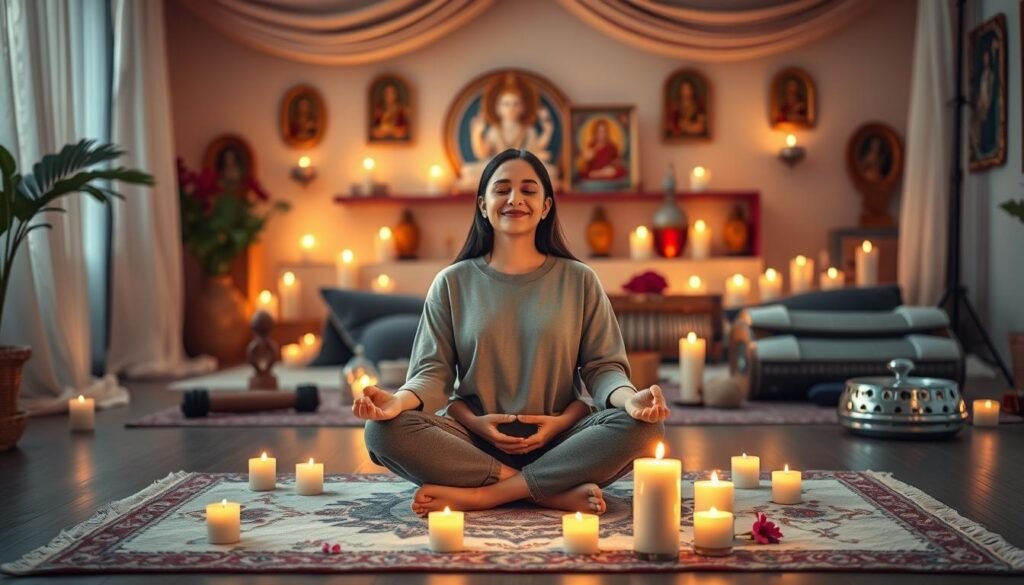
Begin by choosing a quiet area where interruptions are unlikely. A simple focal point can be helpful. Consider placing an image, statue, flute, peacock feather, or even a handwritten name of Krishna nearby. These items can help center your thoughts and energy.
Your dedicated space doesn’t need to be elaborate. A cushion, chair, or an uncluttered corner will suffice. You can sit cross-legged on the floor or in a chair with your feet flat on the ground. Before starting, set a clear intention, such as seeking Krishna’s love and guidance.
Think of this sacred space as a cue to return to your practice. It’s not about achieving perfection but nurturing your mind and spirit.
| Element | Purpose | Example |
|---|---|---|
| Image/Statue | Focus and inspiration | Krishna’s image |
| Flute | Symbol of divine connection | Wooden flute |
| Peacock Feather | Representation of beauty | Decorative feather |

Step-by-Step Guide to Meditate as Taught in the Gita
Discover the essential steps to elevate your meditation practice through ancient wisdom. Following the teachings of the Bhagavad Gita, you can create a fulfilling meditation experience.
Start by establishing a proper posture. Find a clean place and sit comfortably, ensuring your trunk, head, and neck are erect. Rest your hands on your knees; palms up can invite energy, while palms down can ground you. Take three natural breaths to center yourself.
Next, focus your gaze softly at the tip of your nose or between your eyebrows. This gentle approach prevents tension in your face. Allow your breath to become even, drawing from the guidance in Bhagavad Gita 5.27.
Visualize Krishna playing the flute beneath a tree. Notice qualities like love and joy that radiate from this image. If your mind wanders, gently bring it back to Krishna or your mantra, as advised in Bhagavad Gita 6.26.
Finally, close your session with a deep breath, expressing gratitude before gradually returning your awareness to the room.
| Step | Description | Reference |
|---|---|---|
| Posture | Keep trunk, head, and neck erect | Bhagavad Gita 6.11-6.13 |
| Breath Control | Equalize the flow of breath | Bhagavad Gita 5.27 |
| Visualization | Imagine Krishna’s divine form | Roopdhyan practice |
Practical Techniques to Manage Meditation Challenges
It’s normal to experience difficulties in meditation, but understanding how to navigate them can lead to growth. Many practitioners face issues like restlessness and overthinking. The good news is that you can manage these challenges with simple techniques.
Here are some practical methods to help you:
- Normalize Restlessness: Remember Arjuna’s description of the mind in the Bhagavad Gita. Acknowledge that restlessness is part of the human experience.
- Simple Reset: When your mind wanders, notice the thought, label it without judgment, and take a slower breath. Then, return your focus to your mantra or the form of Krishna.
- Practice Abhyasa: Consistent practice is key. Set aside time each day to meditate, even if it’s just five minutes.
- Embrace Vairagya: Release attachment to distractions or the need for perfect sessions. Focus on the journey rather than immediate results.
- Shorter Sessions: If anxiety or fatigue strikes, opt for shorter meditation sessions. A quick five-minute practice can still be effective.
- Balance Your Life: Apply moderation in eating, sleeping, and working. Integrate meditation into your daily routine instead of treating it as a separate task.
- Track Your Progress: Keep a log of your completed sessions. This helps you see your growth over time without judging each experience.
Integrating Meditation into Daily Life
Incorporating meditation into your daily routine can bring a sense of peace and focus. You can adapt your practice to fit seamlessly into your life, whether at home, in bed, or at work. This flexibility helps maintain the essence of devotion while enhancing your overall well-being.
Start with a simple morning routine. Dedicate 5-10 minutes to your practice. Begin with three deep breaths, choose a mantra, visualize Krishna briefly, and close with gratitude. This small commitment can set a positive tone for your day.
If you prefer meditating in bed, sit upright against the headboard. Ensure your body, neck, and head are aligned, as emphasized in Bhagavad Gita 6.13. This position helps you stay focused while remaining comfortable.
At work, find a quiet corner during breaks. You can use your office chair, ensuring both feet rest on the floor and your spine is upright. A short session of breathing or chanting can rejuvenate your mind.
Consider experimenting with Brahma-muhurta, the pre-dawn period. This time is often described as especially conducive to spiritual focus. Remember, consistency is key. It’s about returning to your practice daily, even if just for a few moments.
Enhancing Your Spiritual Journey with Devotional Chants and Mantras
Delve into the world of sound and devotion, where each chant becomes a step on your spiritual journey. Choosing the right mantra can greatly enhance your practice and connection to the divine.
Two powerful options are Om Namo Bhagavate Vasudevaya and the Hare Krishna Maha Mantra. Both allow your heart to resonate with devotion and personal significance. As you explore these mantras, let your intuition guide you in selecting one that feels right.
Japa is a repeated mantra practice that offers your mind a clear sound-based point of return during meditation. Using a 108-bead mala can simplify counting your repetitions, allowing you to focus on your practice without distractions.
Depending on your comfort level, you can chant aloud, whisper, or listen to Krishna bhajans. Each method can help you immerse yourself in the sound and energy of the mantras. Remember, sincere chanting can help revive your connection to Krishna consciousness.
To cultivate a deeper experience, try focusing on one mantra for a week. This approach makes it easier to observe changes in your calmness, focus, and spiritual connection. By embracing these steps, you’ll find that chanting can bring freedom and joy into your daily life.
Conclusion
Embrace the journey of connecting your mind and spirit through intentional practice. Krishna meditation combines focused attention, mantra repetition, and mindful breathing. This practice helps you visualize devotion while setting a sincere intention to connect deeply.
The guidance from the Bhagavad Gita transforms meditation into actionable steps. These steps include maintaining proper posture, regulating your breath, and practicing moderation. Remember, when your mind wanders, gently return to your mantra or visualization without judgment.
Even a brief 5-10 minute routine can become a valuable part of your daily life. Connect your practice with a specific time and place to enhance consistency. For further exploration, consider studying the Bhagavad Gita Verse 6.11 or joining online classes.
Start today with three deep breaths, one mantra, and a moment of gratitude. Your journey toward freedom and personal growth begins now!
FAQ
What is Krishna meditation?
Krishna meditation involves chanting mantras, focusing on mindfulness, and connecting with the divine through devotional practices. It aims to enhance your spiritual journey and promote inner peace.
How do I start practicing Krishna meditation?
Begin by choosing a quiet space where you can sit comfortably. Set your intention for the practice, and start with chanting the Maha Mantra to center your mind and spirit.
What is the Maha Mantra?
The Maha Mantra is a powerful chant that consists of the names of the divine: “Hare Krishna, Hare Rama.” It is believed to bring peace, clarity, and connection to higher consciousness.
How can I overcome distractions during meditation?
To manage distractions, focus on your breath and gently bring your attention back to the mantra whenever your mind wanders. Practicing consistently will help improve your concentration over time.
Can I meditate anywhere?
While you can meditate anywhere, creating a dedicated, clean, and quiet space can enhance your experience. This space should feel sacred and help you focus on your practice.
How long should I meditate each day?
Start with just a few minutes each day and gradually increase the duration as you become more comfortable. Consistency is key, so find a time that works best for you.
What benefits can I expect from Krishna meditation?
Practicing Krishna meditation can lead to reduced anxiety, improved focus, and a deeper sense of love and connection to yourself and others. Many also report feeling more grounded and spiritually fulfilled.