
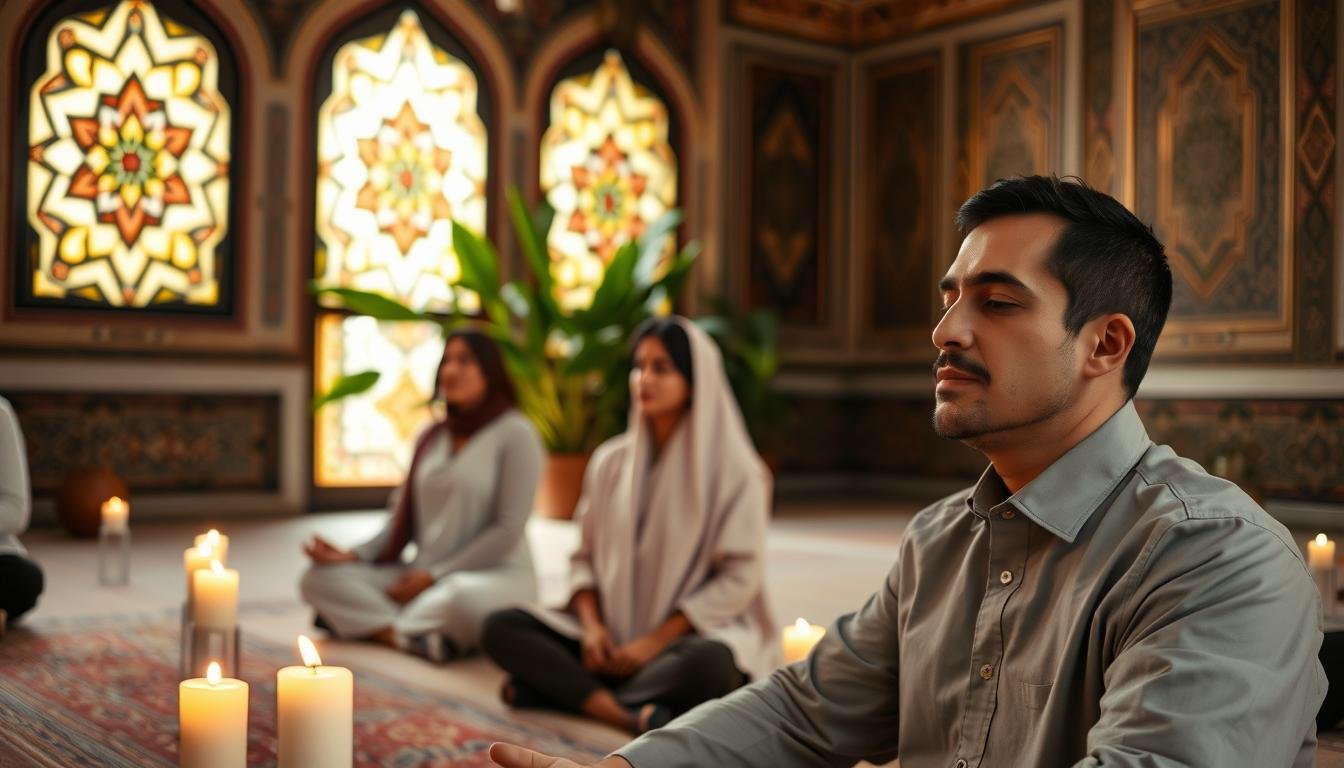
Sufi Meditation: Understanding the Practice and Its Reflective Traditions
Sufi meditation is a profound practice that emphasizes the heart’s connection to love and the journey toward the divine. It is not merely a relaxation technique; instead, it invites seekers to engage in a deep, reflective process. This journey centers on the relationship between the lover and the Beloved, highlighting the essence of love as a pathway to spiritual growth.
At the core of this practice lies dhikr, or remembrance, which can take many forms. This may include reciting divine names, reflecting on Qur’anic verses, or engaging in silent contemplation. The promise of peace in the heart, as stated in Surah 13:28, underscores the importance of this practice in connecting with the divine.
As you explore this journey, consider practical aspects such as posture, breathing, and daily routines. These elements can enhance your experience and support your path toward greater self-awareness. Remember, this is about cultivating a deeper connection with yourself and the world around you.
Key Takeaways
- Sufi meditation is a reflective practice focused on love and remembrance.
- It emphasizes the heart’s journey toward the divine.
- Dhikr, or remembrance, is central to this practice.
- Engaging with the Qur’an can deepen your experience.
- Practical guidance is essential for enhancing your meditation journey.
The Roots of Sufi Meditation and Mystical Traditions
A deep dive into the historical roots of Islamic mysticism reveals a fascinating journey of seekers. One notable group is the Kamal Posh, or “blanket wearers.” These mystics traveled through the ancient world, seeking teachings that could quench their spiritual thirst. Their journey highlights a connection to Prophet Muhammad, emphasizing love as the key to resolving their existential dissatisfaction.
Among these early figures was Râbi’a, a remarkable woman born into slavery in the eighth century. Her teachings centered on the love of God, famously refusing to focus on hatred towards the devil. This profound love became a cornerstone of her legacy.
In contrast, Bâyezîd Bistâmî emphasized shedding the lower self, while Al-Hallâj expressed ecstatic truths, famously declaring, “anâ’l-Haqq.” Meanwhile, Al-Junayd of Baghdad taught sobriety and the annihilation of the ego, known as fanâ. Early Sufi teachers often conveyed their wisdom through lived examples, devotion, and service rather than formal writings.
The Philosophy Behind Sufi Meditation
This practice invites you to delve into a philosophy that celebrates the interconnectedness of all beings. Central to this philosophy is the concept of wahdat al-wujûd, or unity of being, as articulated by the great mystic Ibn ‘Arabî. He taught that all existence ultimately points toward divine oneness, though interpretations may vary across different Sufi schools.
As you explore this path, consider the idea of fanâ, which refers to the loss of the separate ego. This state allows seekers to move beyond ordinary identification and toward a deeper awareness of unity. Ibn ‘Arabî, born in Spain in 1165, systematized many ideas that earlier mystics expressed orally, shaping a rich tradition of thought.
Another key figure is Rûmî, who transformed from a theology professor into a major poet of divine love after meeting Shams-i Tabrîz. His work, especially the Mathnawi, often referred to as “The Qur’an in Persian,” emphasizes love as a profound force that connects us all.
Ultimately, the goal of this practice is to transform your relationship with the self, thoughts, and the world around you. By embracing these teachings, you can cultivate a deeper connection to the essence of love and reality.
| Philosopher | Key Concept | Impact |
|---|---|---|
| Ibn ‘Arabî | Wahdat al-wujûd | Unity of being |
| Rûmî | Divine love | Transformation through poetry |
| Shams-i Tabrîz | Spiritual awakening | Inspiration for Rûmî |
Essential Practices in Sufi Meditation
Understanding the essential practices in this reflective tradition can deepen your spiritual journey. One key aspect is dhikr, which means the remembrance of God. This can take various forms, including silent repetition, vocal recitation, and group chanting.
Tasbih, or misbaha beads, often contain 99 or 100 beads. They help you track your repetitions without dividing your attention between counting and meaning. This allows for a more focused and enriching experience.
Another technique is Wazaif, which involves contemplating the divine names and attributes. Different teachers may prescribe specific formulas, so it’s essential to learn these from a qualified source.
The meditation of the heart is another vital practice. This involves placing loving attention in your heart and allowing distracting thoughts to dissolve naturally. You don’t need to struggle aggressively with your mind.
| Practice Type | Description | Focus |
|---|---|---|
| Silent Dhikr | Inner remembrance without sound | Concentration |
| Vocal Dhikr | Recitation of divine names aloud | Community connection |
| Heart Meditation | Focusing love in the heart | Emotional release |
| Qur’anic Recitation | Reading and reflecting on verses | Spiritual insight |
| Reflective Journaling | Writing thoughts and experiences | Self-discovery |
Before starting any intensive dhikr practice, remember to seek guidance from a murshid or shaykh. This ensures that you receive personalized instruction and support tailored to your spiritual needs.
Starting Your Sufi Meditation Journey
Embarking on a journey of self-discovery through reflective practices can be both exciting and transformative. You can create a meaningful experience by integrating simple yet powerful steps into your daily routine. Here’s how to begin.
Start by finding a relaxed position, whether seated or lying down. Remember, the focus is on ease and steady attention, not rigid posture. Set a gentle timer for 5 to 10 minutes at first, gradually increasing to at least 30 minutes as you become more comfortable.
Invoke feelings of love by remembering God, a cherished person, or a moment of compassion. This connection helps anchor your attention in the heart. Allow thoughts about daily life to surface and pass without judgment. Distractions are part of the process, not failures.
Consider practicing during quieter times, like early mornings or bedtime, when the world is less hectic. After each session, jot down a sentence about your mood or focus. This reflection can illuminate your progress over time.
Choosing a consistent time and place for your practice can greatly enhance your journey.
Cultivating Love and Connection Through Meditation
Embracing a love-centered approach in your practice can transform your connection with yourself and others. Love, in this context, embodies warmth, tenderness, and peace. It invites you to experience feelings of longing and compassion during your reflective moments.
While some may refer to this as “activating the heart chakra,” it’s important to recognize that this term is more contemporary. Traditional Sufi teachings often focus on the heart itself, providing a bridge to understanding these feelings. During your practice, take a moment to remember God or someone you truly love. Notice how this feeling manifests as softness, silence, or even joy.
Rûmî beautifully described love as flowing like blood through the veins. This imagery illustrates how love can transform our very essence. Instead of battling intrusive thoughts, merge them into the feeling of love. This gentle approach can ease the mind’s agitation.
Consider a short compassion practice: silently wish well-being for yourself, a loved one, and even someone challenging in your life. This simple act can deepen your connection to love and enhance your overall experience.
| Quality | Description | Impact |
|---|---|---|
| Warmth | Feeling of comfort and safety | Enhances emotional well-being |
| Tenderness | Gentle affection towards self and others | Fosters compassion |
| Peace | Inner calmness during practice | Promotes clarity of mind |
Sufi Orders and Their Practices
Exploring the various Sufi orders reveals a rich tapestry of practices and teachings. Each order, or tariqa, preserves a lineage of teachings passed down from teacher to disciple. This ensures that the essence of the practice remains intact while adapting to different cultural contexts.
The Mevlevî order, founded by Rûmî, is famous for its music and the Whirling Dervishes. In contrast, the Naqshbandiyya emphasizes silent dhikr, stillness, and psychological work. Their approach includes dream interpretation and suhbat, or spiritual conversation.
The Qâdiryyah, established by ‘Abdu’l-Qâdir Gîlânî in Baghdad, focuses on both silent and vocal forms of dhikr, alongside acts of charity. Meanwhile, the Rifâ’iyya, founded by Ahmad ar-Rifâ’î, is known for its loud dhikr, earning its practitioners the nickname “Howling Dervishes.”
Ahmad Sirhindî, who died in 1624, played a crucial role in spreading the Naqshbandi tradition throughout India. In 1967, Irina Tweedie introduced the Naqshbandiyya-Mujaddidiyya to the West, further enriching the spiritual landscape.
| Order | Founder | Region | Distinctive Practices | Teacher-Student Transmission |
|---|---|---|---|---|
| Qâdiryyah | ‘Abdu’l-Qâdir Gîlânî | Baghdad | Silent and vocal dhikr, charity | Direct lineage |
| Rifâ’iyya | Ahmad ar-Rifâ’î | Baghdad | Loud dhikr | Direct lineage |
| Mevlevî | Rûmî | Turkey | Whirling, music | Direct lineage |
| Naqshbandiyya | Ahmad Sirhindî | India | Silent dhikr, psychological work | Direct lineage |
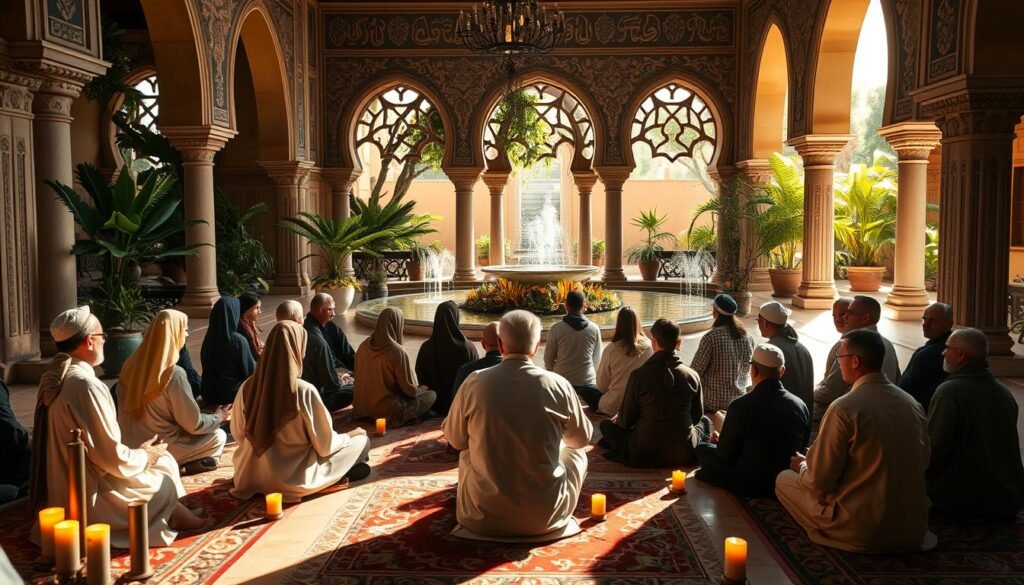
Effective Meditation Techniques and Mindfulness Tips
Mindfulness practices rooted in Sufi teachings provide a transformative approach to self-awareness. By integrating various techniques, you can deepen your spiritual journey and enhance your connection with the divine.
Here are some effective techniques to explore:
- Silent Dhikr: This inner remembrance helps you focus without external distractions.
- Vocal Remembrance: Reciting divine names aloud fosters community and connection.
- Heart Meditation: Direct your attention to your heart, allowing thoughts to flow naturally.
- Contemplative Listening: Engage with sacred music or teaching stories to deepen understanding.
- Movement: Dance or gentle movement can express devotion and joy.
To enhance your practice, consider the following mindfulness tips:
- Notice your breathing and label distractions gently, returning your focus to your anchor.
- Choose one technique to practice for two weeks to allow self-observation to develop.
- Track your experiences in a simple table with date, duration, method, and emotional tone.
For more insights, listen to Tom Bershad’s One Mind episode, where he shares his experiences with Sufi practices over 20 years. Remember, spiritual progress is not solely measured by pleasant sensations.
Integrating Sufi Meditation with Daily Life
Finding ways to weave remembrance into your daily life can transform mundane moments into opportunities for connection. Creating a sustainable routine is essential for making this practice a part of your everyday experience. Consider starting with early mornings or bedtime, which are often quieter times for reflection.
Begin with short sessions, gradually increasing the duration as you become more comfortable. Forcing your practice can lead to resistance, so allow it to unfold naturally. Use brief pauses for remembrance before meals, during commutes, or even between tasks. These small moments can help you stay connected to your spiritual intention throughout the day.
When distractions arise, such as work notifications or worries, acknowledge them without judgment. Gently return your focus to your chosen word, breath, or heart-centered feeling. Protect your practice by keeping devices outside your meditation space and informing others of your quiet times.
| Tip | Description | Benefit |
|---|---|---|
| Consistent Cue | Link practice to daily routines | Builds a habit |
| Manageable Duration | Start small and increase gradually | Reduces resistance |
| Brief Remembrance | Pause during daily activities | Enhances presence |
For more insights on creating sustainable routines, consider checking out a helpful article on BetterLifeAtlas. Remember, consistency over several weeks is more impactful than occasional long sessions.
The Role of a Spiritual Guide in Sufi Meditation
Finding the right mentor can significantly enhance your spiritual journey. A murshid or shaykh can provide personalized guidance, helping you select practices and interpret your experiences. They establish ethical direction and adapt their instruction to fit your unique needs.
Before starting repetitive dhikr, it’s essential to seek permission or ijazah from your guide. This ensures that you are following a respected lineage. For instance, Bhai Sahib trained Irina Tweedie in the Naqshbandi tradition in India, illustrating the importance of teacher-disciple relationships.
A trustworthy guide welcomes your questions and respects your consent. They should avoid financial exploitation and never demand secrecy or unquestioning obedience. Remember, traditional respect for a teacher should not cancel your personal boundaries or independent judgment.
When choosing a mentor, consider attending public talks, speaking with multiple students, and reviewing a teacher’s background. Take your time before making any allegiance or financial commitment. This thoughtful approach can lead to a more enriching spiritual experience.
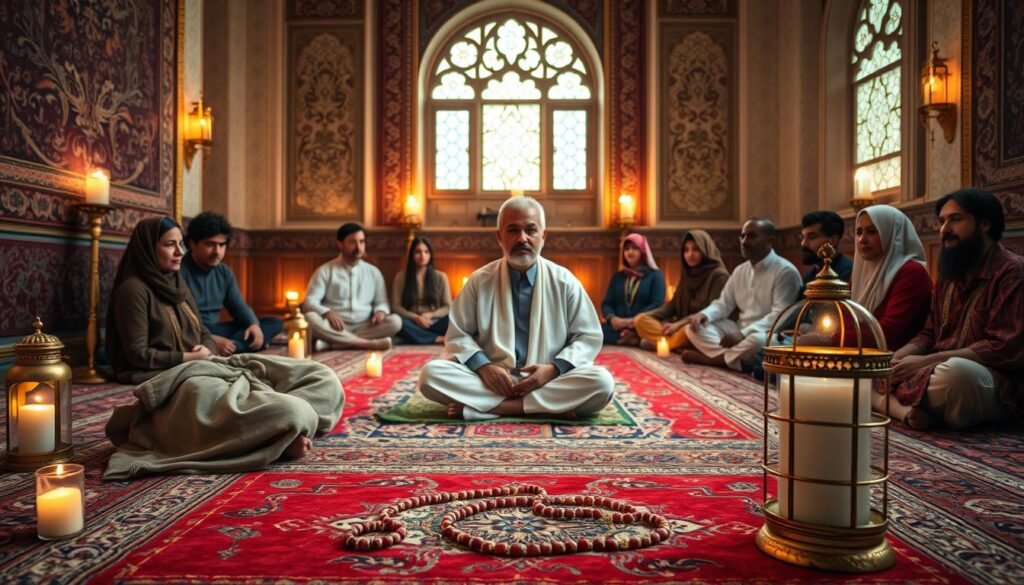
Conclusion
Reflective practices centered on love can profoundly shape your understanding of self and the universe. By embracing remembrance and attention to the heart, you can explore presence in your daily life. This journey is enriched by the teachings of Râbi’a, Ibn ‘Arabî, and Rûmî, showcasing the diverse forms and interpretations within this tradition.
As a beginner, start gently. Find a relaxed posture, engage in short sessions, and focus on a meaningful phrase. Remember, consistent practice holds more power than dramatic experiences. Temporary calm or unusual sensations are not measures of spiritual progress.
Qualified guidance is crucial for deeper practices, especially when exploring intensive forms. Take your time, reflect, and allow your journey to unfold. Explore related articles on mindfulness and intentional living for further insights.
FAQ
What is the purpose of Sufi meditation?
The purpose of this practice is to deepen your connection with the divine, cultivate love, and achieve a state of oneness with all existence.
How can I start my meditation practice?
Begin by setting aside a quiet space and time for yourself. Focus on your breath, engage in dhikr, and allow your heart to guide your thoughts.
What techniques are commonly used in Sufi meditation?
Common techniques include silent dhikr, vocal remembrance, and heart-centered meditation to help quiet the mind and connect with your essence.
How can I integrate meditation into my daily life?
Create a routine that includes short meditation sessions throughout your day, and practice mindfulness to stay present in your activities.
What role does a spiritual guide play in this practice?
A spiritual guide, or Murshid, provides personalized guidance, helping you navigate your journey and deepen your understanding of the practice.
How does meditation help in overcoming distractions?
Regular practice enhances your focus and awareness, making it easier to recognize and manage distractions in your daily life.
What are the benefits of practicing love and connection through meditation?
Practicing love and connection fosters emotional healing, enhances relationships, and promotes a sense of peace and fulfillment in your life.