Yoga Nidra Meditation: A Beginner’s Guide to Deep Relaxation
Are you feeling overwhelmed by daily stress or restless nights? Yoga nidra offers a gentle path to deep relaxation. This practice, often called “yogic sleep,” allows you to experience a sleep-like state while remaining aware. It’s a perfect method for those managing anxious thoughts or simply seeking a moment of peace.
Many people today struggle with stress and poor-quality sleep. This technique can help you find that much-needed space to unwind. As a beginner, you might find yourself experiencing deep relaxation, light drowsiness, or even falling asleep if you’re particularly tired. Each session is a step toward understanding your body and mind.
In this guide, we’ll explore a simple routine based on lying in Shavasana, focusing on body awareness, breathing, and visualization. You’ll learn how to gradually return to the present, refreshed and rejuvenated.
Key Takeaways
- Yoga nidra is a guided relaxation method for stress relief.
- This practice encourages awareness during a sleep-like state.
- Expect varying experiences, from deep relaxation to light drowsiness.
- Many people use this technique when navigating everyday stress or sleep difficulty.
- A beginner routine focuses on body awareness and visualization.
Introduction to Yoga Nidra Meditation
Do you often find it hard to unwind after a busy day? Yoga nidra offers a unique way to relax while remaining aware. This guided practice helps you navigate through your body, allowing you to release tension and find calm.
Historically, references to this practice can be found in ancient texts like the Upanishads and the Mahabharata. However, these sources do not directly describe the modern audio-led method you might encounter today. In 1973, Dennis Boyes introduced the term in a contemporary context, paving the way for its popularization.
Swami Satyananda Saraswati further developed this approach in 1976, creating a structured format that includes:
- Internalization
- Sankalpa (intention setting)
- Rotation of consciousness
- Breath awareness
- Visualization
Today, various adaptations exist, including Richard Miller’s iRest methodology, which focuses on relaxation and wellness. These modern methods make it easier for anyone to access the benefits of this practice.
| Aspect | Traditional Reference | Modern Adaptation |
|---|---|---|
| Origin | Upanishads, Mahabharata | Swami Satyananda Saraswati, Dennis Boyes |
| Focus | Philosophical | Guided relaxation |
| Structure | None specified | Eight-part system |
Preparing for Your Yoga Nidra Session
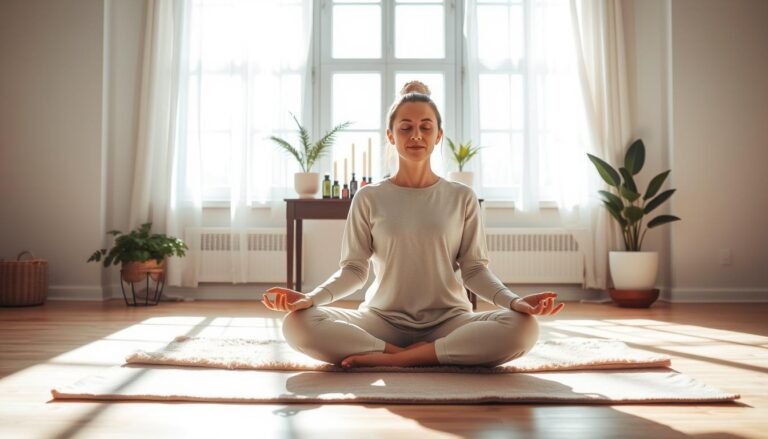
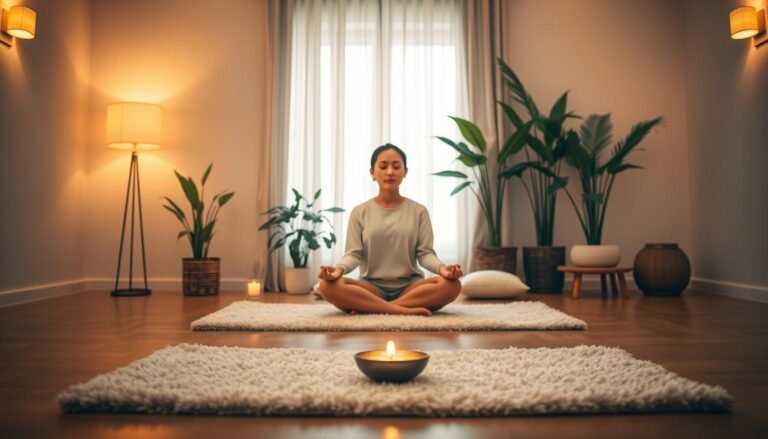
Are you searching for a way to create a calming environment in your home? Setting up the right space is essential for a successful yoga nidra practice. Aim for a quiet, dimly lit area where interruptions are unlikely. This will help you fully immerse yourself in relaxation.
To enhance your comfort, lay a yoga mat or a firm surface beneath your back. Keep a blanket nearby, as your body may cool during stillness. You might also consider adjusting pillows or supporting your knees to prevent discomfort.
Before starting, a few minutes of light stretching can release any physical tension. A gentle yoga sequence is perfect for this. Aim for a session of about 20 minutes, but feel free to extend it if you wish.
Timing can vary based on your needs. You might practice after a physical session, during an afternoon power nap, or even in bed at night when sleep is your goal. Remember, comfort is key—choose what feels best for you.
How to Practice Yoga Nidra Meditation Step-by-Step
Do you long for a simple way to quiet your mind and relax your body? Practicing yoga nidra can guide you into a state of deep relaxation. This process begins with finding a comfortable position, typically in Shavasana.
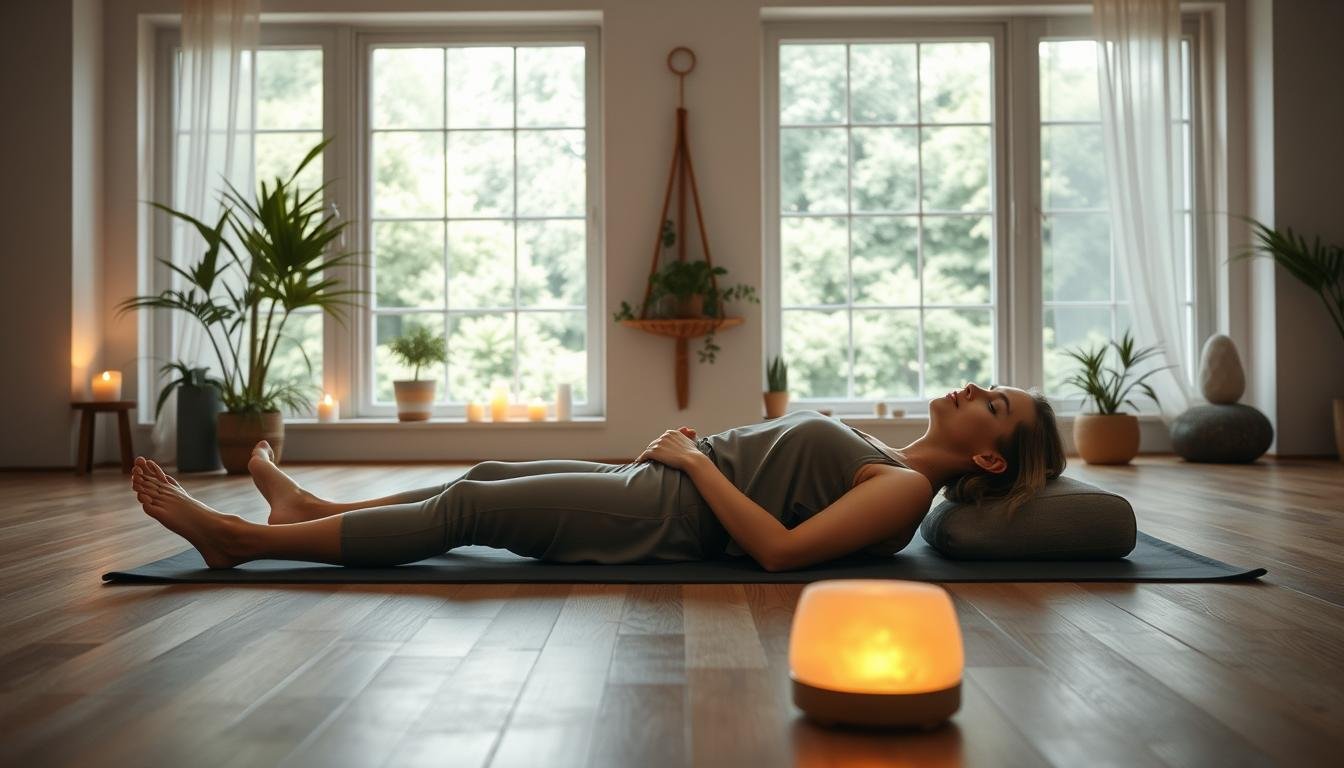
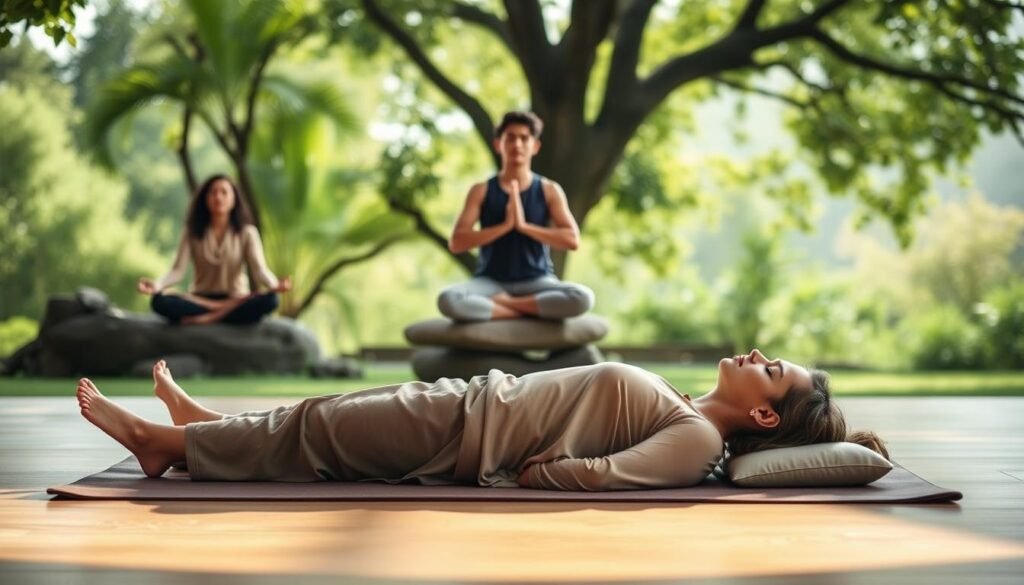
In Shavasana, lie on your back with your arms by your sides, palms facing up, and feet gently splayed outward. Close your eyes and take a few deep breaths. Allow your body to settle into the surface beneath you.
Positioning: Corpse Pose and Body Awareness
Now, gently guide your attention through your body. Start with your right foot, moving up to your knee, thigh, and hip. Then, switch to the left leg and repeat the sequence. This body scan helps enhance awareness and relaxation.
Guided Instructions and Progressive Relaxation
Continue this practice by moving through your abdomen, chest, back, arms, shoulders, throat, face, and head. Relax each part without forcing any sensations. Remember to breathe slowly and allow thoughts to drift by without judgment.
After several minutes, bring your awareness back to the room. Gently roll onto your right side and sit up slowly. This mindful transition helps you return to your day with a refreshed mind.
Benefits of Yoga Nidra Meditation
Have you ever wondered how a few moments of relaxation can transform your day? Practicing yoga nidra offers a range of benefits that can enhance both your physical and emotional health.
Many people use this practice as part of a routine for relaxation and stress management. It allows your body to shift away from constant demands and mental overactivity. People often practice for reasons such as:
- A calmer mood and kinder self-talk.
- Support for winding down before sleep.
- A sense of physical ease after a tense day.
- A steadier feeling during stressful periods.
Experiences vary widely. Yoga nidra is an educational wellness practice and should not replace professional mental health care. If you experience persistent insomnia, trauma symptoms, or severe anxiety, consider discussing complementary practices with a qualified clinician.
Understanding the Science Behind Yoga Nidra Meditation
Have you ever considered how relaxation techniques relate to stress and recovery? Yoga nidra is often discussed in wellness and research settings as a guided rest practice.
Practitioners and some researchers describe shifts toward a calmer nervous-system state during guided rest. For example, Markil and colleagues (2012) reported increased heart rate variability in participants in one study of autonomic regulation.
Rajagopalan, Krishna, and Mukkadan (2022) studied people with hypertension and reported changes in blood-pressure–related measures after regular practice. Those findings are exploratory and should not be read as medical advice or treatment guidance.
A small trial with 45 male athletes also reported shorter sleep latency and better sleep efficiency after four weeks of practice, compared with progressive muscle relaxation in that study. Results from small samples do not guarantee the same outcome for every reader.
Yoga nidra is sometimes described as a hypnagogic, between-waking-and-sleep state. More extensive research is still needed, and individual experiences differ.
| Study | Findings | Participants |
|---|---|---|
| Markil et al. (2012) | Increased heart rate variability | General population |
| Rajagopalan et al. (2022) | Reported BP-related measure changes | Hypertensive individuals |
| Athlete Study (2022) | Better sleep latency and efficiency | 45 male athletes |
Comparing Yoga Nidra to Other Meditation Practices
Are you curious about how different relaxation techniques stack up against each other? Understanding the distinctions can help you choose the right practice for your needs. Yoga nidra, for instance, is typically practiced lying down, while many other forms of meditation are done seated.
This practice guides your awareness through the body, allowing you to enter a sleep-like state without needing to move. In contrast, traditional guided meditation often keeps your focus on breathing or visualization.
Another technique, progressive muscle relaxation, involves intentionally tensing and releasing muscle groups, which differs from the effortless awareness found in yoga nidra.
Here’s a simple comparison to help you decide:
| Technique | Position | Focus |
|---|---|---|
| Yoga Nidra | Lying down | Body awareness and relaxation |
| Seated Meditation | Seated | Breath or thought focus |
| Progressive Muscle Relaxation | Seated or lying | Tensing and releasing muscles |
Additionally, Richard Miller’s iRest yoga nidra has gained recognition, including programs associated with the U.S. military around 2010 as a complementary relaxation approach. That context does not mean yoga nidra treats medical conditions.
Tips, Tools, and Techniques for Deep Relaxation
Are you looking for effective methods to calm your thoughts and enhance relaxation? Practicing deep breathing and visualization can significantly improve your experience. Here are some techniques to consider:
Effective Breathing and Visualization Techniques
Start by observing your breath as it flows naturally through your body. There’s no need to control it; just let it be. This simple act can ground you in the moment.
For visualization, imagine warm sunlight spreading through your body. Let this imagery feel supportive, rather than forced. Before beginning your practice, try a short sankalpa, like “I respond to my day with steadiness.” This positive intention can guide your experience.
Integrating SKY Breath Meditation for Enhanced Benefits
Some people also explore related breath practices such as SKY Breath Meditation alongside yoga nidra. Breathwork can feel grounding for some practitioners, but results vary and it is not a medical treatment.
| Technique | Benefit | Application |
|---|---|---|
| Breathing | Calms the mind | Daily practice |
| Visualization | Enhances relaxation | During sessions |
| SKY Breath Meditation | May support restfulness | Weekly integration |
Incorporating Yoga Nidra Meditation into Daily Life
Have you been seeking a way to weave relaxation into your daily routine? Integrating a yoga nidra practice can be both simple and rewarding. This practice may only take a few minutes and can fit seamlessly into your day.
Start with two or three sessions each week. Gradually increase the frequency if it feels supportive. Remember, the goal is to enhance your well-being, not to create another obligation.
To make it easier to remember, choose a consistent cue. For example, you might practice after finishing your evening hygiene or when you turn down your bed. This can help you associate these moments with relaxation.
Additionally, balance your yoga nidra sessions with other wellness routines. Consider incorporating gentle movement, nourishing meals, and medical care when symptoms like pain or anxiety arise. This holistic approach can significantly enhance your health.
Richard Miller’s iRest methodology has been effectively used in various settings, including veterans’ clinics and schools. This shows how adaptable and beneficial this practice can be for many people.
For those who prefer audio guidance, check out BetterLifeAtlas’s Guided Sleep Meditation for You: Fall Asleep in Minutes to help you ease into a restful night.
Conclusion
Is finding a way to embrace tranquility something you’ve been longing for? Practicing yoga nidra offers a practical approach to conscious rest. Through techniques like body scanning and visualization, you can gently awaken your mind while achieving deep relaxation.
Beginners can easily incorporate this practice into their routines. Whether after gentle movement, during a midday break, or at night in bed, it adapts to your needs. People in many walks of life—including athletes and students—use guided rest practices like yoga nidra as part of a personal wellness routine.
While establishing a consistent routine may support relaxation and sleep, remember that this practice should complement, not replace, professional care. Embrace this journey towards calmness and well-being.
FAQs:
- Do I need to stay awake during practice?
- How long should each session last?
- Is lying down necessary for this practice?
- When should I seek professional guidance?
FAQ
What is the best time to practice yoga nidra?
The best time to practice is when you can find a quiet moment, often in the evening or during a lunch break, to help you unwind and recharge.
How long should a yoga nidra session last?
A typical session can last anywhere from 20 to 40 minutes, depending on your schedule and comfort level.
Can yoga nidra help with anxiety?
Some people find that this practice may support calm and relaxation. It is a wellness practice, not a treatment for anxiety disorders.
Do I need any special equipment for yoga nidra?
No special equipment is needed. Just find a comfortable space where you can lie down and relax.
Is it normal to fall asleep during yoga nidra?
Yes, it’s common to drift off during the practice. The goal is to reach a state of deep relaxation, which can sometimes lead to sleep.
How can I enhance my yoga nidra experience?
You can enhance your experience by using calming music, essential oils, or guided recordings to help you focus and relax.
Can anyone practice yoga nidra?
Absolutely! Yoga nidra is accessible to everyone, regardless of age or experience level.
What should I do if I feel restless during the practice?
If you feel restless, try to gently refocus your attention on your breath or the sensations in your body to help bring your mind back to the practice.