Sound Meditation: How to Use Sound for Relaxation and Mindfulness
Sound meditation is a powerful mindfulness practice that uses focused listening to help you reconnect with the present moment. By immersing yourself in calming frequencies, you can create a serene space that promotes relaxation and emotional balance. This practice has roots in various cultures, including Tibetan and Aboriginal traditions, showcasing its historical significance in promoting well-being.
Research highlights the benefits of this practice. For instance, a study found that soothing vibrations reduced cortisol levels in 86% of participants after just one hour. This finding underscores why many are exploring sound-based relaxation techniques as part of their wellness journey.
Throughout this article, we will explore how simple audio, nature sounds, or tools like singing bowls can support your personal routine. Remember, sound meditation is not a substitute for professional care; instead, it complements existing health practices. You’ll discover practical ways to manage stress, improve sleep quality, and enhance your overall mental health.
Key Takeaways
- Sound meditation helps you focus and relax in the present moment.
- Simple sounds can create a calming routine.
- Research shows significant stress reduction through sound practices.
- This practice complements, rather than replaces, professional health care.
- Sound techniques can improve emotional balance and concentration.
Introduction to Sound Meditation
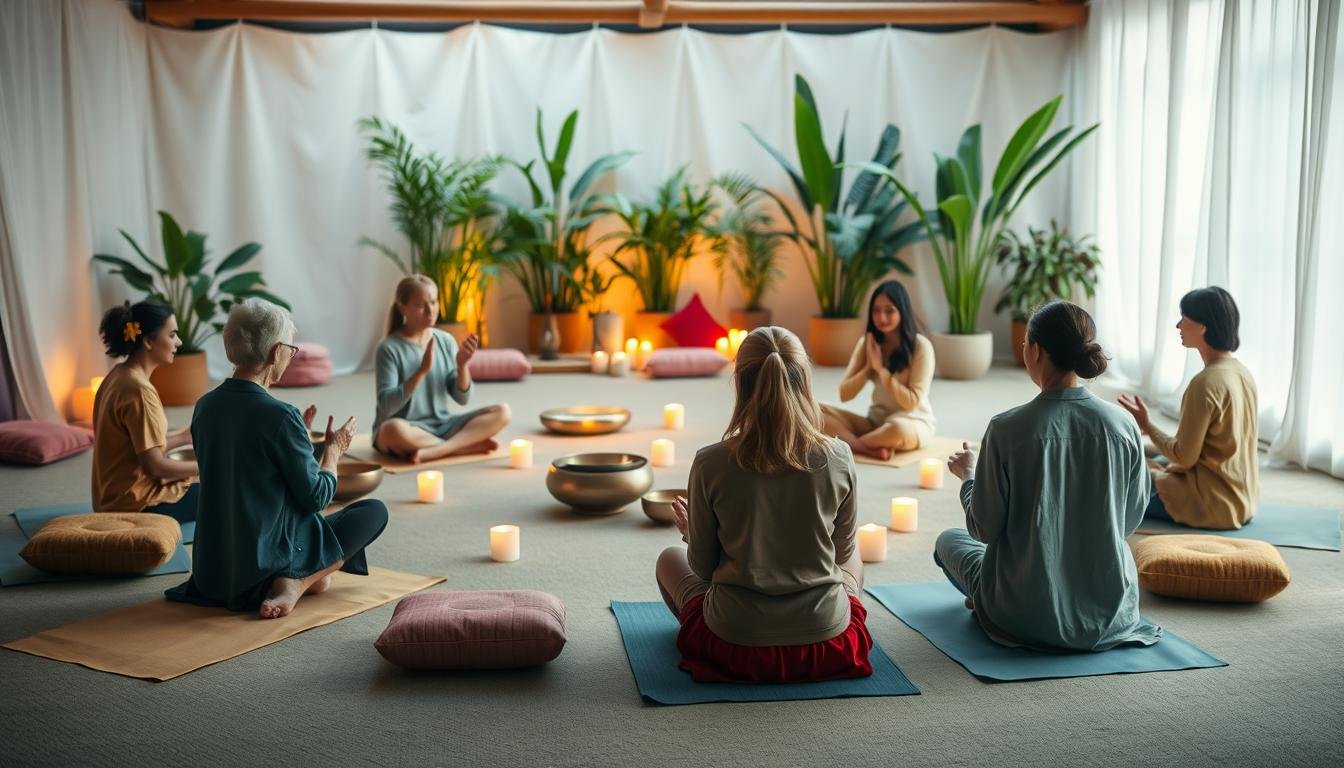
Sound meditation is a practice that focuses on listening to promote relaxation and mindfulness. This approach has deep historical roots, found in cultures like Tibetan, Buddhist, and Aboriginal traditions. These ancient practices recognized the calming effects of auditory experiences for both spiritual and physical healing.
One fascinating aspect is nada yoga, which emphasizes deep listening. This practice allows you to immerse yourself in everyday sounds, transforming them into a meditative experience. In modern times, sound baths have emerged, where you lie down surrounded by soothing tones and vibrations, creating a unique relaxation experience.
Today, tools such as metal singing bowls, gongs, and tuning forks are commonly used. These instruments enhance the meditative experience, allowing you to connect with yourself on a deeper level. If you’re curious about broader mindfulness practices, check out this BetterLifeAtlas article for more insights.
Understanding the Science Behind Sound
The relationship between auditory experiences and our mental state is a fascinating area of study. Researchers theorize that listening may encourage a shift from active beta waves to slower alpha, theta, or delta patterns. These slower brainwave states are often associated with calmness and relaxation.
When you engage with soothing frequencies, your body may activate the parasympathetic nervous system. This response can slow your heart rate, relax your muscles, and help you move into a rest-and-digest state.
Promising evidence from studies shows that 86% of participants experienced reduced cortisol levels after just one hour of soothing sounds. While the sizes and types of studies vary, findings involving natural killer cells, blood pressure, and heart rate provide valuable insights.
- In one study, Himalayan singing bowls were linked to lower blood pressure and heart rates before guided sessions.
- Low-frequency sound stimulation helped nearly 75% of fibromyalgia participants reduce their pain medication.
- A didgeridoo meditation study indicated greater relaxation and less acute stress compared to silent meditation.
Sound Meditation Techniques for Deep Relaxation
Exploring various techniques can deepen your experience with auditory relaxation. One popular method is using Tibetan singing bowls and crystal bowls. These instruments create resonant tones that can enhance your meditative state. Gongs, chimes, and tuning forks add different textures and intensities, making each session unique.
Binaural beats are another fascinating approach. These recordings send slightly different frequencies to each ear, creating a perceived third tone. To experience their full effect, headphones are essential. This technique can help guide your mind into a relaxed state.
For a beginner-friendly practice, find a comfortable spot to lie down. Take a few grounding breaths and set an intention for your session. Listen without forcing concentration. Typically, a 60-minute session starts softly, gradually building sound, and ends with quiet moments to reflect.
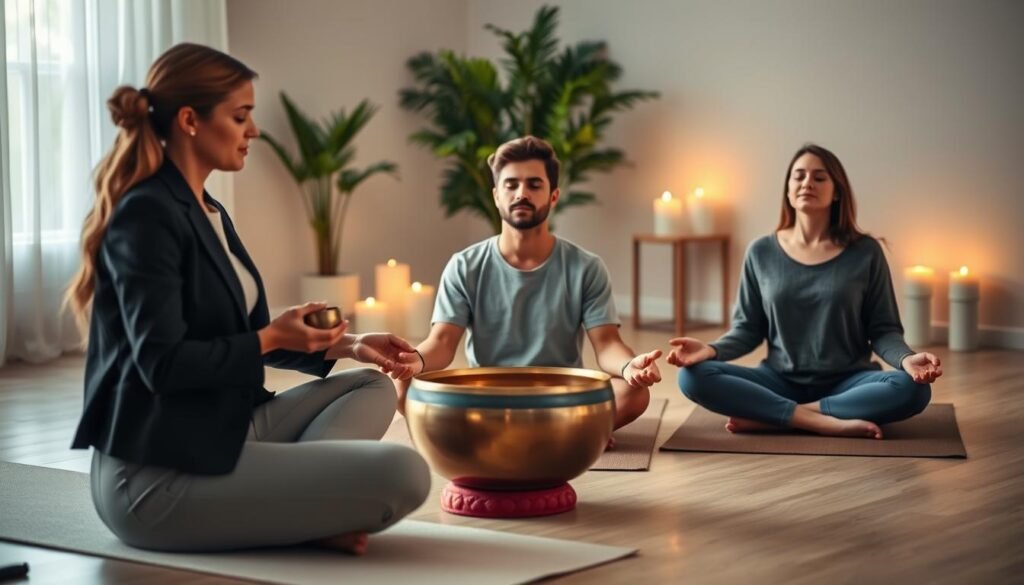
When choosing a facilitator for group or private sessions, consider their experience and reviews. Look for trauma-informed awareness and check their instrument volume and safety policies.
| Instrument | Sound Characteristics | Session Duration | Typical Price Range |
|---|---|---|---|
| Tibetan Singing Bowls | Resonant tones | 60 minutes | $15 – $65 |
| Crystal Bowls | Clear, soothing vibrations | 60 minutes | $15 – $65 |
| Binaural Beats | Perceived third tone | Variable | Varies |
Creating a Personalized Practice
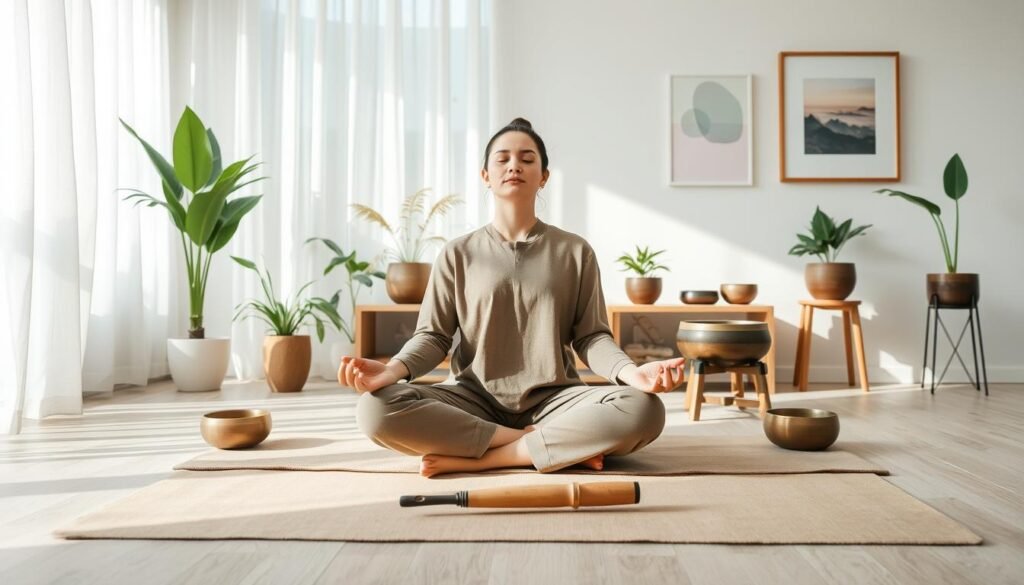
Creating a unique environment for your practice can elevate your overall experience. This is especially important for beginners. Start with five- to ten-minute sessions to ease into the practice.
To set up your space, follow these simple tips:
- Choose a quiet corner where notifications and household noise are unlikely to interrupt you.
- Use a yoga mat, cushion, or chair for comfort. You may want to have a blanket or pillow nearby, as some people feel cold while lying still.
- Dim the lights or light a candle if that feels calming. Just ensure the environment is safe and avoid scents that might distract you.
- Begin with accessible recordings of nature sounds or singing bowl music before investing in instruments.
- Keep water nearby, and jot down notes afterward about your sensations, emotions, and whether the practice felt restorative.
Integrating Sound Meditation into Daily Life
Incorporating auditory practices into your daily routine can significantly enhance your overall well-being. Here are some simple steps to help you build a consistent practice:
Simple Steps to Build a Routine
- Start with just five minutes each day at the same time. Gradually increase the duration as you feel comfortable.
- Pair a brief auditory session with the last few minutes of your yoga practice. Use calming tones during savasana to deepen your relaxation.
- Add these practices to your existing mindfulness, breathwork, or nature walks to create a clear daily cue.
- Consider using tools like the Oura app to track your sleep and personal responses to these practices.
Combining with Yoga, Mindfulness, and Other Wellness Practices
Sound experiences can complement various wellness routines. You might enjoy a sound bath session weekly or monthly, or even use it occasionally when you need to unwind. This integration can create a more enriching experience for your mind and body.
For those interested in enhancing their nighttime routine, check out this BetterLifeAtlas article about how auditory practices can support better sleep.
Exploring Sound Meditation Benefits
Research continues to uncover the positive effects of auditory experiences on well-being. Engaging with soothing frequencies may lead to various health benefits. These can include reduced cortisol levels, lower heart rates, and even diminished pain perception.
For instance, nearly 75% of fibromyalgia participants reported a decrease in pain medication after experiencing low-frequency stimulation. Additionally, those who participated in sessions with Tibetan singing bowls noted a significant reduction in tension, anger, and fatigue.
However, it’s essential to approach these practices with care. Individuals with sound-triggered seizures, PTSD, or other trauma-related sensitivities should consult a healthcare professional before engaging in these experiences. While many report feeling calm and refreshed, responses can vary widely.
- Physical Health: Relaxation responses may lead to lower heart rates and blood pressure.
- Pain Relief: Some studies suggest meaningful results in pain management.
- Mental Health: Enhanced mood and emotional regulation are common benefits.
Conclusion
Harnessing the power of gentle tones can create a unique space for personal reflection. This practice offers a low-tech, flexible way to engage in relaxation and mindful listening, whether at home or in a guided setting. While promising research suggests benefits like reduced cortisol levels and improved mood, it’s essential to remember that these findings do not guarantee medical outcomes.
Start gently by choosing a quiet space and listening for just five to ten minutes. Observe how your mind and body respond. The most effective instrument or recording is the one that feels safe and comfortable for you. Consider integrating these practices with yoga, mindfulness, or your sleep routine for a holistic approach to wellness.
FAQs:
- Is it normal to fall asleep during a sound bath? Yes, relaxation can naturally lead to sleep.
- How often should I practice? Start with a few times a week and adjust as needed.
- What if I cry or feel emotional? Emotional responses are common and can be part of the healing process.
- What is the typical cost for group sessions? Prices usually range from $15 to $65.
- When should I seek medical guidance? If you have concerns about your health or specific conditions, consult a professional.
FAQ
What is sound meditation?
Sound meditation is a practice that uses various sound frequencies, such as those produced by singing bowls or binaural beats, to promote relaxation and mindfulness. It helps individuals achieve a deeper state of calm and awareness.
How does sound affect the body and mind?
Sound influences brainwaves and body responses by creating vibrations that can reduce stress, lower blood pressure, and alleviate tension. These effects can lead to improved mental clarity and emotional well-being.
What are the benefits of sound meditation?
The benefits include enhanced relaxation, reduced anxiety, improved mood, and physical health improvements like lower pain levels and better blood circulation. It can also support mental health by fostering mindfulness.
How can I incorporate sound meditation into my daily routine?
Start by setting aside a few minutes each day to engage in sound meditation. You can use singing bowls or listen to sound baths while sitting comfortably in a quiet space. Gradually build this practice into your wellness routine.
Can sound meditation help with stress management?
Yes, sound meditation is an effective tool for managing stress. The calming frequencies can help reduce anxiety levels and promote a sense of peace, making it easier to cope with daily challenges.
What should I prepare for a sound meditation session?
Create a comfortable, distraction-free environment. Gather any sound tools you wish to use, such as singing bowls or a sound bath recording, and ensure you have a cozy place to sit or lie down.
Are there any scientific studies on sound meditation?
Yes, research has shown that sound meditation can positively impact stress levels and immune health. Studies indicate that regular practice can lead to significant improvements in overall well-being.