Sleep Meditation: A Relaxing Bedtime Practice for a Calmer Mind
Did you know that up to one-third of adults face challenges with rest or insomnia at some point in their lives? This makes finding a calming bedtime routine essential for many people. Sleep meditation offers a gentle way to relax your body and quiet your busy mind, without forcing the process of falling asleep.
Chris Saranchock’s HelpGuide practice begins with you finding a comfortable position, closing your eyes, and noticing your natural breathing rhythm. This approach allows you to engage in a guided experience or practice independently, resting your attention softly instead of analyzing every detail.
Throughout this article, you will discover practical methods to enhance your nighttime routine. Techniques such as breath awareness, body scanning, visualization, and gratitude can help you transition smoothly from the day’s activities to a peaceful night. With regular practice, you may learn to self-soothe and create a quieter environment for rest.
Understanding Sleep Meditation
Sleep meditation is a gentle practice designed to help you transition from the busyness of your day to a more relaxed state at night. It incorporates techniques such as breath awareness, body sensations, and mental imagery. These methods guide you in shifting out of daytime alertness, creating a soothing environment for rest.
Dr. Young emphasizes that with practice, you can learn to perform body scans and breathing techniques independently. This self-soothing ability is a powerful tool, allowing you to guide yourself into a more relaxed state. It’s important to approach this practice with gentle attention rather than trying to force sleep, which can lead to increased tension and distracting thoughts.
There are two main approaches to this practice: guided and unguided meditation. Guided sessions provide structure through a narrator, while unguided practices allow you to move at your own pace. Establishing a calming bedtime routine can also support your health habits, creating a predictable pause between work, family responsibilities, and time in bed. For more insights on building a consistent evening routine, check out this article on BetterLifeAtlas.
Preparing Your Mind and Body for Sleep Meditation
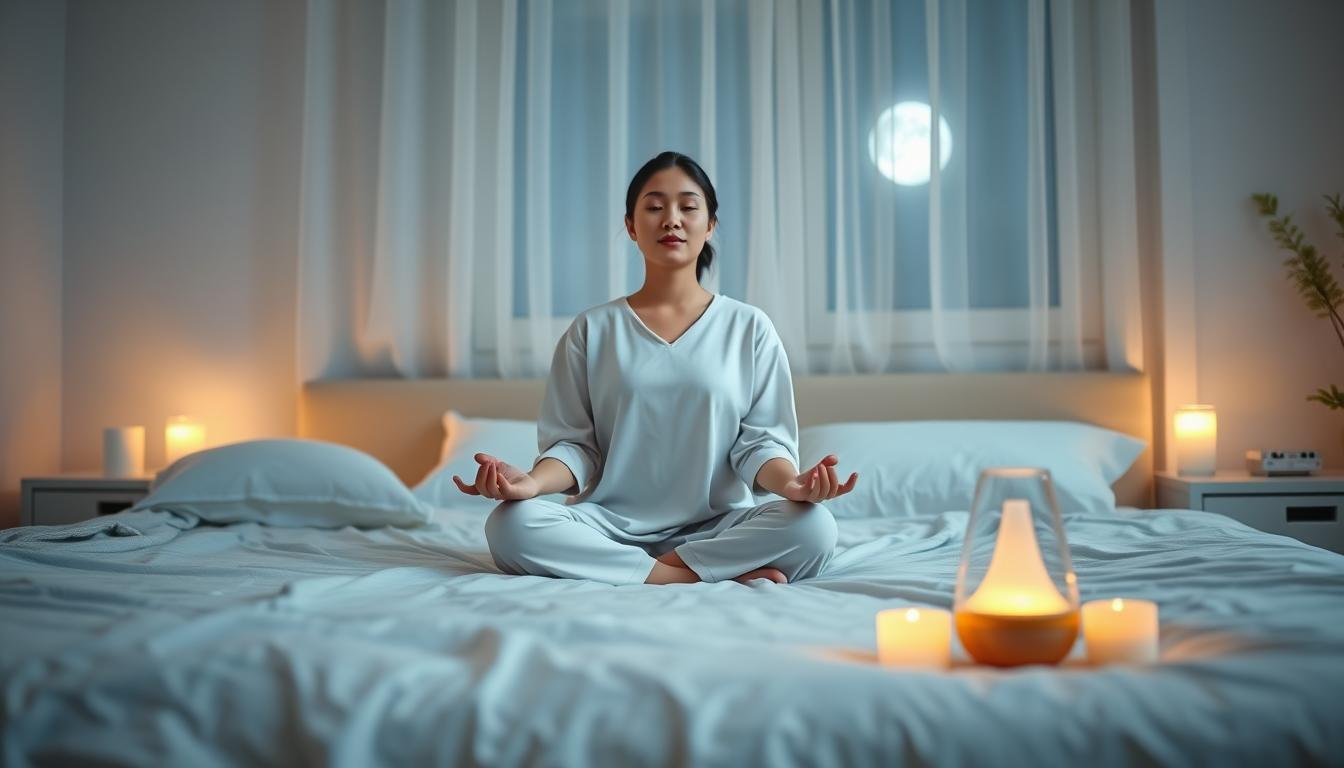
Creating a peaceful atmosphere is essential for effective relaxation. You can enhance your experience by adjusting your environment before you begin. Start by finding a comfortable position on your bed. If it feels right, lie flat on your back, close your eyes, and take a few deep breaths. This simple act helps signal to your body that it’s time to unwind.
Next, consider these practical tips to further prepare:
- Dimming the lights: Soft lighting can reduce stimulation and help you relax.
- Silencing notifications: This keeps distractions at bay, allowing you to focus on your practice.
- Comfortable bedding: Ensure your pillow and mattress support your body well.
Before starting, a few minutes of light stretching or tai chi can help ease tension in your body. Notice how your feet and legs feel against the bed, and consciously release any thoughts about the day. Remember, it’s okay to adjust your position for comfort rather than endure discomfort.
As a practical example, spend one minute settling into bed. Take several natural breaths, then choose either a guided meditation or an unguided body scan. This approach can help you transition smoothly into a restful state.
Essential Sleep Meditation Practices for Mind and Body
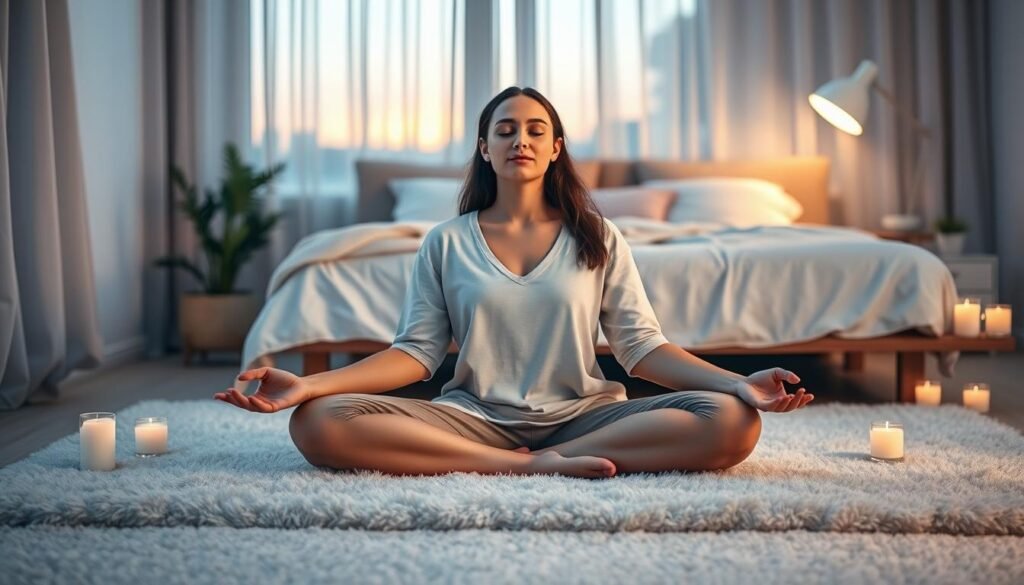
Many individuals struggle to unwind after a long day, making relaxation techniques vital. Integrating breathwork and body scanning can significantly enhance your evening routine. These practices help you focus your mind and relax your body, paving the way for a restful night.
Start by noticing your natural breath. Gradually slow your breathing pattern, signaling that bedtime relaxation is beginning. Pair each exhale with a gentle release of effort, starting at your toes and moving upward through your body. This process can help alleviate tension and stress.
As you settle into bed, pay attention to where your body touches the mattress. Use these contact points as steady anchors when distracting thoughts arise. Here’s a simple sequence to follow:
| Body Part | Focus | Mindfulness |
|---|---|---|
| Feet | Notice sensations | Warmth or coolness |
| Legs | Release tension | Tingling or heaviness |
| Back | Relax muscles | Comfort or tightness |
| Shoulders | Let go of stress | Lightness or relaxation |
| Head | Calm your mind | Stillness or clarity |
Remember, it’s normal for thoughts to interrupt your practice. Whenever you feel anxious or tense, return to one comfortable breath. This gentle approach encourages you to treat interruptions as part of the process rather than failures.
Step-by-Step Guide to a Relaxing Meditation Sleep Routine
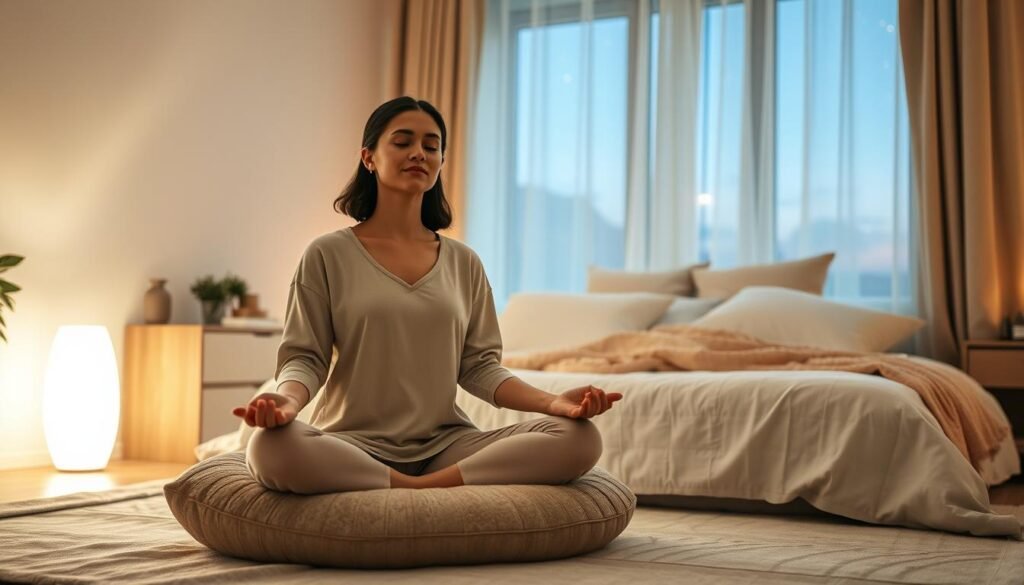
Establishing a calming routine can transform your nights. A simple approach can help you unwind effectively and prepare your body for rest. Begin by finding a comfortable position, closing your eyes, and observing your natural breath. This gentle awareness sets the stage for relaxation.
Next, engage in deep belly breathing. Inhale slowly, feeling your abdomen rise, and exhale gradually, imagining the release of the day’s pressures. Allow your breath to return to its natural rhythm.
Now, let’s guide your body into relaxation:
- Start at your forehead, releasing tension in your temples and eyes.
- Move down to your jaw, neck, and shoulders, letting each area soften.
- Continue through your arms, chest, belly, and hips, feeling them grow heavy.
- Finish with your legs and feet, ensuring every part of your body is relaxed.
If distracting thoughts arise, acknowledge them. Use your next exhale to let go of any tension. Finally, sense your entire body resting comfortably in bed, allowing yourself to stay with this feeling until sleep comes naturally.
| Body Part | Focus | Mindfulness |
|---|---|---|
| Forehead | Release tension | Relaxation |
| Shoulders | Let go of stress | Lightness |
| Legs | Feel heaviness | Grounded |
| Feet | Relax completely | Comfort |
Incorporating Mindfulness and Visualization Exercises
Finding ways to ease tension can significantly enhance your relaxation routine. One effective method is visualization, where you create a calming mental image. Picture a serene beach or a starlit sky. This technique can help you enter a state similar to hypnosis, making it easier to unwind.
Another useful practice is counting. You can start at 10 or even 1,000, counting backward slowly. The goal isn’t to be mathematically accurate; it’s about gently guiding your focus away from repetitive thoughts. When you reach one, simply restart at ten.
Additionally, consider retracing your day. Spend about 20-25 seconds reflecting on each event from the moment you woke up. This can help you process the day and clear your mind.
Incorporating gratitude or loving-kindness meditation at the end of your routine can be beneficial. Reflect on supportive people or moments that brought you joy. Finally, allowing several minutes of silence after guided instructions can reduce verbal stimulation, promoting a peaceful environment for rest.
Conclusion
For many, the journey to a peaceful night can feel elusive amidst daily chaos. Remember, this practice is about gently transitioning into rest, not forcing an immediate outcome. Start by settling into bed, noticing your breath, and softening your body. When your mind is active, try counting or visualization techniques to guide you.
The HelpGuide script flows smoothly from head to toe, making it easy to remember. Consistent practice can help you learn to self-soothe using body scans and breathing techniques. It’s normal to experience occasional wakefulness, so approach bedtime with patience and an open heart.
Frequently Asked Questions
- What is the best position for sleep meditation? Lying flat on your back or side can be ideal, depending on what feels comfortable for you.
- How long should sleep meditation last? Aim for 10-20 minutes, but feel free to adjust based on your needs.
- What should I do if my thoughts keep returning? Acknowledge them, then gently redirect your focus back to your breath or visualization.
- Can I use guided meditation every night? Yes, using guided sessions can provide structure and support your practice.
- When should I seek help for ongoing sleep problems? If you find persistent difficulties affecting your daily life, consider consulting a professional.
FAQ
What is sleep meditation?
Sleep meditation is a practice that combines mindfulness and relaxation techniques to help calm your mind and body, making it easier to drift off to sleep.
How can sleep meditation benefit me?
Engaging in sleep meditation can reduce stress, improve your overall health, and enhance the quality of your rest, allowing you to wake up feeling refreshed.
What should I do to prepare for sleep meditation?
Create a calming environment by dimming the lights, ensuring a comfortable temperature, and minimizing noise. Consider incorporating gentle stretches or deep breathing exercises before starting.
Are there specific techniques I should use during sleep meditation?
Yes, techniques like breathwork, body scanning, and visualization can be particularly effective in promoting relaxation and easing tension.
How do I incorporate mindfulness into my sleep meditation practice?
You can use mindfulness by focusing on your breath, observing your thoughts without judgment, and using visualization techniques to create a peaceful mental space.
Can sleep meditation help with anxiety?
Absolutely! Sleep meditation can help reduce anxiety by calming your mind and allowing you to let go of racing thoughts, making it easier to fall asleep.
How long should I meditate before bed?
Aim for 10 to 20 minutes of meditation before bed. This duration is often sufficient to help you relax and prepare for a restful night.
Do I need any special equipment for sleep meditation?
No special equipment is necessary. A comfortable pillow, a quiet space, and your own breath are all you need to get started.