Meditation Techniques for Beginners: Simple Ways to Find What Works for You
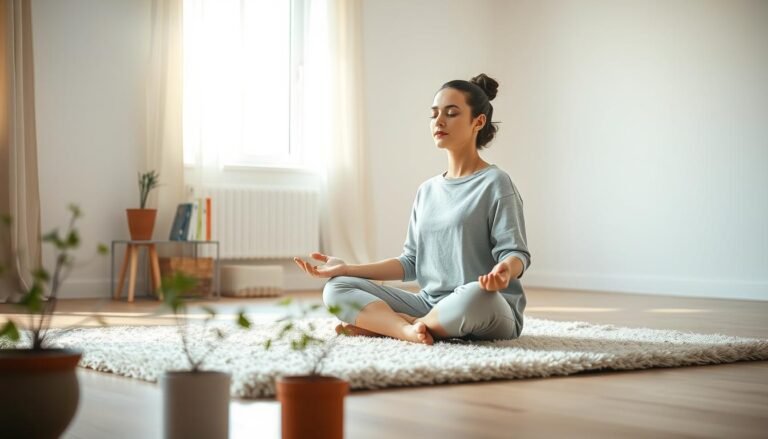
Starting a new practice can feel overwhelming, but meditation is accessible for everyone. You can engage in this practice anywhere and at any time, without needing special equipment or a specific setting. This flexibility makes it an excellent choice for beginners.
There are various types of meditation to explore, including breathwork, mindfulness, guided sessions, and mantras. Each offers unique benefits and approaches. If you find it challenging to quiet your mind, remember that this is common. Many people benefit from guided sessions that help them navigate distracting thoughts.
Instead of searching for a perfect method, consider testing several short styles. This practice is highly personal, and what works for one person may not work for another. You can choose based on your comfort, concentration, and the qualities you want to carry into your daily life.
Key Takeaways
- Anyone can practice meditation anywhere and anytime.
- Explore various styles like mindfulness, breathwork, and guided sessions.
- Struggling to quiet your mind is normal; guided sessions can help.
- Test different styles to find what suits you best.
- Choose practices based on comfort and what you want to incorporate into daily life.
Understanding the Basics of Meditation
Learning the basics can help you navigate your initial steps with ease. At its core, this practice is about training your attention and awareness. The Mayo Clinic describes it as being intensely aware of your present sensations and feelings without judgment.
A calm mind can significantly enhance your focus and emotional steadiness. However, it’s important to note that this practice does not replace professional care for issues like anxiety or depression. Instead, it serves as a supportive tool.
Many beginners believe they must sit perfectly still. In reality, there are various approaches, including walking meditation and incorporating mindfulness into daily activities. It’s also normal for your thoughts to wander. Recognizing this distraction and gently returning your focus is part of the learning process.
Regular practice is linked to improved stress management, prevention of depression, and lower blood pressure. If you have medical concerns, always consult a qualified clinician.
“Mindfulness is intense awareness of present sensations and feelings without judgment.”
| Benefits | Description |
|---|---|
| Stress Management | Helps reduce stress levels effectively. |
| Emotional Stability | Supports better emotional regulation. |
| Lower Blood Pressure | Can contribute to healthier blood pressure levels. |
Effective Meditation Techniques for Beginners
Embarking on a new journey can often seem daunting, yet developing a regular practice is essential. You might want to start with just five minutes each day. Gradually, you can extend your time as you grow more comfortable with your chosen method.
There are various types of meditation to explore. For instance, breathing exercises, mindfulness, and guided sessions all cater to different attention styles. If you find it hard to focus, consider trying a body scan or a mantra to help anchor your thoughts.
Consistency is more important than duration. Try to meditate at the same time each day, perhaps right after brushing your teeth or before bed. This routine can help solidify your practice.
One structured exercise you might enjoy is Andrew Weil’s 4-7-8 breathing pattern. Inhale for four seconds, hold for seven, and exhale for eight. If holding your breath feels uncomfortable, it’s okay to adjust the timing.
Exploring Breathing and Mindfulness Meditation
Diving into new practices can often feel like a leap into the unknown, yet understanding how to incorporate breathing and mindfulness can be rewarding. Both methods help you cultivate awareness and focus.
Here are some quick tips for breathing exercises:
- Start with comfortable nasal inhalation and relaxed exhalation.
- Observe your breath gently, connecting with your body’s sensations.
- Consider the 4-7-8 exercise: inhale for four seconds, hold for seven, and exhale for eight. Repeat this up to four times initially.
Mindfulness meditation focuses on present sensations without judgment. It encourages you to notice the temperature, movement, and rhythm of your breath. This practice can serve as a brief reset during stressful moments, requiring no special space.
Research from Trinity College Dublin in 2018 highlights that breath-focused practices enhance attention and brain health.
Getting Started with Guided Meditation
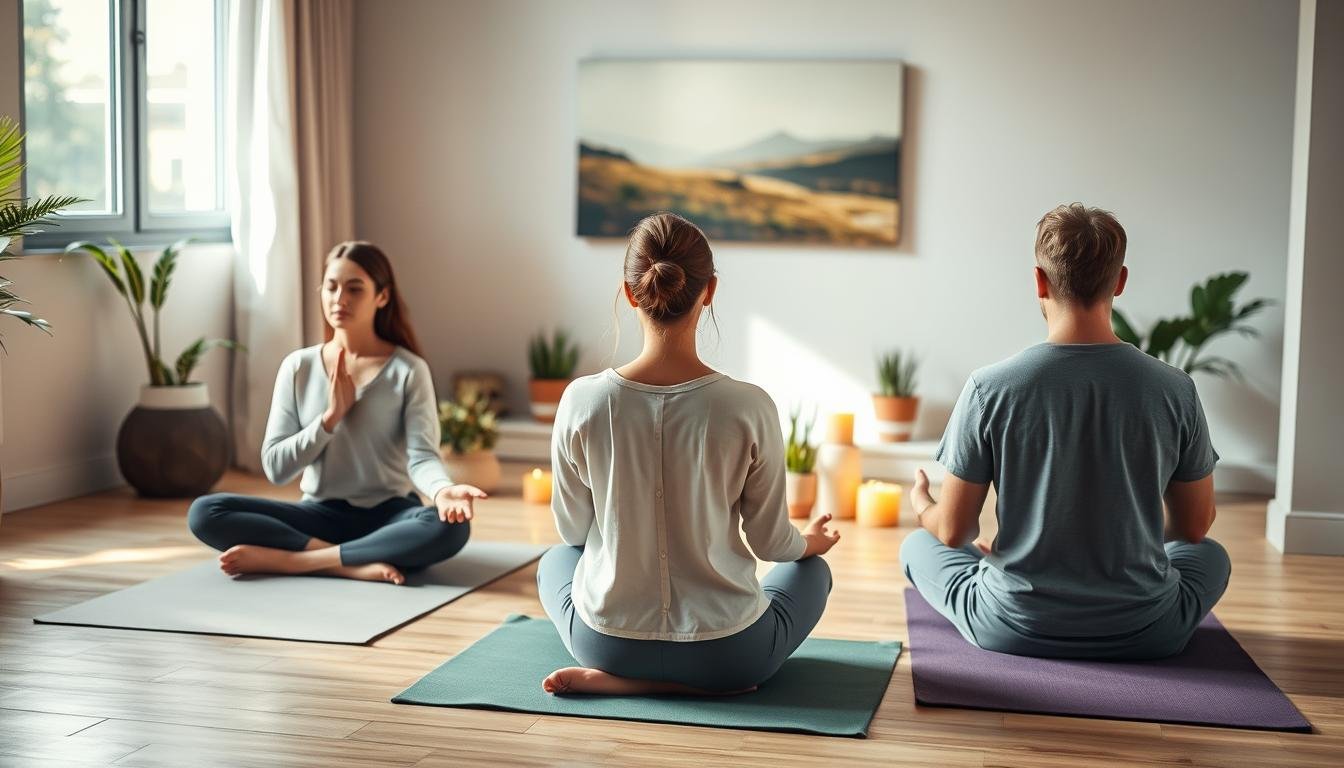
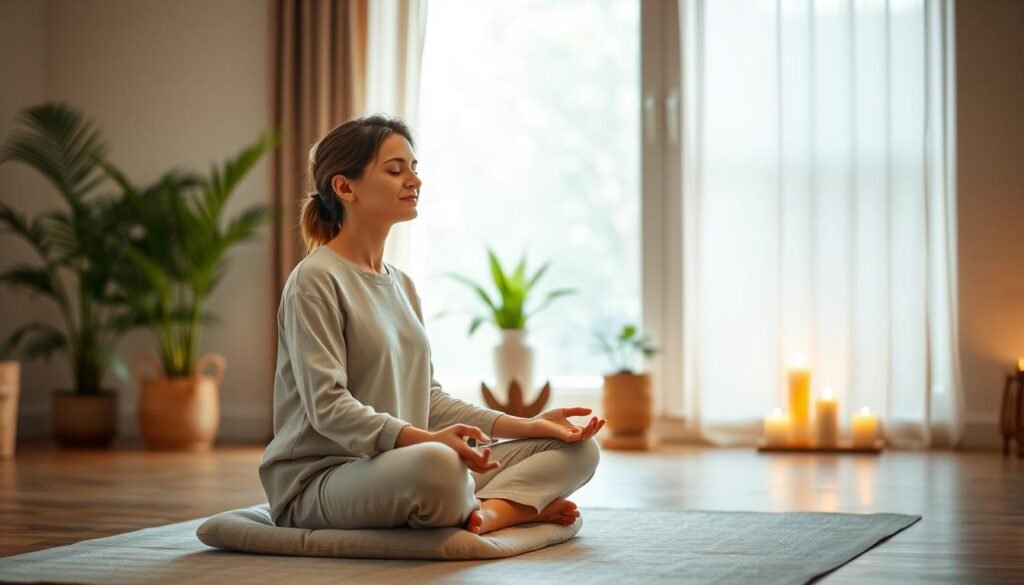
Exploring guided sessions offers a structured approach that many beginners find comforting. These sessions can be conducted face-to-face, in groups, or through apps and YouTube videos. This variety allows you to choose what feels best for you.
When selecting a meditation app, consider the following:
- Session Length: Check if it fits your available time.
- Instructor Style: Different narrators resonate with different people.
- Accessibility Features: Ensure the app is user-friendly.
- Beginner Courses: Look for structured courses to guide you.
- Free Trials: Test the app before committing.
A great starting point is the Headspace app, which offers a free 10-day beginner course. This can help you establish a routine without any initial cost.
As you explore, pay attention to how the narrator’s pace and tone affect your experience. You might want to start with a five- or ten-minute session and track your comfort over a week before deciding on a subscription.
The Power of Mantra and Focus Meditations
Using a mantra can be a powerful way to enhance your practice. A mantra is derived from the Sanskrit words manas (mind) and tra (tool), which means it’s a tool for your mind. This technique can help you focus your thoughts and cultivate awareness.
Here are some accessible phrases you might consider:
- I am worthy
- I am loved
- I am healing
- I am brave
You can repeat your chosen phrase silently or aloud. While traditional practices often suggest repeating a mantra 108 times or following a 40-day cycle, these are not strict requirements for beginners.
To stay focused during your practice, find a comfortable position and begin repeating your mantra. If your mind starts to wander, gently redirect your attention back to the words without judgment. This is a natural part of the process.
Remember, personal affirmations differ from formal methods like Transcendental Meditation, which requires a trained teacher. Your journey with mantra meditation is uniquely yours, and it’s about finding what resonates with you.
Deep Dive into Body Scan and Progressive Relaxation Techniques
Understanding how to tune into your body can be a transformative experience. The body scan and progressive relaxation methods help you connect with your physical sensations, promoting awareness and calmness.
To begin a body scan, start at your toes. Notice any pressure or temperature changes. Gradually move up through your feet, legs, torso, arms, neck, and face, all the way to the top of your head. As you do this, observe sensations like tightness, warmth, or tingling without labeling them as symptoms of a medical condition.
Pair this with progressive muscle relaxation. Gently tighten a muscle group for a few seconds, then release it before moving to the next area. This combination can deepen your awareness of stress signals in your body.
For best results, try this technique lying down before sleep or sitting comfortably in a chair. Always respect your comfort level; if something feels wrong, don’t push through it. This practice builds insight into your body’s responses and can be beneficial for managing stress.
Understanding Zen and Vipassana Practices
Exploring different forms of awareness can open new paths for your personal growth. Zen meditation, a rich tradition rooted in Buddhism, originated in China during the sixth century. This practice emphasizes sitting upright, focusing on your breath, and allowing your mind to be present in the moment.
Within Zen, there are two main styles. Soto Zen encourages you to observe your thoughts, feelings, and sensations as they arise and dissolve. In contrast, Rinzai Zen employs koans—unsolvable riddles—to challenge your mind during practice.
Vipassana, another insightful practice, focuses on examining your experiences neutrally. It invites you to explore themes like suffering, impermanence, and non-self without trying to control your reactions. This approach helps deepen your understanding of your inner landscape.
For those interested in intensive Zen or Vipassana practices, seeking guidance from an experienced teacher is highly recommended. This support is especially valuable during retreats or long sessions, where unfamiliar spiritual frameworks may arise.
| Zen Meditation Style | Description |
|---|---|
| Soto Zen | Focuses on observing thoughts and sensations as they come and go. |
| Rinzai Zen | Utilizes koans to provoke deep contemplation and insight. |
| Vipassana | Examines experiences neutrally, emphasizing impermanence and non-self. |
Incorporating Meditation into Your Daily Routine
Bringing mindfulness into everyday tasks can transform mundane moments into meaningful experiences. You don’t need a dedicated space or a lot of time to practice awareness. Instead, you can turn simple activities into opportunities for reflection.
Here are some practical ways to integrate mindfulness:
- Mindful Walking: Take a five- or ten-minute walk. Focus on the sensation of your feet touching the ground, the air on your skin, and the sounds around you.
- Shower Meditation: While showering, pay attention to the warm water, the scent of soap, and how tension melts away.
- Mindful Eating: During meals, savor the texture, flavor, and temperature of your food before returning to conversation or screens.
- Chore Meditation: While washing dishes, concentrate on the warm water, the movement of your hands, and the sounds of the task at hand.
These moments of mindfulness can help you cultivate a deeper awareness of your body and mind. For more tips on incorporating these practices, check out our guide on mindful walking or intentional living.
Tips and Actionable Advice to Enhance Your Practice
Creating a supportive environment can significantly enhance your practice. A peaceful space can help you focus and feel more relaxed. Here’s how to set it up:
Creating a Peaceful Meditation Space
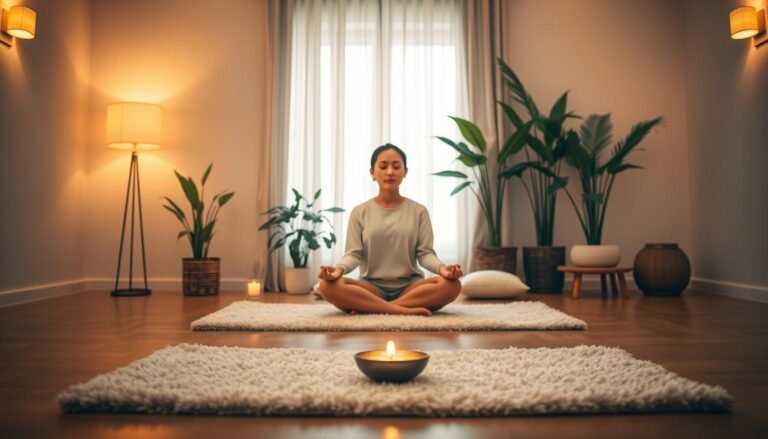
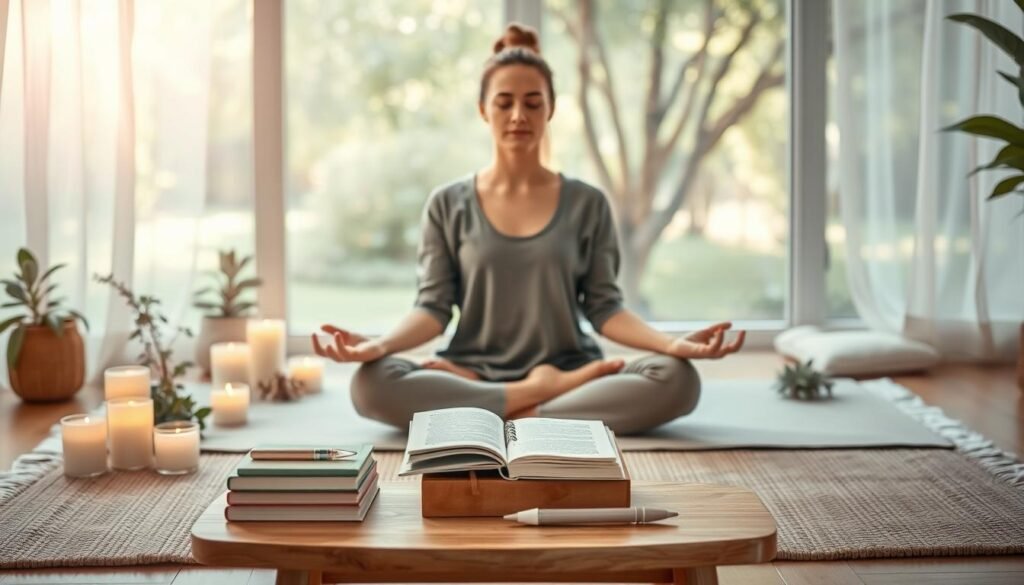
Build a serene area with a comfortable cushion or chair, soft lighting, and a timer. Optional headphones can help you enjoy calming sounds. Make sure there’s enough room to sit without feeling crowded.
It’s important to reduce distractions. Remember, meditation can happen anywhere. You don’t need a perfect room or expensive equipment to benefit.
Managing Stress with Meditation
Use a simple three-step stress reset. Pause, take one complete breath, and name your present sensations without judgment. This approach is supported by research from Harvard Medical School, which suggests mindfulness may ease anxiety.
Johns Hopkins University reviewed over 19,000 studies, with 47 showing relief from psychological stress. Dr. Elizabeth Hoge from Massachusetts General Hospital found that mindful practices can help with anxiety symptoms.
| Research Source | Findings |
|---|---|
| Harvard Medical School | Mindfulness may ease anxiety and mental stress. |
| Johns Hopkins University | 47 studies support relief from psychological stress. |
| Dr. Elizabeth Hoge | Mindful practices help with anxiety symptoms. |
Conclusion
Finding your rhythm in a new practice can be both exciting and challenging. The best approach is the one that feels comfortable and can be done consistently. Start with breathing exercises or guided sessions, then explore mindfulness and body scan methods. After that, consider mantras, Zen, or sound practices.
Research shows that even a 20-minute session can help reduce stress indicators. While results may vary, every small step counts. Today, try taking three deep breaths, going for a five-minute walk, or listening to a short guided session. These simple actions can make your practice easier to repeat.
Next, check out our FAQ section for helpful insights on session lengths, managing wandering thoughts, and selecting the right app. As you grow in your journey, remember that building positive habits is key to intentional living. Explore more in our related article on this topic!
FAQ
What are some simple meditation techniques for beginners?
Beginners can start with techniques like mindful breathing, guided sessions, or body scans. These methods help you focus your mind and relax your body.
How often should I practice meditation?
Aim for a few minutes each day. Consistency is key, so find a time that works for you, whether it’s morning or evening.
What should I do if my mind wanders during practice?
It’s normal for thoughts to arise. When this happens, gently bring your focus back to your breath or mantra without judgment.
Can meditation help reduce stress?
Yes, many people find that regular practice can significantly lower stress levels and promote a sense of calm.
What is the difference between mindfulness and mantra meditation?
Mindfulness meditation focuses on being present and aware of your thoughts and feelings, while mantra meditation involves repeating a specific word or phrase to help maintain focus.
How can I create a peaceful meditation space at home?
Choose a quiet area, use comfortable seating, and add calming elements like soft lighting or soothing sounds to enhance your experience.
Is guided meditation suitable for beginners?
Absolutely! Guided sessions provide direction and support, making them a great choice for those new to the practice.
What are the benefits of body scan meditation?
Body scan meditation promotes relaxation, increases body awareness, and helps release tension by focusing on different sensations throughout your body.
How can I incorporate meditation into my daily routine?
Look for opportunities during your day, like taking a few mindful breaths while waiting in line or practicing gratitude before bed.
What should I look for in a meditation app?
Choose an app that offers a variety of guided sessions, features that suit your needs, and user-friendly navigation to enhance your practice.