
Gratitude Activities to Build Appreciation Into Your Everyday Life
Gratitude is more than just saying thank you; it’s a powerful practice that can transform your daily life. By incorporating simple, practical exercises into your routine, you can foster a deeper sense of appreciation. These activities don’t require much time but can yield significant benefits for your emotional well-being and relationships.
On April 7, 2025, research highlighted how small gestures, like writing a note or reflecting on positive moments, can help you recognize the good in your life. This article will guide you through a balanced list of ideas that fit seamlessly into your day, whether at home, school, or work.
Start with just one thing. Perhaps you can name someone who has helped you or take a moment before bed to reflect on your day. Remember, the key to building appreciation lies in consistent practice rather than seeking a single life-changing moment.
Key Takeaways
- Gratitude is a daily practice that can enhance your life.
- Small activities can lead to big changes in your mindset.
- Consistent reflection fosters emotional well-being.
- Engaging in simple acts can strengthen your relationships.
- Begin with one manageable task to build your practice.
Understanding the Impact of Gratitude on Well-Being
Focusing on what we value can enhance our emotional resilience and relationships. Research has shown that practicing appreciation can lead to significant psychological benefits. For instance, Emmons and McCullough’s 2003 study revealed that counting blessings instead of burdens can positively affect mental health.
In a randomized controlled trial by Cheng, Tsui, and Lam in 2015, health care practitioners reported reduced stress and anxiety when they practiced gratitude. This aligns with findings from Hartanto et al. in 2022, which also highlighted the connection between appreciation and lower stress levels.
Gratitude shifts our attention from what we lack to the supportive people and positive experiences around us. As Fredrickson’s broaden-and-build theory suggests, positive emotions can build lasting resources like resilience. It’s important to note that practicing gratitude doesn’t mean ignoring challenges. Acknowledging a tough day while recognizing one helpful person can create emotional balance.
“Gratitude is not only the greatest of virtues but the parent of all others.”
Fundamentals of Practicing Gratitude
Recognizing the good in our lives can shift our perspective and enhance our overall well-being. Gratitude is not just a fleeting feeling; it’s a powerful practice that can transform how you experience daily life. According to Wood et al. (2009), it involves intentionally recognizing and valuing positive experiences, outcomes, and acts of kindness.
There’s a difference between feeling appreciation internally and expressing it outwardly. You can share your feelings through spoken words, written notes, or thoughtful actions. This expression is vital in strengthening your connections with others.
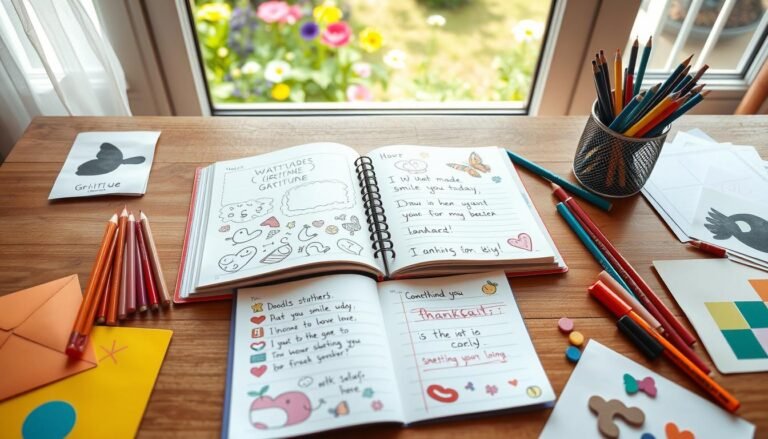
One effective way to practice gratitude is by keeping a gratitude journal. You can jot down moments that made you smile or people who supported you. A gratitude jar is another fun activity. Write down things you’re grateful for on slips of paper and place them in the jar. This simple act can make a significant difference.
Gratitude can be found in everyday moments—a meal shared with family, a kind gesture from a friend, or even a beautiful sunset. By developing a habit of awareness, you can respond positively to daily life at home, school, and work.
Simple Gratitude Exercises You Can Start Today
Simple exercises can help you cultivate a mindset of appreciation and joy in everyday life. By incorporating these quick practices, you can make gratitude a part of your daily routine without feeling overwhelmed.
Start by listing three things you’re grateful for each day. This aligns with findings from Purol and Chopik’s 2024 study, which showed that even a short list can be effective. You might also take just two minutes to name one thing from your day, one person who helped you, and one experience you want to remember.
For students and kids, drawing their feelings on paper can be a fun way to express appreciation. Adults can opt to write a sentence, record a voice note, or use a gratitude journal. Other options include a gratitude walk, a gratitude rock, or a short thank-you message. Choose an activity that fits your routine and attach it to an existing cue, like breakfast or bedtime.

Creative Ways to Use Gratitude Activities in Your Routine
Incorporating gratitude into your daily routine can significantly enhance your overall outlook on life. Simple practices like journaling, using a gratitude jar, or writing thank-you notes can make a difference. These activities are not only easy to implement but also help reinforce appreciation in your everyday life.
Consider starting with a gratitude journal. Aim to list three to five things you appreciate each day. For deeper reflection, describe five reasons why a person or experience matters to you. Alternatively, a gratitude jar allows you to collect notes of appreciation. Review these at the end of the week or month to reflect on your positive moments.
Here’s a comparison of some effective gratitude practices:
| Activity | Effort | Privacy | Family Involvement | Ease of Repetition |
|---|---|---|---|---|
| Gratitude Journal | Moderate | Private | Yes | Easy |
| Gratitude Jar | Low | Public | Yes | Moderate |
| Thank-You Notes | Moderate | Private | Yes | Easy |
| Gratitude Rock | Low | Private | No | Easy |
| Gratitude Tree | High | Public | Yes | Moderate |
For kids and students, using drawings or paper leaves can make expressing appreciation fun. They can create cards or short notes when writing several sentences feels challenging. This way, everyone can engage in the practice of appreciation, making it a shared family activity.
Incorporating “Gratitude Activities” Into Family Life
Integrating appreciation into daily family routines can lead to a more connected and supportive home. Engaging in gratitude practices not only nurtures relationships but also fosters a sense of belonging among family members. Here are some interactive ideas to make gratitude a fun part of your family life.
Interactive Ideas for Home and School
Consider creating a gratitude jar where everyone can drop in notes about things they appreciate. You might also set aside time for dinner-table sharing, where each person shares one positive moment from their day. This simple practice can strengthen bonds and encourage open communication.
Engaging Both Kids and Adults
For younger kids, activities like drawing their favorite things or creating gratitude books can be enjoyable. Older students can write detailed reflections about a person or experience that matters to them. Adults can model appreciation by sharing their own entries or participating in community service together.
- Start a weekly kindness challenge to encourage acts of kindness within the family.
- Use bedtime questions to reflect on the day’s positive moments.
- Create a gratitude tree where family members can add leaves with notes of appreciation.
Keeping these practices brief and voluntary helps ensure that gratitude feels like a natural connection rather than a chore. By making time for these moments, you can cultivate a family culture of appreciation and kindness.
Enhancing Your Gratitude Journal Practice
Keeping a gratitude journal can be a transformative tool for personal growth. This practice allows you to reflect on the positive aspects of your life regularly. To make the most of your journaling, consider a few actionable tips.
Start by building a simple template. Include space for ten things you appreciate, five people who made a difference, and a section for one learning reflection. Don’t forget to note the best part of your day.
For kids and students, encourage them to draw first. They can label their pictures or write a short sentence before diving into longer reflections. Use prompts like, “What made you smile today?” or “Who helped you?” These questions guide them from general thoughts to specific awareness.
When writing about one entry, suggest describing at least five details. Include what happened, who contributed, how it made them feel, and why it still matters. This depth of reflection enhances the overall experience.
Finally, review your entries at the end of the week or month. Add notes about patterns, growth, kindness, or memorable moments. This practice not only reinforces appreciation but also fosters a deeper connection to your experiences.

Mindful Moments: Turning Everyday Experiences into Gratitude
Noticing the world around you can turn ordinary moments into extraordinary feelings of appreciation. Mindfulness helps you to engage with your surroundings, revealing beauty in simple things.
Try a five-senses pause during your day. Identify one thing you appreciate through:
- Sight: A beautiful tree or a colorful flower.
- Sound: The chirping of birds or laughter from others.
- Smell: Freshly baked bread or the scent of nature.
- Taste: A delicious meal or your favorite drink.
- Touch: The warmth of sunlight or a soft blanket.
Consider going on a gratitude walk. This practice encourages you to notice sunlight, fresh air, and textures around you. For students and kids, these walks can become a fun way to explore nature.
Mindful transitions before meals or bedtime can also create moments of appreciation. Take a moment to reflect on one positive thing from your day.
Record your observations on paper or in a journal. Place your entries near a gratitude jar or a tree, serving as a visual reminder of your practice. Remember, mindful gratitude doesn’t mean ignoring stress; it’s about recognizing one supportive detail amidst challenges.
Applying Gratitude at Work and in Educational Settings
Incorporating appreciation in professional and educational environments can foster a positive atmosphere. When you recognize the contributions of others, it creates a sense of belonging and respect. This practice can enhance focus and strengthen community ties.
For educators and professionals, starting meetings or classes with a specific acknowledgment can set a positive tone. For example, share one thing you appreciate about a colleague or a recent accomplishment. This small act can inspire others to do the same.
Another effective strategy is to engage students in activities that promote reflection. Ask them to research historical figures who made a difference in society. They can write about these individuals’ sacrifices and lasting impacts, connecting history with gratitude.
Here are some additional strategies to integrate appreciation into your routine:
- Encourage private journaling or anonymous notes for those who may feel shy about speaking up.
- Utilize appreciation boards where everyone can post notes of thanks.
- Connect gratitude with learning by discussing the importance of mentors, discoveries, and community contributions.
- Recognize specific efforts in your team or classroom, avoiding vague praise.
Ways to Sustain a Long-Term Gratitude Practice
Sustaining a long-term practice of appreciation requires intentional habits and mindfulness. Research shows that repetition in a consistent context helps solidify these habits. For example, repeating a practice like writing in a gratitude journal after brushing your teeth can make it automatic.
Consider creating an implementation intention, such as, “After dinner, I will write one note of appreciation.” This strategy, highlighted by Gollwitzer and Sheeran, helps reinforce your commitment.
Choose a manageable activity, like a two-minute journal entry or a gratitude jar, instead of trying to do everything at once. This keeps your practice sustainable.
Utilizing technology can also support your journey. Smartphone reminders or habit-tracking apps can help you stay consistent without replacing personal reflection.
If you miss a day, don’t be discouraged. Simply restart and rotate your prompts during challenging weeks. Measuring your success can be as simple as returning to your practice and noticing how it enriches your life.
Real-Life Examples and Success Stories of Gratitude
Seeing how others have embraced appreciation can inspire you to start your own journey. Real-life examples showcase the positive impact of gratitude on daily life.
For instance, a woman named Sarah decided to keep a gratitude journal for one week. Each day, she wrote down three things she appreciated. By the end of the week, she noticed she was more aware of supportive moments, like a friend’s encouraging words or a beautiful sunset. This simple practice shifted her focus to the positives around her.
A family tried using a gratitude jar and a gratitude tree for a month. They wrote notes about their favorite moments and shared them at the end of the month. This helped them recognize recurring themes in their lives, such as family outings and shared meals, strengthening their bonds.
In a classroom, students created a paper chain of appreciation notes. Each student wrote something they valued about their classmates. This activity fostered a sense of belonging without requiring personal disclosures, making everyone feel included.
Research by Kini et al. (2016) indicates that consistent practice can support neuroplasticity, enhancing attention and perception. Remember, while these practices can be beneficial, they should complement, not replace, professional mental health support when needed.
Conclusion
Embracing appreciation can significantly enrich your everyday experiences. Remember, it’s the small, repeated actions that make gratitude meaningful. A simple journal entry, a spoken word of thanks, or a thoughtful note can all contribute to a positive mindset.
Students, kids, adults, and families can engage in various activities while practicing the same core skill of recognizing and valuing the good in their lives. Start today with one thing, one person, or one moment rather than waiting for the perfect time.
Repetition, mindfulness, and kindness are key to building a sustainable practice that supports your everyday life. Review the ideas in this article, choose one activity, and integrate it into your daily routine. Your journey toward appreciation begins now!
FAQ
What are some simple ways to practice gratitude daily?
You can start by keeping a gratitude journal where you write down three things you appreciate each day. Another option is to create a gratitude jar, filling it with notes about what you’re thankful for throughout the week.
How can gratitude impact my mental health?
Practicing gratitude can lead to improved mood, reduced stress, and enhanced overall well-being. It helps shift your focus from negative thoughts to positive aspects of your life, fostering a more optimistic outlook.
Can gratitude activities be beneficial for children?
Absolutely! Engaging kids in gratitude practices, like making thank-you cards or sharing what they are thankful for at dinner, can teach them appreciation and enhance their emotional intelligence.
How do I encourage my family to participate in gratitude exercises?
You can make it a fun family tradition by setting aside time each week to share what everyone is grateful for. Consider using prompts or themes to spark conversation and involvement.
What should I include in my gratitude journal?
Focus on specific moments or people that made a positive impact on your day. You can also include reflections on nature, experiences, or even small acts of kindness you’ve witnessed.
How can I incorporate gratitude into my work environment?
You can express appreciation for your colleagues through simple gestures like thank-you notes or shout-outs during meetings. Creating a gratitude board in the office can also encourage a culture of appreciation.
Are there any long-term benefits to maintaining a gratitude practice?
Yes, sustaining a gratitude practice can lead to lasting improvements in your emotional resilience, relationships, and overall life satisfaction. It helps create a habit of looking for the good in every situation.