Gratitude Board Ideas for Family, Home, School, and Personal Growth
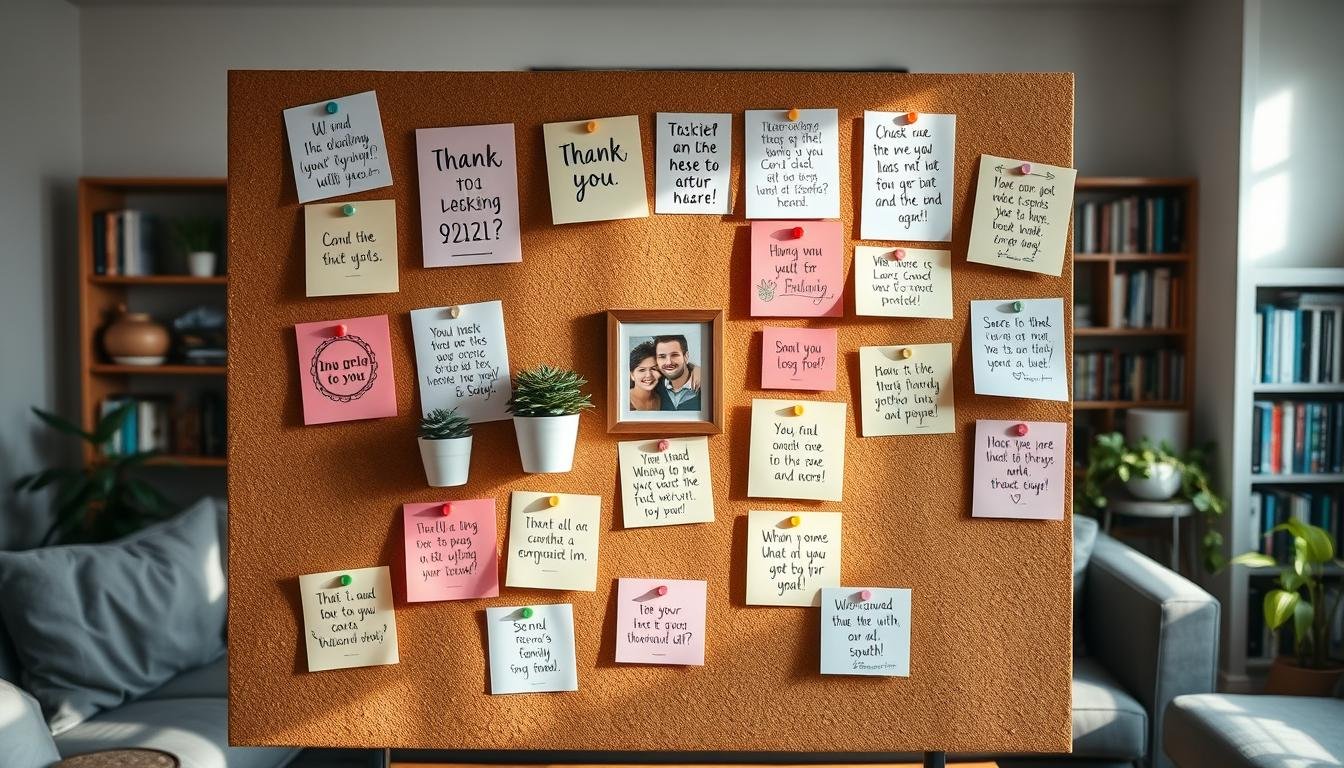
Creating a space for appreciation can transform your daily routine. Gratitude boards serve as visible reminders of the positive things in life. These boards are not just decorative; they can foster a culture of appreciation within families, schools, and workplaces.
When you incorporate a board into your daily practice, it becomes a powerful tool. The act of reflecting on what you value can lead to lasting habits. Research from the Gratitude Project shows that individuals who engaged in writing gratitude letters experienced a more positive mood for up to 12 weeks. This demonstrates how powerful consistent reflection can be.
Whether you’re looking to enhance your home, classroom, or personal growth, there are many formats to explore. By choosing a style that fits your environment, you can make appreciation a regular part of your life. Remember, while a gratitude board can support reflection, it’s important to understand that results may vary for each person.
Key Takeaways
- Gratitude boards help individuals notice positive aspects of their lives.
- Connecting a board to daily practice enhances its effectiveness.
- Various formats exist to fit different environments and routines.
- Writing gratitude letters can improve mood for weeks.
- Consistent use of a board supports reflection and connection.
Understanding the Benefits of a Gratitude Practice
Focusing on what you value can make a remarkable difference in your overall well-being. When you practice appreciation daily, it can lead to the release of dopamine and serotonin. These chemicals are linked to positive feelings, enhancing your mood.
Regularly acknowledging the good in your life is associated with greater resilience and happiness. It’s important to note that this practice does not replace professional mental health care. Instead, it complements it.
Writing notes of appreciation can help shift your focus toward supportive people and positive experiences. This shift can be particularly beneficial in tough times. For example, the Gratitude Project found that after four weeks of writing, participants reported mood improvements lasting up to 12 weeks.
Families and classrooms can engage in discussions about both significant and everyday experiences. Whether it’s a sibling’s help or a teacher’s encouragement, these moments are worth recognizing.
The Science Behind Gratitude and Well-Being
Creating a dedicated area for recognizing positives can transform your daily outlook. The science of gratitude reveals how it can significantly impact your brain and overall well-being. When you express appreciation, your brain releases dopamine and serotonin, the feel-good chemicals that boost your mood.
Research suggests that gratitude may strengthen neurons that focus on positive experiences. This means that when you regularly practice appreciation, you reinforce pathways in your brain that help you notice the good around you.
Given the brain’s natural negativity bias, having a visible gratitude wall can make it easier to revisit positive observations. This wall serves as a constant reminder to look for the good in others, even in challenging situations.
| Concept | Description | Impact |
|---|---|---|
| Dopamine Release | Gratitude triggers the release of feel-good chemicals. | Enhances mood and overall happiness. |
| Neural Reinforcement | Regular gratitude practice strengthens positive neural pathways. | Increases awareness of positive experiences. |
| Negativity Bias | The brain tends to focus on negative experiences. | Gratitude helps counteract this bias. |
Writing appreciation for classmates or family members not only fosters emotional reflection but also builds stronger community bonds. Instead of vague terms like “thankful,” try naming specific actions and their effects. This approach makes your expressions of gratitude more meaningful and impactful.
Building a Gratitude Culture at Home and School
Cultivating a culture of appreciation can significantly enhance the atmosphere at home and in the classroom. It’s essential to discuss your appreciation wall during family check-ins or classroom meetings. This ensures it becomes a living part of your routine rather than just a silent decoration.
Adults should model appreciation openly. A cute display alone will not create a meaningful cultural shift. Instead, show how acknowledging others can transform relationships.
For children who may feel shy, offer private participation options. This allows them to express their feelings without pressure. Connect appreciation with social-emotional learning by discussing how a simple thank-you note or a thoughtful action impacts someone else.
Make it a habit to review the display weekly. Refresh prompts regularly to keep the practice alive and meaningful beyond special occasions. Remember, consistency is key to making appreciation second nature.
Gratitude Board Ideas for the Classroom
A dedicated space for appreciation can enrich the classroom experience. Implementing gratitude practices fosters a positive culture among students. Here are some easy-to-make ideas that will engage your students and make thankfulness a part of their daily routine.
- Appreciation Station: Set up a corner with gratitude sheets or write-and-wipe mats. At the end of each day, review selected notes to celebrate positive moments.
- Thankful Tree: Create a tree using paper and sticky notes in autumn colors. Students can write what they are thankful for on red, yellow, and orange notes.
- Affirmation Station: Provide child-friendly affirmations and images. This helps students who may struggle to identify their gratitude.
- Rose and Thorn: Use this daily check-in where each student shares a positive (rose) and a concern (thorn) needing care.
- Ways to Show Kindness: Encourage students to list acts of kindness, such as sharing, cleanup, or giving compliments.
To keep the momentum going, consider rotating themes for your gratitude wall weekly or monthly. You might focus on family, teachers, or classmates, ensuring every student feels included. For birthdays, students can write gratitude cards, stating, “I am grateful for ___ because ___.”
For more resources, check out The Hive for a 14-day free trial of digital classroom tools, or visit Mrs Learning Bee for free gratitude wall templates.
| Activity | Description | Benefits |
|---|---|---|
| Appreciation Station | Corner with gratitude sheets | Encourages daily reflection |
| Thankful Tree | Tree made with sticky notes | Visual representation of thankfulness |
| Rose and Thorn | Daily check-in activity | Promotes emotional awareness |
Creative Family and Home Gratitude Displays
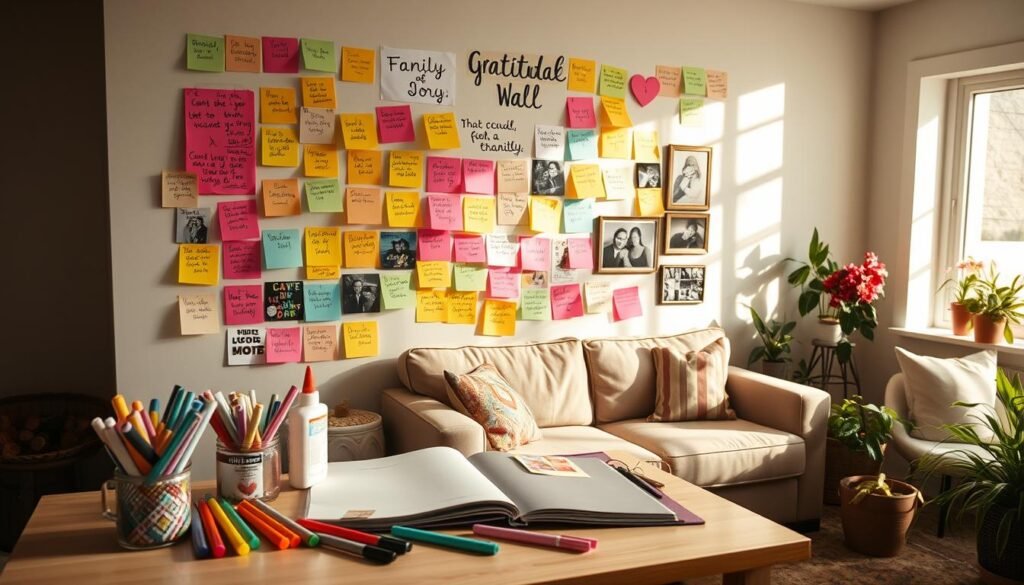
Transform your living space into a canvas of appreciation with simple displays. These displays can be tailored to fit any area, from cozy apartments to shared family spaces. By incorporating notes, drawings, and photos, you can create a vibrant environment that reflects what matters most.
Consider setting up a kitchen gratitude board. Each family member can add a paper leaf or note before dinner, echoing the Thankful Tree concept. This practice encourages everyone to share moments of appreciation.
A hallway photo display can also enhance your home. Pair family images with short messages about recent kindness or shared memories. To spark reflection, use prompts like “Who helped you today?” or “What ordinary thing made life easier?”
Switching themes monthly can keep participation engaging. Focus on topics like home, school, or small moments. For those who prefer privacy, provide an envelope beside the display for personal notes.
Innovative Ways to Incorporate Gratitude in Personal Growth
Incorporating appreciation into your daily life can lead to significant personal growth. This practice not only enhances your mood but also strengthens your connections with others. You can start small by reflecting on daily experiences that spark joy.
Consider keeping a section of your gratitude wall for lessons learned. Use the four-week writing period from the Gratitude Project as a manageable experiment. This way, you can track your growth over time.
Pair each note of appreciation with a specific action. For example, send a thank-you message, help someone else, or complete a good deed. These small acts of kindness can create a ripple effect in your community.
Utilize affirmations and quotes as visual reminders. Place them beside personal observations to keep your gratitude wall grounded. You might also create a “small wins” area to highlight progress in work, health, or relationships.
Encourage a weekly review of your gratitude notes. Ask yourself which notes changed your behavior or improved your connections. This reflection can reveal neglected areas of your life that deserve attention.
| Activity | Description | Benefits |
|---|---|---|
| Gratitude Journal | Daily entries of things you appreciate | Enhances self-awareness and positivity |
| Thank-You Notes | Writing notes to express appreciation | Strengthens relationships and connections |
| Acts of Kindness | Doing something nice for others | Fosters community and personal fulfillment |
Workplace Gratitude Walls: Boosting Team Spirit and Well-Being
Creating an area for recognition can enhance workplace relationships and boost overall satisfaction. A central office wall dedicated to appreciation can highlight hard work, supportive colleagues, and small wins. This initiative doesn’t require a large budget; it simply needs commitment.
To make participation easy, provide sticky notes, pens, and tape beside the wall. Employees can share their thoughts during ordinary work breaks. Monthly themes can keep the momentum going. Consider themes like thanking a colleague for their help, celebrating a small win, or recognizing a mentor.
For hybrid teams, a digital gratitude wall can allow remote employees to contribute through a shared document or online whiteboard. Encourage managers to model participation by highlighting messages during meetings. Regularly refreshing the wall ensures appreciation remains active and engaging.
To add a lasting visual reminder, consider pairing the display with a minimalist print from Laboo Studio, such as “Live with a Clear Purpose.” This can reinforce the culture of recognition within your team.
| Feature | Description | Benefits |
|---|---|---|
| Central Wall | A dedicated space for appreciation | Recognizes hard work and builds morale |
| Sticky Notes | Supplies for easy participation | Encourages spontaneous sharing |
| Monthly Themes | Focused recognition efforts | Keeps appreciation fresh and relevant |
| Digital Wall | Virtual space for remote teams | Ensures inclusivity and engagement |
| Manager Participation | Leadership involvement in recognition | Models behavior and boosts team spirit |
DIY Gratitude Board Projects and Practical Tips
Crafting a personalized display of appreciation can greatly enrich your environment. It’s an engaging way to express what matters most to you and those around you. Let’s explore some essential materials and creative techniques to help you get started.
Essential Materials and Creative Techniques
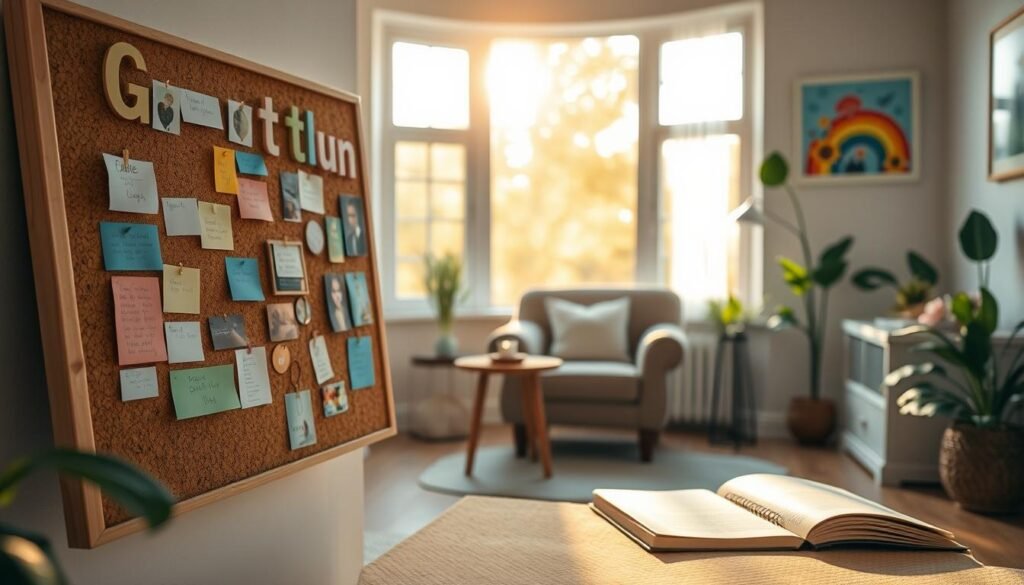
Begin with a wall, poster paper, or corkboard sized to fit your space and contributors. Gather materials like sticky notes, pens, scissors, tape, and optional photos. You can even use letters, banners, and borders to add flair.
For full-size headings, use 8.5 × 11-inch poster paper. If space is limited, print two designs per page. Divide your display into sections for prompts, submitted notes, and rotating themes to guide participation.
Step-by-Step Guide to Craft Your Own Board
- Start by selecting your display surface.
- Gather all necessary materials to make the process smooth.
- Divide the board into sections for clarity.
- Encourage contributions by adding accents created by students or family members.
- Consider using free templates from Mrs Learning Bee to kickstart your project.
Actionable Steps for a Daily Gratitude Routine
Starting your day with a moment of appreciation can set a positive tone for everything that follows. By incorporating simple activities into your morning and evening, you can create a meaningful routine.
Consider these steps:
- Morning Reflection: Each morning, take less than five minutes to write down one specific thing you appreciate. Use a paper note, journal, or digital display.
- Evening Acknowledgment: At the end of the day, note one person, event, or ordinary thing that supported you. Reread one earlier note to reinforce your feelings.
- Weekly Connection: Use prompts like “What changed because of someone else’s effort?” to deepen your appreciation and strengthen relationships.
- Defined Experiment: Try the four-week writing period from the Gratitude Project as a manageable experiment, rather than a long-term commitment.
- Visible Reminders: Place affirmations, quotes, or a gratitude wall near your routine locations to make the practice easier to remember.
Conclusion
Creating a space dedicated to recognizing the good can truly enhance your everyday life. The most effective gratitude wall is simple enough for regular use and meaningful enough to reflect real people and experiences. Remember, the Gratitude Project found that just four weeks of writing can lead to mood benefits lasting up to 12 weeks.
Choose one location, one prompt, and one daily moment to start your practice. This focused approach is far more manageable than juggling multiple activities. Whether in a classroom, home, or workplace, these displays can foster appreciation, connection, and a positive culture.
Why not begin today? Write one paper note about someone or something you genuinely value. This small step can spark a rewarding journey of appreciation.
Next, check out our FAQ section to learn how to set up your wall, what to write, how often to refresh it, and ways to ensure privacy.
FAQ
What is a gratitude wall?
A gratitude wall is a designated space where individuals can express appreciation and share positive thoughts, often using notes or visuals to highlight moments of thankfulness.
How can I start a gratitude practice at home?
Begin by setting aside a few minutes each day to reflect on what you are thankful for. You can use a journal, create a display, or even share your thoughts with family members.
What materials do I need for a DIY gratitude project?
Essential materials include paper, pens, a bulletin board or wall space, and decorative items like stickers or images to personalize your display.
How can gratitude improve workplace culture?
Incorporating gratitude in the workplace fosters a positive environment, boosts morale, and enhances team collaboration by encouraging appreciation among colleagues.
Can gratitude practices help with personal growth?
Yes, regularly practicing gratitude can enhance self-awareness, improve emotional resilience, and motivate you to pursue personal goals and aspirations.
What are some creative prompts for a gratitude display?
Consider prompts like “What made you smile today?” or “Who are you thankful for this week?” to inspire meaningful contributions to your display.
How can I involve my family in gratitude activities?
Encourage family members to share their thoughts during meals or create a family gratitude journal where everyone can contribute regularly.