Meditation Tips for Building a Consistent and Enjoyable Practice
Have you ever felt overwhelmed by the pace of life? Taking a moment to pause can be a simple yet effective way to reset your mind. Dr. Becky Spelman offers a beginner-friendly guide that makes this practice feel accessible to everyone. You don’t need to be an expert; just a willingness to start is enough.
It’s important to understand that this practice is about training your attention. You won’t eliminate every thought, but you can learn to gently return your focus to your breath. Don’t judge yourself if your mind wanders. This is completely normal.
When you begin, aim for a short session of just two minutes. As you grow more comfortable, you can gradually extend this to about twenty minutes. You might find yourself fidgeting or daydreaming, and that’s okay. The goal is to develop a kinder relationship with your mind and emotions.
In the following sections, we’ll explore practical steps to create a routine, choose a calming space, and make your sessions enjoyable.
Key Takeaways
- Start with short sessions, gradually increasing the time.
- Focus on returning to your breath without self-judgment.
- Common distractions are normal; embrace them as part of the process.
- The goal is to cultivate a positive relationship with your thoughts and feelings.
- Practical steps can help you create a sustainable practice.
Understanding the Benefits of Meditation
Do you often find yourself feeling weighed down by daily stress? Engaging in a regular practice can lead to significant improvements in both your physical and mental health. Research shows that individuals who practice regularly may experience better sleep, enhanced focus, and even stronger connections with others.
Here’s a quick look at the benefits:
| Benefit Type | Examples |
|---|---|
| Mental Benefits | Improved focus, emotional resilience, self-compassion |
| Physical Benefits | Better sleep, potential blood pressure reduction, pain management |
By focusing on your breath, you can release physical tension and cultivate a sense of calm. This practice encourages you to respond to stressors with awareness rather than reacting impulsively. Over time, you may notice that you handle challenges with greater ease.
For beginners, it’s helpful to measure progress through daily life changes, such as increased clarity or improved stress recovery. Remember, every small step counts on this journey!
Getting Started with Meditation: A How-To Guide
Do you ever find it challenging to carve out a moment for yourself amidst your busy schedule? Establishing a calming practice can transform your daily routine. Here’s how to begin.
Choosing Your Ideal Meditation Space
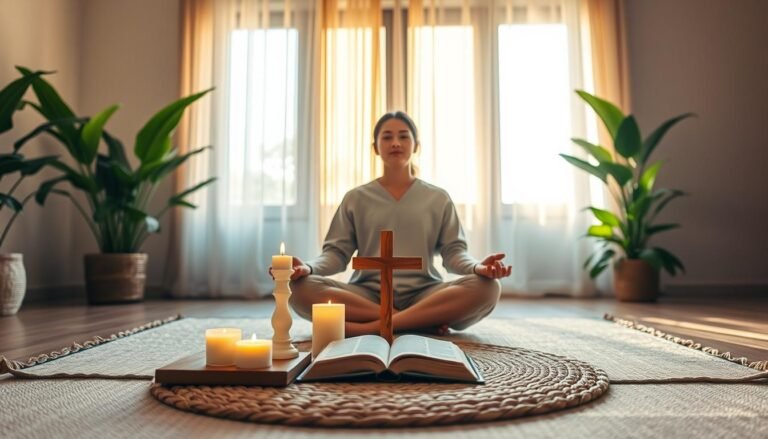
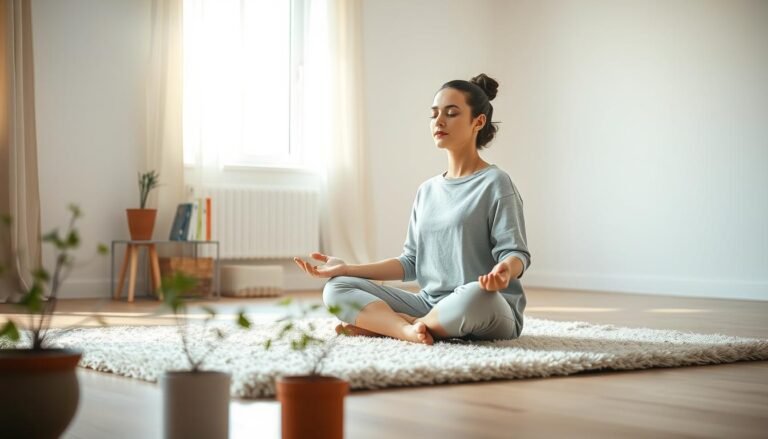
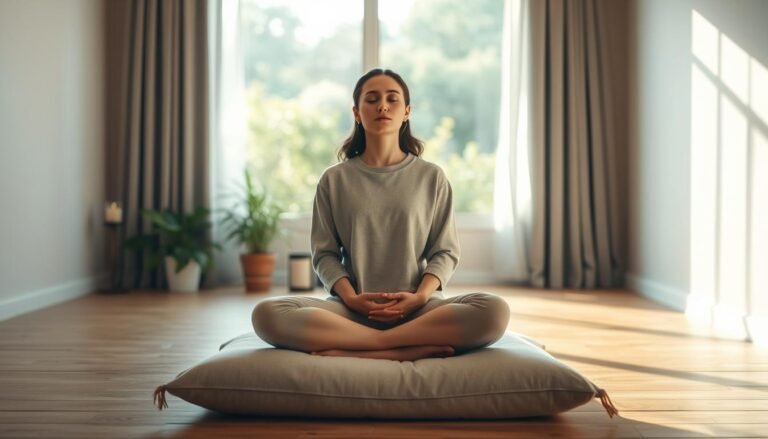
First, select a quiet location where you won’t be disturbed. This could be a cozy corner of your home or a peaceful spot in a park. A comfortable chair, a folded blanket, or a meditation cushion can provide support. Remember, the goal is to sit upright while keeping your body relaxed.
Establishing a Daily Routine
Start with just 5-10 minutes each day. Use a timer to avoid distractions from checking the clock. Focus on your breath—notice the inhale and exhale without forcing it. You can practice after waking up, during lunch, or before bed.
To close your session, sit still for a moment, gently open your eyes, and transition back to your day. This routine can help you cultivate awareness and a sense of calm.
| Step | Action | Tips |
|---|---|---|
| 1 | Choose a calm location | Find a spot free from distractions. |
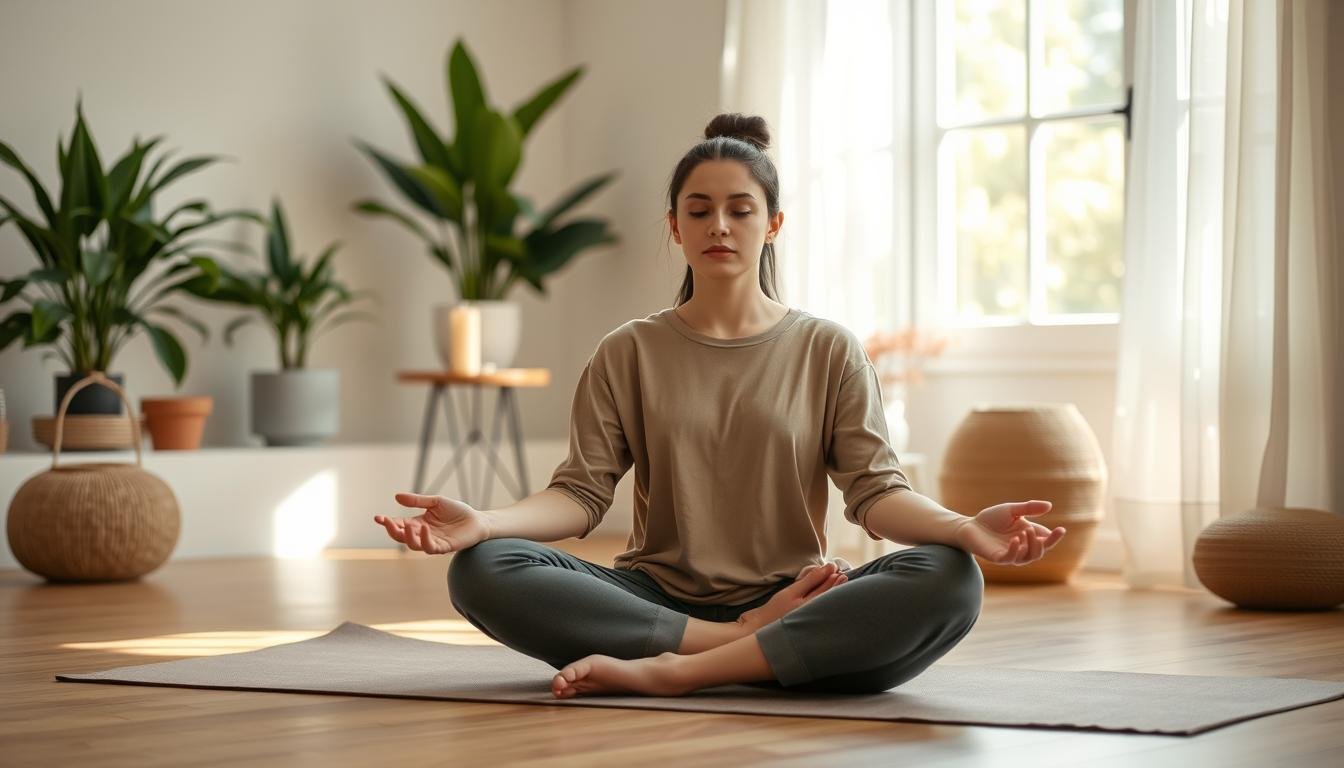
| 2 | Sit upright | Maintain a natural spinal curve. |
| 3 | Relax your hands | Place them on your knees or lap. |
| 4 | Soften or close your eyes | Help focus your attention inward. |
| 5 | Settle your breathing | Notice your breath naturally. |
Meditation Tips for Building a Consistent Practice
Are you looking for ways to seamlessly integrate new habits into your life? Starting small can make a significant difference. Aim for three sessions each week. This manageable frequency allows you to develop a routine that feels familiar and sustainable.
For instance, one student from Highland Park began with just five minutes after morning coffee. Over a year, this small anchor evolved into a daily practice. The benefits of this practice are cumulative, strengthening through regular repetition.
Tracking your progress can also be beneficial. Instead of treating each session like a test, note the date, duration, technique, mood, and one observation. This approach helps you focus on growth rather than perfection.
Remember, consistency matters more than long sessions. Even a short practice counts, especially when time or motivation is limited. Celebrate your return to practice after a missed day, as habit strength grows through repetition.
| Week | Planned Sessions | Completed Sessions | Notes |
|---|---|---|---|
| 1 | 3 | 2 | Felt focused, good energy |
| 2 | 3 | 3 | Improved sleep |
| 3 | 3 | 1 | Missed a day, but returned |
Exploring Different Types of Meditation
Are you curious about how various methods can help you achieve a more focused mind? Different techniques can cater to your unique preferences and goals. Let’s explore some popular options.
Mindfulness and Guided Meditations
Mindfulness meditation focuses on breath, sound, or sensations. You gently return your attention to an anchor whenever your mind wanders. On the other hand, guided meditations provide a teacher’s voice to help you navigate your practice, making it ideal for beginners.
Body Scan and Back Breath Techniques
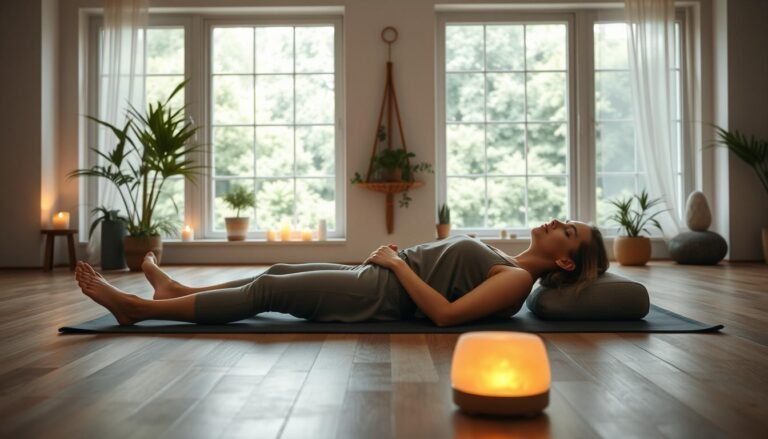
Body scan meditation moves awareness from your feet to your head. This technique helps you notice tension without rushing to change it. Back breath methods can enhance relaxation and focus, making them beneficial for those seeking a deeper connection with their body.
| Technique | Best For | Key Features |
|---|---|---|
| Mindfulness | Everyone | Focus on breath or sensations |
| Guided Meditation | Beginners | Supportive teacher’s voice |
| Body Scan | Stress relief | Awareness of tension |
| Back Breath | Focus enhancement | Deep breathing techniques |
Try several methods for a few minutes each. Evaluate which technique best supports your focus, relaxation, or self-awareness. You can also explore more about to find what resonates with you.
Mastering the Breath for Better Focus
What if you could harness the power of your breath to enhance your focus? Understanding how to breathe effectively can transform your experience. It’s not about forcing your breath but rather cultivating a gentle awareness of it.
Begin by noticing the air entering and leaving through your nose at a natural pace. This simple act helps ground you. As you breathe in, pay attention to the sensations in your nose, throat, lungs, chest, and belly. This awareness connects you to your body.
Understanding Back Breath Methods
The term “back breath” refers to a gentle awareness of your back body. Start with one or two full breaths, then allow your breathing to settle into a natural rhythm. This approach encourages relaxation rather than intensity.
Exercises to Anchor Your Attention
To anchor your attention, try this simple exercise:
- Notice the air at your nostrils as you breathe in and out.
- Feel the movement through your throat and the expansion of your chest or belly.
- Count your breaths or silently say “inhale” and “exhale” to maintain focus.
Connecting breath awareness with yoga’s pranayama tradition can deepen your practice. Remember, if you feel strained or dizzy, adjust your breathing. Relaxed breathing is always more beneficial than intensity.
Practical Strategies to Stay Present
Have you ever noticed how your mind tends to wander, even when you’re trying to focus? This is a common experience, even for seasoned practitioners. Recognizing that distraction is a normal part of your journey can help you approach it with compassion.
When you find your attention drifting, try this simple three-step reset:
- Notice the distraction: Acknowledge that your mind has wandered.
- Label it gently: Use terms like “thought,” “planning,” or “remembering” to create distance from the distraction.
- Return to your breath: Focus back on your next inhale or exhale without self-criticism.
Think of each return as a repetition that strengthens your attention, much like completing another set in a workout. If your mind feels particularly busy, a brief two-minute practice can serve as a helpful reset. This can be easier than skipping your session altogether.
These skills aren’t just useful during your practice. You can apply them while commuting, waiting, or even during stressful moments at work. For more insights on being present, check out this about present-moment awareness.
Integrating Meditation into Your Daily Routine
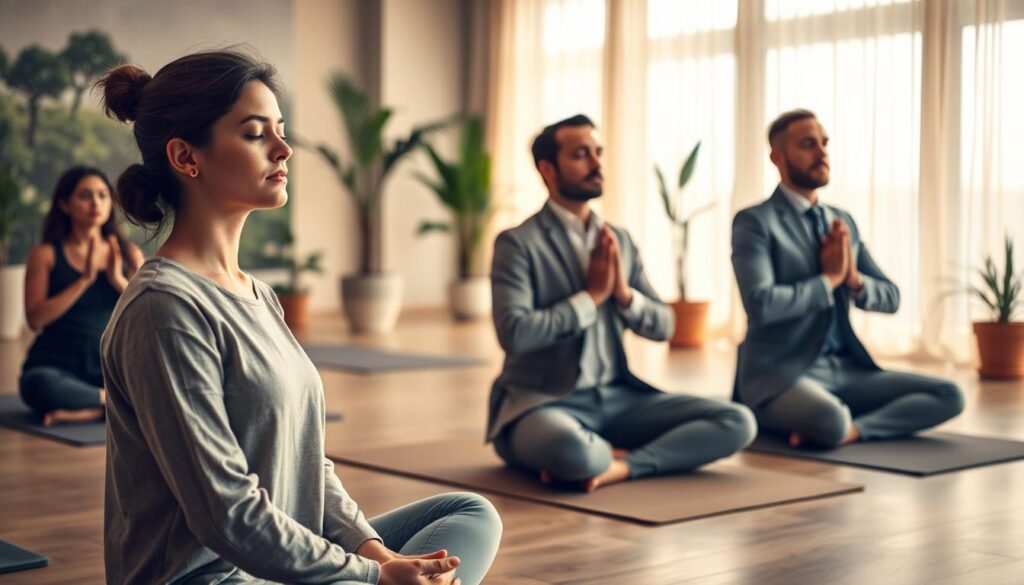
What if you could easily weave new habits into your everyday routines? Pairing your practice with existing rituals can make it feel more natural. For example, consider meditating while waiting for your morning coffee or during your commute. These moments can serve as anchors for your practice.
Choosing the right time of day is also essential. Morning sessions can help set your intention, while midday practices can reset your focus. Evening practices are perfect for releasing tension before sleep. It’s crucial to find a time when you feel calm yet alert.
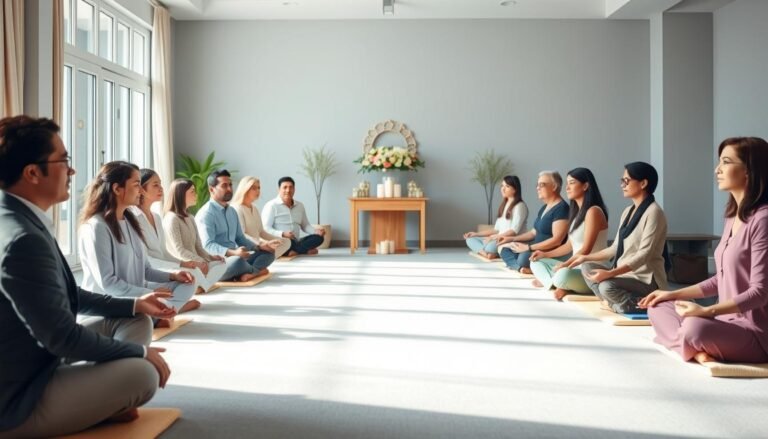
Your meditation space should be welcoming and ready. This reduces the number of decisions you need to make before starting. It’s also worth noting that this practice can complement yoga, whether before class, during savasana, or after movement. Local communities, like the Center for Yoga LA, can make your practice feel supported rather than isolated.
| Time of Day | Purpose | Best Practices |
|---|---|---|
| Morning | Set intention | Pair with coffee or breakfast |
| Midday | Reset attention | During lunch break or commuting |
| Evening | Release tension | Before sleep or winding down |
For more insights on routines and intentional living,
Enhancing Your Practice with Guided Sessions
What if you could elevate your practice by using audio and video guides? Incorporating guided sessions can provide structure and support as you explore mindfulness. Dr. Becky Spelman offers audio-only guided sessions that help you connect with your body and breath.
Her body scan meditation guides your attention through physical sensations, helping you identify areas of tension. Additionally, her awareness-of-breath session is a great option for those seeking spoken prompts during a 5-20 minute practice.
Apps like Headspace and Calm offer various guided meditations, timers, and reminders. These platforms can help you establish a routine with sessions lasting anywhere from 5 to 30 minutes. When motivation dips or thoughts feel intrusive, a guided session can provide the necessary support.
As you grow more comfortable, consider alternating between guided and unguided practices. This approach allows you to build confidence while retaining a useful structure. Remember to choose a voice, pace, and session length that feels right for you.
| Resource | Type | Session Length |
|---|---|---|
| Dr. Becky Spelman | Audio Guided | 5-20 minutes |
| Headspace | App-Based | 5-30 minutes |
| Calm | App-Based | 5-30 minutes |
Overcoming Common Meditation Challenges
Have you ever wondered how to make your practice more adaptable to your lifestyle? Many people face distractions and intrusive thoughts that can interrupt their focus. Understanding how to navigate these challenges can enhance your experience.
When intrusive thoughts arise, try gently labeling them. Instead of suppressing or arguing with your mind, simply acknowledge the thought and return your focus to your breath. This approach helps create distance from mental content.
Sleepiness can also be a hurdle. If you feel drowsy, consider opening a window or stepping outside. Meditating in a seated position with your hips slightly higher than your knees can help maintain alertness.
Adjusting your posture is essential. You can use a chair or sit on a cushion for better support. Loose clothing and a comfortable temperature can reduce physical distractions, allowing you to focus more effectively.
| Challenge | Solution | Notes |
|---|---|---|
| Discomfort | Adjust posture | Use a chair or cushion. |
| Boredom | Change techniques | Try different methods. |
| Noise | Find a quieter space | Consider headphones. |
| Time constraints | Shorten sessions | Even a few minutes counts. |
| Sleepiness | Change position | Try sitting instead of lying down. |
Remember, you don’t need special apps or equipment to practice. The most important aspect is to find what works best for you. For more insights, check out articles on sleep, stress, and flexible routines.
Conclusion
What if just a few quiet minutes could create a ripple effect of calm throughout your day? Remember, this practice starts with a comfortable posture and a willingness to return your focus whenever it drifts.
The example from Highland Park illustrates how five minutes after coffee can evolve into a daily habit over a year. Consistency is key; it matters more than perfect focus or long sessions.
Explore various practices like breath awareness, body scans, or loving-kindness. Find what feels sustainable for you. Start with three sessions a week or just 5-10 minutes each day, adjusting as needed.
Begin today with one intentional breath. Each return to your practice is a step forward, and every moment counts.
FAQ
What are the primary benefits of practicing meditation?
Engaging in meditation can lead to improved focus, reduced stress, and enhanced emotional well-being. It also supports better sleep and overall mental clarity.
How can I start meditating if I’m a beginner?
Begin by finding a quiet space, sitting comfortably, and focusing on your breath. Start with just a few minutes each day and gradually increase the duration as you become more comfortable.
What should I do if my mind wanders during meditation?
It’s normal for your thoughts to drift. When you notice this, gently bring your focus back to your breath or the present moment without judgment.
How long should I meditate each day?
Start with 5 to 10 minutes daily. As you develop your practice, you can gradually extend your sessions to 20 minutes or more, depending on your comfort level.
What types of meditation should I explore?
You might try mindfulness meditation, guided sessions, or body scan techniques. Each offers unique benefits and can be tailored to your preferences.
Can meditation help with anxiety?
Yes, many people find that regular practice helps reduce anxiety levels by promoting relaxation and increasing self-awareness.
Do I need any special equipment to meditate?
While you don’t need anything specific, a comfortable cushion or chair can enhance your experience. Just ensure you’re in a space where you feel at ease.
How can I integrate meditation into my daily routine?
Consider pairing meditation with existing habits, like after brushing your teeth or before bed. This helps create a consistent practice.