Loving-Kindness Meditation: A Simple Practice for Compassion and Connection
Loving-kindness meditation is a powerful tool that can help you foster a sense of compassion and connection. This practice, known in Buddhist terms as metta bhavana, invites you to direct goodwill toward yourself and others. It’s a gentle approach that encourages you to cultivate positive feelings, not just for those you love, but also for strangers and even those with whom you may have conflict.
As you embark on this journey, remember that it’s about reconnecting with your heart and mind. Renowned teacher Sharon Salzberg emphasizes that this practice is not a quick fix for happiness, but rather a source of strength in challenging moments. You can approach it in various ways—spiritually, secularly, or psychologically—making it accessible to everyone.
In this guide, you’ll find a practical sequence to get started, including posture, breath, visualization, and phrases to repeat. With time, you can gradually expand your focus to include all living beings. For additional support, consider pairing this guide with resources on mindfulness or stress relief.
Key Takeaways
- Loving-kindness meditation helps direct goodwill towards yourself and others.
- The practice is known as metta bhavana in Buddhism.
- It serves as a source of strength, not a guarantee of constant happiness.
- You can approach this practice in various ways—spiritual, secular, or psychological.
- Expect to engage in a sequence involving posture, breath, and visualization.
What Is Loving-Kindness Meditation?
Loving-kindness meditation has deep roots in Buddhist teachings. It is the first of the Four Brahma Viharas, which are essential practices for cultivating positive qualities. These include metta (loving-kindness), karuna (compassion), mudita (appreciative joy), and upekkha (equanimity). Each of these principles guides you toward universal friendliness and emotional balance.
Unlike possessive love, metta is about giving without expecting anything in return. This makes it a unique form of love that fosters genuine connection with others. By practicing this form of meditation, you can direct your heart toward feelings of safety, happiness, and health.
Mindfulness plays a crucial role here. It helps you become aware of your thoughts and feelings, while loving-kindness gently directs your heart toward positive outcomes. The insights from Williams and Kabat-Zinn in their 2013 work emphasize the importance of understanding mindfulness in the context of dharma, encouraging respectful learning across cultures.
Benefits of Loving-Kindness Meditation
Engaging in this practice opens doors to emotional strength and deeper connections with others. Research shows that it can enhance your resilience, helping you cope with stress and difficult emotions. For instance, a study by Shahar et al. (2015) found that this practice can reduce self-criticism, which is often a barrier to emotional health.
Moreover, loving-kindness meditation fosters positive feelings towards others. He et al. (2015) demonstrated that this practice can improve interpersonal interactions, making you feel more open and connected. This is crucial for building strong relationships in your life.
In addition to emotional benefits, studies like those by Adelian et al. (2021) and Speca et al. (2000) indicate that mindfulness-based approaches can enhance overall health and wellbeing. These findings suggest that incorporating this practice into your routine can lead to a happier, healthier life.
Preparing Your Space and Mind for Meditation
Creating a serene space for your practice can significantly enhance your experience. A calm environment helps you focus and brings ease to your heart and mind. It’s essential to set up a space that feels inviting, whether it’s in your bedroom, office, or even outdoors.
Start by choosing a comfortable chair, cushion, or lying position that supports your body. Remember, comfort is key! A quick body scan can help identify any tension in your shoulders or jaw, allowing you to relax fully.
Next, find a quiet spot with softer lighting. Aim for a phone-free interval to minimize distractions. While perfect conditions aren’t necessary, a peaceful setting can help you engage more deeply in your practice.
Consider selecting a realistic time to meditate, and connect this preparation with your wellness habits. Ultimately, the goal is to learn to bring kindness to whatever arises in your mind and body.

How to Practice loving kindness meditation
To truly embrace this practice, begin by focusing on your breath and the sensations within your body. Find a comfortable position, whether sitting or lying down, and take several natural breaths. This will help establish a steady foundation for your meditation.
Next, visualize someone who loves you unconditionally. If no specific person comes to mind, imagine a warm, caring presence. Let this visualization create feelings of warmth and safety, allowing the practice to unfold naturally without forcing vivid images.
As you settle into this space, repeat phrases that resonate with you. For example, say, “May I be safe,” “May I be happy,” “May I be healthy,” and “May I experience ease of well-being.” If these words feel artificial, take a moment to notice your reactions, then gently return to your breath and body sensations.
Start with just two to five minutes of practice. As you grow more comfortable, consider using Emma Seppala’s for structured support. This can enhance your experience and deepen your connection to the practice.
Invoking Unconditional Love and Self-Compassion
Embracing self-compassion is a vital step in nurturing your emotional well-being. It’s important to recognize that self-compassion is not about self-indulgence. Research by Shahar et al. (2015) highlights how loving-kindness meditation can help reduce self-criticism, paving the way for a healthier mindset.
To cultivate self-love, start with affirmations that feel genuine. Phrases like “May I meet this moment with care” can be more impactful than jumping straight to declarations of happiness or health. This gradual approach helps you connect with your feelings without pressure.
Consider the findings from Arimitsu’s 2016 study, which emphasized the value of structured self-compassion training. This shows that even small steps can lead to significant improvements in how you view yourself.
It’s also worth noting that Noh and Cho’s 2020 research focused on highly self-critical university students. Their experiences remind us that self-compassion can be especially crucial in challenging situations.
When difficult emotions arise, place a hand on your heart, breathe slowly, and speak to yourself with compassion. This practice invites warmth and understanding into your life.
Expanding Your Circle of Compassion
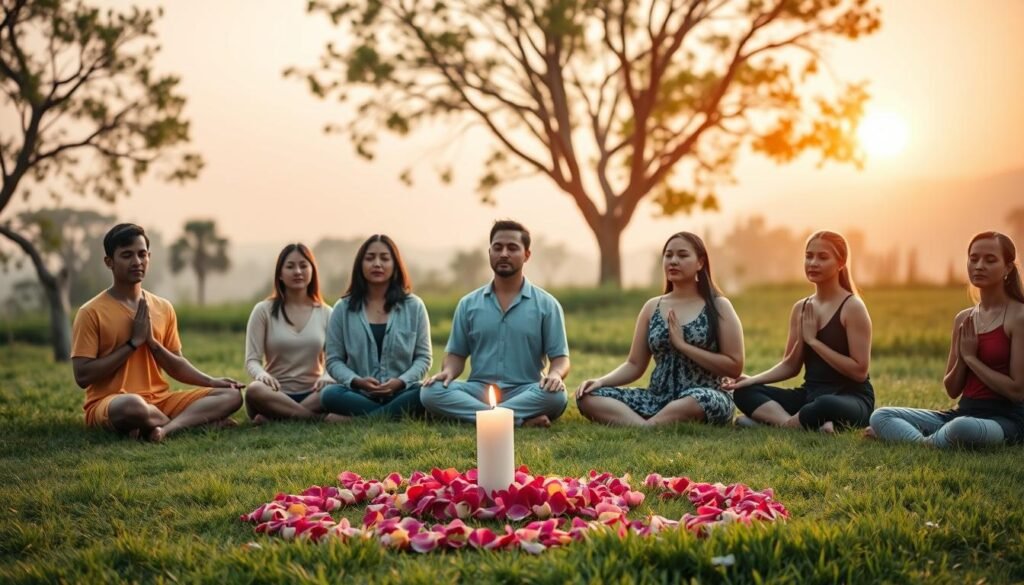
You can gradually widen your circle of compassion, starting from yourself to the world. This practice allows you to extend feelings of goodwill from loved ones to strangers and even those you find challenging. The traditional approach begins with yourself, then moves to friends, neutral individuals, and finally to communities and all beings.
Use phrases like, “May you be safe, happy, healthy, and at ease.” Focus on your sincere intention rather than perfect imagery. It’s important to understand that sending kindness towards someone difficult does not mean you have to forgive, reconnect, or tolerate harm.
Research shows the impact of this practice. For instance, Stell and Farsides (2016) found that brief loving-kindness meditation reduced racial bias by fostering positive feelings towards others. Similarly, Hutcherson et al. (2008) studied how empathy for strangers can enhance social connections.
As you expand your compassion, include wishes for communities, animals, plants, and the Earth. Whenever the practice feels overwhelming, remember to return to self-compassion. This gentle approach nurtures your heart while fostering a sense of connection with the world.
| Stage | Focus | Phrases |
|---|---|---|
| Self | Your own well-being | May I be safe, happy, healthy, and at ease |
| Loved Ones | Close friends and family | May you be safe, happy, healthy, and at ease |
| Neutral Individuals | People you don’t know well | May you be safe, happy, healthy, and at ease |
| Difficult Individuals | People with whom you have conflict | May you be safe, happy, healthy, and at ease |
| All Beings | Communities and the Earth | May all beings be safe, happy, healthy, and at ease |
Integrating Science and Research Insights
Understanding the science behind your practice can deepen your appreciation for its effects. Numerous studies highlight the benefits of this practice, showing how it can improve emotional resilience and mental health.
For instance, Gallegos et al. (2020) conducted a community-based pilot trial with survivors of intimate partner violence. Their findings indicate that meditation can foster healing and emotional strength. Similarly, Fogarty et al. (2019) evaluated mindfulness-based stress reduction in individuals with rheumatoid arthritis, showing significant improvements in pain management.
Other studies, like Zhang et al. (2019), focused on prenatal stress and anxiety, demonstrating the positive effects of mindfulness on expectant mothers. Ho et al. (2020) examined cortisol patterns in disadvantaged families, revealing how stress can be mitigated through consistent practice.
It’s essential to consider the participant characteristics and outcomes when interpreting these findings. Each study contributes to a broader understanding of how meditation enhances quality of life and relationships.
Always consult qualified healthcare professionals for persistent pain, trauma symptoms, or mental health concerns. The journey of self-discovery through this practice is enriched by both personal experience and scientific insight.
Overcoming Challenges in Meditation Practice
It’s important to recognize that distractions and discomfort are natural parts of the meditation process. Many people experience wandering thoughts, boredom, or emotional discomfort during their sessions. The key is to approach these moments with compassion and understanding.
Here are some practical tips to help you stay focused and present:
- When you notice your mind wandering, gently return to your breath or the phrases you are repeating. This is part of the practice, not a sign of failure.
- If feelings of anger or grief become overwhelming, consider shortening your session or focusing solely on self-kindness.
- Replace self-criticism with simple observations, such as saying, “the mind is wandering,” followed by a gentle breath.
- For guidance on patience with difficult emotions, refer to *Full Catastrophe Living* by Kabat-Zinn and Hanh.
- Establish a consistent cue for your practice, like meditating after brushing your teeth, and accept that missed sessions are normal.
- Remember, resilience builds through repeated, manageable returns rather than forcing concentration or suppressing emotions.
| Challenge | Response | Tip |
|---|---|---|
| Mind Wandering | Notice and return | Gently redirect your focus |
| Overwhelming Emotions | Shorten session | Focus on self-kindness |
| Self-Criticism | Replace with observation | Practice gentle breathing |
| Inconsistent Practice | Accept normalcy | Use a consistent cue |
| Difficulty Concentrating | Embrace patience | Refer to helpful resources |
Enhancing Daily Wellbeing Through Mindfulness
Incorporating mindfulness into your daily routine can transform your overall well-being. Short practices can fit seamlessly into your life, making it easier to cultivate positive feelings and reduce stress.
Consider these options for your mindfulness journey:
- Try a one-minute version: take a single breath and repeat a simple phrase.
- Utilize the UCLA Semel Institute’s 10-minute loving-kindness meditation transcript.
- Emma Seppala’s 15-minute guided meditation is a great choice for a structured session.
- For those seeking a longer practice, Gil Fronsdal offers a 30-minute guided metta meditation.
- Engage in a mindful moments exercise by observing a small object, noting its color, shape, and texture while breathing slowly.
Pair your practice with daily activities, such as commuting or waiting for coffee. Tracking your consistency, mood, and energy can provide valuable insights into your journey. Remember, it’s about progress, not perfection.
Bringing Loving-Kindness into Relationships
Translating the essence of loving-kindness into your relationships can significantly enhance your connections with others. This practice encourages you to approach interactions with an open heart and a sense of compassion. As Sharon Salzberg beautifully states, “Loving-kindness supports an open and fearless heart that can manage conflict.” By embracing this mindset, you can navigate difficult conversations with grace.
Before engaging in challenging discussions, consider silently offering a phrase like, “May you be safe and at ease.” This simple act creates a pause between emotion and reaction, allowing you to respond thoughtfully. Mindful listening is also crucial; take a moment to feel your breath, relax your body, and reflect on the other person’s words before responding.
Remember, compassion includes setting honest boundaries. Kindness does not mean accepting disrespect or unsafe behavior. For practical insights, explore Thich Nhat Hanh’s *True Love*, which delves into applying presence and compassion in close relationships.
Lastly, repair any misunderstandings with clear language. Phrases like, “I felt hurt when that happened, and I want to understand your perspective,” can foster deeper connections. These practices not only nurture your relationships but also promote a sense of community and connection with others.
Conclusion
As you finish this guide, embrace the potential for transformation that lies within these practices. Loving-kindness meditation offers a repeatable way to meet yourself and others with greater compassion, supported by research such as Shahar et al. (2015). Begin with a comfortable posture, natural breath, and one sincere phrase rather than waiting for ideal conditions.
Let your practice expand gradually from self to loved ones, neutral people, and even those you find challenging. Remember, the benefits may develop through consistent practice, while persistent mental health concerns deserve qualified professional support.
Choose a realistic duration for your sessions, whether it’s one minute or thirty, and return to the practice with patience. For continued learning, explore related articles on mindfulness, self-compassion, stress reduction, and healthy relationships.
FAQ
What is loving-kindness meditation?
It is a practice focused on cultivating compassion and love towards oneself and others. It encourages positive feelings and emotional well-being.
How can I benefit from this meditation?
Engaging in this practice can enhance emotional resilience, reduce stress, and improve relationships, leading to overall better mental and physical health.
How do I prepare for meditation?
Create a peaceful environment by choosing a quiet space, sitting comfortably, and setting aside distractions to help you focus.
What are the steps to practice this meditation?
Start by establishing a calm posture, then visualize warmth and love, and repeat specific phrases that promote self-compassion and kindness.
Can I use affirmations during this practice?
Yes, using affirmations can help reinforce feelings of self-love and worth, making the practice more effective.
How can I expand my circle of compassion?
Begin by sending positive thoughts to loved ones, then gradually extend those feelings to acquaintances and even the broader community.
Is there scientific research supporting this practice?
Yes, numerous studies have shown that it can lead to significant emotional and psychological benefits, including increased happiness and reduced anxiety.
What challenges might I face while meditating?
Common challenges include wandering thoughts and difficulty focusing. It’s important to acknowledge these distractions and gently bring your attention back to the practice.
How can I incorporate mindfulness into my daily life?
You can integrate short mindfulness practices throughout your day, such as taking a few deep breaths or practicing gratitude, to enhance your overall well-being.
How can I improve my relationships through this practice?
By applying the principles of compassion and understanding, you can enhance communication and build stronger, more resilient connections with others.