
How to Write a Gratitude Letter That Expresses Meaningful Appreciation
Writing a heartfelt message can change lives. A gratitude letter is a personal way to thank someone who has made a positive impact on your life. It’s not just about saying “thank you.” It’s about expressing your emotions and recognizing the value of their actions.
Research by Martin Seligman shows that crafting a specific gratitude letter can boost your happiness significantly. He suggests writing around 300 words, focusing on a particular moment or quality that made a difference. This approach makes your message more meaningful than a general statement.
In this article, you’ll learn how to choose a person to write to, recall a significant moment, and explain the impact they had on you. You can write this message by hand, type it out, or even send it via email. Remember, the goal is to express your appreciation sincerely.
While the emotional purpose of expressing gratitude is clear, keep in mind that the focus is on your happiness, not necessarily the recipient’s reaction. This journey of appreciation can lead to a more fulfilling life.
Key Takeaways
- A gratitude letter is a personal message of thanks.
- Specific examples make your appreciation more impactful.
- Writing can boost your happiness and emotional well-being.
- You can choose various methods to deliver your message.
- Expressing appreciation focuses on your feelings, not just the recipient’s response.
Understanding the Power of Gratitude
Acknowledging the kindness of others can profoundly affect your well-being. Research highlights the emotional impact of expressing appreciation. For instance, Seligman’s 2005 study found that writing gratitude letters led to the greatest initial happiness boost among various positive psychology activities.
Those who engaged in this practice reported higher happiness and lower depression scores for at least a month. This demonstrates how a simple act can create a lasting impact on your emotional state.
Another notable study by Emmons and McCullough in 2003 explored counting blessings versus burdens. This research linked gratitude practices to improved subjective well-being. Regularly acknowledging the good things in life can enhance your overall outlook.
Additionally, cultural insights from Al-Seheel and Noor’s 2016 study of Muslim students show that gratitude strategies can be effective across different backgrounds. Connecting with others through appreciation fosters optimism, kindness, and compassion.
Moreover, studies indicate that gratitude is associated with better cardiovascular and immune functioning, promoting longevity. By making appreciation a regular practice, you can positively influence your mental and physical health.
Planning Your Gratitude Letter
Expressing your feelings through writing can transform how you relate to others. To start, identify someone who has positively influenced your life. This person may not have received the thanks they deserve. Think about how you met them and what moments stand out in your memory.
Reflect on specific actions they took that impacted your emotions. Ask yourself questions like: What was the first thing you remember about them? How did their support change your feelings? Focusing on one or two key moments will make your appreciation clearer and more impactful.
While Seligman suggests aiming for around 300 words, treat this as a flexible guideline. Choose a delivery method that feels right for the relationship—be it a handwritten note, an email, or even a private conversation. If you feel unsure about sending it, remember that writing it down is a powerful step in itself.
Structuring Your Letter for Maximum Impact
Crafting a thoughtful message can create meaningful connections. To write an effective gratitude letter, begin with a clear narrative. Start by stating your appreciation directly. Then, share a specific memory that illustrates why this person matters to you.
Next, explain how their actions affected your feelings. This creates a deeper emotional connection. Finally, conclude with a heartfelt thanks. Avoid vague phrases like “I appreciate everything.” Instead, use vivid examples that highlight their unique contributions.
Here’s a simple structure to follow:
- Open with appreciation.
- Describe a meaningful moment.
- Explain the emotional impact.
- Close with sincere thanks.
Using Ryan Niemiec’s character-strength framework can also enhance your writing. This approach emphasizes love, perspective, social intelligence, bravery, and zest in your message.
| Element | Description | Example |
|---|---|---|
| Opening | Direct statement of appreciation | “Thank you for always being there for me.” |
| Memory | Specific event that illustrates your point | “I remember when you helped me during my tough week.” |
| Impact | Explain how it made you feel | “Your support lifted my spirits and motivated me.” |
| Closing | Final expression of thanks | “I truly appreciate your kindness and support.” |
Choose a delivery method that feels right, whether it’s a handwritten note, email, or a simple text. Each format can effectively convey your appreciation.
Tailoring Your Message for Different Relationships
Expressing appreciation can strengthen bonds and enhance relationships. Each connection in your life deserves a unique approach. When writing a gratitude letter, consider the relationship you have with the recipient.
Gratitude Letter for a Boss or Colleague
For a boss or colleague, highlight specific guidance or support that has aided your professional growth. Use examples like their creative ideas or feedback that helped you excel. As Gina Hamadey suggests, acknowledge their talent and work ethic. This personal touch makes your message impactful.
Expressing Appreciation to Family and Friends
When writing to family, reflect on cherished memories. Mention how they supported you through school or shared laughter during tough times. For friends, adopt a warmer tone. Acknowledge their loyalty through good and bad moments. This heartfelt approach fosters deeper connections.
For quick messages, consider a short email version. You can still capture the essence of your feelings without losing the specific memory at the center of your message. Remember, your goal is to convey genuine appreciation in a way that resonates with the person.

Actionable Tips and Creative Techniques
Crafting a heartfelt message requires genuine effort and thoughtfulness. Using sincere language can make your message more relatable. Ordinary words paired with personal details resonate better than polished clichés. This authenticity fosters a deeper connection with the recipient.
To enhance your writing, consider these strategies:
- Write a first draft quickly. This helps capture your true feelings.
- Revise for clarity and read it aloud. This ensures your tone feels natural.
- Connect your appreciation to Seligman’s PERMA model, highlighting how relationships contribute to overall well-being.
Research shows that gratitude can influence behavior. For instance, a study by Fritz and colleagues in 2019 linked gratitude to healthier eating habits among adolescents. This suggests that expressing appreciation can extend beyond emotional benefits.
Consider pairing your writing with a two-week savoring experiment. Focus on two pleasurable activities each day to enhance your overall mood. This technique is recommended by PositivePsychology.com and can complement your gratitude practice.
| Technique | Description | Benefit |
|---|---|---|
| Sincere Language | Use ordinary words and personal details | Creates a relatable message |
| Quick Draft | Write your first draft without overthinking | Captures authentic feelings |
| Read Aloud | Check if the tone matches your voice | Ensures clarity and comfort |
| Savoring Activities | Notice two pleasurable activities daily | Enhances mood and well-being |
Crafting a Meaningful Gratitude Letter
Crafting a sincere message can create lasting impressions. The tone you choose is essential. For a manager, keep it respectful and concise. With close friends, feel free to be playful or informal. This approach helps your message resonate.
Remember, a short card can still make a difference. When it’s honest and anchored to a meaningful memory, it carries weight. Appreciation knows no time limits. A teacher may cherish a thank-you note received twenty years later.
Preserve your natural voice in your writing. Use your unique rhythm, humor, and emotional vocabulary. Avoid overly formal templates that may not reflect your true self.
- Consider anonymous delivery for encouragement without recognition.
- Use a signed message for deeper relational conversations.
- Keep a private gratitude journal as a companion for building this habit.
Conclusion
Crafting a sincere message can leave a lasting impression. Begin by identifying one person who has made a difference in your life. Recall a specific moment that highlights their impact and explain why their actions mattered to you.
Seligman’s guideline of approximately 300 words serves as a helpful starting point, but remember that honesty is what truly resonates. Research shows that making appreciation a habit can enhance your overall well-being.
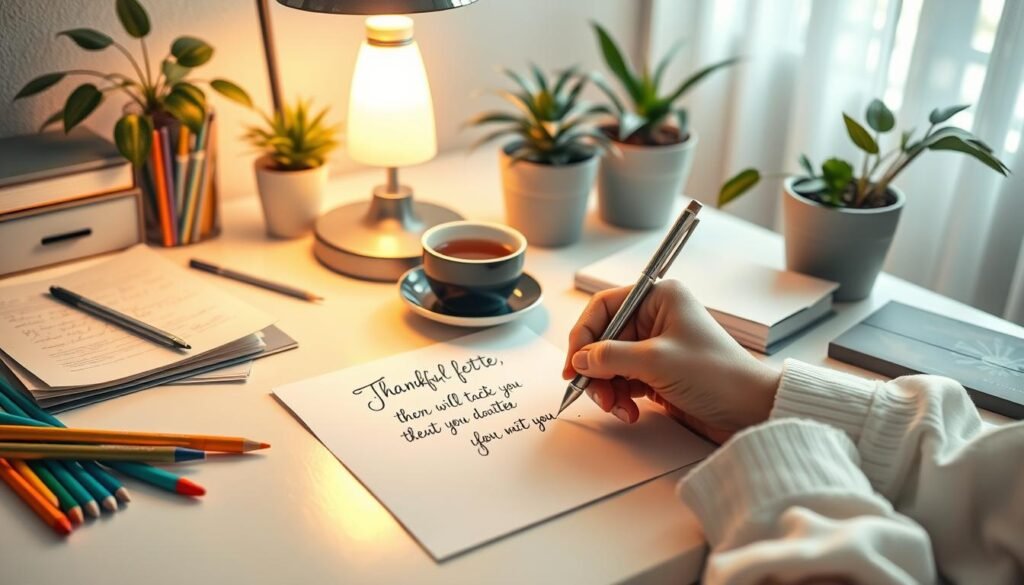
Choose the delivery method that feels right, whether it’s a handwritten note, an email, or a simple card. If you feel uncomfortable delivering it, writing it for yourself can still honor that person’s influence.
For quick guidance on crafting your message, refer to the FAQ section below.
FAQ
What is the purpose of writing a gratitude letter?
The purpose is to express heartfelt appreciation to someone who has positively impacted your life, fostering stronger relationships and emotional connections.
How can I identify the right moments to mention in my letter?
Reflect on specific instances where the person’s actions or words made a difference in your life. Focus on moments that resonate with you emotionally.
What tone should I use when writing my gratitude letter?
Aim for a sincere and genuine tone that reflects your true feelings. Use language that feels natural to you, whether it’s formal or casual.
Can I write a gratitude letter to someone I don’t know well?
Yes, expressing appreciation to someone you don’t know well can still be meaningful. Focus on their impact or contributions that you value.
How often should I write gratitude letters?
There’s no set frequency, but making it a regular practice can enhance your relationships and overall well-being. Consider writing them during special occasions or milestones.
Is it better to send a handwritten letter or an email?
Handwritten letters often feel more personal and thoughtful, but an email can be just as effective if it conveys your feelings sincerely and promptly.
What if I struggle to find the right words?
Take your time and brainstorm your thoughts. You can also look for inspiration from examples online or jot down bullet points before crafting your letter.