Rajyoga Meditation: A Beginner’s Guide to Awareness and Inner Calm
Are you ready to explore a transformative practice that can enhance your life? Rajyoga meditation offers a unique way to develop awareness and inner calm. Originating from ancient texts in Bharat, or India, this method stands out as one of the highest forms of yoga. The term “Raja” translates to king, while “yoga” signifies union. Together, they embody the idea of mastering your own mind and body.
This open-eyed technique encourages you to see yourself as an eternal soul, rather than just your physical form. One practitioner’s experience of over seven years shows how consistent practice can lead to clearer thoughts and a more fulfilling relationship with oneself.
In this guide, we’ll discuss how to recognize your soul and remember the Supreme Soul. You won’t need to worry about complicated postures or chanting. Instead, you’ll learn to use focused remembrance and visualization, making it accessible for anyone new to spiritual practices.
Key Takeaways
- Rajyoga meditation is an open-eyed practice that enhances awareness and inner peace.
- The term “Raja” means king, symbolizing mastery over your mind and body.
- Seeing yourself as an eternal soul is a foundational aspect of this practice.
- Consistent practice can lead to discipline and a more content self-relationship.
- This approach focuses on remembrance and visualization, making it accessible for beginners.
Understanding Rajyoga Meditation: Origins and Principles
Delving into the essence of Raja Yoga reveals its rich history and guiding principles. This practice is one of the four types of yoga mentioned in ancient texts from Bharat, often regarded as the highest form. Raja Yoga meditation involves two key steps: self-realization and God-realization. Understanding these concepts can greatly enhance your practice.
The soul is described as an eternal, self-luminous point of divine light. This visualization helps you connect with your true self, separate from the physical body. The Confluence Age, or Sangam Yug, is considered a special time when the Supreme Soul teaches Rajyoga to guide souls toward transformation.
As you explore this meditation technique, it’s essential to recognize the five vices—lust, anger, greed, ego, and attachment—that can disrupt your peace and clarity. By understanding these patterns, you can cultivate virtues and develop a deeper connection with the Supreme Soul, often referred to as the spiritual father of all souls.
| Focus | Inner Question | Intended Experience |
|---|---|---|
| Self-Realization | Who am I? | Awareness of the soul |
| God-Realization | Who is God? | Connection with the Supreme Soul |
Practical rajyoga meditation Techniques for Daily Mindfulness
Embracing the essence of Raja Yoga meditation can be as simple as following a few easy techniques. Here’s a step-by-step guide to help you incorporate this practice into your daily life.
Step-by-Step Guided Practice
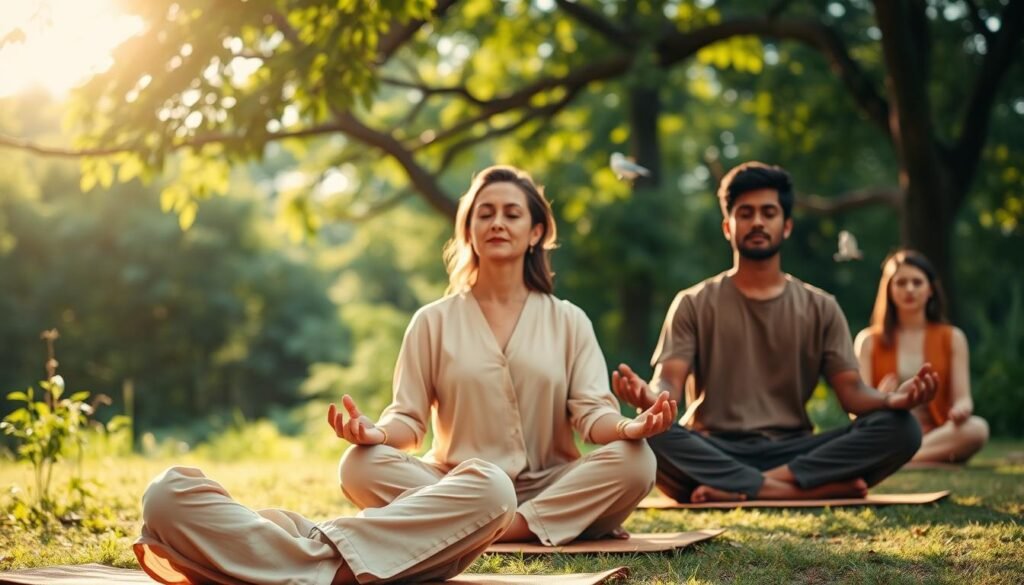
- Begin by sitting comfortably with your back straight and eyes open. This open-eyed approach is fundamental in Raja Yoga.
- Pause for a moment and notice your thoughts. Affirm, “I am a peaceful soul,” while visualizing a tiny point of light at the center of your awareness.
- Remember the Supreme Soul as your source of peace, purity, love, and bliss.
- Utilize Dadi Janki’s questions: “Who am I?”, “Who do I belong to?”, and “What do I have to do now?” to focus your mind.
Actionable Tips for Daily Affirmations and Visualizations
Start with just five minutes in the morning. Repeat your calming affirmation throughout the day. Before sleep, take a minute to reflect on your thoughts.
Practice without chanting by gently bringing your attention back to the soul and the Supreme Soul whenever your mind wanders. This technique helps cultivate virtues and enhances your connection with the divine.
Consider reflecting on a teaching from the Brahma Kumaris Murli and write down one action that embodies that lesson in your daily life.
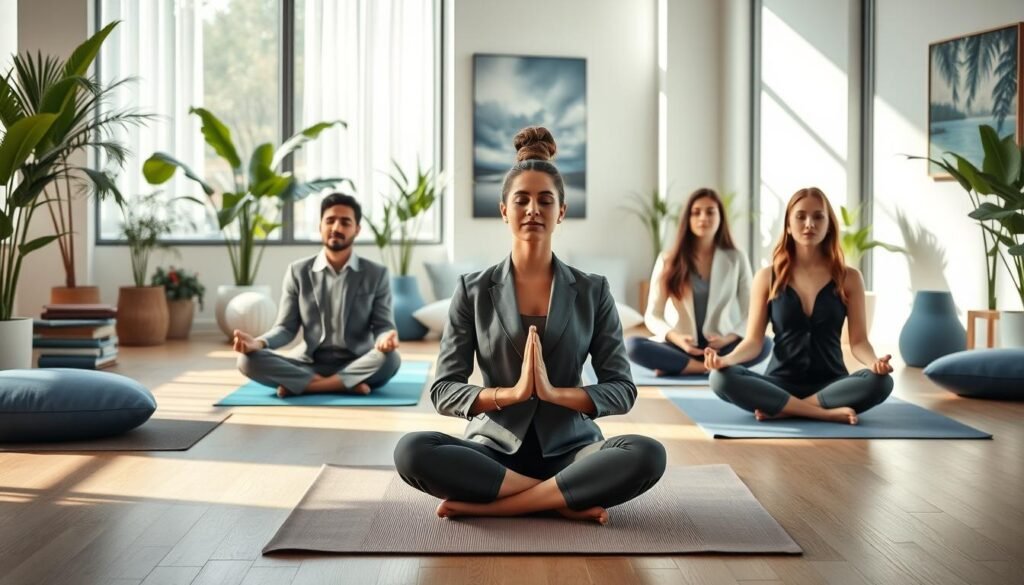
Living a Mindful Life: Integrating Meditation into Everyday Actions
Incorporating mindful practices into your daily actions can foster a deeper connection with your inner self. Raja Yoga can be practiced in various settings, such as at work, home, or during social interactions. By doing so, you can cultivate a sense of peace and clarity throughout your day.
At work, take a moment before sending an important email. Pause, remember yourself as a peaceful soul, and choose words that reflect clarity and respect. This simple act can transform your communication and strengthen relationships.
While walking or eating, use these moments for remembrance. Focus on the supreme soul and your connection to it. You can also create habit cues, like connecting meditation with daily tasks such as brushing your teeth or opening your laptop.
Emotional resilience is key. When you feel anger or attachment rising, name the emotion and return to a state of peace. Treat each person as a soul, bringing love and patience into your conversations while maintaining healthy boundaries.
Consider following a daily Murli teaching from the Brahma Kumaris as a behavioral experiment. This practice can enhance your spiritual discipline, much like Dadi Janki did at age 100. Reflect on whether your thoughts, words, and actions align with your chosen qualities at the end of each day.
| Practice | Setting | Benefit |
|---|---|---|
| Pause before emails | Work | Enhances clarity |
| Mindful walking | Daily life | Increases awareness |
| Daily Murli | Home | Strengthens discipline |
Envision a path that leads you to a profound understanding of your soul. Raja Yoga meditation invites you to recognize your true essence and develop a meaningful relationship with the Supreme Soul. This technique is designed to be open-eyed and accessible, fitting naturally into your daily life.
Start gently with just five minutes a day, focusing on one meaningful affirmation. Remember, this practice evolves gradually through consistent awareness, not through pressure to achieve perfection immediately. For structured support, consider exploring teachings from the Brahma Kumaris or relevant resources like .
Embrace this journey with patience and curiosity, and watch as your inner power unfolds.
FAQs
- What is Rajyoga meditation? It’s a practice focused on self-awareness and connecting with the Supreme Soul.
- Does it require chanting? No, it primarily uses visualization and remembrance.
- How can beginners start? Begin with five minutes of focused affirmation each day.
- Do my eyes remain open? Yes, this technique is practiced with eyes open.
- How often should I practice? Daily practice is encouraged for the best results.
FAQ
What is Rajyoga meditation?
Rajyoga meditation is a practice that focuses on connecting with the self and the Supreme Soul. It emphasizes inner peace, self-awareness, and the cultivation of virtues through meditation techniques.
How can I start practicing Rajyoga meditation?
You can begin by finding a quiet space, sitting comfortably, and focusing on your breath. Visualize a point of light representing your true self, and gradually shift your thoughts towards feelings of love and peace.
What are the benefits of Rajyoga meditation?
Practicing Rajyoga meditation can lead to improved emotional well-being, reduced stress, enhanced focus, and a deeper connection with your inner self. It promotes a sense of bliss and clarity in daily life.
How often should I meditate?
Ideally, you should aim to meditate daily, even if just for a few minutes. Consistency is key to experiencing the full benefits of this practice.
Can Rajyoga meditation help with stress management?
Yes, Rajyoga meditation is particularly effective for stress management. It helps calm the mind, promotes relaxation, and encourages a positive mindset, making it easier to handle life’s challenges.
What is the role of the Supreme Soul in Rajyoga meditation?
The Supreme Soul is viewed as the ultimate source of peace and love. In Rajyoga meditation, connecting with the Supreme Soul helps you tap into your original qualities and enhances your meditation experience.
Are there any specific techniques I should follow?
Yes, you can use techniques such as visualization, affirmations, and mindful breathing. These methods help deepen your practice and reinforce positive thoughts and feelings.
How can I integrate meditation into my daily life?
You can integrate meditation by setting aside specific times for practice, using reminders, and incorporating mindfulness into daily activities like walking, eating, or even working.