
Short Positive Affirmations You Can Use Every Day
Positive affirmations are simple yet powerful phrases that can transform your mindset. These easy-to-remember words can be placed on a wall, a phone sticker, or even a journal page. They serve as gentle reminders to focus on the good in your life.
This article will explore various themes such as confidence, calm, gratitude, and self-care. While these phrases can uplift your spirits, they are not a magic solution to every challenge. Instead, think of them as tools to help you navigate daily life.
For instance, you might say, “I am enough,” or “I am capable.” These affirmations can enhance your mental health and complement broader self-care practices. Remember, it’s essential to seek professional support for serious concerns.
Choose a phrase that resonates with you, repeat it at a consistent time, and feel free to adjust it as your needs change. This practice can create a sense of peace and positivity in your day-to-day life.
Key Takeaways
- Positive affirmations are simple phrases that can boost your mindset.
- Use them as reminders to focus on positivity and self-love.
- Examples include “I am worthy” and “I trust myself.”
- Daily repetition can enhance mental health and well-being.
- Adjust your affirmations to fit your changing needs.
Key Takeaways for Daily Positivity
Affirmations are powerful tools that can reshape your perspective. They are short, encouraging statements that validate your values and intentions. By incorporating phrases like “I trust myself” or “I am worthy,” you can guide your thoughts in a positive direction.
Why do these phrases work? Regular practice of affirmations can reduce harmful stress and enhance your mental health. Oludara Adeeyo, LCSW, describes them as a mental fitness exercise that fosters confidence and joy.
Here are some key takeaways:
- Choose words that resonate with you personally.
- Repeat your affirmations consistently, ideally daily.
- Pair your affirmations with practical actions to reinforce their impact.
Remember, while affirmations can support a healthier mindset, they are not a cure-all. For persistent mental health concerns, seeking professional care is essential. To learn more about building positive habits, check out this article.
The Impact of Short Affirmations on Mental Health
Daily phrases can have a profound effect on your mental well-being. These positive statements can enhance your self-esteem and help reduce feelings of stress and anxiety. When you repeat affirmations like “I am proud of who I am becoming,” you can challenge negative comparisons and foster a sense of confidence.
Moreover, calming phrases can serve as a momentary pause in stressful situations. Taking a deep breath and focusing on a manageable next step can help you regain control. It’s important to remember that these affirmations acknowledge difficult feelings without forcing false happiness.
Here’s a simple two-minute exercise you can try:
- Name the feeling you are experiencing.
- Breathe slowly and deeply.
- Repeat a believable affirmation.
- Choose one supportive action to take.
Incorporating daily affirmations into your routine can help you cultivate a positive mindset. For more strategies on managing stress,
| Benefits of Affirmations | Impact on Mental Health | Example Affirmation |
|---|---|---|
| Boosts Self-Esteem | Increases confidence and resilience | I am enough |
| Reduces Stress | Lessens worry and anxiety | I am calm and in control |
| Improves Mood | Enhances feelings of joy and positivity | I choose happiness today |
How to Incorporate Daily Affirmations Into Your Routine
Incorporating affirmations into your daily life can set a positive tone for your day. You can practice affirmations during specific moments, such as in the morning or while on the go. This helps to reinforce a mindset of peace and happiness.
Start your day with a morning affirmation. For example, choose a phrase like “I am ready” and repeat it while brushing your teeth. This simple act can kickstart your mindset for the day ahead.
Here’s a table to guide you on where and when to use affirmations:
| Situation | Affirmation | Action |
|---|---|---|
| Commuting | I always make it through these tough moments | Save in phone Notes app |
| Desk Work | I am capable of achieving my goals | Repeat silently |
| Bedtime | I am grateful for today | Write in a journal |
| Difficult Conversations | I approach challenges with love | Speak aloud before the meeting |
To make your practice easier, set a phone notification or write reminders on your mirror. Choose the method that feels most authentic to you, whether it’s speaking aloud, repeating silently, or writing it down.
For more tips on creating a morning routine, check out this article. Integrating affirmations into your daily practice can lead to significant benefits for your mental health and overall well-being.
Using short affirmations to Overcome Negative Thoughts
Embracing uplifting phrases can create a pathway to a more positive mindset. Negative self-talk often leads to a cycle of stress and anxiety. One harsh thought can spiral into more negativity, affecting your outlook on life.
To break this cycle, try a three-step reframe:
- Identify the original statement: Recognize the negative thought.
- Validate the underlying feeling: Acknowledge that it’s okay to feel this way.
- Replace the judgment: Formulate a believable next step.
For example, change “I always mess everything up” to “I made a mistake, and I can learn what to try differently next time.” This shift allows for growth rather than despair.
Consider a road-rage scenario. Instead of reacting impulsively, affirm, “How I choose to express my anger is my responsibility.” This creates space between the event and your response.
Remember, it’s okay to feel sad. “I am allowed to feel sad” recognizes your feelings without letting them define your entire day. Pair these reframes with actions like taking a walk or seeking support.
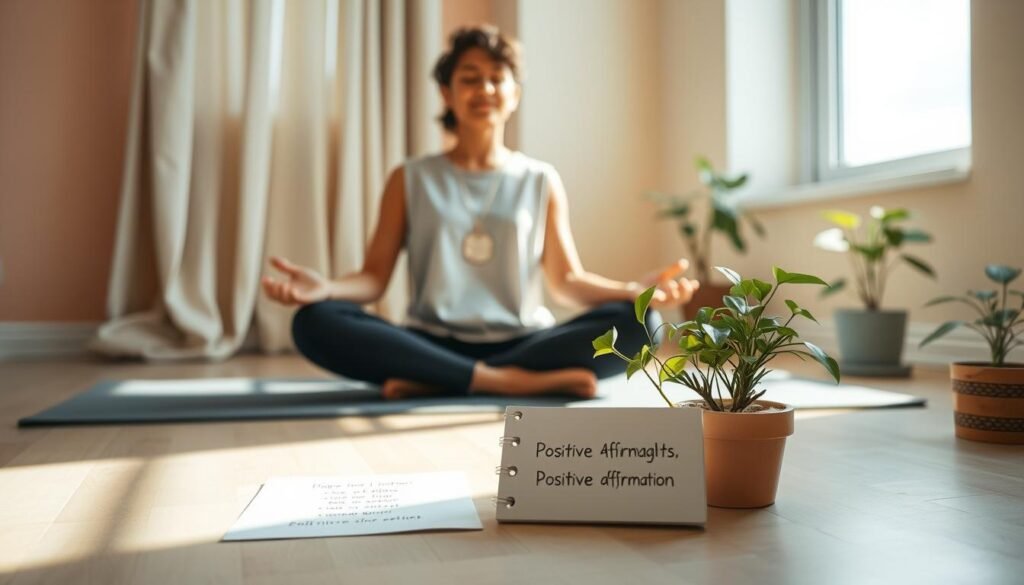
Tips for Crafting Personalized Affirmations
Crafting personalized phrases can be a rewarding journey towards self-discovery. When you create affirmations that resonate with your values, they become more impactful. Here are some tips to help you write authentic and meaningful phrases.
Writing Authentic and Impactful Phrases
Start by writing in the present tense. Use specific language that reflects your true feelings. For example, instead of saying, “Everything will be perfect,” try “I can handle this next step.” This makes your phrases feel more connected to reality.
Consider using rhymes to make your affirmations easier to remember. A line like “My heart is light, my thoughts are bright” can be both catchy and uplifting.
Examples to Get You Started
Here are some examples organized by purpose:
- Confidence: “I trust myself.”
- Rest: “I give myself permission to slow down.”
- Health: “My needs are important and valid.”
- Gratitude: “Today is mine, a gift divine.”
- Personal Growth: “I give myself room to make mistakes and grow.”
Ask yourself what you need more of today: rest, courage, patience, clarity, connection, or permission to begin again. Testing one phrase for several days can help you determine what resonates best.
| Purpose | Example Phrase | Key Focus |
|---|---|---|
| Confidence | I am worthy of self-care | Self-acceptance |
| Health | I prioritize my well-being | Self-care |
| Growth | I embrace new challenges | Personal development |
By following these tips, you can create affirmations that truly reflect who you are. Remember, the key is to choose phrases that feel authentic and can be easily repeated. For more guidance on crafting personalized phrases, visit this .
Integrating Affirmations into Your Self-Care Practice
Integrating uplifting phrases into your self-care routine can significantly enhance your overall well-being. Affirmations serve as one small yet powerful component of a broader self-care strategy. They work best when combined with healthy habits like nourishing food, quality sleep, and supportive relationships.
Consider pairing the affirmation “I prioritize rest and relaxation” with specific actions, such as reducing screen time before bed or creating a calming evening environment. Similarly, when you say, “I listen to my body’s signals,” take a moment to check in on your hunger, fatigue, or hydration needs.
Using an affirmation before journaling, meditation, or stretching can help set a clear intention for your practice. Remember, these phrases are not a substitute for professional medical or mental health support, especially when symptoms interfere with daily functioning. For more insights on self-care routines,

Conclusion
The power of positive phrases lies in their ability to shift your mindset. The best phrases are authentic, easy to remember, and connect to your current needs. To build a practical habit, choose one phrase, repeat it at a consistent time, and link your words with action.
Regular practice may enhance resilience, mood, self-esteem, and reduce stress. Remember, these phrases complement—not replace—professional care, therapy, or supportive relationships. Take a moment to select a phrase like “I am ready,” write it where you can see it, and practice it today.
For further guidance, here are some frequently asked questions:
- How often should I repeat my phrases? Daily repetition is recommended for best results.
- Do these phrases work for anxiety? Many find them helpful, but results can vary.
- How can I make them believable? Use personal language that resonates with your experiences.
- Should I say them aloud? Speaking them aloud can enhance their impact.
- When should I seek professional support? If feelings persist or worsen, consider reaching out to a professional.
For more insights, explore this .
FAQ
What are affirmations?
Affirmations are positive statements that help you challenge and overcome negative thoughts. They can boost your confidence and improve your mindset.
How can I incorporate affirmations into my daily routine?
You can start your day with morning affirmations, write them down, or use reminders on your phone to practice throughout the day.
Can affirmations really help reduce stress and anxiety?
Yes, practicing affirmations can help shift your mindset, making it easier to manage stress and anxiety by promoting a more positive outlook.
How do I create personalized affirmations?
To craft personalized affirmations, focus on your goals and values. Write phrases that resonate with you and reflect what you want to achieve.
What are some examples of effective affirmations?
Examples include “I am capable of achieving my goals,” “I deserve love and happiness,” and “I am in control of my thoughts and feelings.”
How can I combine affirmations with other self-care practices?
You can integrate affirmations into meditation, journaling, or mindfulness exercises to enhance your overall self-care routine.