Positive Affirmations for Kids to Build Confidence and Self-Esteem
The messages your child hears can shape their self-worth and confidence. Positive phrases play a crucial role in helping them navigate daily challenges. These affirmations serve as a gentle reminder that they are capable and valued.
Short, uplifting phrases can effectively counter negative self-talk. They don’t ignore the difficulties in life but instead provide a supportive framework. A great resource is the from Cosmic Kids. These cards make practicing affirmations fun and engaging for both parents and teachers.
It’s important to set realistic expectations. Affirmations work best when combined with encouragement, patience, and strong relationships. In this article, you’ll find a practical list of age-appropriate phrases, routines, and creative tools to help your child practice these positive thoughts consistently.
Key Takeaways
- Positive messages influence a child’s self-esteem and resilience.
- Short phrases can help counter negative thoughts.
- Cosmic Kids offers a fun resource with Banana Cards.
- Affirmations should complement encouragement and support.
- This article provides practical tools for consistent practice.
Key Takeaways
The thoughts your child embraces play a crucial role in building their confidence. Affirmations are simple, positive statements that help shape a child’s mindset. Examples include, “I am brave” and “I am enough.” These phrases are present-tense and encourage children to see their strengths.
When repeated consistently, short phrases can help your child develop a more constructive inner voice. Just like exercise builds physical strength, affirmations can strengthen mental resilience over time. Confidence flourishes when children connect these phrases to real actions, like trying again or asking for help.
It’s important to note that while affirmations can support emotional and mental health, they should not replace professional care or attentive adult support. Start with one to three phrases, practice them daily, and let your child choose language that feels authentic to them.
What Are Positive Affirmations and Why They Matter?
Positive phrases are more than just words; they can reshape how a child views themselves and their world. Understanding the science behind these phrases is essential. According to Steele’s self-affirmation theory, identity is flexible. This means children can see themselves as good listeners, learners, or friends without needing to be perfect all the time.
Repetition plays a key role in this process. When children consistently hear positive statements, they build neural pathways in their brains. This can help replace negative self-talk with constructive thoughts. Over time, they learn to respond to challenges and mistakes with greater resilience.
Using affirmations like “My feelings matter” encourages kids to identify and discuss their emotions. This emotional skill is crucial for their overall health. For more insights on emotional regulation, check out this article on . Additionally, resources like Cosmic Kids Yoga’s mindfulness library can provide supportive practices to enhance their journey.
Daily Affirmations for Kids: Boosting Confidence and Self-Esteem
The words children hear daily can greatly influence their sense of self-worth. Empowering phrases can help them navigate life’s challenges with confidence. Here are some practical affirmations that you can share with your child:
- I am loved and appreciated.
- I am brave and strong.
- I can learn anything I want to learn.
- You are strong.
- You are creative.
- You can do hard things.
These phrases can be organized by purpose:
- Confidence: “I am brave and strong.”
- Kindness: “I treat others with kindness.”
- Emotional Regulation: “My feelings matter.”
- Learning: “Mistakes help me learn.”
- Perseverance: “I can handle challenges.”
- Friendship: “I am a good friend.”
Encourage your child to connect these affirmations with real actions. For example, praise their persistence when they try something difficult. This approach reinforces their belief in themselves and their abilities.
Customizing Affirmation Practices for Different Ages
The phrases children encounter regularly can mold their perceptions of themselves and their capabilities. Tailoring these positive messages to their developmental stage is essential. This ensures they resonate and support their growth.
Affirmations for Kindergarten and Early Elementary Kids
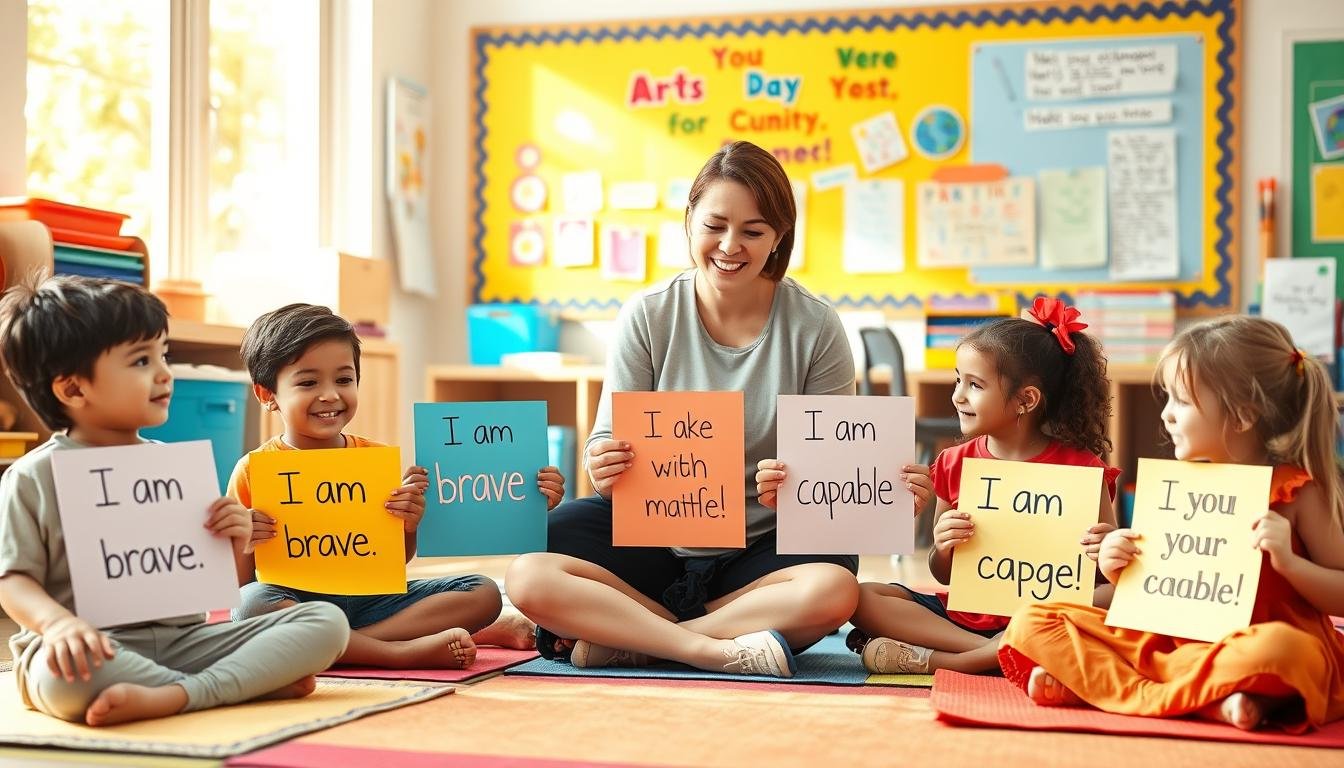
For children ages 3-6, brief phrases work best. Statements like “I am brave,” “I am safe and loved,” and “I can calm down” help them feel secure and confident.
Tailoring Affirmations for Tweens and Teens
As children grow, their needs change. For ages 9-12, focus on learning-oriented phrases like “Mistakes help me learn” and “I can solve problems.” For teens, use respectful language about goals and self-trust. Phrases such as “I give myself grace” can encourage a healthy mindset.
Revisiting these phrases as your child grows allows the practice to reflect their evolving challenges and emotional needs. This ongoing support can enhance their resilience and confidence.
Integrating Affirmations into Daily Routines
Incorporating positive phrases into your child’s daily life can be a game changer. Establishing routines around these uplifting messages can help reinforce their importance. Here are some effective ways to weave them into everyday activities.
Morning and Bedtime Rituals That Work
Start each morning with a chosen phrase, like “I am ready to learn.” Pair it with a simple breathing exercise to set a positive tone for the day. At bedtime, use quieter statements such as “I am loved” or “I can begin again tomorrow.” These moments provide comfort and reflection.
Simple Ways to Make Affirmations a Fun Family Practice
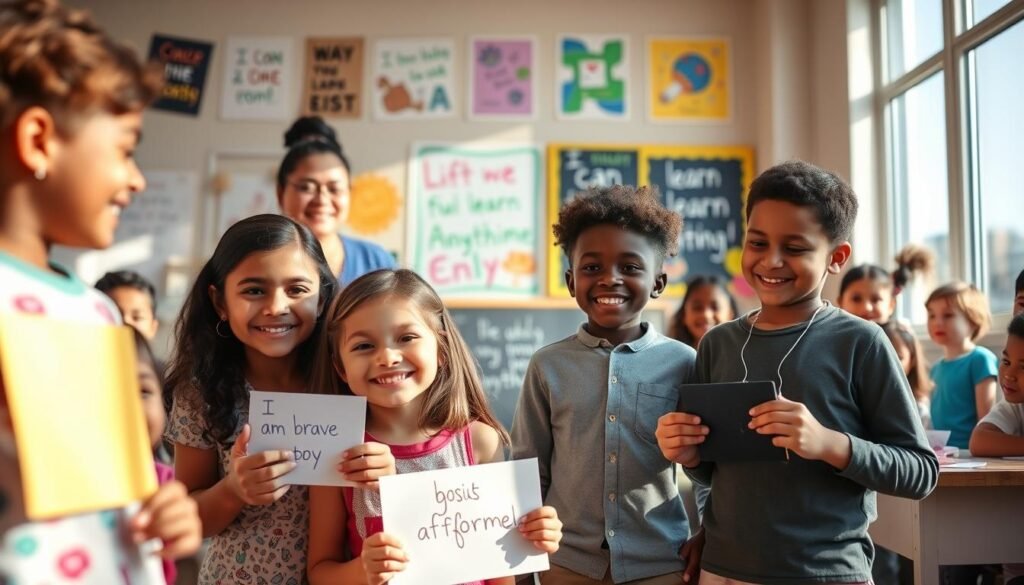
Display these phrases on mirrors, lunchboxes, or bedroom walls. This approach serves as gentle reminders without making it feel like a chore. Create a family routine where everyone picks one phrase and one action to demonstrate it throughout the day.
Encourage a calm atmosphere when practicing these phrases. Adults can use a natural voice and allow silent repetition if speaking aloud feels uncomfortable. This practice nurtures a supportive environment for growth.
Actionable Tips to Engage Children with Affirmations
Engaging your child with uplifting phrases can be a fun and creative process. Utilizing various tools and strategies makes repetition enjoyable and effective. Here are some engaging methods to help your child connect with these positive messages.
Creative Tools: Flashcards, Affirmation Cards, and Yoga Adventures
One great resource is Cosmic Kids’ 48 Banana Cards. These colorful cards provide a playful visual tool, allowing children to choose and repeat phrases easily. You can also transform these phrases into songs or rhymes, making repetition feel like a game rather than homework.
Consider incorporating themed yoga adventures from Cosmic Kids. These stories often address topics like staying calm and dealing with bullying, helping to connect confidence statements with movement and problem-solving.
Practical Strategies to Encourage Repetition and Belief
Encourage older children to maintain an affirmation journal. They can write one phrase daily and reflect on when it felt useful. This practice nurtures self-awareness and belief in their abilities.
It’s important to remember that belief develops gradually. Use phrases like “I am learning to be brave” when absolute statements feel daunting. This gentle approach can foster a more supportive environment for growth.
Conclusion
The way children perceive themselves is influenced by the messages they receive from their environment. Positive phrases give them simple language to notice their strengths and express their feelings. This practice helps them respond to challenges with self-trust.
Utilizing resources like the 48 affirmations and examples can help focus on themes such as courage, creativity, and kindness. Remember, the most effective approach is consistent and small. Choosing one phrase during breakfast or bedtime can make a big difference.
As adults, it’s essential to avoid forcing belief. Instead, pair these phrases with patient encouragement and emotional support. Lastly, “I am enough” can be a powerful starting point, but don’t hesitate to seek professional help when needed.
FAQ
What are some examples of positive phrases for children?
Empowering phrases include “I am brave,” “I can do hard things,” and “I am loved just as I am.” These help boost confidence and self-esteem.
How can affirmations help with emotional health?
They promote a positive mindset, reduce anxiety, and enhance resilience, allowing children to better cope with challenges.
At what age should I start using affirmations with my child?
You can start as early as preschool. Tailor the phrases to be age-appropriate and simple for them to understand.
How can I make affirmations a fun part of our routine?
Incorporate them into morning rituals or bedtime stories. You can also use games or creative activities to make it engaging.
Can affirmations help my child with social skills?
Yes, positive phrases can build confidence, helping children feel more comfortable in social situations and improve their relationships with peers.
How often should my child practice affirmations?
Consistency is key. Encourage daily practice, such as in the morning or before bed, to reinforce positive beliefs.
What if my child struggles to believe the affirmations?
Start with simple phrases that resonate with them. Gradually build up to more powerful affirmations as their confidence grows.