How to Make a Vision Board to Achieve Your Goals
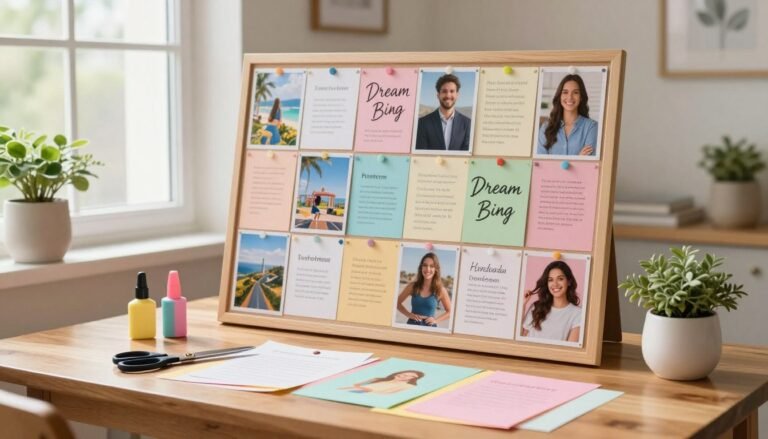
Learning how to make a vision board can be a simple, inspiring process that pulls your daily actions toward big dreams. Steve Jobs said a strong sight of purpose will pull you forward, and a curated collage or chart can do just that.
Stephanie Hampton reminds readers that any time is right for fresh focus. Spending a little time to create this tool turns fuzzy hopes into a clear plan. This post walks you through each step and shows how small choices add up to real progress this year.
Key Takeaways
- One short process aligns daily habits with long-term goals.
- A visible collage serves as a constant reminder of what matters.
- Start now—you don’t need to wait for the new year.
- Real clarity grows when you set clear images and words.
- This post guides each step so your plans feel doable.
Understanding the Power of Vision Boards
A well-crafted board acts like a compass, guiding daily habits toward meaningful goals. Jean Van’t Hul has spent over 20 years refining this process, blending creativity with practical self-development methods.
These tools work because they keep your intentions visible. When images and words sit where you can see them, your priorities stay clear. That steady reminder helps turn ideas into actions across the year.
Research and practice show that vision boards focus attention on core values. They create alignment between what matters and what you actually do. In that way, your plans begin to feel like a tangible reality.
- Focus: Boards center your intentions and daily choices.
- Commitment: A visual map helps you stay on track with goals.
- Agency: Building a board puts creative control back in your hands.
“When you create a board, you are steering your life with clear intent.”
Understanding why vision boards work is the first step toward using them as an effective tool for lasting personal change.
How to Make a Vision Board That Inspires You
A clear collage turns scattered hopes into visible targets you can act on every day. Use this section to name your core purpose and learn why visualization matters. Small, steady reminders help your mind stay aligned with long-term goals.
Defining Your Core Purpose
Start with a short list of life areas that matter: family, work, health, and relationships. Decide which areas need the most focus this year.
Pick words and images that match that purpose. Zakiya Larry reminds readers there are no strict rules—choose what sparks real inspiration for you and your family.
The Science of Visualization
Research supports visual practice. A 2025 study found that students using digital vision boards stayed more motivated and clarified intentions across the year.
The process trains your mind to notice opportunities that fit your dreams. Whether you use a computer or a poster at home, a visible version of your goals nudges behavior toward reality.
| Format | Visibility | Best for | Tip |
|---|---|---|---|
| Physical board | High in room | Daily visual reminders | Place near workspace |
| Digital board | Screensaver or app | Remote work, travel | Update images monthly |
| Hybrid | Both spaces | Flexible routines | Keep a short list of goals |
“There are no strict rules when you create layouts; find what inspires you.”
Reflecting on Your Goals and Intentions
Start by pausing and asking which goals truly matter this year. Stephanie Hampton recommends journaling as the first step. Writing helps you clear your mind and sort real intentions from noise.
Journaling Prompts for Clarity
Try short prompts that point you toward what feels honest and possible. Use these prompts before you place images on your board.
- What did the past year teach me about the people and things that support my growth?
- Which dreams keep coming back when I have quiet time?
- What three goals would change my life by next year?
| Prompt | Purpose | Next step |
|---|---|---|
| Reflect on supports | Spot key people, habits | List influences for the board |
| Name recurring dreams | Find true priorities | Choose imagery that matches |
| Set three goals | Create clear future plans | Write short intentions near images |
“Journaling helps ground your intentions so the board reflects your real self.”
Gathering Your Creative Materials
Collect meaningful photos, quotes, and clippings so your intentions feel personal and easy to revisit.
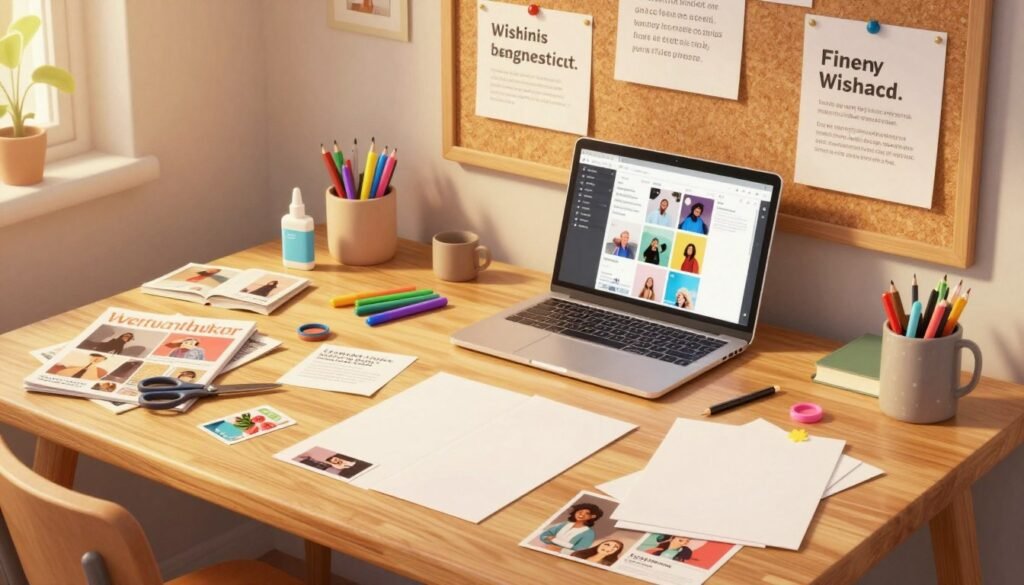
Stephanie Hampton suggests pulling magazines, family photos, and favorite quotes before you begin. This step makes the project reflective and true to your goals.
Whether you sit at home or use a computer, spend time searching for pictures of people, places, and things that match the life you want. Create a short list of must-have items; that list narrows your visual search and saves time.
Tip: Choose images that spark emotion. When pictures connect with feeling, the board becomes a clearer guide.
| Material | Source | Purpose |
|---|---|---|
| Magazines | Home or library | Find lifestyle and decor ideas |
| Photos | Personal albums or online | Represent family and milestones |
| Quotes & lists | Journals or web | Clarify goals and daily focus |
| Digital images | Computer searches | Easy to edit and share |
“Gathering materials is a fun way to prepare; it helps your future plans feel closer.”
Once your supplies and images are ready, you are set for the next step: arranging layout and composition for meaningful vision boards.
Designing Your Layout and Composition
Organize your collage by life areas, so every image and word has a clear role.
Categorizing Life Areas
Divide the board into zones for family, work, health, and personal growth. This keeps goals visible and balanced.
Label each zone simply. Use headers or colored borders so your mind spots priorities at a glance.
Selecting Impactful Imagery
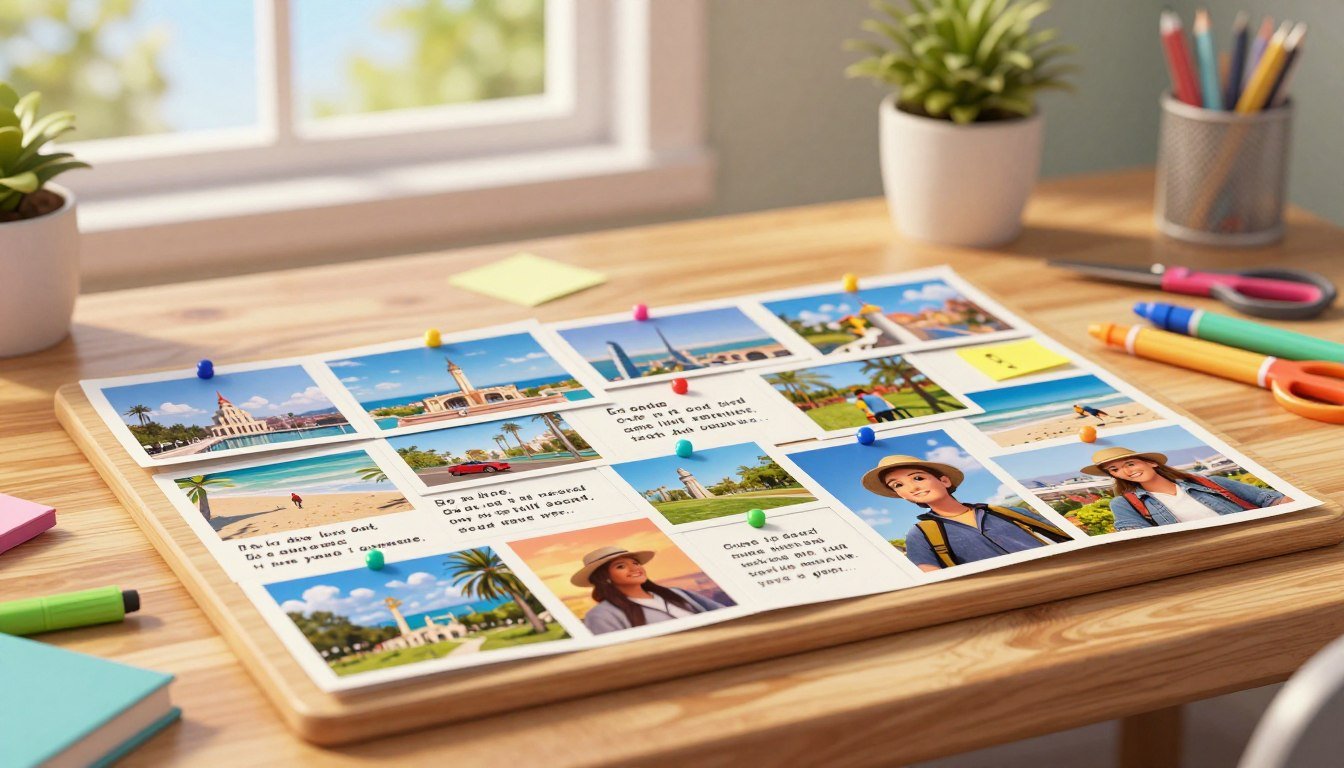
Choose pictures that stir feeling. Use magazines, personal photos, or computer images from Canva.
Pick images that match specific goals. For example, balance might show calm scenes and daily routines.
Incorporating Affirmations and Words
Place short, strong words near relevant images. Keep text concise: use phrases that prompt action and clarity.
Use affirmations as daily reminders. Change them over time as your priorities shift.
- Use Canva or similar tools for neat layout and drag-and-drop editing.
- Group similar images so each area reads as one idea.
- Limit text so pictures remain the main focus.
| Element | Purpose | Tip |
|---|---|---|
| Zones by life area | Balance goals across life | Label with headers or colors |
| Impactful images | Evoke emotion and clarity | Choose photos that feel real |
| Words & affirmations | Reinforce focus each day | Keep phrases short and bold |
“A clear layout helps your mind notice chances that match your goals.”
Choosing Between Physical and Digital Formats
Deciding between a tactile poster and a digital layout depends on whether you like hands-on craft or screen-based design.
Physical boards offer a tactile process. Use glue, scissors, magazine clippings, and a poster you can frame and hang in your home.
A framed board makes images and words part of daily life. Seeing that display often helps keep goals and dreams in focus.
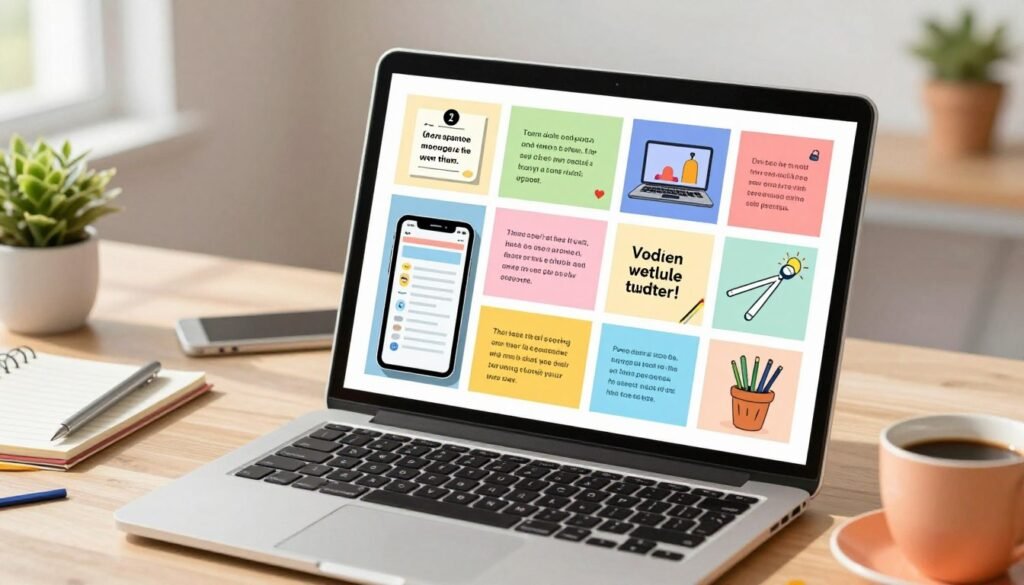
Digital versions live on your computer or phone. Use apps or simple photo tools to arrange images, then set the result as wallpaper.
Many people find a digital vision board is a convenient way to keep intentions front and center during busy days.
- Physical: tactile process, craft tools, frame for display.
- Digital: quick edits, phone wallpaper, accessible anywhere.
- Hybrid: print a favorite digital layout and place it in a frame.
| Format | Tools | Best use | Display |
|---|---|---|---|
| Physical poster | Glue, scissors, magazines | Hands-on crafting, emotional connection | Frame on wall at home |
| Digital version | Photo editor, apps, computer | Frequent travel, remote work | Phone or computer background |
| Hybrid | Print services, frame | Flexible routines, swap images often | Frame or digital backup |
“Both formats work because they keep your intentions in daily sight, turning ideas into small, steady actions.”
Tip: Pick the format that fits your routine and time. That way, you are more likely to use the process and keep your goals real.
Keeping Your Vision Front and Center
Keep your board visible each day so small choices add up toward big change. Place the display where you live or work, like a home office wall, so it meets your eyes every morning.
Updating Your Board Over Time
Change is normal. Zakiya Larry reminds readers not to fear replacing images as goals shift or get checked off. Swapping one photo for another keeps inspiration fresh.
If you feel like you’ve reached a goal, remove that image and add a new idea. Add short words or text when your intentions need sharper focus.
- Keep the display where people see it daily for steady motivation.
- Use a digital version or a framed poster if you travel or work remotely.
- Refresh images and items each quarter so the board mirrors your life and future plans.
“By keeping your goals front and center, you remind your mind of the reality you are working to create.”
Conclusion
Let this final note remind you that small steps build lasting change.
Creating a vision board can clarify your goals and keep your dreams close every day. Use simple images and short words that pull your focus toward what matters most in life.
This flexible tool works in physical and digital formats. Update the board when priorities shift, and replace images as you reach milestones.
Start by gathering one or two favorite photos or quotes, then arrange them so the display nudges action. With steady focus and tiny habits, your board becomes a practical map for long-term success.
FAQ
What is a vision board and why use one?
A vision board is a visual collage of images, words, and symbols that represent goals and intentions. It helps focus attention, build clarity, and maintain motivation by keeping desired outcomes visible each day.
When should I create a board?
Create one at the start of a new phase—like a year, career change, or after a milestone. Fresh starts and moments of reflection work best for setting clear priorities and direction.
What belongs on a board?
Include meaningful photos, magazine clippings, printed images from Pinterest or Unsplash, short affirmations, goal statements, and small symbols that trigger emotion and commitment for family, work, health, and finances.
Physical or digital — which format is better?
Both work. Physical boards offer tactile connection and visibility at home. Digital boards (Canva, Pinterest, or a desktop wallpaper) are portable and easy to update. Choose the format that you’ll engage with daily.
How often should I look at my board?
Review it every morning or at least weekly. Regular viewing reinforces intention, guides daily choices, and keeps momentum toward short- and long-term goals.
Can I update or change the board?
Yes. Refresh images and words as goals evolve. Rotate sections each quarter or year so the board stays relevant to current priorities and keeps your focus sharp.
How do I pick images that actually inspire results?
Choose photos that spark strong positive emotions and clearly represent your desired outcome—examples include lifestyle shots, people achieving goals, places you want to visit, and concrete representations of milestones like a diploma or business logo.
Should I include deadlines or action steps?
Add short, specific intentions and timeframes if they help you act. Keep the board primarily visual and emotional, and use a nearby planner or digital task list for detailed steps and timelines.
Can vision boards help with limiting beliefs?
Yes. Pair images with empowering affirmations and realistic examples of progress. Seeing consistent positive cues can shift mindset and reduce self-doubt over time.
What tools are useful for a digital version?
Use Canva, Pinterest, Google Slides, or Milanote to arrange images and text. Export a high-resolution file for desktop or phone backgrounds so your digital collage remains top of mind.
How do I involve family or a partner?
Create a shared family board for collective goals like travel, home projects, or financial milestones. Discuss priorities first, assign areas for each person, and display the finished board in a common space.
Can vision boards help with career goals?
Absolutely. Include company logos, role titles, certificates, networking cues, and images that represent professional growth. Combine with a concrete action plan to translate vision into promotions or new opportunities.
Is there a recommended size or display location?
Size depends on available space; a poster or corkboard works well. Display it where you spend time every day—near your desk, by the mirror, or as a phone wallpaper for frequent exposure.
How do I measure success from a board?
Track progress with monthly check-ins: note milestones achieved, habits formed, and mindset shifts. Use a journal or app to record wins and adjust visuals to reflect new targets.
What if I don’t feel motivated after making one?
Revisit your core purpose and ensure images align with what truly matters. Simplify the board, remove clutter, and add vivid, emotionally charged pictures. Small accountability steps with a friend can also reignite momentum.