
Gratitude Jar Ideas for Building a More Thankful Daily Routine
Have you ever felt overwhelmed by the busyness of life? It’s easy to overlook the small joys that make each day special. One simple way to shift your focus is by creating a gratitude jar. This practice allows you to collect meaningful moments instead of fixating on what feels missing.
Nicola Jane Hobbs, MSc, a certified yoga teacher and lifestyle coach, uses an ordinary glass container tied with a ribbon to hold her notes of appreciation. Unlike a traditional journal, this jar provides a physical reminder of positive experiences you can revisit. Whether it’s a delicious meal, a kind word from a friend, or a moment of peace, each note serves as a gentle nudge towards positivity.
Imagine reflecting on the good things in your life, even amidst challenges like a hectic schedule or financial worries. This jar can become a cherished space for recognizing the support from loved ones and the comforts of everyday life. You can start today with just paper, a pen, and any container you have at home.
Key Takeaways
- Collect meaningful observations to shift focus from what’s missing.
- Use a simple jar or box to store notes of appreciation.
- Each note serves as a physical reminder of positive experiences.
- Reflect on the good things, even during challenging times.
- Start with basic supplies you already have at home.
The Benefits of Daily Gratitude Practices
Life can often feel like a whirlwind, making it easy to miss the bright spots. Engaging in daily gratitude practices can help you recognize those moments. Research indicates that regularly noting what you appreciate leads to better emotional regulation. This is especially beneficial for children, as it can reduce tantrums and improve their social skills.
Moreover, practicing gratitude can enhance your self-esteem and resilience. It fosters empathy and kindness, strengthening your relationships with friends and family. Nicola Jane Hobbs shared that rereading her notes helped her appreciate the food, time, and people in her life, especially during tough times.
Noticing supportive friends and family encourages warmer communication. It opens the door for more intentional expressions of appreciation. Whether you choose a gratitude jar or a gratitude journal, both tools can support your emotional awareness over time.
| Benefit | Impact on Life | Research Findings |
|---|---|---|
| Emotional Regulation | Fewer tantrums in children | Improves emotional control |
| Social Skills | Stronger friendships | Increases empathy and kindness |
| Self-Esteem | Enhanced personal worth | Boosts confidence levels |
Getting Started with Your Gratitude Jar
The journey to cultivating appreciation begins with just a few basic supplies. You don’t need fancy items to create a meaningful gratitude jar. Here’s a simple list to get you started:
- One jar or box: This will hold your notes of appreciation.
- Paper: Use any type you have at home. Recommended sizes for children are 3-by-3-inch squares.
- A pen: This is essential for writing your notes.
- Optional decorations: Ribbons, stickers, or markers can add a personal touch.
One family even used a Star Wars Easter basket as their first container, proving that the symbolism matters more than the appearance.
To set up your jar, prepare your paper and writing supplies nearby. Encourage each family member to write one note of appreciation each day. Fold the notes and store them inside the jar. You can decorate the jar with your family colors or fun designs, but ensure the opening remains easy to use.
Make this a daily practice for at least 30 days. Choose a consistent time to reflect on the positive things in your life. This simple routine can make a big difference in how you view your days.
Innovative Gratitude Jar Ideas to Spark Daily Reflection
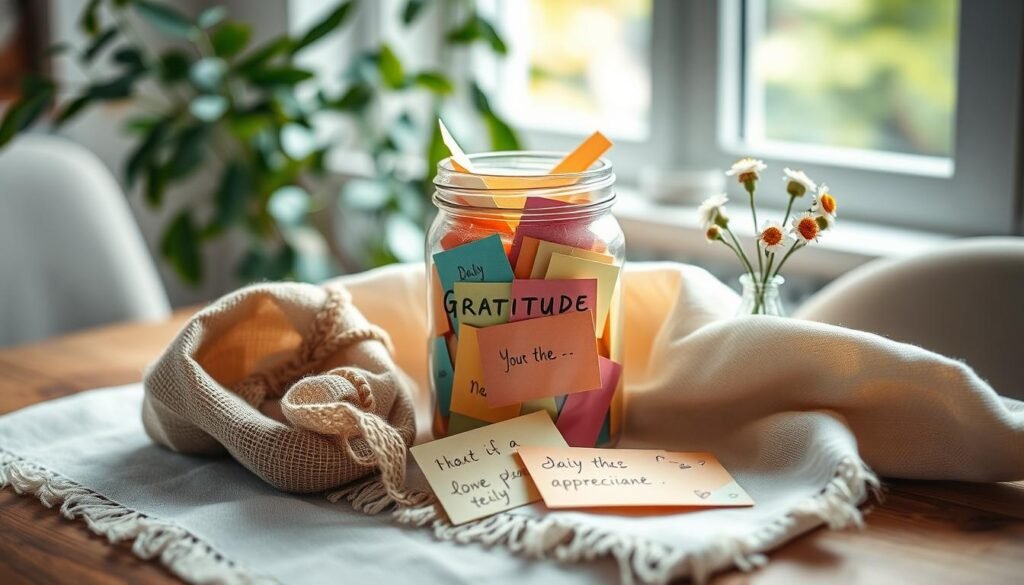
Finding ways to appreciate the little things can transform your daily routine. One effective method is the Give THANKS approach. This includes thinking, having an open mind, allowing yourself to feel grateful, noting your thoughts, keeping them safe, and sharing them with others.
To help you get started, consider these simple prompts: “What made you smile today?” or “What was something good that happened?” These questions can guide your reflections and make them more specific.
Here are some themes to explore in your notes:
- Nature: Appreciate a beautiful sunrise or the sound of rain.
- Kind people: Reflect on a stranger’s smile or a friend’s support.
- Comforting things: Recognize your favorite food or a cozy blanket.
- Memorable experiences: Recall a fun outing or a family gathering.
- Personal strengths: Acknowledge your resilience or creativity.
- Small wins: Celebrate completing a task or learning something new.
For those who may not enjoy writing, there are alternatives. You can draw a picture, dictate your thoughts, circle pre-drawn images, or use stickers to express your feelings.
When it comes to decorating your jar, think creatively! Use ribbons, markers, and stickers to make it visually appealing while keeping it practical for everyday use. Don’t forget to revisit your notes occasionally during the week. This way, your jar becomes an active reflection practice rather than just a storage place for notes.
Family-Focused Gratitude Jar Activities
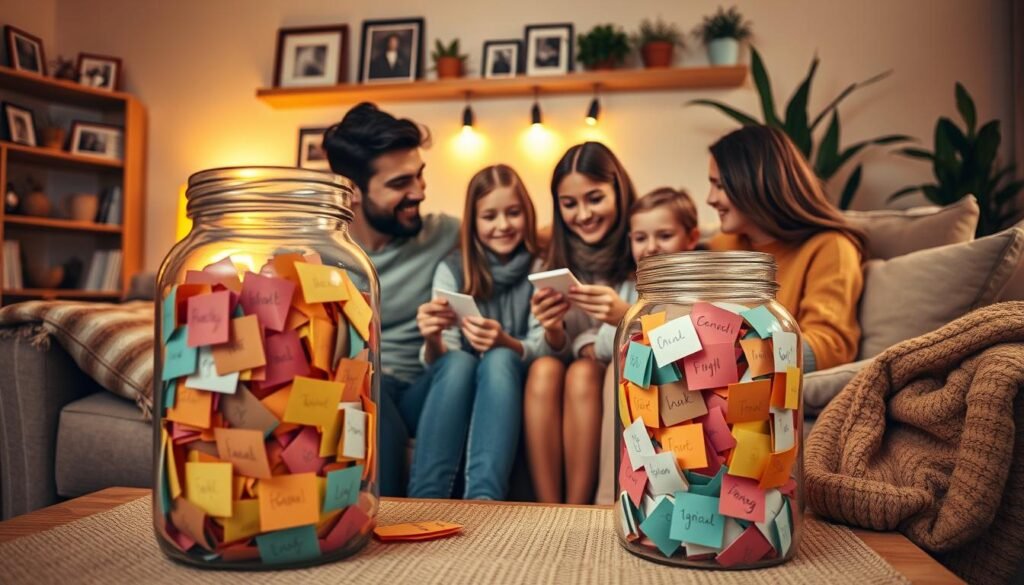
Creating a space for appreciation can transform how your family connects. This practice is a wonderful way to involve everyone, from toddlers to teens, in reflecting on the positive moments in life.
Start by inviting each family member to share one thing they appreciate. This could be about a person, a memory, or even a favorite toy. You can encourage children to express their feelings through drawing or using stickers if they find writing challenging.
Engaging Children in the Practice
For toddlers aged 2-4, keep it simple. They can draw one picture representing something they are thankful for. Preschoolers, ages 4-6, can dictate short sentences about their appreciations. School-age children, ages 6-12, might enjoy adding “because” explanations to their notes.
Adapting Ideas for Different Age Groups
Teens, ages 13 and older, can reflect on personal growth through challenges. To make it more fun, assign different colored paper for each family member. This helps reduce sibling competition and celebrates every contribution equally.
Consider turning your jar into a family activity during holidays. For instance, read a year’s worth of notes at Thanksgiving or set intentions for the New Year. Ask your children what made them smile today, and share your own answer to show that you are participating too.
| Age Group | Activity Type | Examples |
|---|---|---|
| Toddlers (2-4) | Drawing | One picture of something they like |
| Preschoolers (4-6) | Dictation | Short sentences about their day |
| School-age (6-12) | Writing | Notes with “because” explanations |
| Teens (13+) | Reflection | Growth through challenges |
For more tips on creating a meaningful practice, check out this that can help you get started today.
Tips for Maintaining a Consistent Gratitude Practice
Building a habit of reflection can enrich your daily experiences. To make this practice easier, connect it to existing routines. Consider incorporating it into your bedtime, dinner, or breakfast rituals. This connection will help you remember to engage in this positive activity.
It’s recommended to maintain this practice for at least 30 days. This allows enough time for it to become a familiar part of your life. If daily participation feels overwhelming, aim for three times a week instead. This can still provide meaningful benefits.
Set a reminder on your phone or create a weekly alert. This will prompt you to add one or two notes if you overlook the jar. Keeping the container visible and placing paper and pens nearby can reduce friction and encourage participation.
When inspiration strikes away from home, jot down your thoughts on your phone. Later, transfer them to the jar during your next routine. On challenging days, revisit your notes. Taking a deep breath before reading can offer perspective and emotional steadiness.
Conclusion
You have the power to shift your perspective and focus on the positives. Start with any container, a few slips of paper, and one honest appreciation. You don’t need a perfect setup or fancy supplies to begin.
Remember that Nicola Jane Hobbs started with a simple glass container, while another family found joy in using a Star Wars Easter basket. Flexibility is key; welcome drawings, dictated words, and stickers from all ages.
Establish a reliable routine, aim for 30 days, and adjust as needed. Let your container gather real experiences, from small comforts to supportive people. Add your first note today, and invite your family to notice what deserves appreciation in the next ordinary moment.
FAQ
What supplies do I need to create a gratitude jar?
You will need a jar or box, small pieces of paper, pens or markers, and optional decorations like stickers or ribbon to personalize your jar.
How often should I write in my gratitude jar?
Aim to write in your jar daily or weekly, depending on what feels right for you. Consistency helps reinforce the practice.
Can I involve my family in this activity?
Absolutely! Involving family members can make it a fun and engaging experience, allowing everyone to share their thoughts and feelings.
What should I write on the pieces of paper?
Write down anything you feel thankful for, whether it’s a kind gesture from a friend, a beautiful moment in nature, or a personal achievement.
How can I keep my gratitude practice fresh and exciting?
Try different themes or prompts each week, decorate your jar in new ways, or even share your notes with friends and family for added inspiration.
What are the mental health benefits of maintaining a gratitude practice?
Regularly reflecting on what you’re thankful for can improve your mood, reduce stress, and enhance your overall emotional well-being.
How can I adapt this practice for different age groups?
For younger children, use simple prompts or illustrations. For teens, encourage them to express their thoughts in creative ways, like poetry or art.