Practicing Gratitude: Simple Ways to Become More Thankful Every Day
Embracing a mindset of thankfulness can significantly enhance your life. This practical skill allows you to notice the ordinary goodness around you, fostering a steadier mood and increasing your overall happiness. By reflecting on your experiences, you can affirm the positive aspects of your life.
Consider setting aside a few moments each day to jot down three to five things you appreciate. Whether it’s a repaired dryer, blooming flowers, or a friend’s support, these reflections can shift your focus. Options like journaling, quick meditations, or simply appreciating one good thing can make this practice feel accessible.
While this approach can complement mental health care, it’s essential to remember that it shouldn’t replace professional support when needed. The insights shared here draw from respected researchers like Robert Emmons and Martin Seligman, providing a solid foundation for your journey toward a more thankful life.
Key Takeaways
- Gratitude helps you notice everyday goodness.
- Small practices can boost your mood and happiness.
- Reflecting on positive experiences can improve mental well-being.
- Accessible methods include journaling and quick meditations.
- Seek professional help when needed, as gratitude is not a substitute.
Introduction to Gratitude and Its Impact
Recognizing the value in everyday moments can profoundly influence your well-being. Gratitude is about noticing and acknowledging what feels meaningful, whether it’s a brief conversation or a significant achievement. According to Robert Emmons, gratitude has two key components: affirming the goodness in our lives and recognizing the contributions of others, nature, or even fate.
Shifting your focus can change your emotional perspective. For instance, instead of fixating on a flat tire, consider the supportive friends who help you or the ability to cover the repair costs. This shift not only enhances your mood but also links gratitude to the release of serotonin and dopamine, which can lower stress hormones.
Embracing small moments—like a cool breeze or a peaceful walk—can help integrate gratitude into your daily life. It’s these little things that often bring the most joy.
“Gratitude is not only the greatest of virtues but the parent of all others.” – Marcus Tullius Cicero
| Components of Gratitude | Description |
|---|---|
| Acknowledging Goodness | Recognizing positive aspects of life and experiences. |
| Recognizing Contributions | Understanding how others, nature, or fate contribute to our happiness. |
| Shifting Focus | Changing perspective from negatives to positives in daily situations. |
Understanding Practicing Gratitude and Its Benefits
A mindset focused on appreciation can transform your daily experiences. The effects of gratitude can be seen in both the short term and long term. In the short term, you may notice a calmer mood and a more positive outlook on life. These immediate emotional changes can uplift your spirits and improve your interactions with others.
Over time, practicing gratitude can lead to stronger resilience and healthier behaviors. Research indicates that individuals who engage in gratitude practices often experience better sleep, improved immune function, and increased optimism. These benefits contribute to overall mental health and well-being.
The How of Happiness suggests that a weekly gratitude practice is most effective. However, individual preferences may vary. Some may find daily practices beneficial, while others might prefer a few sessions a week or even monthly. A study by Dickens and DeSteno in 2016 linked daily gratitude with greater patience and less impulsivity.
It’s essential to remember that gratitude can support recovery from depression but should be used alongside professional treatment. Tracking your mood, sleep, and stress levels can help you notice the positive changes over time.
| Benefit Type | Short-Term Effects | Long-Term Effects |
|---|---|---|
| Mood | Calmer feelings | Stronger resilience |
| Health | Improved sleep | Better immune function |
| Relationships | Enhanced interactions | Deeper connections |
Daily Practices to Incorporate Gratitude Into Your Life
Cultivating a sense of appreciation can bring remarkable changes to your daily life. By integrating simple actions into your routine, you can start noticing the good things around you. It doesn’t have to be complicated; even small shifts can make a big difference.
One effective way to keep this practice fresh is through a gratitude journal. Here are some practical tips:
- Pause during a daily interaction to reflect on the specific help you received. Before thanking someone, think about how their support made a difference.
- Record three to five entries about ordinary or significant experiences. For example, instead of saying, “I’m grateful for my coworkers,” try “My coworkers brought soup when I was sick on Tuesday.” This adds depth to your reflections.
- Consider prompts like: What pleasant sensations did I experience today? Who made my day better? What unexpected kindness did I encounter?
- Write in your journal one to three times a week. This helps maintain freshness and prevents it from becoming a routine chore.
- Alternate between journaling, conversations, and creative expressions to keep your practice engaging.
By taking these steps, you can keep gratitude alive in your life, enhancing your overall well-being.
Mindful Exercises to Cultivate a Thankful Mindset
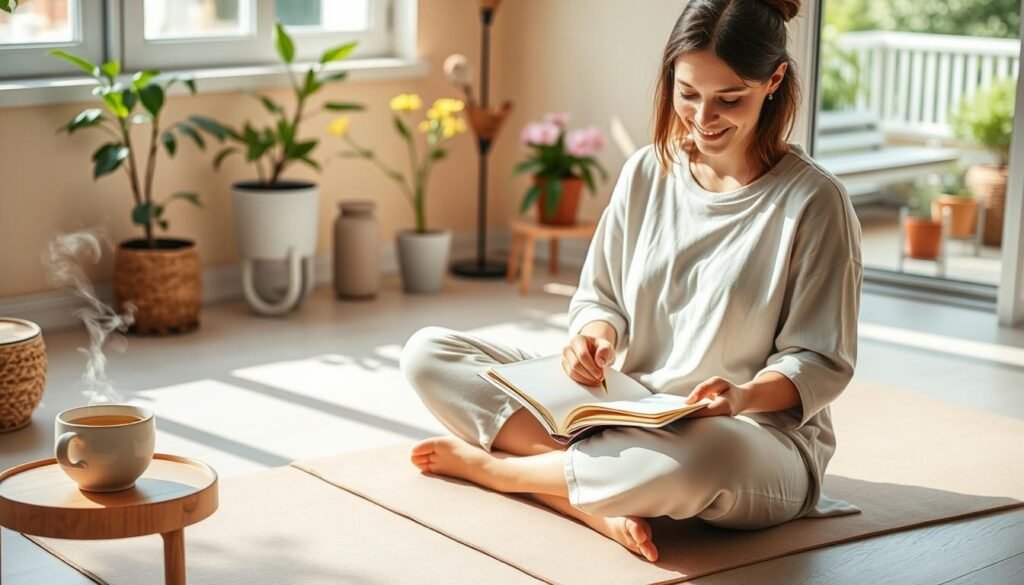
A thankful mindset opens the door to a more fulfilling life. One effective way to nurture this mindset is through gratitude meditation. This practice helps anchor your attention in the present, allowing you to appreciate the small moments that often go unnoticed.
Here’s a simple five-minute meditation you can try:
- Start with five slow minutes of breathing. Lower your shoulders and notice how your body feels.
- Choose a focus for your gratitude. Move through your senses: sight, scent, sound, touch, and taste.
- Reflect on what you can appreciate in the present moment. Remember, each sight or sound is unique.
- Consider the ordinary objects around you. Think about the design, labor, and effort that brought them into your life.
- If you prefer guided support, check out HelpGuide’s “Gratitude in Difficult Times” audio.
As you finish, carry a gentle attitude of appreciation into the rest of your day. You don’t need to force any particular emotion; just let it flow naturally.
| Gratitude Meditation Steps | Description |
|---|---|
| Breathing | Begin with deep breaths to relax and center yourself. |
| Focus | Choose a sensory focus for your gratitude. |
| Reflection | Appreciate the uniqueness of the moment. |
| Ordinary Objects | Consider the effort behind everyday items. |
| Guided Support | Utilize resources like HelpGuide for structured meditation. |
Expressing Gratitude to Enhance Relationships
Expressing appreciation can strengthen the bonds we share with others. Whether it’s a heartfelt letter or a simple face-to-face acknowledgment, these gestures can make a significant impact. Research by Martin Seligman and colleagues shows that gratitude visits can lead to immediate happiness gains and reduce feelings of depression.
Here are some effective ways to express gratitude:
- Writing Personal Gratitude Letters: Start by naming the person’s action and explaining its effect on you. Recall a specific memory that highlights their kindness and describe why it still matters.
- Sharing Appreciation Face-to-Face: When a letter feels too formal, consider delivering your thanks verbally. A sincere conversation can deepen connections.
- Thank Various People: Don’t limit your appreciation to close friends or family. Consider thanking teachers, coaches, or even postal carriers for their efforts.
Participants in gratitude studies experienced greater happiness and less depression immediately after expressing thanks. Even writing letters privately for just 15 minutes a week can have lasting benefits. So, take a moment to reach out and express gratitude—it can create meaningful emotional connections.
The Science Behind Gratitude and Mental Health
Research shows that embracing a thankful mindset can lead to significant mental health benefits. Studies have revealed that expressing appreciation can enhance mood and overall happiness. For instance, the 2015 paper by Fox, Kaplan, and the Damasios explored the neural correlates of gratitude, linking it to emotional regulation and social bonding.
In a 2021 meta-analysis by Cregg and Cheavens, researchers found that gratitude interventions could help reduce symptoms of depression and anxiety. However, it’s essential to remember that while these studies highlight promising effects, they do not guarantee the same outcomes for everyone.
Gratitude may also influence physical health. Research from Wood, Joseph, Lloyd, and Atkins in 2009 suggested that thinking gratefully before sleep could improve sleep quality. More recent findings from Altier and colleagues in 2025 linked gratitude with reduced sleep disturbances and psychological distress.
| Research Findings | Impacts |
|---|---|
| Fox et al. (2015) | Gratitude linked to emotional regulation and social bonding. |
| Cregg & Cheavens (2021) | Gratitude interventions reduce depression and anxiety symptoms. |
| Wood et al. (2009) | Grateful thoughts may enhance sleep quality. |
| Altier et al. (2025) | Gratitude associated with better sleep and reduced psychological distress. |
These findings suggest that gratitude can positively affect stress levels, cardiovascular health, and immune function. Yet, it’s crucial to seek professional help for persistent mental health issues. Self-guided practices are beneficial but should complement qualified support.
Overcoming Barriers to Feeling Thankful
Addressing the hurdles to appreciation can help you cultivate a brighter outlook. Many factors can make it challenging to feel thankful, such as negativity bias. This bias often causes unpleasant experiences, like a disappointing email, to overshadow positive interactions.
Common barriers include:
- Envy: Comparing yourself to others can diminish your ability to appreciate what you have.
- Materialism: Focusing on possessions can distract from the simple joys in life.
- Cynicism: Assuming that people expect something in return can cloud your view of their kindness.
- Stress and Depression: These emotions can make it hard to notice the good things around you.
To combat these challenges, try reframing your thoughts. Ask yourself if you can recognize a helpful action without expecting anything back. Additionally, practice subtraction by imagining life without a supportive friend or a reliable home. This can help you see what remains valuable.
On tough days, focus on one sensory detail, like the taste of good food or the comfort of a pet’s presence. Remember, gradual changes can lead to a more thankful mindset over time. As Dickens and DeSteno found in 2016, daily gratitude can foster patience and emotional flexibility.
Creative Ways to Practice Gratitude
Finding new ways to express appreciation can add depth to your daily life. Engaging in artistic practices can help you experience moments of thankfulness more vividly. Anaïs Nin once said that writing heightens awareness, allowing you to savor experiences both in the moment and through reflection.
Consider exploring visual journaling as a method to capture your gratitude. You might photograph a favorite park, create a collage of supportive people, or paint a watercolor of a meaningful scene. These creative outlets can enrich your gratitude journal and make your reflections more engaging.
Artistic Expressions and Visual Journaling
Artistic expressions can vary widely. You could try a one-thing practice by identifying one overlooked detail each day, such as a comfortable chair or the morning light. This practice encourages you to appreciate the small joys that might otherwise go unnoticed.
Daily Reflection Prompts and “One Thing” Practices
Rotate prompts that focus on your senses, unexpected surprises, or past challenges. This variety can keep your reflections fresh and meaningful. For those who prefer not to write traditionally, consider using a private sketchbook, voice memo, or even an uplifting social media post to share your appreciation.
Remember to take time savoring pleasant moments instead of just compiling a long list. Quality over quantity can deepen your experience of gratitude.
Leveraging Internal and External Resources
Utilizing both internal and external resources can greatly enhance your journey toward appreciation. By tapping into various supports, you can deepen your understanding of gratitude and its many benefits.
For instance, HelpGuide offers a guided audio meditation called “Gratitude in Difficult Times,” which can help you cultivate a thankful mindset even during challenging moments. Additionally, exploring related articles on BetterLifeAtlas can provide insights into mindfulness, self-esteem, and social support.
Related BetterLifeAtlas Articles to Explore
- Mindfulness Techniques
- Building Self-Esteem
- Social Support for Stress Relief
Curated Research and External Links for Further Reading
Research shows that gratitude can significantly impact mental health. For example, the American Psychological Association published “A Grateful Heart Is a Healthier Heart,” which highlights the health benefits of appreciation. Furthermore, the study “Neural Correlates of Gratitude” in Frontiers in Psychology explores how gratitude affects our brain functions.
For those interested in more recent findings, check out Cregg and Cheavens’s 2021 meta-analysis in the Journal of Happiness Studies, which discusses gratitude interventions, and Altier’s 2025 study in Frontiers in Sleep about gratitude’s impact on sleep quality.
Lastly, if you’re looking for professional support, consider BetterHelp, an online therapy service that connects you with licensed therapists to help you navigate your emotional landscape.

Customizing Your Gratitude Practice for Your Lifestyle
Tailoring your appreciation practice to fit your lifestyle can enhance its effectiveness. Finding a routine that resonates with you is essential for making gratitude a lasting part of your life.
Start with a manageable schedule. You might choose to reflect on your day every Sunday evening, or set aside three short sessions during the week. Alternatively, consider a daily pause after lunch to acknowledge the good things around you.
The How of Happiness suggests that a weekly practice is generally the most effective. However, your personal results may vary. Some may thrive with daily reflections, while others find joy in practicing two times a month.
Match your method to your personality. You could opt for writing, contemplation, or even creative expressions like photography or watercolor. This variety keeps your practice fresh and engaging.
Additionally, vary your focus. Explore relationships, work, or the beauty in your surroundings. This helps maintain meaning and prevents your routine from becoming stale.
After two or three weeks, review your practice. Ask yourself if it supports your happiness, health habits, or connection with others. If it feels forced, consider adjusting the frequency or switching methods instead of abandoning gratitude altogether.
Conclusion
Every small step you take toward appreciation can lead to a brighter outlook. Start today by naming one good thing, writing a specific journal entry, or thanking a supportive person. Research by Robert Emmons and Martin Seligman, along with studies from 2009 to 2025, supports gratitude as a promising practice for well-being.
Choose a routine that fits your life, whether it’s a weekly letter, a sensory meditation, or a brief daily reflection. Let your practice evolve across family, friends, work, health, and those easy-to-overlook moments. Keep expectations gentle, as this approach may support mood, relationships, sleep, and mental health, but won’t eliminate depression or difficult circumstances.
If anxiety, depression, or persistent distress interferes with your daily functioning, consider speaking with a licensed mental health professional. Embracing these practices can enrich your life and strengthen your connections with others.
FAQ
What are some simple ways to practice gratitude daily?
You can start by keeping a gratitude journal, where you write down one thing you’re thankful for each day. Other methods include sharing appreciation with friends or family and reflecting on positive moments before bed.
How does gratitude impact mental health?
Research shows that expressing appreciation can reduce feelings of depression and anxiety. It helps improve mood and enhances overall well-being by shifting focus from negative to positive aspects of life.
Can gratitude really improve my relationships?
Yes! Expressing gratitude can strengthen your connections with others. Writing personal letters of appreciation or simply saying thank you can deepen bonds and foster a supportive environment.
What is the best way to start a gratitude journal?
Begin by setting aside a few minutes each day to write down one or two things you’re grateful for. It can be as simple as a good meal or a kind gesture from a friend. Consistency is key!
Are there specific exercises to cultivate gratitude?
Yes, gratitude meditation is one effective technique. It involves focusing on things you appreciate in your life, which can help create a more thankful mindset over time.
How can I overcome feelings of negativity to practice gratitude?
Start by identifying negative thoughts and consciously reframing them. Instead of focusing on what’s wrong, try to find something positive in every situation, no matter how small.
What are some creative ways to express gratitude?
You can use artistic expressions like drawing or painting to represent what you’re thankful for. Visual journaling or using daily reflection prompts can also enhance your gratitude practice.
How often should I practice gratitude?
It’s best to find a frequency that fits your lifestyle. Some people benefit from daily practices, while others may prefer weekly reflections. The important thing is to make it a regular part of your routine.