
Gratitude Activities for Kids That Make Thankfulness Fun
Gratitude is all about noticing and appreciating the good things in our lives. It’s not just about saying “thank you” but truly feeling thankful for the positive experiences and relationships we have. However, children often need intentional practice to develop this mindset. Gratitude is a skill shaped through repeated experiences, and not every child automatically understands it.
As a parent or caregiver, you can introduce simple yet effective ways to practice gratitude. Activities like scavenger hunts, collages, or journaling can be great starting points. These options allow children to express their feelings creatively, whether through spoken words, drawings, or writing.
Engaging in these practices can help children feel happier and less stressed. It’s important to remember that while these activities are beneficial, they should complement, not replace, professional support when needed. A child can begin with small observations, like appreciating a favorite stuffed animal or a visit from a grandparent.
Key Takeaways
- Gratitude involves appreciating positive experiences and relationships.
- Children may need help to develop a gratitude mindset.
- Simple activities can help teach gratitude effectively.
- Practicing gratitude can enhance happiness and reduce stress.
- Start with small observations to build a gratitude habit.
Understanding the Importance of Gratitude for Kids
Recognizing and valuing the positive aspects of life can transform a child’s outlook. Practicing appreciation is not just a nice gesture; it can lead to lasting happiness. Research shows that children who regularly engage in gratitude practices tend to feel more connected and joyful.
According to Harvard Health, gratitude is linked to greater happiness. It encourages kids to focus on the good things in their lives, fostering a positive mindset. The Anxiety & Depression Association of America notes that gratitude can improve social connections, enhance sleep quality, and even reduce suicide risk.
Furthermore, a 2022 study published in the Journal of Applied Psychology explored how mindfulness and gratitude are intertwined. It highlighted that these practices can lead to increased empathy and kindness in children. Simple actions, like writing kind notes or helping with homework, can make appreciation visible in a child’s everyday life.
Foundational Steps for Teaching Gratitude
Encouraging children to recognize what they cherish can create a foundation for lifelong happiness. Start by choosing age-appropriate methods. For younger children, consider the Thankful Tree, where they can draw leaves or hearts representing what they appreciate. For those aged five and older, the Thankful ABC activity can be engaging, as they list things they are thankful for from A to Z.
As children reach around age six, they can begin gratitude journaling. This can involve writing one to three things they appreciate each day. If they struggle, offer prompts to guide their thoughts. Remember, the goal is to make this a fun and manageable ritual.
Modeling appreciation is vital. When you name a helpful person or a comforting place, it encourages children to do the same. Keep these daily practices brief and interactive, allowing children to express gratitude through spoken words, drawings, or simple notes. Accept all forms of expression, making it easier for them to share their feelings.
- Use drawings for younger children, while older ones can write lists.
- Keep practices short to encourage repetition.
- Accept various forms of communication, from gestures to writing.
Creative Crafts to Foster Thankfulness
Crafting can be a wonderful way for children to show what they value. Here are some engaging ideas that encourage creativity while practicing gratitude.
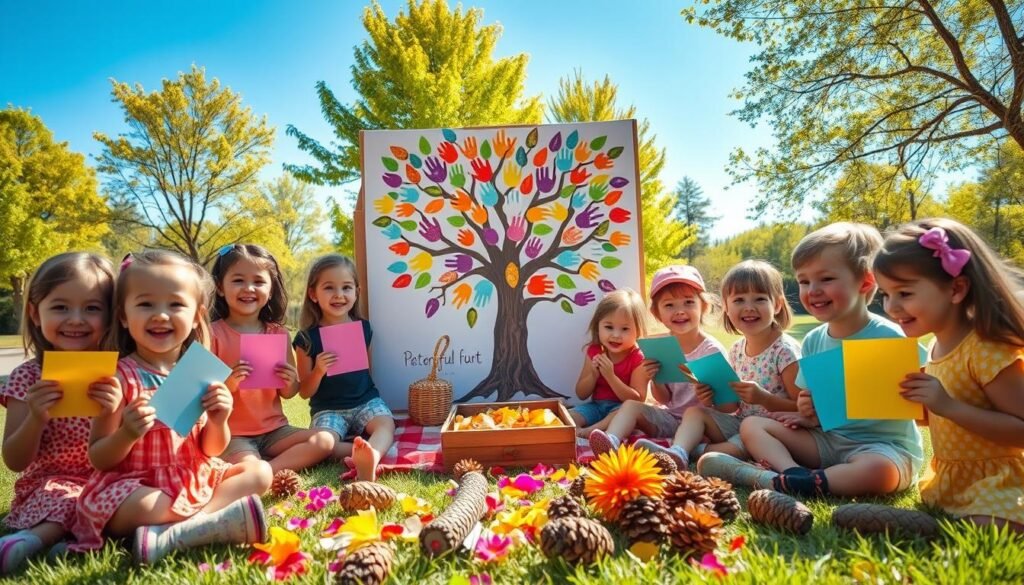
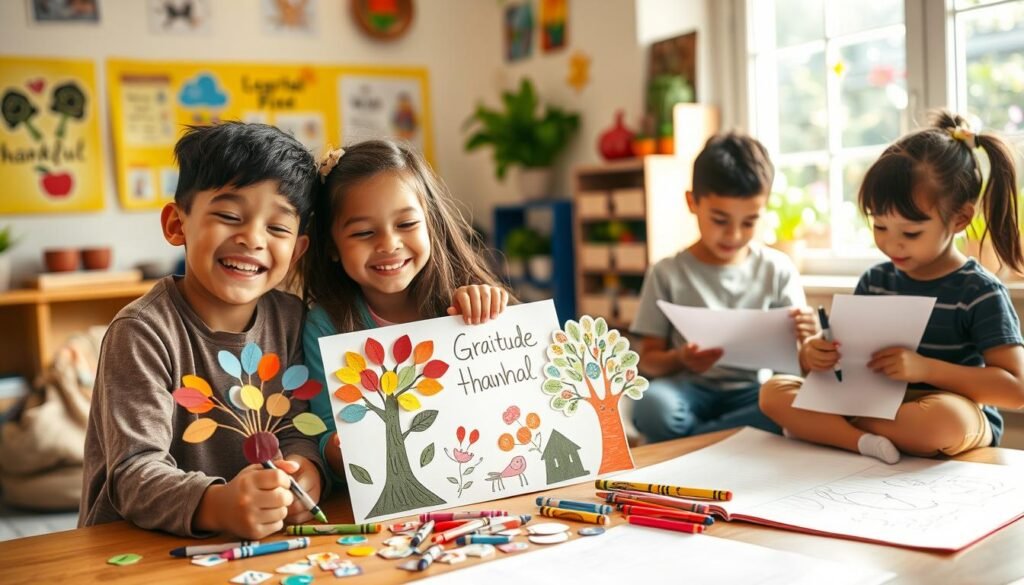
Start with the Thankful Tree. Children aged 5-12 can cut colorful leaves from construction paper. They can write or draw what they appreciate on each leaf and attach them to a large sheet of paper, creating a beautiful display of gratitude.
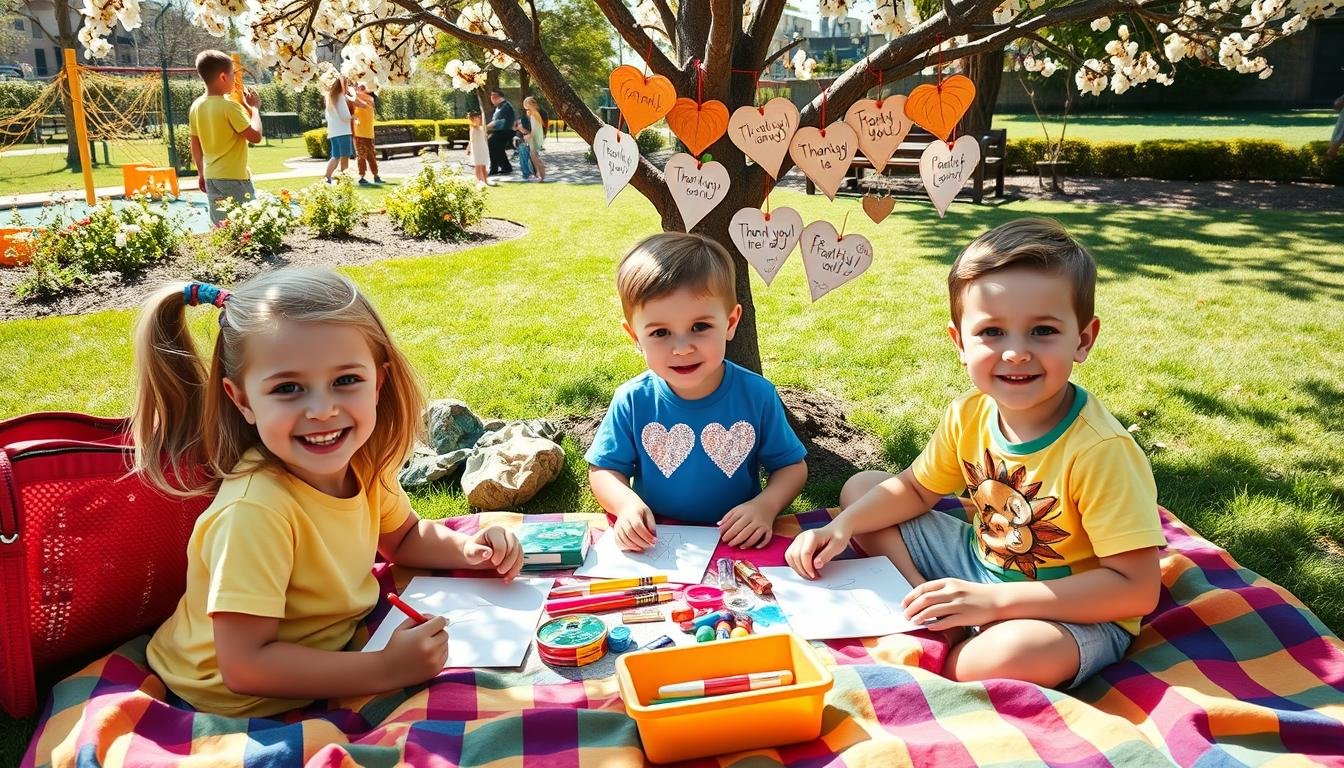
Another fun project is the Thankful Hearts. Kids can create heart-shaped cutouts from construction paper. Each child adds one meaningful observation, turning these hearts into a family or classroom display.
For a more open-ended project, consider a gratitude collage. Using magazine pictures, handwritten words, and drawings, children can create a collage that represents their feelings. There’s no right or wrong way to arrange it, making it a great way to express themselves.
Lastly, pairing a handmade card with a specific message for a grandparent, neighbor, or teacher can be a lovely gesture. These crafts not only help children practice gratitude but also foster connections with others.
| Craft Idea | Materials Needed | Instructions |
|---|---|---|
| Thankful Tree | Construction paper, scissors, markers, large sheet of paper | Cut leaves, write/draw appreciation, attach to the tree. |
| Thankful Hearts | Construction paper, scissors, decorative materials | Cut hearts, write observations, display on poster board. |
| Gratitude Collage | Magazines, scissors, glue, decorations | Cut out images/words, arrange them creatively. |
For more creative art projects, explore BetterLifeAtlas’ resources to keep the crafting spirit alive!
Interactive Gratitude Games and Scavenger Hunts
Finding joy in the little things can be a powerful lesson for children. Engaging them in interactive games can make practicing thankfulness fun and memorable. One exciting option is the Gratitude Game, which requires simple materials like popsicle sticks, markers, and a jar.
To set up the game, write prompts on the popsicle sticks. Place them in a container jar and invite children ages 6-12 to draw one stick at a time. Suggested prompts include naming a person they appreciate, describing something beautiful in nature, or identifying a personal skill or talent.
Scavenger Hunt Ideas for Every Age
Scavenger hunts are another great way to explore gratitude. Suitable for children ages 4 and older, these hunts can be structured with a checklist to find various objects, sounds, or colors. Encourage kids to explain why each discovery matters, fostering deeper reflection.
For indoor fun, consider a rainy day hunt. Children can look for a soft blanket, a favorite book, or evidence of kindness, like a note left by a family member. This approach not only makes the activity enjoyable but also reinforces the importance of appreciation.
| Activity | Age Group | Materials Needed |
|---|---|---|
| Gratitude Game | 6-12 | Popsicle sticks, markers, jar |
| Scavenger Hunt | 4+ | Checklist, pencil, camera (optional) |
Mindfulness and Gratitude Practices
Encouraging children to be mindful of their environment can enhance their appreciation for life’s little joys. One wonderful way to practice this is through gratitude walks. Suitable for children ages 4 and older, these walks invite kids to notice one sound, sight, smell, texture, or temperature they appreciate.
As they stroll, explain that sensory awareness helps them value experiences like warm sunlight, bird songs, or a soft blanket. This practice not only fosters gratitude but also connects them to the world around them.
Integrating Yoga and Meditation
Another engaging option is gratitude yoga, recommended for children approximately ages 5-11. Introduce gentle breathing and simple movements in a spacious area with age-appropriate mats. These activities can create a calming environment where kids can reflect on what they appreciate.
Research, such as the 2022 Sawyer study, shows that mindfulness practices can enhance positive feelings and helping behaviors. Keep these exercises inviting rather than competitive, allowing children to pause, observe, and share their thoughts when they feel ready.
For more ideas on how to , explore various activities that can be incorporated into daily routines.
Building a Daily Gratitude Routine
Creating daily moments of appreciation can significantly enhance a child’s emotional well-being. Establishing short rituals that fit into your family’s schedule makes practicing thankfulness easier and more enjoyable.
Consider a one-to-two-minute bedtime ritual. Ask your child questions like, “What was something good that happened today?” or “Who made your day better?” These prompts encourage reflection and help children identify positive experiences.
Another great option is a dinner-table round where each family member shares one positive moment. This activity fosters connection without ranking or correcting anyone’s answers, making it a safe space for expression.
By anchoring gratitude to existing routines, like bedtime or dinner, you create consistency. Families can rotate activities weekly, such as a drawing exercise or reviewing a gratitude jar, to keep things fresh.
Remember, gratitude should feel like a welcoming pause, not a test. It’s about embracing the good while acknowledging that difficult feelings are part of life.
Practical Gratitude Journals and Art Projects
Writing down what you appreciate can help children understand their feelings better. Starting a gratitude journal is a wonderful way for children around age six to express themselves. Encourage them to write one to three observations daily. You can suggest prompts like, “What made you smile today?” or “Who helped you?” These questions provide a clear starting point for their writing.
Starting a Gratitude Journal
For younger children, drawing can be an effective alternative. They can illustrate a person, pet, meal, toy, or memorable moment they appreciate. This visual representation allows them to connect with their feelings in a fun way.
Creating a Gratitude Collage
Another engaging project is making a gratitude collage. Children can use magazine images, newspaper pictures, handwritten words, and decorations that represent what they appreciate. This creative activity not only encourages self-expression but also reinforces the concept of thankfulness.
For additional ideas, explore BetterLifeAtlas’ gratitude journal prompts and creative writing prompts for kids. Reading gratitude books with children as young as age three can also spark meaningful conversations about relationships and growth.
gratitude activities for kids
Teaching children to notice the beauty in everyday moments can shape their outlook on life. Here’s a list of ten engaging activities that promote appreciation, along with age guidance and materials needed.
| Activity | Age Group | Materials | Instructions |
|---|---|---|---|
| Thankful Tree | 5-12 | Construction paper, scissors, markers | Cut leaves, write/draw what they appreciate, attach to a tree. |
| Gratitude Game | 6-12 | Popsicle sticks, jar | Write prompts on sticks, draw one, and share appreciation. |
| Thankful ABC | 5+ | Paper, markers | List things they are thankful for from A to Z. |
| Gratitude Walk | 4+ | None | Walk and notice one thing they appreciate along the way. |
| Scavenger Hunt | 4+ | Checklist | Find items that represent things they appreciate. |
| Gratitude Collage | 6+ | Magazines, glue, scissors | Create a collage of images and words that express appreciation. |
| Thankful Hearts | 3-8 | Construction paper, scissors | Cut out hearts and write what they appreciate on each. |
| Gratitude Yoga | 5-11 | Mats | Practice simple poses while reflecting on things they appreciate. |
| Gratitude Journal | 6+ | Notebook, pens | Write or draw daily things they are thankful for. |
| Gratitude Books | 3-12 | Books | Read stories that highlight appreciation and discuss them. |
Choose one activity today to get started. You can revisit this list later to explore more options. The best choice depends on your child’s interests and available space. Each activity is a fun way to practice gratitude and foster happiness!
For more ideas on how to , check out additional resources.
Incorporating Family and Classroom Dynamics
Fostering a sense of appreciation within family and classroom settings can enrich children’s experiences. Collaborative projects not only build gratitude but also strengthen connections among participants. One engaging idea is to create a shared Thankful Hearts display. Families can contribute individual hearts, while classrooms can create a large poster where every child adds their paper heart.
Another fun approach is the “Thank You Detective” challenge. In this activity, children notice helpful actions from siblings, teachers, and community members like grocery workers or delivery drivers. This encourages them to reflect on the contributions of others.
Group Activities and Collaborative Projects
Encourage groups to write thank-you cards, draw pictures, or record short voice messages for people whose work often goes unnoticed. Teachers can also accept private reflections and drawings, allowing children who prefer not to speak publicly to participate meaningfully.
Collaborative gratitude works best when adults model specificity. Avoid comparing answers and give every participant time to contribute. This way, everyone feels valued and included.
| Activity | Participants | Materials Needed |
|---|---|---|
| Thankful Hearts Display | Families/Classrooms | Paper, markers |
| Thank You Detective | Groups | Checklist |
| Thank-You Cards | Groups | Paper, art supplies |
Linking Gratitude to Overall Happiness and Wellness
Understanding the connection between appreciation and happiness can profoundly impact children’s lives. Practicing gratitude supports emotional awareness, optimism, and resilience. While it’s essential for children to learn to appreciate the good, they also need space to express disappointment or stress.
According to a Harvard Health article from August 14, 2021, giving thanks can lead to greater happiness. The Anxiety & Depression Association of America (ADAA) highlights links between gratitude, social connections, and improved sleep quality. These factors can contribute to overall well-being and even reduce suicide risk.
Research shows that gratitude is associated with increased exercise and fewer doctor visits, but it should not be viewed as a substitute for medical treatment. Activities like a kindness challenge can connect inner appreciation with helpful actions, encouraging children to express their feelings positively.
Conclusion
The journey to appreciating life’s moments begins with small, intentional practices. Reinforcing the habit of recognizing one thing each day can help cultivate a positive attitude. Simple actions, like naming a cherished experience before bed or drawing a thankful heart, can have a lasting impact.
Parents and teachers play a crucial role in this process. Children can express appreciation through conversation, writing, art, movement, and sensory observations. This variety allows for creative engagement in practicing thankfulness.
As you explore the activities outlined, choose one that resonates with your child. Feel free to adapt the materials, timing, and difficulty to suit their age and interests. Remember, fostering appreciation does not mean ignoring genuine worries or pretending every day is perfect.
Encourage families and classrooms to make appreciation a gentle, consistent part of everyday life. By doing so, you create an environment where gratitude can flourish, leading to deeper connections and enhanced emotional well-being.
Frequently Asked Questions
What is the best age to start gratitude practices? Many methods can begin around age 3 through books and drawing, while journaling often becomes practical around age 6.
How often should children engage in gratitude? A brief one-to-two-minute ritual at bedtime, dinner, or another existing routine can help build consistency.
What if my child does not want to write? Encourage drawing, talking, movement, collage-making, or choosing pictures instead of requiring written responses.
Can these practices work in classrooms? Yes, group collages, gratitude jars, and shared displays can involve the entire class.
Do these practices need expensive supplies? No, many options use simple materials like construction paper, markers, scissors, or recycled items found at home.
Should children be forced to feel thankful? No, encourage honest participation, acknowledge difficult feelings, and model appreciation without dismissing sadness or frustration.
FAQ
What are some simple ways to teach appreciation to children?
You can start by encouraging them to share one thing they are thankful for each day. This can be done during family meals or bedtime routines.
How can I make gratitude fun for my child?
Try creating a gratitude jar where they can write notes about what they appreciate and read them together as a family.
Are there specific books that promote thankfulness?
Yes, there are many wonderful children’s books focused on appreciation, such as “The Thank You Book” by Mo Willems and “Gratitude is My Superpower” by Alicia Ortego.
How often should kids practice thankfulness?
Practicing it daily can be beneficial. Integrating it into their routine helps make it a natural part of their lives.
Can gratitude activities be done in a classroom setting?
Absolutely! Teachers can implement group projects or discussions that encourage students to express their appreciation for each other and their environment.
What age is appropriate to start teaching kids about thankfulness?
You can introduce concepts of appreciation as early as preschool. Simple activities like drawing or sharing can be effective.
How do gratitude practices impact children’s well-being?
Engaging in thankfulness can enhance emotional health, improve relationships, and promote a positive outlook on life.