

How to Create a Gratitude Board That Keeps You Focused on the Positive
In our busy lives, it’s easy to overlook the small joys that bring us happiness. A visible habit of appreciation can serve as a gentle reminder to pause and reflect on the positive aspects of life. This practice can enhance your mood and help you recognize the blessings around you. Research shows that expressing thankfulness can release feel-good chemicals like dopamine and serotonin, contributing to a more positive mindset.
This article will introduce you to seven practical ideas for creating your own gratitude display. From an Appreciation Station to a Thankful Tree, these concepts are designed to fit into your daily routine. They encourage you to reflect on meaningful moments, whether they are small comforts or significant milestones.
Additionally, consider the findings from The Gratitude Project, which suggest that writing gratitude letters over four weeks can lead to lasting positive changes in mood. You can also use Harvard Health’s six reflection questions to guide your thoughts when starting your gratitude practice.
Introduction to Creating a Gratitude Board
In the rush of everyday life, we frequently overlook the small wonders that bring us joy. A gratitude board is a shared space, either physical or digital, where you can record things you appreciate, affirmations, and cherished memories. This practice goes beyond mere decoration; it requires regular participation to foster a culture of appreciation.
These boards can be set up in various places—your kitchen, a classroom, or even a shared digital platform. The key is to create an environment that encourages reflection. As Harvard Health suggests, using prompts can help you move past vague statements like “I am thankful for everything.”
Instead, think about specific entries, such as thanking a colleague for their support or recalling a peaceful moment in your day. These detailed reflections make the experience more meaningful and memorable.
Understanding the Science Behind Gratitude
Amidst our daily routines, we often miss the little moments that spark joy. Research shows that practicing appreciation can lead to the release of dopamine and serotonin. These feel-good chemicals help explain why you might feel uplifted when you acknowledge the positive aspects of your life.
Our brains have a natural negativity bias, which means we often focus on what’s wrong rather than what’s right. However, by intentionally noticing positive experiences, you can shift your attention. This change can create a healthier mindset over time.
The Gratitude Project highlights this idea. Participants who wrote gratitude letters for four weeks reported a boost in their mood lasting up to 12 weeks after the project ended. This shows how powerful appreciation can be in your daily life.
To help you cultivate this habit, consider the four A’s of gratitude: Awareness, Acknowledgement, Appreciation, and Action. This framework can guide you in transforming your thoughts into meaningful behaviors.
| Four A’s of Gratitude | Description |
|---|---|
| Awareness | Recognizing what you are thankful for. |
| Acknowledgement | Validating those feelings of appreciation. |
| Appreciation | Deepening your understanding of those moments. |
| Action | Acting on your feelings through expressions of thanks. |
Essential Components for Your Gratitude Board Setup
In the chaos of our daily routines, it’s common to forget the small joys that uplift our spirits. Setting up a gratitude wall can be a fun and rewarding experience. Whether you choose a physical or virtual format, having a dedicated space for appreciation can make a significant difference.
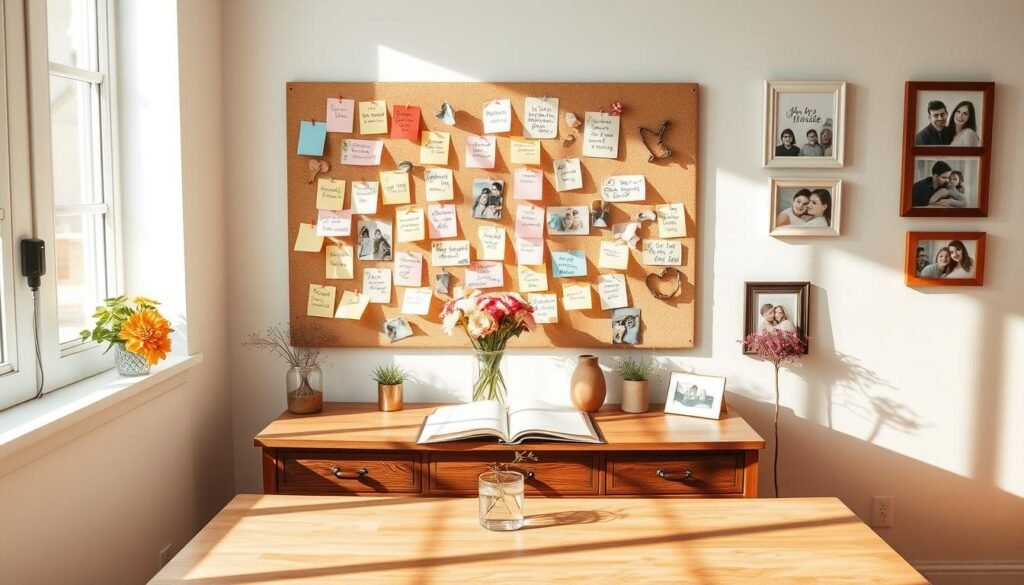
First, consider where to place your gratitude wall. Ideal locations include kitchens, family rooms, or entryways—places where you often gather. A visible spot encourages everyone to participate. You can also opt for a classroom meeting area or a high-traffic office wall.
Next, think about the materials you’ll need. Essential supplies include sticky notes, index cards, and paper. Don’t forget markers, dry-erase pens, and clips to keep everything organized. For easy access, place writing materials in a small storage basket beside your display.
If physical space is limited, virtual options are available. Platforms like shared documents, Miro boards, or Padlet boards allow everyone to contribute from anywhere. This flexibility makes it easy for families, students, and coworkers to join in on the fun of sharing appreciation.
Creative Gratitude Board Ideas for Every Day
Life often sweeps us away, making it easy to forget the little things that brighten our days. By incorporating creative gratitude wall ideas, you can encourage daily reflection and appreciation. Here are some engaging concepts that can be adapted for classrooms or family settings.
Affirmation Stations and Thankful Trees
Start with an Appreciation Station. Here, everyone can add a specific note each day, reflecting on what they are thankful for. This can be a simple sticky note or a more elaborate gratitude sheet. Review these entries together at the end of the week to foster connection.
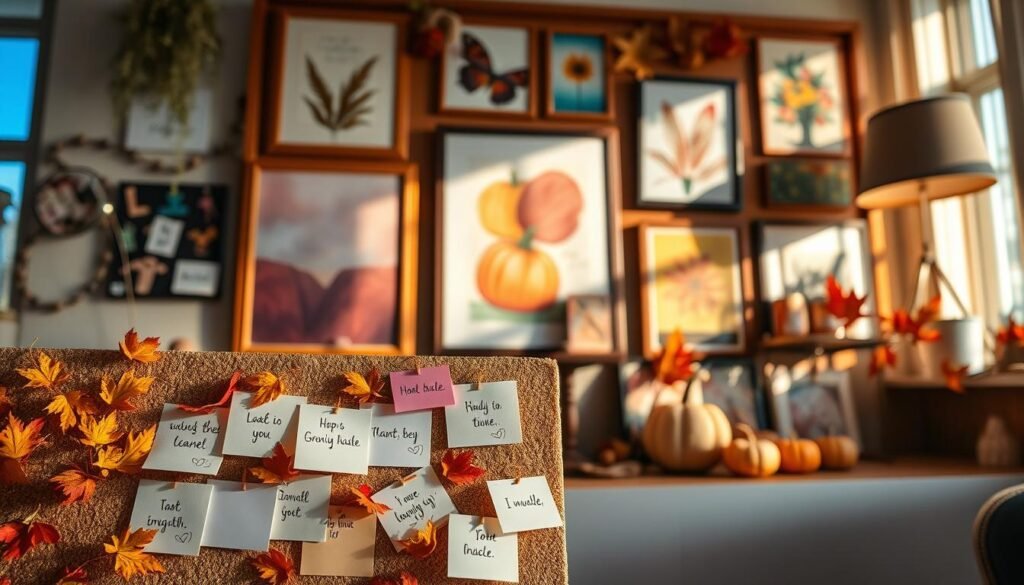
Next, consider a Thankful Tree. Create a paper tree and use colorful sticky notes as leaves. Each person can write something they appreciate on a leaf, especially during autumn when the colors are vibrant. This not only beautifies your space but also serves as a constant reminder of positivity.
Bulletin Board Displays and Creative Prompts
For a more interactive experience, set up a bulletin board that features ways to show gratitude. This could include acts of kindness like helping someone or sharing compliments. You can also incorporate a gratitude T-chart, contrasting positive actions with those that do not show appreciation.
Lastly, celebrate birthdays with gratitude cards using prompts like “I am grateful for ___ because ___.” This encourages recognition of specific qualities in classmates and nurtures a culture of appreciation.
How to Build a “Gratitude Board” That Inspires Daily Positivity
Every day, we have opportunities to reflect on what makes us happy. A well-structured gratitude display can help cultivate this practice. It’s essential to focus on implementation rather than just decoration. Establishing clear participation expectations will encourage everyone to engage.
Consider setting a simple rule. For example, in a classroom, students can add a note daily. At home, families might agree on one note per week. This creates a routine that everyone can follow.
Position your display near an existing routine, like a morning meeting or dinner time. This connection reinforces the habit of sharing appreciation. To keep things fresh, rotate prompts that inspire reflection on various themes—people, places, and small comforts.
Encourage creativity by inviting participants to add photos, drawings, or clippings. This allows for different ages and communication styles to shine. Lastly, respect privacy by allowing private entries and reviewing public notes before displaying them.
| Participation Strategy | Description |
|---|---|
| Daily Notes | Encourage adding a note every day in class. |
| Weekly Sharing | Agree on one gratitude note per week at home. |
| Rotating Prompts | Use different themes to inspire entries. |
| Creative Contributions | Invite photos and drawings for variety. |
| Respectful Boundaries | Allow private entries and review public notes. |
Incorporating Art and Seasonal Decor into Your Board
Finding ways to visually enhance your gratitude wall can make the practice even more engaging. Seasonal designs can keep participation fresh and timely throughout the year. Think about using snowflakes in winter, leaves in fall, flowers in spring, and seashells in summer. These seasonal elements invite everyone to reflect on what they appreciate during different times of the year.
Invite your family members, colleagues, or students to choose colors and design elements. This collaborative approach ensures the display reflects the people who use it. You might also consider creating a gratitude quilt made from fabric squares contributed by team members. Each square can represent individual appreciation, turning it into a shared artwork.
Another fun idea is to use a blank puzzle. Each participant can decorate a piece with their own expression of appreciation before assembling it. This visual representation illustrates how everyone contributes to the overall culture of kindness.
Try a vibrant rainbow design with a pot of gold. This allows participants to add colorful sticky notes that expand as gratitude grows. Additionally, you can offer custom templates, drawings, and digital uploads through tools like Miro or Padlet. These platforms support notes, photos, and reflections, catering to those who prefer creative expression.
Integrating Gratitude Routines in Classes and Homes
In the hustle of daily life, we often forget to pause and appreciate the small things that brighten our spirits. Integrating gratitude into your classroom or family routine can enhance relationships and promote positive thinking. Here are some actionable tips to make this practice authentic and engaging.
For classrooms, consider starting each day with a gratitude moment. Ask students to share one specific entry before diving into academic activities. This not only sets a positive tone but also encourages students to recognize the support of their classmates.
At home, utilize routines like breakfast or dinner as cues for writing gratitude notes. Encourage family members to reflect on their day, creating a predictable space for appreciation. This practice can foster resilience and strengthen family bonds.
- Build gratitude into classroom meetings by discussing one specific entry daily.
- Use family routines to create a cue for writing gratitude notes.
- Ensure gratitude is authentic, not just a seasonal decoration.
- Encourage recognition of supportive classmates and family members.
- Invite families to review entries together and celebrate small moments.
By incorporating these activities, you can cultivate a culture of appreciation in both classrooms and homes. For more insights on emotional wellness and family routines, check out the resources on BetterLifeAtlas.
Maintaining Your Gratitude Practice Over Time
In the whirlwind of daily activities, it’s easy to overlook the small blessings that brighten our lives. To keep your gratitude wall relevant, consider refreshing it regularly. A weekly reading, monthly reset, or seasonal update can ensure that everyone remains engaged and inspired.
Refreshing Your Wall and Keeping It Relevant
Families can choose a cadence that works for them, clearing the wall and storing older entries in a scrapbook, box, or jar. This keeps the collection accessible for those tough weeks when someone needs a boost.
Additionally, rotating prompts and visual themes can keep the experience fresh. Use seasonal decorations like fall leaves or winter snowflakes to encourage participation.
Simple Steps to Build a Long-Term Habit
Incorporate quotes from inspiring figures like Maya Angelou or Rumi to give participants a fresh starting point. Quotes can serve as gentle reminders of the power of thankfulness. Remember, the goal is to convert appreciation into action—whether through a thank-you note or a kind gesture.
Ultimately, a modest, authentic routine is more sustainable than an elaborate display used only once. This practice will cultivate a lasting sense of thankfulness and positivity.
Conclusion
The most effective display for appreciation is one that is visible, accessible, and specific. It should connect to a routine you already follow. From Appreciation Stations to Thankful Trees, each idea offers a unique way to reflect on what you cherish. Remember, The Gratitude Project found that expressing thankfulness can enhance mood for up to 12 weeks after just four weeks of practice.
Don’t wait for perfect materials. Start with a single sheet of paper or a few sticky notes. You can even create a shared digital document to get started. Here are some FAQs to help you along the way:
- What are the four A’s of appreciation? They are Awareness, Acknowledgement, Appreciation, and Action.
- Where should I place my display? Ideal spots include kitchens, classrooms, or entryways.
- How can I maintain privacy? Allow private entries and review public notes before displaying them.
- What virtual tools can I use? Platforms like Miro and Padlet are great for shared displays.
- How often should I refresh my display? Consider a weekly or monthly update to keep it engaging.
- What prompts can I use? Use specific themes or questions to inspire entries.
FAQ
What materials do I need to create a gratitude board?
You can use a variety of materials such as poster board, fabric, sticky notes, pens, and decorative items like stickers or quotes. Choose what resonates with you!
How often should I update my gratitude board?
It’s beneficial to refresh your board regularly, perhaps once a month, to keep it relevant and inspiring. You can add new notes or replace old ones as your feelings change.
Can I involve my family or colleagues in this practice?
Absolutely! Creating a shared space for gratitude can enhance connections and foster a positive culture. Encourage everyone to contribute their thoughts and notes.
What are some creative prompts I can use for my gratitude board?
Consider using prompts like “What made you smile today?” or “Who are you thankful for this week?” These can spark meaningful reflections and notes.
How can I maintain my gratitude practice over time?
Establish a routine where you take a few moments each day or week to reflect and add to your board. Consistency is key to building this positive habit.
What should I do if I run out of space on my gratitude board?
You can create a new section or start a new board. Alternatively, consider a digital version where you can keep adding without physical limitations.
How does creating a gratitude board benefit my mental health?
Engaging in gratitude practices can improve your mood, reduce stress, and enhance overall well-being by shifting your focus to the positive aspects of your life.