Gratitude Tree Ideas for Practicing Thankfulness with Family and Friends
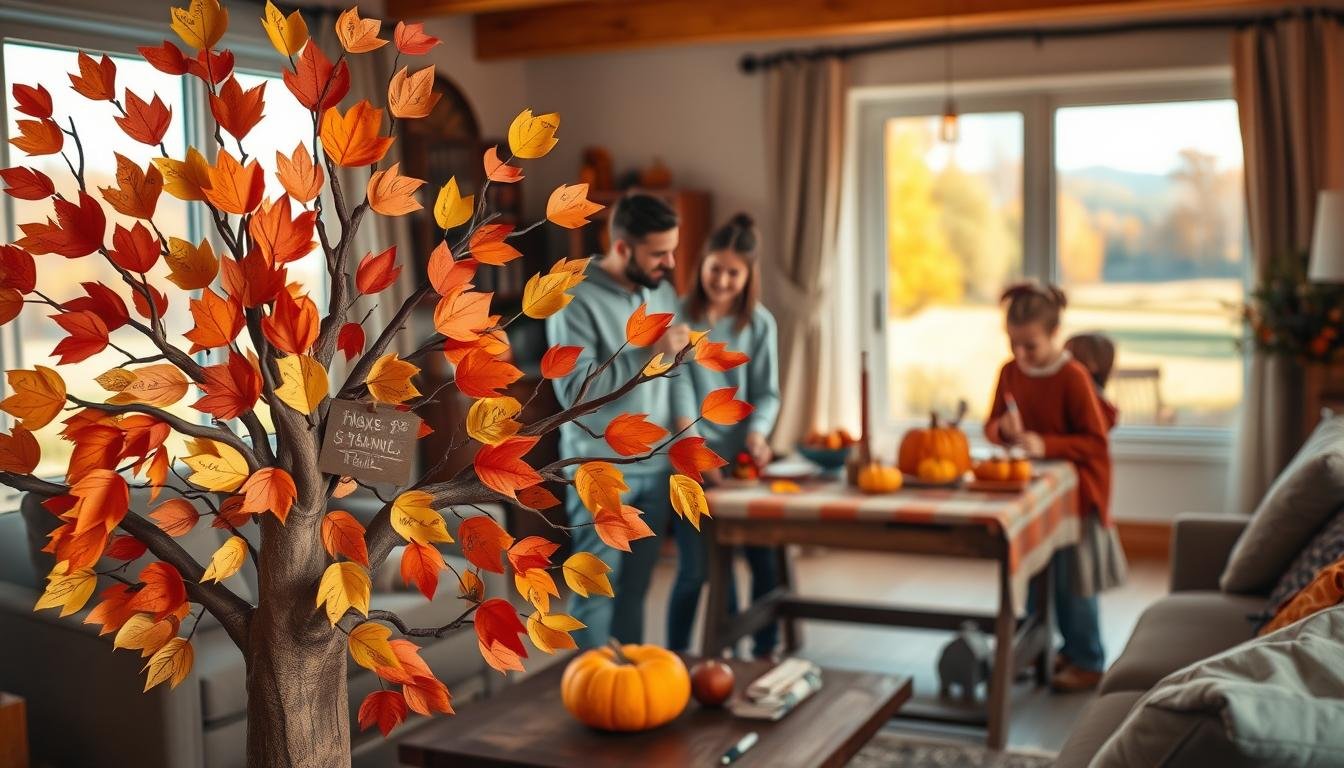
Thanksgiving is a wonderful time to reflect on what matters most. One fun way to do this is through thankful tree activities. These crafts provide families with a relaxed opportunity to express their appreciation. Instead of hurried conversations before dinner, families can take a moment to share their thoughts in a creative way.
For instance, Audrey’s family has kept a thankful tree tradition alive. They gather each year to create colorful leaves that represent their cherished memories. Another family even expanded this practice into a month-long celebration throughout November, making it a meaningful tradition.
In this article, you’ll discover how to create your own tabletop or wall display using branches, paper, and vibrant leaves. Kids and adults alike can contribute specific memories, ordinary comforts, and even humorous moments. This activity not only fosters connection but also sparks delightful conversations throughout the year.
Get ready to explore various arrangements, decorating tips, and conversation starters that will make your thankful tree a cherished part of your home.
Key Takeaways
- Thankful tree activities provide a relaxed way to reflect during Thanksgiving.
- Families can turn this craft into a month-long tradition.
- Use branches, paper, and colorful leaves for displays at home.
- Everyone can share memories and appreciation throughout the year.
- Explore decorating ideas and conversation prompts for meaningful connections.
Embracing the Gratitude Tree Tradition
This time of year invites families to reflect on their shared experiences and values. A thankful tree can transform gratitude into a visible family ritual. For example, Audrey’s four-year-old expressed thanks for his swimsuit, showing how even simple things can spark meaningful conversations.
Writing responses over several weeks allows family members to think deeply rather than rushing their answers at the Thanksgiving table. Consider placing your thankful tree in a spot where everyone naturally passes by, like the kitchen or entryway. This way, it becomes a part of daily life.
To make the activity more engaging, encourage specific prompts. Ask about people, experiences, or even small comforts. For instance, “What made you smile today?” Adding one note each day in November creates regular opportunities for conversation.
Preserving selected notes in a journal or envelope can be a lovely way to revisit changing interests and milestones in future years. You can also explore more about fostering gratitude habits by visiting .
Crafting Your Gratitude Tree: Gratitude Tree Ideas
As the holidays draw near, families have a wonderful opportunity to express their thanks creatively. Gathering materials is the first step in this engaging activity. You can use items like branches, construction paper, and even recycled materials to create your own unique display.
Gathering Materials and Setting Up Your Space
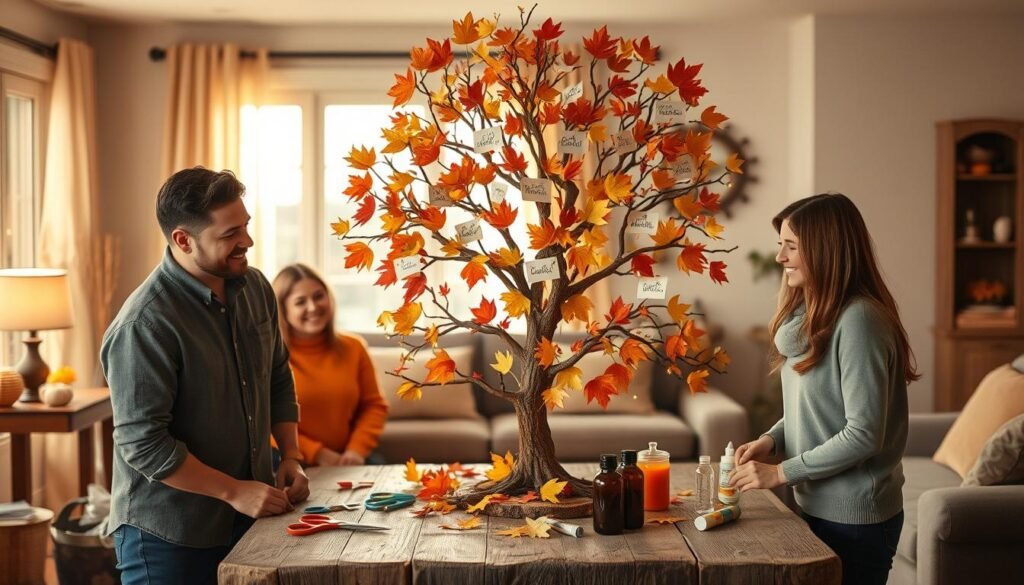
Here’s a list of materials you might need:
| Materials | Purpose |
|---|---|
| Branches | To form the structure of your tree |
| Construction Paper | For creating colorful leaves |
| Heavy Vase | To stabilize larger branches |
| Scissors | For cutting paper and trimming branches |
| Tape or Glue | To secure elements together |
Step-by-Step Guide to Creating Your Tree
Follow these simple steps to create your own gratitude tree:
- Gather or build your tree using branches or recycled paper.
- Arrange and decorate the branches with colorful leaves.
- Write specific notes of appreciation and hang them securely.
For added creativity, consider using punched paper circles, gift tags, or even preserved leaves as ornaments. This activity not only fosters connection but also allows you to reflect on the little things that matter most throughout the year.
Creative Ways to Involve Family and Kids
During this festive time, families can explore fun and meaningful ways to celebrate thankfulness. Involving children in activities not only fosters connection but also enhances their learning. Assign age-appropriate tasks to make it enjoyable for everyone.
Fun Art Projects and Personalizations
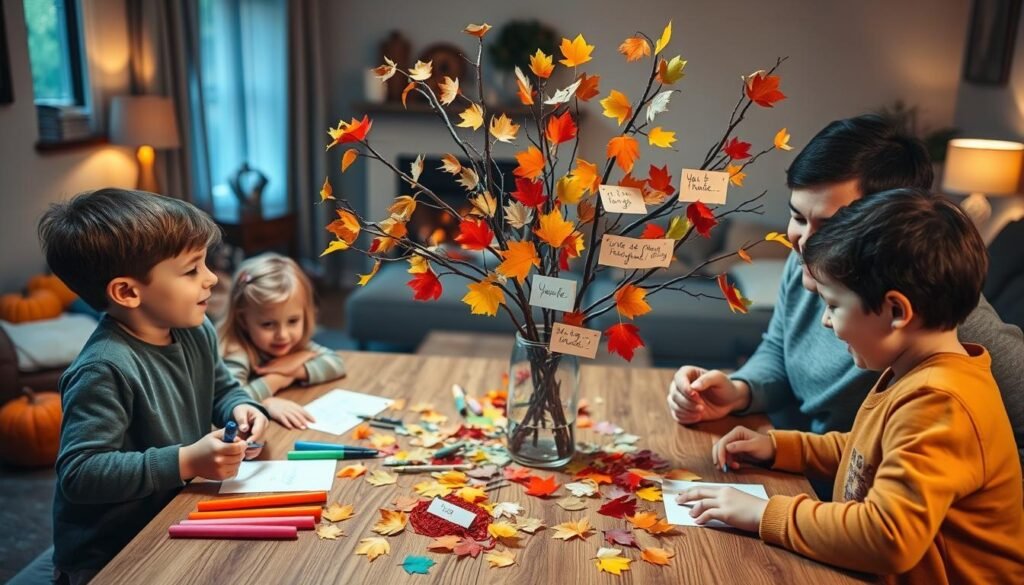
Consider Izzie, age seven, who drew branch shapes while her younger sister Emma, age five, cut them out. This division of tasks allows each child to contribute uniquely. Meanwhile, toddlers like Hannah, almost three, can express what makes them happy by naming colors or pointing to pictures.
Adapting the Activity for Various Ages
For early writers, provide space to practice spelling and handwriting. You can follow Izzie’s spelling practice and Emma’s kindergarten writing as examples. Encourage children to personalize leaves with initials, dates, or small illustrations, making each contribution special.
Keep spare leaves, a pen, and tape in a baggie beside the display. This way, family members can easily add leaves whenever a meaningful moment occurs. By reusing fabric leaves or autumn garlands each year, you can also compare children’s interests and growth over time.
Conclusion
As the month of November unfolds, families have a chance to engage in meaningful reflection together. A gratitude tree offers a practical way to pause and share appreciation during this special time and beyond. Whether you opt for branches from your yard or a creative paper version, this activity can adapt to fit any home, budget, or age group.
Saving your notes in a journal allows you to revisit heartfelt memories and amusing moments for years to come. Each year can bring new insights and laughter, making this a cherished tradition.
Here are some helpful FAQs to consider:
- What materials do I need for a gratitude tree, and can I substitute common household items?
- How can children of different ages participate in this activity?
- Should I add notes daily, only on Thanksgiving, or whenever inspiration strikes?
- How can I ensure my branch-based tree remains stable, and what alternatives exist?
FAQ
What materials do I need to create a gratitude tree?
You can use paper, colored leaves, branches, tape, and any decorative items you like. Gather these materials to set up your space for crafting.
How can I involve my kids in this activity?
Encourage your children to draw or write what they are thankful for on the leaves. This can be a fun way for them to express their thoughts and feelings.
Can we make this a yearly tradition?
Absolutely! You can set aside time each year, perhaps around Thanksgiving, to reflect on what everyone is thankful for and add new leaves to your tree.
What are some creative ways to personalize our gratitude tree?
You can use different shapes and colors for the leaves, or even add photos and drawings that represent what you are thankful for. This adds a personal touch to your tree.
How can I adapt this activity for different age groups?
For younger kids, focus on simple drawings or stickers. For older children and adults, encourage more detailed reflections or discussions about gratitude.