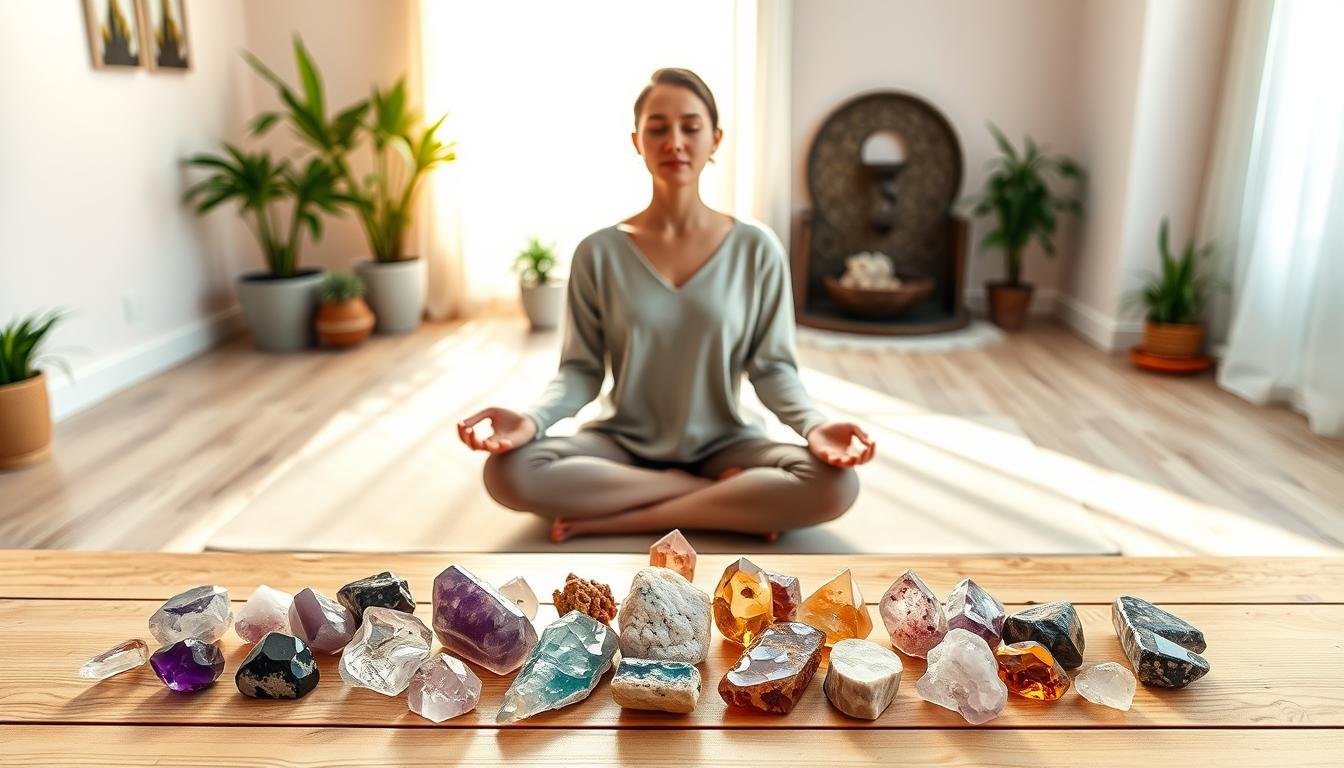
Crystal Meditation: A Beginner’s Guide to Mindful Practice with Crystals
Have you ever wondered how to enhance your meditation practice? One effective method is through the use of crystals. This approach invites you to sit quietly while holding, wearing, or placing a crystal nearby. The physical presence of the stone helps anchor your attention, making it easier to focus.
Danielle Hollman describes this practice as engaging with touch, weight, temperature, and pressure. It’s about finding comfort in the tangible aspects of the stone, rather than expecting dramatic sensations. Remember, the true benefits—like relaxation and improved focus—come from the meditation itself, with the crystal serving as a supportive tool.
This guide will walk you through choosing a comfortable stone, creating a peaceful space, and completing a short session. A popular choice for beginners is Clear Quartz, but any stone that feels right to you can be a great starting point.
Key Takeaways
- Crystal meditation involves using a stone to enhance focus during meditation.
- Engage with the crystal through its physical attributes like touch and weight.
- Expect benefits from meditation itself, with crystals as supportive objects.
- Begin with a comfortable stone, such as Clear Quartz, for a tangible focus.
- This guide offers practical steps for creating a meditation space and reviewing your progress.
Introduction to Crystal Meditation
Wondering how simple objects can deepen your experience of stillness? For beginners, crystal meditation offers a gentle entry into mindfulness. It’s about observing what happens in your body while you hold a stone. This practice can feel less intimidating than striving for an empty mind.
When you focus on the weight and texture of a stone, you give your mind a simple task. This makes it easier to settle into the moment. Instead of directing energy, you engage in a receptive practice, as noted by Danielle Hollman.
As you notice your breath and the support beneath you, awareness naturally grows. Each time your thoughts wander, gently return to the sensation of the stone. This is not a failure; it’s part of the process. Remember, it’s perfectly okay to feel little or nothing. The goal is to stay present, embracing whatever arises.
| Key Concepts | Description | Benefits |
|---|---|---|
| Receptive Practice | Engaging with the stone without directing energy | Promotes relaxation and focus |
| Mindful Awareness | Noticing sensations in the body | Enhances present-moment awareness |
| Gentle Return | Returning to the stone when distracted | Builds patience and resilience |
Understanding the Role of Crystals in Meditation
Curious about how certain stones can influence your inner calm? The relationship between crystals and meditation is fascinating, blending both scientific facts and spiritual beliefs. Crystals form within the Earth under immense pressure over time, creating ordered atomic structures. This unique formation gives them properties that many believe can enhance focus and clarity during meditation.
Interestingly, these same structures are utilized in technology—like watches and computers—showing their material stability. However, this doesn’t equate to any healing claims. For example, Clear Quartz is often viewed as a neutral amplifier associated with all chakras, particularly the Crown Chakra. It’s essential to recognize that while some traditions speak of energy, research from institutions like NIH and Harvard Medical School focuses on the benefits of meditation itself, not the stones.
As you explore this practice, think of energy language as part of a spiritual tradition. Use the observable skills of breathing and attention to enrich your daily life.
Benefits of Crystal Meditation
What if the right stone could help you stay more present in your practice? Using a physical stone can significantly enhance your focus. By returning to the weight and texture of a stone, you interrupt repetitive thoughts, creating a clearer mental space.
Research from institutions like NIH and Harvard Medical School highlights the benefits of meditation, including reduced stress and improved emotional regulation. These studies show that simply engaging in a mindful practice can lead to deeper relaxation and enhanced clarity.
Grounding is another key benefit. It involves noticing your body’s support, breath, and surroundings, rather than escaping into thought. For instance, Clear Quartz is often associated with clarity, but remember, its use is to support your practice, not to treat anxiety or illness independently.
Start with just 5-10 minutes of practice. This way, you can build consistency without feeling overwhelmed. Each session can become a stepping stone toward a more mindful and focused you.
Selecting the Right Crystal for Your Practice
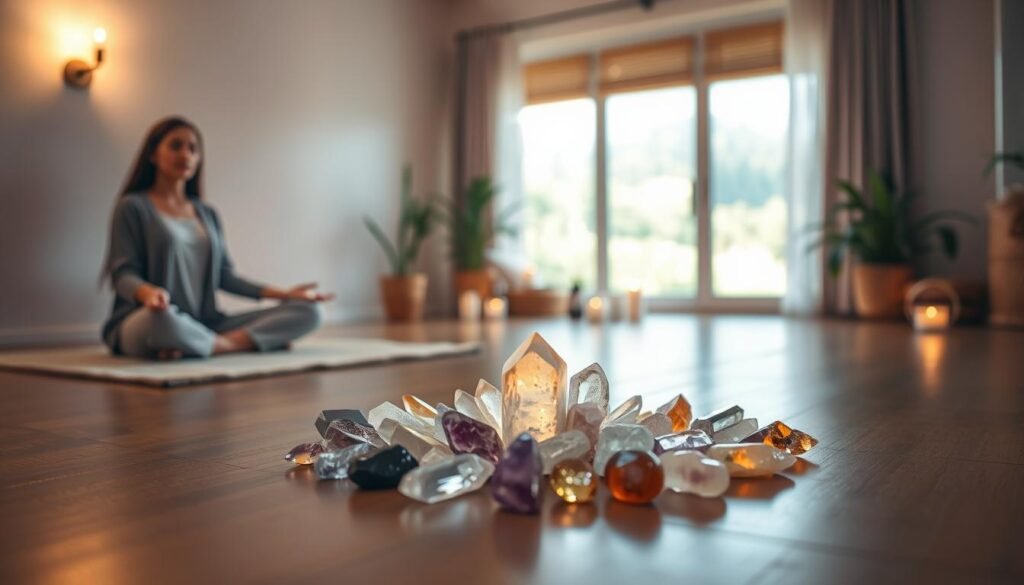
Have you considered how the right stone can elevate your mindfulness journey? Choosing a suitable stone is essential for beginners. It can enhance your experience and support your focus during sessions.
Some popular choices include Clear Quartz, Amethyst, Rose Quartz, Smoky Quartz, and Black Tourmaline. Each stone has unique properties that may resonate with you. For instance, Clear Quartz is often called the “Master Healer.” It is known for its clarity and intention-setting abilities.
When selecting a stone, comfort and personal response are crucial. You might find that the best option is one you already have. Take a moment to hold the stone in your hand. Notice how your body feels. Do your shoulders relax? Does your grip loosen? These reactions can guide your choice.
| Stone | Properties | Best For |
|---|---|---|
| Clear Quartz | Clarity, cleansing | Intention-setting |
| Amethyst | Calm, peace | Stress relief |
| Rose Quartz | Emotional softness | Love and compassion |
| Smoky Quartz | Grounding | Stability |
| Black Tourmaline | Protection | Energy shielding |
Setting Up Your Meditation Space
Creating the right environment can significantly enhance your experience. A calm, inviting space sets the tone for your practice. It helps you focus and relax, making your sessions more effective.
Start by choosing a quiet corner where you can sit comfortably. Soft lighting can create a soothing atmosphere, while a stable surface allows you to focus on your body instead of adjusting your position. This small setup can make a big difference.
Consider incorporating tools like Selenite, which is traditionally used for clearing energy. You might also want to use incense, such as frankincense resin, to mark the beginning of your quiet ritual. This adds a sensory element that can enhance your experience.
Palm stones are another excellent choice for beginners. Their larger shape fits comfortably in your hand, providing a tactile anchor during your sessions. However, remember that you can start with just a Clear Quartz stone and a few uninterrupted minutes to get going.
For more tips on creating a calming wellness space, check out this guide. You can also explore additional resources on crystals and meditation techniques.
| Tool | Purpose | Notes |
|---|---|---|
| Selenite | Clearing energy | Helps create a peaceful atmosphere |
| Incense | Marks the beginning of practice | Frankincense is a popular choice |
| Palm Stones | Tactile anchor | Comfortable for beginners |
Crystal Meditation: Step-by-Step Guide for Beginners
Have you thought about how to create a meaningful connection with your stone? This guide will help you establish a safe and effective routine for your practice. Follow these simple steps to enhance your experience and anchor your awareness.
How to Hold, Cleanse, and Prepare Your Crystal
Start by finding a comfortable position—sitting, reclining, or lying down. Hold your chosen stone in one or both hands. Take several slow nasal breaths, allowing your jaw and shoulders to relax.
Before your first use, cleanse the stone. You can do this with incense, Palo Santo, or sage. Alternatively, place it overnight on a Selenite plate. Setting a simple intention, such as calm or clarity, can enhance your focus.
Simple Techniques to Anchor Your Awareness
Notice the weight, temperature, and texture of the stone against your skin. When your mind wanders, gently return your attention to one physical sensation. Remember, it’s natural for thoughts to arise; don’t criticize yourself for this.
As you finish, move your fingers and toes, take a deeper breath, and open your eyes. Take a moment to note how your body feels before standing. This practice not only cultivates awareness but also fosters a deeper connection with your body and the present moment.
Enhancing Your Practice with Guided Meditations
Imagine having a supportive voice to guide you through your meditation practice. Guided meditations can be a fantastic tool for beginners. They provide verbal reminders to breathe, relax, and return your attention when silence feels confusing or difficult.
For example, a 10-minute guided recording using Selenite can create a manageable morning ritual. This predictable cue helps you start your day with intention. On the other hand, Amethyst is suggested for a calming transition before sleep, though it shouldn’t be seen as a guaranteed sleep aid.
If at any point you feel discomfort, remember to pause or open your eyes. Your personal safety takes priority over completing a recording. As you grow more comfortable, consider alternating between guided sessions and silent practice. This way, you can gradually learn to anchor your awareness without relying on constant audio support.
Incorporating Crystals into Your Daily Routine
How can a small stone serve as a reminder to pause and reflect throughout your day? Integrating a stone into your daily life can make your practice more consistent and meaningful. By connecting your meditation practice with existing routines, you can create a habit that feels natural and supportive.
Start with just 5-10 minutes at the same time each day. This short, repeatable routine is easier to maintain than longer sessions. Pair your morning practice with Clear Quartz or Selenite, and consider using Amethyst in the evening. This rhythm can help ground your day.
Here are some practical tips to help you stay consistent:
- Keep a stone beside your toothbrush, journal, or work computer. This visual cue will remind you to pause without complicated preparation.
- Use Full Moon sessions for reflection and release, or New Moon sessions for setting fresh intentions. Treat these as optional rituals.
- Record one word about your mood after each session. This simple practice can help you notice changes in focus and stress over time.
| Routine | Stone | Purpose |
|---|---|---|
| Morning | Clear Quartz | Focus and clarity |
| Evening | Amethyst | Calm and relaxation |
| Full Moon | Any | Reflection and release |
| New Moon | Any | Fresh intentions |
Common Challenges and How to Overcome Them
Starting any new practice can come with its challenges. It’s essential to address common misconceptions and obstacles that may arise during your journey with stones. Understanding these can help you navigate your experience more smoothly.
One common misunderstanding is the belief that a stone requires activation before use. As Danielle Hollman points out, simply meditating with your chosen stone is enough to connect with its energy. This means you can dive right into your practice without extra steps.
Quiet sessions are also often misinterpreted. Not feeling warmth or movement does not mean your practice is ineffective. It’s normal to experience stillness, and this does not equate to failure. Embrace these moments as part of your journey.
Many beginners expect instant results or try to sit for too long too soon. This can lead to frustration and abandonment of the practice. Start small and gradually increase your time as you become more comfortable.
Lastly, remember that while stones can be meaningful, they should not replace professional medical or mental health care. If you feel discomfort during your session, open your eyes, identify nearby objects, and gently end the practice without judgment.
| Challenge | Solution | Notes |
|---|---|---|
| Activation Requirement | No activation needed | Focus on the meditation itself |
| Quiet Sessions | Accept stillness | Not feeling anything is okay |
| Instant Results | Start small | Build your practice gradually |
| Replacing Care | Seek professional help | Stones are supportive, not substitutes |
Expanding Your Meditation Practice Over Time
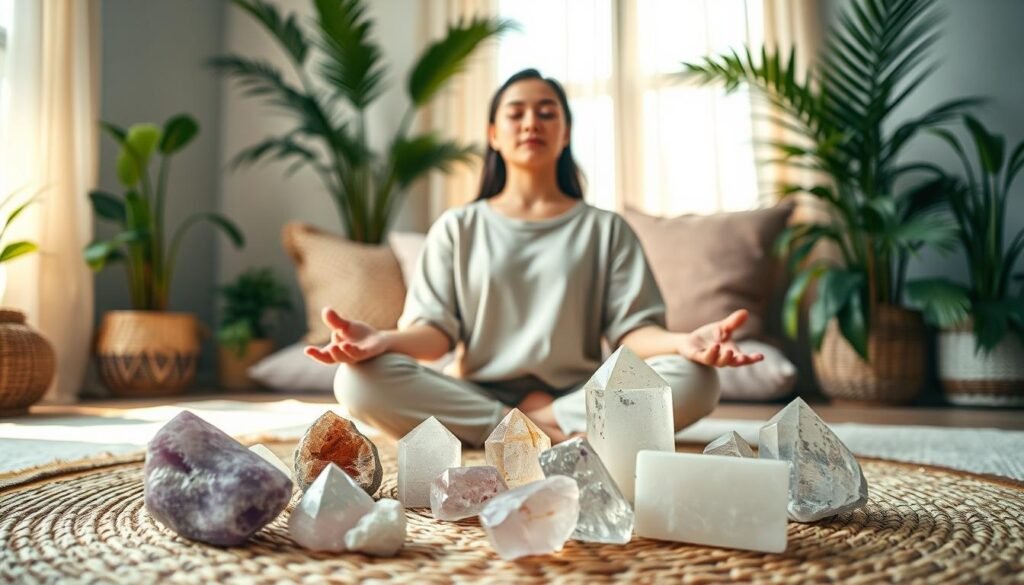
As you grow in your practice, consider how you can gradually enhance your experience. This journey can involve experimenting with different techniques and setting new intentions. It’s about finding what resonates with you and deepening your connection with the stones.
After mastering a single stone, you might try pairing it with others. For instance, combining Clear Quartz with Amethyst can bring calmness, while pairing it with Rose Quartz can foster self-compassion. These traditional combinations can elevate your practice without overwhelming you.
Once you feel comfortable with one stone, explore simple body layouts or crystal grids. This allows you to ground your practice in familiarity and physical awareness. Journaling can also be beneficial. Track your session length, chosen stone, intention, mood, and focus. Reviewing these patterns over several weeks can provide valuable insights.
Adjust your routine as needed. If you notice your breath becoming tense or your hands gripping tightly, it may be time to change your timing, posture, or crystal choice. Remember, using Clear Quartz in different ways—like carrying it or wearing it as jewelry—can be a helpful extension of your practice, but it’s not a requirement.
| Technique | Details | Notes |
|---|---|---|
| Stone Pairing | Combine stones for enhanced effects | Clear Quartz with Amethyst for calm |
| Body Layouts | Use multiple stones in a layout | Grounds your practice |
| Journaling | Track your experiences | Review patterns over time |
| Routine Adjustments | Change elements if needed | Focus on comfort and awareness |
Conclusion
How can a few moments of quiet reflection guide you toward clarity? Crystal meditation offers a gentle path for beginners to enhance their mindfulness journey. You can start with one comfortable stone, supported by your body, and take several slow breaths. Just a few minutes of patient attention can create a profound impact.
Clear Quartz is a popular choice, but other stones like Amethyst, Rose Quartz, and Selenite can also enrich your practice. Remember, the strongest evidence supporting meditation comes from research by institutions like NIH and Harvard Medical School.
As you practice, choose a simple intention. When your mind wanders, gently return to the physical sensations of your body. Close your session by opening your eyes and reconnecting with your surroundings. Build consistency gradually, and treat your stones as supportive tools in your mindfulness journey.
FAQ
What is crystal meditation?
Crystal meditation is a practice that involves using specific stones to enhance mindfulness and awareness during meditation. It helps in focusing your thoughts and creating a deeper connection with your inner self.
How do I choose the right crystal for my meditation practice?
Start by exploring crystals that resonate with you. Popular choices include clear quartz for clarity and amethyst for relaxation. Trust your intuition when selecting a stone that feels right for your intentions.
Can beginners practice crystal meditation?
Absolutely! Beginners can easily incorporate crystals into their practice. Start with simple techniques like holding a stone in your hand while focusing on your breath to anchor your awareness.
How can I create a calming meditation space?
Choose a quiet area free from distractions. Use soft lighting, comfortable seating, and include your chosen crystals to create an inviting atmosphere that encourages relaxation and focus.
What are the benefits of using crystals during meditation?
Crystals can enhance focus, promote grounding, and relieve stress. They help in setting intentions and can amplify the energy of your practice, making it more effective.
How often should I practice crystal meditation?
Consistency is key. Aim for a few minutes daily or several times a week. The more you practice, the more you’ll deepen your connection with the crystals and your meditation experience.
What should I do if I encounter challenges in my practice?
It’s normal to face challenges. Address any misunderstandings about crystal use, and be patient with yourself. Adjust your routine as needed, and don’t hesitate to seek guidance if necessary.
How can I incorporate crystals into my daily life?
You can carry a small crystal in your pocket, wear crystal jewelry, or place them in your environment. This keeps their energy present throughout your day, supporting your intentions and mindfulness.